How Long Does a Transmission Last After It Starts Slipping? Essential Insights
If you’ve noticed your car’s transmission slipping, you’re probably wondering how much longer it can last before things get worse. Transmission slipping can feel scary because it affects how smoothly your car drives and can lead to costly repairs.
The good news is, you don’t have to panic just yet. Understanding what slipping means and how long your transmission might hold up gives you the power to make smart decisions and avoid being stuck on the side of the road.
Keep reading to learn what causes slipping, signs to watch for, and how long your transmission could last after it starts slipping. This knowledge will help you protect your car and your wallet.
Signs Of Transmission Slipping
Transmission slipping is a serious problem for any vehicle. It happens when the transmission changes gears in the wrong way or does not change at all. Recognizing the signs early can save you costly repairs. Here are some clear signs and causes of slipping to watch for.
Common Symptoms
Your car may hesitate or jerk when you accelerate. The engine might rev higher than usual but the car moves slowly. You could feel a delay before the car shifts into the next gear. Sometimes, the transmission may shift roughly or unexpectedly. Strange noises like whining or clunking can also appear. The “Check Engine” light might come on. Transmission fluid leaks or a burning smell may be noticeable.
Causes Of Slipping
Low or dirty transmission fluid often causes slipping. The fluid lubricates and cools transmission parts. Worn out clutch plates or bands inside the transmission lead to slipping. Faulty solenoids that control fluid flow can cause gear issues. Internal damage like broken gears or bearings is another cause. Overheating transmission parts may also result in slipping. Poor maintenance and hard driving increase the risk.

Credit: independenttransmission.com
Impact On Transmission Lifespan
The impact of transmission slipping on its lifespan is significant. Once slipping starts, the transmission faces extra stress. This stress causes faster wear and tear. Drivers often wonder how long their transmission will last after slipping begins. Understanding the damage and factors that affect longevity can help manage expectations and maintenance.
Damage Progression
Transmission slipping means the gears do not engage properly. This causes friction and heat to increase inside the transmission. Heat damages the transmission fluid, reducing its ability to lubricate parts. As lubrication drops, metal parts grind against each other. This grinding speeds up the wear process.
Small problems can turn into major failures quickly. Slipping can lead to broken bands or clutches inside the transmission. These failures often require costly repairs or full transmission replacement. Early slipping signs should never be ignored.
Factors Affecting Longevity
Several factors affect how long a slipping transmission lasts. The quality and level of transmission fluid play a big role. Regular fluid changes keep parts cool and clean. Driving habits also impact lifespan. Hard acceleration and heavy towing increase stress on the transmission.
Vehicle maintenance history matters as well. Well-maintained transmissions last longer even after slipping starts. The make and model of the vehicle can influence durability too. Some transmissions are more robust and resist damage better than others.
Repair And Maintenance Options
Transmission slipping can cause serious problems if ignored. Repair and maintenance options help stop damage and save money. Quick action improves your car’s performance and safety. Understanding these options helps you decide the best step to take.
Immediate Fixes
Check the transmission fluid level and quality. Low or dirty fluid often causes slipping. Adding or changing fluid may fix the issue temporarily. Avoid driving hard or fast to reduce stress on the transmission. Use a transmission stop leak product to seal small leaks. These fixes may buy time but do not solve underlying problems.
Long-term Solutions
Have a professional inspect the transmission for deeper issues. Repair worn parts like clutches, bands, or solenoids. Rebuild the transmission if damage is extensive but parts are salvageable. Replace the transmission if repair costs are too high. Regular fluid changes and filter replacements prevent future slipping. Follow the manufacturer’s maintenance schedule for best results.
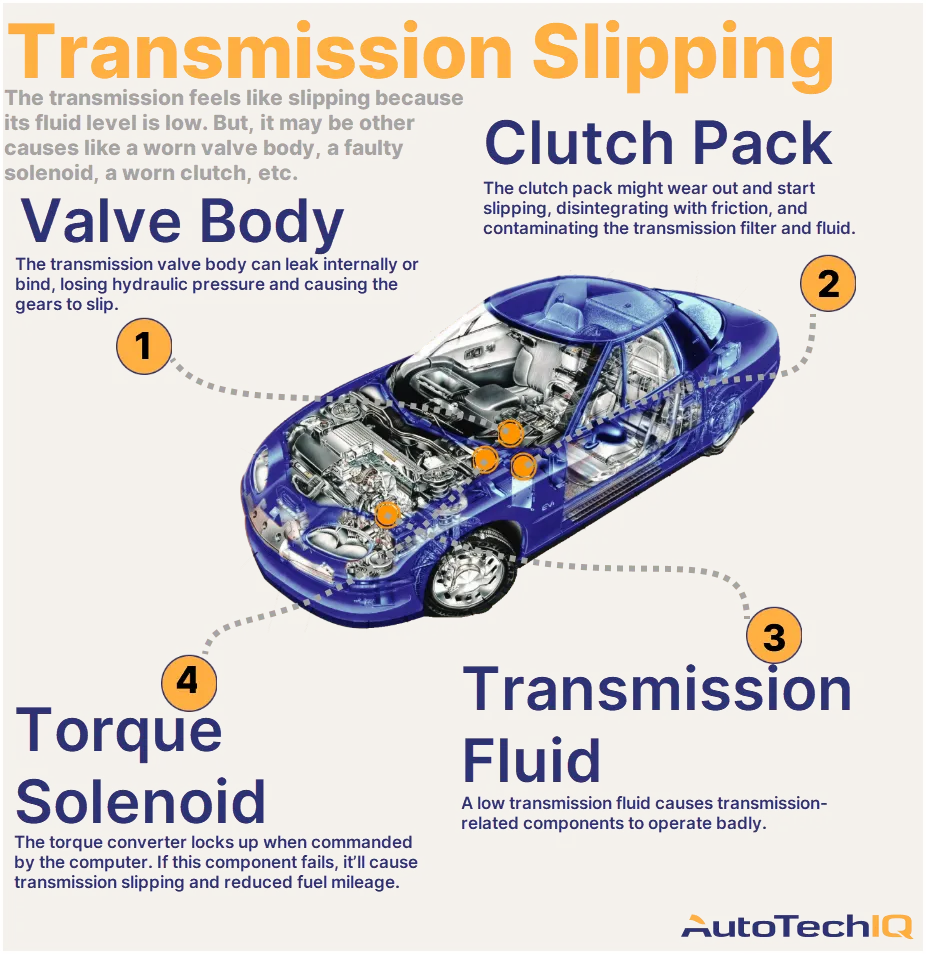
Credit: www.autotechiq.com
Preventing Transmission Slippage
Preventing transmission slippage helps your vehicle run smoothly longer. Taking care of the transmission reduces repair costs. Simple actions today avoid serious problems tomorrow. Focus on routine maintenance and smart driving habits to protect your transmission.
Routine Maintenance Tips
Check transmission fluid regularly. Clean fluid keeps parts moving well. Change the fluid as the car manual says. Use the right fluid type for your vehicle. Replace the transmission filter if your car has one. Inspect seals and gaskets to stop leaks. Fix leaks immediately to avoid damage. Have a mechanic check your transmission yearly. Early detection saves you money and trouble.
Driving Habits To Avoid
Avoid sudden starts or stops. This stresses the transmission parts. Do not shift gears while the car moves. Wait until the car stops completely. Avoid towing heavy loads beyond the car’s limit. Use lower gears on steep hills. Do not ride the brake on slopes. These habits help your transmission last longer.
Credit: www.autotechiq.com
Frequently Asked Questions
How Long Can A Transmission Last After It Starts Slipping?
A slipping transmission can last from a few days to several months. It depends on the cause and how you drive the vehicle. Early repairs can extend its life.
What Are Common Signs A Transmission Is Slipping?
You might notice delayed shifting, strange noises, or burning smells. The car may jerk or hesitate while driving. These signs indicate slipping.
Can Driving With A Slipping Transmission Cause More Damage?
Yes, driving with slipping can worsen the problem quickly. It can lead to complete transmission failure. Repair or check it soon to avoid high costs.
How Much Does It Cost To Fix A Slipping Transmission?
Fixing slipping can range from $150 to over $1,000. Minor repairs cost less, but full rebuilds are expensive. Costs vary by car model and damage severity.
Is It Safe To Drive With A Slipping Transmission?
Driving with slipping is risky and can be unsafe. The car might lose power or stall unexpectedly. It’s best to get it checked promptly.
Conclusion
A slipping transmission signals trouble ahead. It can last days, weeks, or even months. The exact time depends on use and care. Ignoring the problem can cause bigger damage. Acting quickly can save money and stress. Regular checks help spot issues early.
Keep an eye on how your car drives. Don’t wait until the problem worsens. Taking action soon keeps your vehicle safe and reliable.