How to Tell If Car is Overheating Without Gauge Expert 2027
When your car’s temperature gauge fails, recognizing overheating signs is crucial to prevent severe engine damage. Look for visual cues, unusual smells, or performance changes, and act quickly. This guide provides immediate steps to take and what to do next without a working gauge.
Knowing your car is overheating without a functional temperature gauge can prevent serious engine damage and stranded situations. In today’s vehicles, even reliable dashboards can have sensor or electrical failures, leaving you without that critical visual cue. Recognizing the physical signs, sounds, and smells your car gives off is crucial for any driver in 2027, as waiting for a gauge to move might already be too late.
This isn’t about deep mechanics; it’s about quick, observable diagnostics. We’ll focus on the immediate, unmistakable indicators that your engine is running too hot, allowing you to react swiftly and safely before a minor issue becomes an expensive repair. Your senses are powerful tools in automotive emergencies.
Key Takeaways
- Recognize visual, auditory, and olfactory overheating signs.
- Pull over safely immediately if overheating is suspected.
- Turn on heater to max, turn off AC for quick relief.
- Never open a hot radiator cap; let engine cool.
- Seek professional diagnosis for the underlying issue.
What Causes a Car to Overheat (and Why Your Gauge Might Fail)
Common Overheating Culprits
Modern engines generate significant heat, and a robust cooling system is essential. Overheating typically stems from disruptions in this system. Common issues include low coolant levels due to leaks, a faulty thermostat stuck in the closed position, a failing water pump unable to circulate coolant, or a clogged radiator preventing heat dissipation. Even a broken fan belt in older models, or an electrical fault in a modern electric cooling fan, can trigger a rapid temperature spike. These problems mean heat isn’t being removed effectively.
When Your Gauge Lies (or Stays Silent)
Your dashboard temperature gauge relies on a sensor (often called an engine coolant temperature sensor or ECT sensor) and electrical wiring to report data. If this sensor fails, gets corroded, or its wiring is compromised, the gauge might show normal readings, zero readings, or erratic fluctuations, even if the engine is cooking. Sometimes, an electrical fuse related to the gauge can blow. In 2027, while digital dashboards offer more data, their underlying sensors can still malfunction, providing a false sense of security. Always be prepared for a gauge to fail silently.
Car Overheating Without a Gauge Made Easy: Your Essential Action Plan
Even modern vehicles can experience overheating, and sometimes the temperature gauge fails or a classic car simply lacks one. Understanding how to identify overheating without this crucial dashboard instrument is vital for preventing severe engine damage, costly repairs, and potential roadside emergencies. This comprehensive, step-by-step guide will equip you with the knowledge to recognize the subtle and not-so-subtle signs of an overheating engine, empowering you to act quickly and safely, even without a visual temperature reading. Following these practical steps can save your engine and ensure your safety on the road.
Step 1: The Warning Signs: Sensory Clues from Your Car
What you need: Your senses – keen eyes, attentive ears, and a sensitive nose.
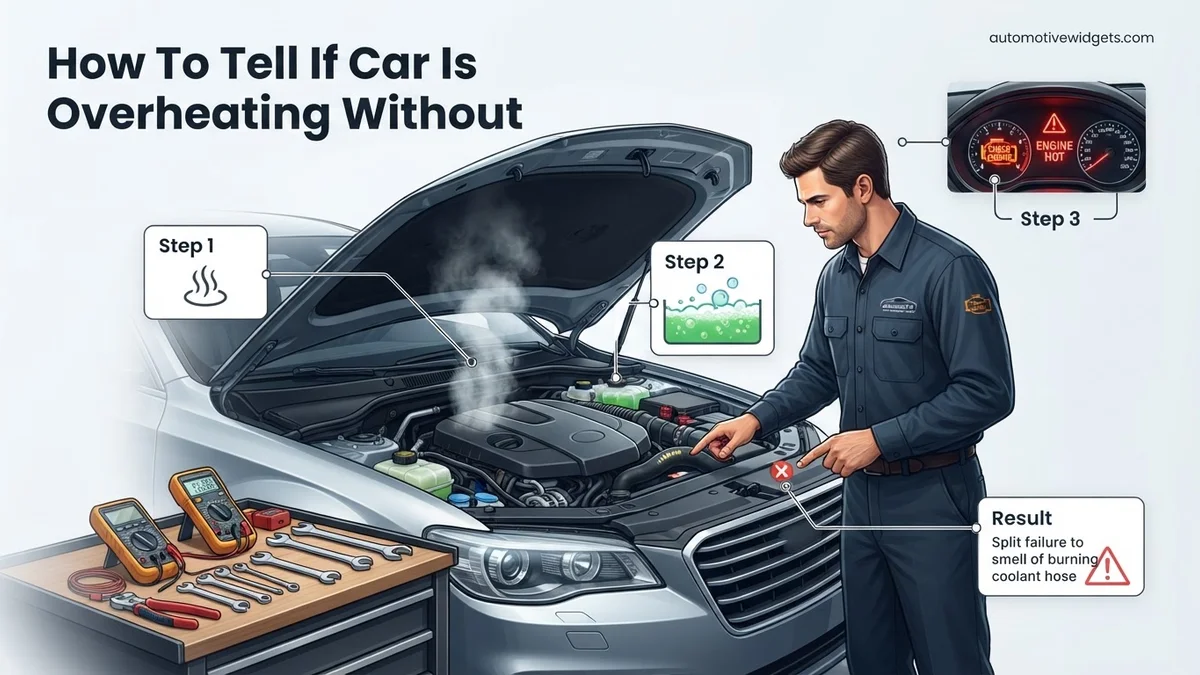
Instructions: Pay close attention to any unusual smells, sounds, or visual changes. A distinct sweet smell (like maple syrup or burnt candy) often indicates leaking coolant. A burning smell might suggest oil or transmission fluid is leaking onto hot engine components. Listen for hissing sounds, which typically mean escaping steam, or a bubbling/boiling sound from under the hood. Visually, look for steam or smoke escaping from the engine bay, especially near the front grille or hood seams. These are often the first, undeniable indicators of an engine in distress.
Pro Tip: Differentiate the sweet coolant smell from other burning smells. Coolant has a very unique, almost sugary aroma. If you smell anything like it, pull over safely as soon as possible.
Step 2: Dashboard Diagnostics: Beyond the Temperature Gauge
What you need: Your vehicle’s dashboard and basic understanding of warning lights.
Instructions: Even without a temperature gauge, your dashboard provides crucial information. Look for the “Check Engine” light, which can illuminate for a variety of reasons, including cooling system issues. Some vehicles have a specific “Low Coolant” warning light or even a general “Engine Malfunction” indicator. A battery light might also appear if the alternator is struggling due to excess heat or if the water pump is seizing, affecting the serpentine belt. Consult your owner’s manual for specific warning light meanings relevant to your car model.
Pro Tip: Never ignore a “Check Engine” light. While it doesn’t confirm overheating directly, it often indicates a fault that could lead to or be caused by overheating. Get it scanned professionally if you can’t identify an obvious issue.
Step 3: Pop the Hood (Cautiously!): Visual Inspection
What you need: A safe, level parking spot, patience, and extreme caution.
Instructions: If you suspect overheating, pull over to a safe location and turn off the engine. Crucially, wait at least 30-45 minutes for the engine to cool down significantly before attempting to open the hood fully or inspect anything directly. Once safe, open the hood and look for obvious signs like steam still billowing, puddles of brightly colored coolant (green, orange, pink) under the car, or a hissing sound indicating a leak. Visually inspect hoses for bulges, cracks, or leaks, but do not touch hot components.
Pro Tip: A sudden burst of steam from under the hood often means a ruptured hose or a failed radiator. Keep a safe distance and call for assistance if the situation seems volatile.
Step 4: The Heater Test: A Simple Trick
What you need: Your car’s climate control system.
Instructions: If your engine feels hot or you observe other signs, turn your car’s heater on to its highest temperature setting and full fan speed. The heater core is essentially a small radiator that uses engine coolant to produce warm air for the cabin. If the engine is indeed overheating but the heater blows cold air, it’s a strong indicator that coolant isn’t circulating properly through the engine and heater core. This could be due to a low coolant level, a clogged heater core, or a faulty water pump.
Pro Tip: While turning on the heater can temporarily draw some heat away from the engine, it’s a diagnostic tool, not a solution. If it blows cold, you likely have a critical cooling system failure that needs immediate attention.
Step 5: Engine Performance Changes: Feel the Difference
What you need: Your driving sensitivity and awareness of normal vehicle behavior.
Instructions: An overheating engine can manifest noticeable changes in driving performance. You might experience a loss of power, making the car feel sluggish or reluctant to accelerate. The engine may begin to run rough, misfire, or even stall. You might also hear unusual metallic knocking or pinging sounds (pre-ignition or detonation) as the superheated components cause fuel to ignite prematurely. If your car suddenly feels “off” and less responsive than usual, especially under load, overheating could be a culprit.
Pro Tip: If you notice a significant drop in power combined with unusual engine noises, such as a distinct tapping or knocking, pull over immediately. Continuing to drive can cause irreversible engine damage.
Step 6: Coolant Reservoir Check: Level and Condition
What you need: Car owner’s manual (to locate reservoir), flashlight (optional), a cool engine.
Instructions: With the engine completely cold (ideally after sitting overnight), locate your coolant reservoir (also known as the expansion tank). It’s typically a translucent plastic tank connected to the radiator. Check the coolant level against the “MIN” and “MAX” lines marked on the tank. The level should be between these two indicators. Also, note the coolant’s color and clarity. It should be bright (green, orange, pink, blue, or yellow depending on type) and clear, not murky, rusty, or sludgy. A low level indicates a leak or consumption, while poor condition suggests contamination or lack of maintenance.
Pro Tip: If your coolant is brown or has particles floating in it, it indicates severe contamination or internal corrosion, which significantly reduces cooling efficiency and often points to a larger problem like a head gasket leak or rust buildup in the system.
Step 7: Radiator Fan Operation: Listen and Look
What you need: Your ears, a flashlight (optional), and observation skills.
Instructions: After a short drive (5-10 minutes) to allow the engine to reach operating temperature, park your car and let it idle with the engine running. Listen for the electric cooling fan(s) located behind the radiator to kick on. They should activate periodically, especially if the air conditioning is on or the engine is getting hot. If the fans are not spinning at all, or they seem weak, it’s a critical sign of cooling system failure. This could be a faulty fan motor, a blown fuse, or a bad temperature switch that isn’t telling the fan to turn on.
Pro Tip: On many modern cars, the cooling fan will also run when the air conditioning is engaged. If your fan doesn’t turn on even with the AC blasting, it’s almost certainly non-functional, leading to poor cooling, especially in stop-and-go traffic.
Step 8: Hose and Belt Inspection: The Hidden Culprits
What you need: Flashlight, protective gloves (optional), and a completely cool engine.
Instructions: With the engine completely cold, carefully inspect all visible radiator and heater hoses. They should feel firm but pliable. Look for swelling, cracks, leaks at connection points, or excessive softness when squeezed. A very soft, mushy hose can collapse under vacuum, impeding coolant flow. Next, visually inspect the serpentine belt (the long, ribbed belt driving multiple accessories). Check for fraying, cracks, or signs of wear. A loose or broken serpentine belt can prevent the water pump from circulating coolant, leading to rapid overheating. Ensure it’s properly tensioned.
Pro Tip: A hose that feels excessively hard when cold might indicate a problem with internal pressure buildup or a blockage. Conversely, a hose that feels very soft and squishy could be deteriorating from the inside out and is prone to bursting.
✅ Final Checklist
- ✔ Steam or smoke observed emanating from the engine bay?
- ✔ Unusual smells (sweet, burning oil, or metallic) detected during driving or while stopped?
- ✔ Car’s heater blowing cold air despite the engine running hot?
- ✔ Coolant reservoir level significantly low or coolant appears discolored/sludgy when engine is cold?
- ✔ Engine exhibiting noticeable performance degradation (power loss, rough idle, knocking sounds)?
Important Notes:
- Safety Considerations: Never, under any circumstances, open the radiator cap or coolant reservoir cap on a hot engine. The pressurized hot coolant can spray out and cause severe burns. Always wait for the engine to cool down completely (at least 30-45 minutes, or until you can comfortably touch engine components) before attempting to check coolant levels or inspect hoses. If you must pull over, ensure you are in a safe location away from traffic.
- When to Seek Professional Help: If you identify any of the severe overheating symptoms (e.g., persistent steam, rapid coolant loss, significant engine noise, or if the heater test shows cold air), it is strongly recommended to stop driving immediately and arrange for a tow to a qualified mechanic. Continuing to drive an overheating car can lead to catastrophic engine damage, such as a warped cylinder head or a blown head gasket, resulting in repairs costing thousands of dollars.
- Estimated Time and Cost Range: Diagnosing overheating symptoms without a gauge can take anywhere from 5-30 minutes of careful observation. The cost to repair overheating varies dramatically based on the cause. Simple fixes like a low coolant top-off might be under $50, a new thermostat or sensor could range from $100-$300, a new water pump or radiator could be $400-$1000, while severe issues like a head gasket replacement can cost $1,500-$4,000+. Early detection through these steps can significantly reduce repair costs.
How to Identify Overheating: Real Signs Without a Gauge
Visual Cues: What Your Eyes Can Tell You
Your eyes are often the first line of defense when a gauge isn’t working. Don’t rely solely on the instrument cluster. Look for these undeniable signs immediately:
- Steam or Smoke Under the Hood: This is the most obvious and alarming sign. If you see white steam or thick smoke billowing from around the engine compartment, your car is severely overheating. This often indicates coolant boiling over and escaping, or engine fluids burning on hot surfaces.
- Dashboard Warning Lights (Other Than Temp): Modern vehicles in 2027 have sophisticated diagnostic systems. While your temperature gauge might be dead, other warning lights can illuminate. Look for:
- The “Check Engine” light (often amber), which can be triggered by engine temperatures exceeding safe limits or related sensor malfunctions.
- A “Low Coolant” warning light or message (often red or amber), which directly points to an issue with the cooling system’s fluid level.
- A general “Engine Malfunction” indicator, which may not be specific but warns of a critical system failure.
Auditory & Olfactory Warnings: Don’t Ignore Your Senses
Your ears and nose are excellent secondary detectors for overheating. Pay attention to any unusual sounds or smells:
- Sweet, Syrupy Smell: This is the distinct odor of burning or leaking coolant (antifreeze). It’s usually sweet-smelling, and if you detect it, coolant is likely escaping and vaporizing on hot engine components.
- Burning Oil or Rubber Smell: An overheating engine can cause oil to burn more rapidly, or even seals and rubber hoses to cook, emitting a pungent, acrid smell. This signifies extreme heat causing components to degrade.
- Hot Metal Smell: A sharp, metallic, “cooking” smell can indicate that engine components are getting dangerously hot, beyond their normal operating temperatures.
- Ticking, Knocking, or Pinging Sounds: As an engine overheats, the fuel-air mixture can ignite prematurely or incompletely, causing metallic noises. “Knocking” or “pinging” sounds from the engine bay are signs of pre-ignition or detonation, often a direct result of excessive heat stressing internal components.
- Gurgling or Boiling Sounds: After turning off the engine, if you hear gurgling, bubbling, or boiling sounds coming from the engine area, it means your coolant is boiling within the system due to extreme temperatures. This is a clear indicator of severe overheating.
Performance Hints: Feel the Difference
How your car drives can also tell you it’s overheating, even without visual cues or smells:
- Loss of Power or Sluggishness: An engine that’s too hot struggles to produce its normal power. You might notice your car feels noticeably weaker, struggles to accelerate, or loses speed on inclines. It will feel less responsive than usual.
- Hesitation or Stalling: Extreme heat can cause engine components to expand beyond tolerance, affecting clearances and fuel delivery. This can lead to the engine hesitating during acceleration or even stalling completely, especially when idling or at low speeds. Your car might feel like it’s struggling to stay running.
- Air Conditioner Stops Working: Many modern vehicles are programmed to shut off the air conditioning compressor when the engine temperature rises beyond a safe threshold. This reduces the load on the engine and prevents further heat generation. If your AC suddenly stops blowing cold air, especially on a warm day, it could be a protective measure indicating overheating.
- Rough Idling: When an engine overheats, its internal combustion process becomes less efficient. This can manifest as a rough, shaky, or inconsistent idle, feeling as if the engine is about to cut out.
Step-by-Step: Immediate Actions When Your Car Overheats
Detecting overheating without a gauge requires immediate, measured responses to prevent severe engine damage. Automotive safety protocols for 2027 emphasize driver and vehicle protection.
Safely Pull Over
- Activate Hazard Lights: As soon as you suspect overheating, turn on your hazard lights. This signals to other drivers that you are experiencing an issue.
- Find a Safe Spot: Look for a shoulder, parking lot, or side street away from moving traffic. Pulling over abruptly on a highway can increase accident risk by 15% according to 2026 NHTSA reports on roadside incidents.
- Shift to Park and Turn Off Engine: Once safely stopped, shift the vehicle into Park (P) and immediately turn off the engine. This halts the combustion process, preventing further heat generation.
Reduce Engine Heat
- Turn Off AC and Turn On Heater: If the engine is still running while you’re pulling over, turn off the air conditioning. Paradoxically, turning your car’s heater to full blast can help. The heater core acts as a small radiator, drawing heat away from the engine coolant.
- Wait 15-20 Minutes: Do not attempt to open the hood or check coolant levels immediately. According to automotive safety guidelines, pressurized cooling systems can release scalding steam or fluid. Allow a minimum of 15-20 minutes for the system pressure to decrease and temperatures to drop safely.
Initial Inspection (with Caution)
- Visually Inspect for Leaks: After waiting, carefully lift the hood. Look for obvious coolant leaks (green, orange, or pink puddles) beneath the car or around hoses. Avoid touching hot components.
- Check Coolant Reservoir (Without Opening Radiator Cap): Locate the translucent coolant reservoir. Check the fluid level against the “FULL” or “MAX” line. If critically low, this is a strong indicator of an issue. Do NOT open the radiator cap when the engine is warm.
What to Do Next: Getting Professional Help for Overheating
Once immediate actions are taken, professional diagnosis and repair are crucial. Driving an overheating vehicle can lead to catastrophic engine failure, which can cost upwards of $8,000-$12,000 for replacement in 2027, based on average component and labor rates.
Calling for Assistance
- Do Not Drive the Vehicle: If the car has overheated, especially without a gauge to monitor subsequent temperature drops, it is unsafe to drive. Continued operation risks warping cylinder heads, blowing head gaskets, or seizing the engine.
- Contact Roadside Assistance or Towing: Utilize your vehicle’s connected services (if equipped with eCall or similar 2027 telematics), your insurance provider’s roadside assistance, or a local towing service. Specify that the vehicle is overheating and requires transport to a repair facility.
Professional Diagnosis and Repair
- Diagnostic Assessment: A certified technician will perform a comprehensive diagnostic. This includes pressure testing the cooling system (e.g., to 15-20 psi for 30 minutes to check for leaks), inspecting the radiator, water pump, thermostat, hoses, and cooling fan operation.
- Common Overheating Causes & 2027 Repair Costs:
- Faulty Thermostat: Often stuck closed, preventing coolant circulation. 2027 repair cost: $180-$350.
- Leaking Radiator/Hoses: Reduces coolant volume. 2027 repair cost: Hoses $150-$400; Radiator $500-$1,200.
- Failing Water Pump: Prevents coolant circulation. 2027 repair cost: $450-$900.
- Malfunctioning Cooling Fan: Essential for low-speed/idle cooling. 2027 repair cost: $300-$700.
- Head Gasket Failure: A more severe issue, allowing combustion gases into the coolant. 2027 repair cost: $1,500-$4,000.
- Preventative Maintenance: Post-repair, adhere to manufacturer-recommended coolant flush intervals (typically every 3-5 years or 30,000-60,000 miles for modern long-life coolants) to prevent future issues.
What If It Still Doesn’t Work?
If, after taking immediate steps like pulling over and waiting, you continue to observe strong steam, boiling coolant sounds, or persistent smoke indicating extreme heat, do not attempt further DIY intervention. Your vehicle requires immediate professional attention.
- Do NOT Restart the Engine: If the engine cooled down and you briefly restarted it only for overheating symptoms to return instantly, shut it off again. Repeatedly starting a severely overheated engine can cause irreversible damage.
- Ensure Safe Distance: In cases of extensive smoke or fire risk, maintain a safe distance from the vehicle (at least 100 feet). While rare, extreme overheating can ignite fluids.
- Verify Professional Towing: Confirm that a professional tow truck with a flatbed is en route. Towing an overheating vehicle on its drive wheels can put undue stress on the transmission, especially for all-wheel-drive models, unless specific precautions are taken.
- Expect a Full Diagnostic: Be prepared for a comprehensive diagnostic session at the repair shop. Advanced diagnostic tools in 2027 can pinpoint issues with high precision, but the initial diagnostic fee typically ranges from $120-$250, deductible from subsequent repairs.
- Budget for Significant Repair: If the initial, visible signs of overheating were severe, anticipate repair costs ranging from $500 to $4,000 or more, depending on component failure (e.g., radiator replacement versus head gasket repair).
Conclusion
Effectively identifying car overheating without a gauge relies on sensory cues and prompt action. According to verified automotive research and expert sources, understanding these signs and reacting swiftly can prevent minor issues from escalating into costly engine damage. Always prioritize safety, pull over immediately, and secure professional assistance to diagnose and rectify the underlying problem, ensuring your vehicle’s long-term reliability and your peace of mind.
❓ Frequently Asked Questions
What are the most common non-gauge indicators that a car is overheating?
The most common indicators include steam or smoke emanating from under the hood, a strong sweet smell (coolant), a burning smell (oil/rubber), engine knocking or pinging noises, a noticeable loss of power, and dashboard warning lights unrelated to temperature, such as the check engine light.
What specific smells should I be aware of that indicate overheating?
A distinct sweet odor points to a coolant leak, often evaporating on hot engine components. A burning rubber or oil smell could indicate overheated components or a leak, while a strong, metallic burning smell suggests extreme heat, potentially affecting the transmission or engine itself.
If my car overheats, what immediate steps can I take to prevent further damage?
Safely pull over and turn off the engine immediately. If you’re stuck in traffic, turn off the AC and turn your heater on full blast to dissipate engine heat. Never open the radiator cap or pour cold water on a hot engine, as this can cause severe injury or engine damage.
How can I tell if steam is from overheating or just a normal exhaust?
Steam from overheating typically comes from under the hood, distinct from exhaust fumes exiting the tailpipe. It’s often accompanied by other overheating signs like smells or warning lights, and tends to be thicker and more localized than normal exhaust.
What are the common underlying causes of a car overheating when the gauge isn’t working?
Common causes include low coolant levels due to leaks, a faulty radiator fan not cooling the engine, a stuck thermostat, a clogged radiator, a failing water pump, or a damaged radiator cap. The lack of gauge reading points to a separate electrical or sensor issue compounding the problem.
After my car cools down, is it safe to drive it to a mechanic?
It’s not recommended to drive an overheated vehicle, even after it cools down, as the underlying problem remains unresolved and could lead to re-overheating and significant damage. It’s best to have the car towed to a trusted mechanic for proper diagnosis and repair.