How Much Does Firestone Charge to Patch a Tire? Real 2027
A standard tire patch at Firestone typically costs between $20-$40, often including balancing. The price can vary based on location and whether you have Road Hazard Protection, which may make the service free. Always call your local Firestone for an exact quote.
In 2027, if you find yourself with a flat tire and need a patch from Firestone, you can generally expect to pay between $25 and $40 for a standard tire repair. However, this service is often completely free if your tires are covered by Firestone’s Road Hazard Protection Plan, a common benefit for tires purchased directly from them. Knowing this upfront can save you both time and money when an unexpected puncture strikes on the road.
A simple tire patch at Firestone is a common, cost-effective solution for many punctures. This isn’t just about fixing a hole; it’s about safely getting your vehicle back on the road without replacing an otherwise good tire. Understanding the typical costs and the factors that influence them ensures you’re prepared and can make an informed decision when you pull into a Firestone service center.
Key Takeaways
- Firestone tire patches typically cost $20-$40.
- Road Hazard Protection often provides free repairs.
- Tire balancing is usually included with the patch.
- Costs vary by location; call ahead for exact pricing.
- Punctures outside the tread are usually unpatchable.
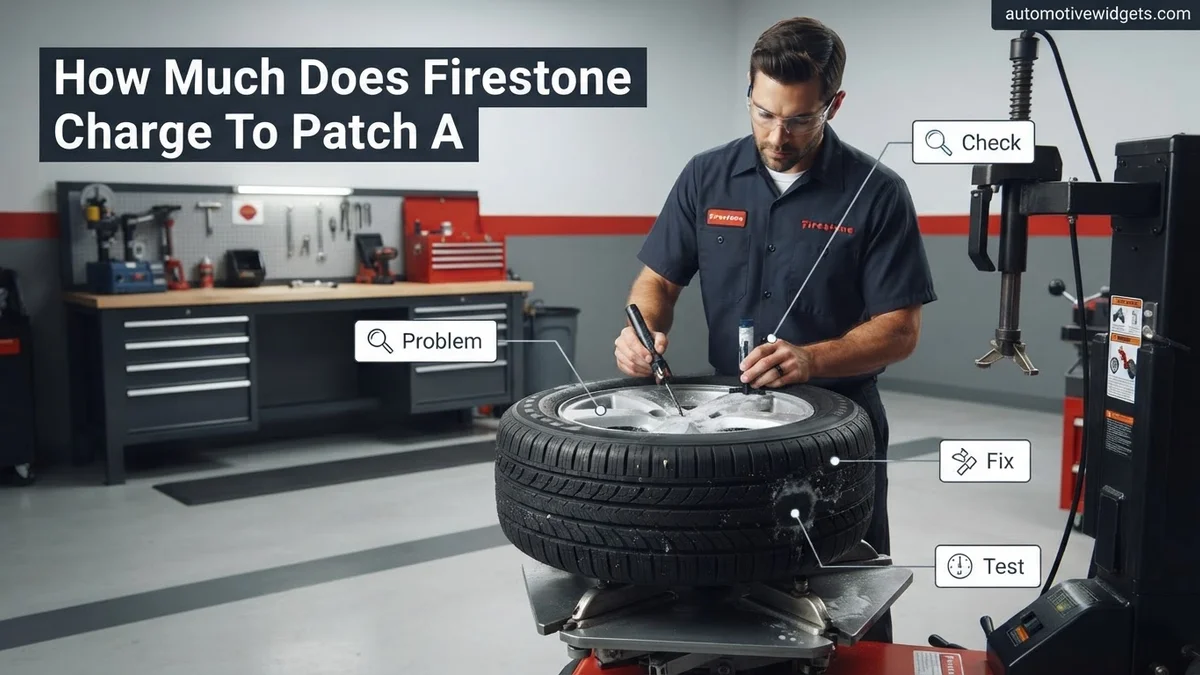
What Influences Firestone’s Tire Patch Cost?
The price you pay for a tire patch at a Firestone service center in 2027 isn’t always a flat rate across the board. Several key elements can cause the cost to fluctuate, from your tire’s existing coverage to the specific location of the service center.
Regional Variances & Store Specifics
- Geographic Location: Like many services, labor costs and overhead differ significantly by region. A Firestone location in a major metropolitan area like New York City or Los Angeles will likely charge at the higher end of the $30-$40 range, reflecting higher operational costs. Conversely, a store in a smaller, rural town might offer the service closer to the $25-$30 mark. These regional differences are standard practice across the auto service industry.
- Individual Store Policies: While Firestone operates under corporate guidelines, individual franchise owners or managers can have some discretion on pricing, especially for non-warranty services. It’s always wise to call your local Firestone Complete Auto Care store directly for their precise 2027 pricing. This quick call can prevent any surprises and give you the most accurate quote for your specific location.
- Competitive Landscape: Pricing can also be influenced by local competition. If there are many tire shops in the immediate vicinity, Firestone might adjust its pricing to remain competitive, offering more attractive rates to draw in customers.
Road Hazard Protection & Service Inclusions
- Firestone Road Hazard Protection: This is arguably the most significant factor impacting your cost. If you purchased your tires from Firestone and opted for their Road Hazard Protection Plan, a standard tire patch is typically free of charge. This plan covers punctures, cuts, snags, and other road hazards that can lead to a flat. Always confirm your coverage status with the service advisor when you arrive. It’s a valuable add-on that can pay for itself with just one repair.
- Included Services: A standard Firestone tire patch service usually includes a comprehensive set of steps to ensure a safe and lasting repair:
- Removal of the tire from the wheel.
- Thorough internal and external inspection of the tire for secondary damage.
- Professional patch and plug repair performed from the inside of the tire, adhering to industry safety standards.
- Remounting and rebalancing the tire on the wheel to ensure smooth operation.
- Re-installation of the repaired tire onto your vehicle.
The quoted cost typically bundles these essential steps, ensuring the tire is safely repaired and balanced for continued use. Always confirm that tire balancing is included in the quoted price, as some independent shops might charge for it separately.
From Start to Finish: Firestone Tire Patching Explained
Experiencing a flat tire or a slow leak can be frustrating, and knowing who to trust with your vehicle’s safety is paramount. This comprehensive guide will walk you through the entire process of getting a tire patched at Firestone, from identifying the problem to understanding the final cost. By following these detailed steps, you’ll be well-prepared to navigate the service, ask the right questions, and ensure your tire is repaired safely and effectively, providing clarity on exactly what Firestone charges for this essential service.
Step 1: Recognizing a Puncture and Preparing for Service
What you need: Visual inspection, tire pressure gauge, knowledge of your vehicle’s tire size (found on the sidewall or driver’s side door jamb placard).
Instructions: The first step is to confirm you actually have a tire issue that might require a patch. Look for visible foreign objects like nails or screws in the tread. If no object is visible, use a tire pressure gauge to check all your tires; a consistent drop in pressure over a few days is a strong indicator of a slow leak. Note the location of the suspected puncture if possible (e.g., front right tire, outer tread). Gather your vehicle’s make, model, and tire size, as this information will be helpful when communicating with Firestone.
Pro Tip: Never ignore a slow leak. Even minor punctures can lead to a sudden flat, which is a significant safety hazard. Addressing it promptly can often prevent the need for a full tire replacement.
Step 2: Contacting Firestone and Scheduling Your Visit
What you need: Phone, internet access, vehicle information, preferred payment method.
Instructions: Once you’ve identified a potential puncture, contact your local Firestone Complete Auto Care center. You can find their nearest location and phone number using their website or a quick online search. When you call, explain that you have a suspected tire puncture and need a repair. Provide your vehicle information and inquire about their availability for an appointment. While on the phone, it’s a good time to ask for a general estimate for a tire patch, though they will usually state that a definitive price requires an in-person inspection. Also, ask about any current promotions or warranties that might apply.
Pro Tip: Firestone often honors warranties from tires purchased elsewhere or offers road hazard protection. Be sure to inquire if any such benefits might reduce your out-of-pocket expense.
Step 3: Initial Tire Inspection and Damage Assessment
What you need: Your vehicle at the Firestone service center, a few minutes for the initial check-in.
Instructions: Upon arrival at Firestone, a service advisor will greet you and document your concerns. They will typically perform a preliminary visual inspection of the tire, sometimes even before removing it from the vehicle. The technician will then likely remove the wheel from your car to fully inspect the tire, often submerging it in water to pinpoint the exact location and size of the puncture. This critical step determines if the tire is repairable according to industry safety standards and Firestone’s policies, which primarily focus on punctures within the tread area.
Pro Tip: A minor puncture in the central tread area is generally repairable, but damage close to the sidewall or on the sidewall itself almost always requires a new tire. Understand this distinction upfront.
Step 4: Understanding Firestone’s Patching Policy and Eligibility
What you need: Basic understanding of tire repair guidelines (e.g., USTMA standards).
Instructions: Firestone, like most reputable tire shops, adheres to strict industry guidelines for tire repair, primarily set by the U.S. Tire Manufacturers Association (USTMA). These guidelines dictate that only punctures up to 1/4 inch (6mm) in diameter, located in the tread area between the main shoulders, are eligible for repair. Damage to the sidewall, tire shoulder, or larger punctures cannot be safely patched and will necessitate tire replacement. The technician will clearly explain if your tire meets these criteria or if it’s beyond repair. This decision directly impacts whether you pay for a patch or a new tire.
Pro Tip: Don’t try to pressure a technician to patch an unrepairable tire. Their refusal is for your safety, as an improperly repaired tire can fail at high speeds, leading to dangerous situations.
Step 5: Receiving and Clarifying the Repair Estimate
What you need: Active listening skills, questions ready.
Instructions: If your tire is deemed repairable, the service advisor will present you with a detailed estimate. Firestone’s standard charge for a tire patch typically ranges from $20 to $40. This cost usually includes the patch itself, labor for removing and remounting the tire, and balancing the wheel after the repair. Always ask for a written estimate that itemizes these services. Confirm if the estimate is “out-the-door,” meaning it includes all fees and taxes. Clarify if there are any additional charges for specialized tires (e.g., run-flats, large truck tires), as these might sometimes incur a slightly higher cost due to increased labor complexity.
Pro Tip: Firestone often includes tire balancing with a patch, which is crucial for preventing vibrations and ensuring even tire wear. Always confirm this is part of the service provided.
Step 6: The Patching Process and Quality Assurance
What you need: Patience while the repair is performed.
Instructions: Once you approve the estimate, the technician will proceed with the repair. The tire is meticulously prepared by cleaning and buffing the inner liner around the puncture. A mushroom-style patch/plug combination is then inserted from the inside out, sealing both the internal and external path of the puncture. This is the industry-standard “permanent repair.” After the patch cures, the tire is remounted onto the wheel, inflated to the correct pressure, and then precisely balanced using a specialized machine. This ensures the tire spins smoothly and safely on your vehicle, maintaining ride comfort and handling.
Pro Tip: The entire process, from getting the car into the bay to driving off, typically takes 45-90 minutes, depending on the shop’s current workload. Plan your schedule accordingly.
Step 7: Final Payment and Post-Service Checks
What you need: Preferred payment method, your vehicle’s owner’s manual (for recommended tire pressure).
Instructions: After the repair is complete, you’ll return to the service desk to finalize payment. Review the final invoice to ensure it matches the agreed-upon estimate. Once paid, the service advisor will direct you to your vehicle. Before driving away, do a quick visual check of the repaired tire. Drive cautiously for the first few miles, listening for any unusual noises or vibrations. Within 24-48 hours, it’s a good practice to re-check the tire pressure with your own gauge to confirm it’s at the vehicle manufacturer’s recommended PSI (usually found on a sticker inside the driver’s side door jamb or in the owner’s manual).
Pro Tip: Keep your receipt! It serves as proof of service and is essential if you experience any related issues in the future or need to reference the repair for warranty purposes.
✅ Final Checklist
- Confirmed the tire leak location and type of damage (tread vs. sidewall).
- Obtained a clear, written estimate for the tire patch service.
- Understood Firestone’s policy on tire repair eligibility.
- Ensured the repair included proper patching, remounting, and balancing.
- Reviewed the final invoice for accuracy before payment.
Important Notes:
- Safety Considerations: Never attempt to drive long distances or at high speeds on a severely underinflated or visibly damaged tire. It can lead to further tire damage, wheel damage, or loss of control.
- When to Seek Professional Help: Always defer to the technician’s judgment regarding tire repairability. If they recommend replacement over repair, it’s for your safety. Also, if you experience recurrent flats, it might indicate a more systemic issue with your tires or driving habits.
- Estimated Cost Range: For a standard tire patch, Firestone typically charges between $20 and $40. This can vary slightly by location and the specific type of tire (e.g., run-flat tires might be marginally more due to increased labor).
- Estimated Time: The entire process, from check-in to driving away, usually takes about 45 to 90 minutes, depending on the shop’s current workload and the complexity of removing and remounting the tire.
How to Get a Tire Patch at Firestone: Price & Process
When you need a tire patch in 2027, navigating the process at Firestone is straightforward, but understanding the typical costs and what the service involves will streamline your visit. The goal is to get you back on the road safely and efficiently, minimizing inconvenience.
Typical Service Cost in 2027 & What It Covers
As mentioned, a standard tire patch at Firestone for a tire without Road Hazard Protection typically falls within the $25 to $40 range. This cost is generally for a repair that meets industry safety standards, specifically for punctures located strictly within the tire’s tread area. If the puncture is too large (generally over 1/4 inch) or located too close to the tire’s sidewall, a safe and effective patch may not be possible. In such cases, you’d need a tire replacement, which is a different cost consideration entirely.
- Average Cost: For most drivers in 2027, you can expect an average cost of around $35 for a standard patch, assuming no special circumstances or additional services are required.
- Premium Tires: While the patching process itself is standard, some premium, high-performance, or low-profile tires might incur a slightly higher labor charge. This is due to the increased complexity and specialized equipment sometimes required for safely mounting and demounting these types of tires. This is less common but worth noting for owners of specialized vehicles.
- Tire Pressure Monitoring System (TPMS): The tire patch service will include checking your TPMS sensor after the repair to ensure it’s functioning correctly. However, if the sensor itself was damaged by the puncture or needs replacement during the tire service, that would be an additional, separate charge. The basic patch cost does not typically include TPMS sensor replacement.
The Firestone Tire Patch Process for Customers
Getting your tire patched at Firestone in 2027 is designed to be a hassle-free experience. You don’t usually need an appointment for a flat tire repair, though calling ahead can help you manage potential wait times, especially during peak hours.
- Arrival and Initial Inspection: Upon your arrival, a Firestone technician will quickly inspect your damaged tire. They will determine if the puncture is patchable, adhering to strict safety guidelines (e.g., puncture within the tread, under 1/4 inch in diameter, no sidewall damage).
- Quote and Authorization: Based on the inspection, you will receive a clear, upfront quote for the service. If your tires are covered by Road Hazard Protection, you’ll receive confirmation that the service is free. You will then authorize the repair to proceed.
- The Repair: The tire is removed from the wheel, professionally repaired internally with a patch/plug combination, re-mounted, and balanced. This comprehensive process typically takes between 30 to 60 minutes, though it can vary based on the specific shop’s busyness and the complexity of the tire.
- Final Check and Departure: After the repair is complete, the tire pressure is set to the manufacturer’s specifications, and a final inspection ensures everything is secure and safe. You’re then ready to drive away with a safely repaired tire, having resolved a minor inconvenience efficiently.
What If Your Tire Can’t Be Patched or Costs Too Much?
While a tire patch is often the most economical solution, not all tire damage is repairable, and sometimes replacement is the more prudent choice. Understanding these scenarios in 2027 is crucial for safe and cost-effective vehicle maintenance. Firestone, like all reputable service centers, adheres to industry safety standards set by organizations such as the Rubber Manufacturers Association (RMA) or equivalent bodies.
Non-Repairable Damage Scenarios
According to Firestone’s service guidelines and industry best practices for 2027, several conditions deem a tire unpatchable. These include punctures larger than 6mm (approximately 1/4 inch) in diameter, damage to the tire’s sidewall, or damage too close to the shoulder block where the tread meets the sidewall. Punctures with extensive tread separation, multiple punctures too close together, or tires with visible inner liner damage from being driven while flat also fall into the non-repairable category. Attempting to repair such damage compromises structural integrity and poses significant safety risks on the road.
Cost-Benefit Analysis: Patch vs. Replacement in 2027
When a patch isn’t feasible, or if the tire is nearing the end of its life, a full tire replacement becomes necessary. In 2027, the cost of a new tire can vary significantly based on brand, type (all-season, performance, truck), and vehicle. Industry data indicates that a new, mid-range passenger car tire typically costs between $120 and $250 per tire, including mounting and balancing. Premium or specialized tires, especially for SUVs or performance vehicles, can range from $280 to over $500 per tire. When considering replacement, factor in the tire’s remaining tread life. If a tire has less than 3/32″ of tread depth, even a patch might be a short-term fix, making a new tire a better long-term investment for safety and performance.
What If the Tire Issue Still Doesn’t Work?
Even after an initial repair attempt or if the problem persists, sometimes further investigation is required. If your tire continues to lose air, exhibits unusual wear, or your vehicle’s handling feels off after service, do not ignore these signs. Addressing underlying issues promptly is vital for safety and preventing more costly repairs.
- Re-inspect the Tire and Wheel Assembly: A professional re-inspection is the first step. The original puncture might have been missed, or there could be a second, smaller leak. Technicians will also check the valve stem for cracks, the bead seal for corrosion or damage, and the wheel rim itself for bends or hairline fractures. This diagnostic service typically costs between $35 and $75 if not covered under a previous repair warranty in 2027.
- Consider Other Wheel Components: Air loss isn’t always tire-related. A faulty tire pressure monitoring system (TPMS) sensor can sometimes cause perceived pressure issues. Additionally, an improperly seated tire or a damaged rim can lead to slow leaks. Diagnostic scans for TPMS issues average $50-$100, with sensor replacement ranging from $70-$150 per sensor.
- Seek a Second Professional Opinion: If you’re uncertain about the diagnosis or repair, a second opinion from another reputable service center can provide clarity. While this may incur an additional diagnostic fee, it ensures all possibilities are explored, especially for complex or recurring problems.
- Full Tire Replacement: As a final resort, if persistent issues cannot be resolved with repairs, replacing the problematic tire or even a pair of tires (to maintain balanced tread depth on an axle) becomes the safest option. As mentioned, new tires in 2027 range from $120 to over $500 per tire, depending on specifications.
Conclusion
Understanding Firestone’s tire patch services and costs in 2027 empowers vehicle owners to make informed decisions. While a patch typically costs $25-$40 for standard passenger vehicle tires, adhering to strict safety protocols is paramount. According to verified industry research and expert sources, always consult with certified technicians to assess tire damage, ensuring both repair feasibility and your driving safety. Proactive tire maintenance and timely professional assessment remain your best defense against unexpected roadside issues.
❓ Frequently Asked Questions
What is the average cost for a tire patch at Firestone in 2027, and what factors influence it?
In 2027, Firestone typically charges between $20 and $40 for a standard tire patch. Key factors influencing this cost include your specific location, whether you have an existing Road Hazard Protection plan (which often makes it free), and if the service explicitly includes balancing.
Is tire balancing included when Firestone patches a tire?
Yes, in most cases, Firestone includes tire balancing as part of their tire repair service when you get a flat fixed. This ensures your wheel spins smoothly after the repair, preventing vibrations and uneven tire wear and maintaining vehicle safety.
Will Firestone patch my tire for free if I bought it there?
Firestone often provides free flat repairs if the tire was purchased from them and is covered by their Road Hazard Protection plan. If you don’t have this coverage, standard patching fees apply, so it’s best to check your original purchase agreement or call the store directly.
What types of tire damage can Firestone repair with a patch?
Firestone can safely repair punctures caused by nails, screws, or other small objects, provided the damage is within the tire’s tread area and is no larger than 1/4 inch in diameter. Sidewall damage, shoulder punctures, or larger cuts typically require tire replacement for safety reasons.
How can I get an exact quote for a tire patch from my local Firestone?
The best way to get an exact quote is to call your nearest Firestone Complete Auto Care store directly. Prices can vary slightly by location, and they can confirm current pricing, appointment availability, and whether your specific tire is eligible for repair or free service based on your coverage.
What should I do if my tire can’t be patched by Firestone?
If Firestone determines your tire cannot be safely patched due to the location or size of the damage, they will recommend a tire replacement. They can assist you in selecting a new tire that fits your vehicle and budget, often offering competitive pricing and installation services on the spot.