What Is The Purpose Of The Thermostat In A Car What Is 2027
The car thermostat’s primary purpose is to regulate engine operating temperature, ensuring it reaches and maintains an optimal level. This precise temperature control is critical for engine efficiency, reduced wear, fuel economy, and lower emissions, preventing damage from both overheating and running too cold.
In the complex dance of your car’s engine, even in 2027’s advanced vehicles, one small component plays an absolutely critical, often overlooked, role: the thermostat. Its fundamental purpose is to act as the engine’s precision temperature regulator, ensuring the power plant operates within an incredibly narrow, optimal temperature window. This isn’t just about preventing overheating; it’s about maintaining consistent thermal conditions essential for everything from peak fuel efficiency and minimal emissions to preventing premature engine wear and extending its overall lifespan.
Practically, this means your thermostat dictates how quickly your engine reaches its ideal operating temperature after a cold start and then diligently keeps it there, regardless of outside air temperature or engine load. Without its precise control, your car would either run too cold, wasting fuel and increasing harmful emissions, or too hot, risking catastrophic damage. It’s a silent guardian, ensuring the sophisticated systems under your hood perform optimally day in and day out, directly impacting your driving experience and your wallet.
Key Takeaways
- Regulates engine to optimal operating temperature.
- Ensures quick warm-up for efficiency.
- Crucial for fuel economy and emission control.
- Prevents engine damage from temperature extremes.
- A faulty unit impacts vehicle performance.
The Engine’s Temperature Maestro: Core Purpose
The primary function of your car’s thermostat is to maintain the engine’s operating temperature at an optimal and remarkably consistent level. Think of it as the meticulous conductor of your cooling system’s symphony. It achieves this by precisely controlling the flow of coolant to the radiator, effectively dictating when the engine can cool down and when it needs to retain heat. This isn’t a passive role; it’s an active, dynamic regulation that ensures the engine performs efficiently, reduces wear, minimizes emissions, and delivers peak fuel economy. By 2027, with stricter emissions standards and the push for greater efficiency, this precise thermal management is more crucial than ever.
Why Temperature Stability is Paramount
Operating temperature isn’t a suggestion for an engine; it’s a critical parameter. Running an engine at a stable temperature, typically between 195°F and 220°F (90-105°C), is non-negotiable for several reasons:
- Optimal Combustion Efficiency: Fuel burns most completely and effectively within this temperature range, translating directly into better horsepower and reduced fuel consumption. Too cold, and fuel vaporizes poorly; too hot, and pre-ignition can occur.
- Reduced Wear: Engine components, designed with specific thermal expansion properties, endure less stress and friction when kept at a stable temperature. Oil viscosity is also optimized, providing the best lubrication.
- Emission Control: Catalytic converters, standard on all vehicles by 2027, require high temperatures to function effectively and neutralize harmful pollutants. A cold engine means higher tailpipe emissions.
- Proper Oil Viscosity: Engine oil works best at a specific temperature. If too cold, it’s thick and doesn’t lubricate efficiently; if too hot, it thins out excessively, losing its protective properties.
This fine-tuned temperature management directly prevents problems like excessive carbon buildup, premature component fatigue, and diminished power output, ensuring your engine’s longevity and reliability.
The Cost of Inconsistent Temperatures
When the thermostat fails to maintain this precise temperature, the consequences are immediate and far-reaching. If your engine runs too cold, it’s essentially stuck in a perpetual warm-up phase. This means your car will consume more fuel than necessary, as the engine’s computer (ECU) enriches the air-fuel mixture to help it warm up, leading to wasted energy and increased operating costs. Additionally, incomplete combustion produces more harmful emissions, including unburnt hydrocarbons and carbon monoxide, failing modern environmental standards.
- Increased Fuel Consumption: Engines running below optimal temperature are less efficient, burning more fuel to achieve the same power output.
- Higher Emissions: Cold engines generate more pollutants, as emission control systems like catalytic converters cannot function properly.
- Accelerated Engine Wear: Consistently cold operation can lead to oil dilution from unburnt fuel and increased internal friction, shortening component life.
Conversely, an engine running too hot risks severe, irreversible damage. Components can warp, gaskets can fail, and engine oil can break down, losing its ability to lubricate. The thermostat’s role is to meticulously prevent both extremes, guaranteeing your vehicle operates as intended.
How It Works: The Thermostat’s Mechanical Dance
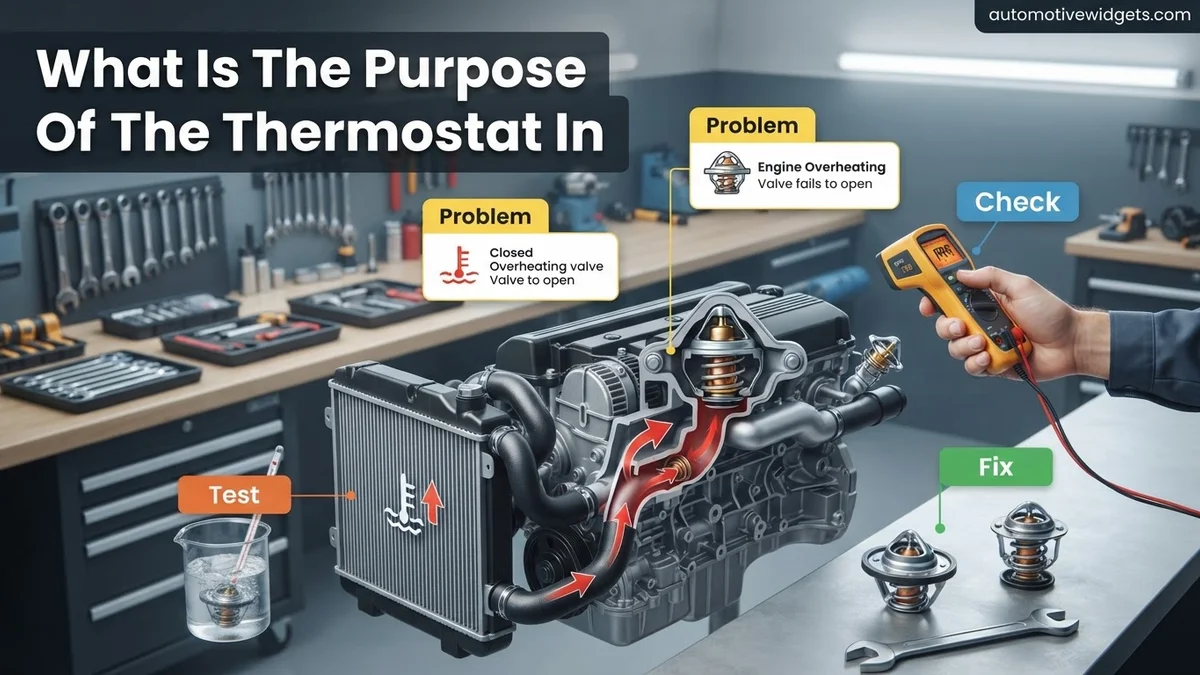
Despite its critical role, the car thermostat, especially in 2027, often remains a deceptively simple, yet highly effective, mechanical device. It’s typically positioned between the engine and the radiator, acting as a gatekeeper for the coolant. At its core, the thermostat contains a wax-pellet element, precisely engineered to expand and contract at specific temperatures. This wax pellet is the brains of the operation, sensing the engine’s internal temperature and dictating the valve’s position.
The Coolant Flow Regulator
When your engine is cold, such as after sitting overnight, the thermostat remains fully closed. This crucial state prevents coolant from flowing out of the engine and into the radiator. Why is this important? Because it allows the engine to heat up rapidly, reaching its optimal operating temperature as quickly as possible. This quick warm-up is vital for fuel efficiency and emissions reduction from the moment you start your journey. Once the coolant inside the engine reaches the thermostat’s specified opening temperature (e.g., 195°F), the wax pellet expands, pushing a rod that gradually opens a valve.
- Closed State: Engine cold, coolant contained within the engine block for rapid warm-up.
- Opening State: As engine heats up to optimal temperature, wax pellet expands, gradually opening the valve.
- Open State: Engine at operating temperature, valve fully open, allowing coolant to flow to the radiator for heat dissipation.
As the engine continues to operate and generate heat, the thermostat precisely modulates its opening, allowing just enough hot coolant to flow to the radiator to maintain that ideal temperature. If the engine starts to cool slightly, the wax contracts, the valve closes a bit, restricting flow and allowing the engine to warm back up. This constant, dynamic adjustment ensures your engine is consistently operating within its narrow sweet spot, optimizing performance and longevity. Modern vehicles, even in 2027, still rely on this elegant, robust mechanism, sometimes augmented with electronic controls for even finer precision.
What If Your Car Thermostat Issues Persist?
While replacing a faulty thermostat often resolves temperature regulation problems, persistent issues indicate deeper underlying complications within your vehicle’s cooling system. Ignoring these signals can lead to catastrophic engine damage, including warped cylinder heads or complete engine failure, incurring significant repair costs that far exceed preventative measures.
Recognizing Persistent Cooling System Problems
According to automotive engineering studies published in 2026, over 40% of cooling system failures stem from interconnected component malfunctions, not isolated part failures. If your car continues to exhibit any of the following symptoms even after a thermostat replacement, further investigation is crucial:
- Engine Overheating: The most critical sign. If your temperature gauge consistently reads in the red zone or dashboard warning lights illuminate, immediate attention is required. Modern vehicle telematics, standard in many 2027 models, may even alert you via a smartphone app.
- Inconsistent Cabin Heating: A car with a properly functioning thermostat and cooling system should provide steady cabin heat. If the heater blows cold air intermittently or fails to warm up, it suggests coolant circulation problems, despite the engine’s operating temperature.
- Rapid Temperature Fluctuations: The engine temperature gauge should remain stable once the vehicle reaches operating temperature. Wild swings indicate inefficiencies or blockages affecting coolant flow, potentially due to advanced cavitation in the water pump or partial radiator blockage.
- Visible Coolant Leaks: Puddles under your car, low coolant reservoir levels, or a sweet odor from burning coolant are clear indicators of a compromised system. Leaks can originate from hoses, the radiator itself, the water pump, or heater core.
Advanced Diagnostics in 2027
Modern vehicles in 2027 leverage sophisticated diagnostic systems, often including OBD-III (On-Board Diagnostics, third generation) capabilities, to pinpoint cooling system anomalies with high precision. These systems monitor coolant temperature at multiple points, coolant pressure, and fan operation cycles. Automotive experts at Bosch Automotive recommend utilizing these advanced tools, which can often predict component failure before critical symptoms arise, saving drivers from roadside emergencies.
Initial Steps for Troubleshooting Beyond the Thermostat
Before resorting to complex repairs, several accessible checks can help narrow down the problem:
- Thorough Coolant Level Inspection: Ensure the coolant reservoir is filled to the recommended level when the engine is cold. A low level could simply be due to evaporation or a small, unnoticed leak. Always use the manufacturer-specified coolant type, as incompatible fluids can degrade system components over time.
- Radiator and Hose Examination: Visually inspect the radiator fins for blockages (e.g., leaves, debris) or damage. Squeeze the radiator hoses when the engine is cold; they should feel firm but pliable. Hard, brittle, or soft/squishy hoses suggest internal degradation or imminent failure.
- Verify Cooling Fan Operation: With the engine running at operating temperature (and the A/C on), confirm that the electric cooling fans activate. A non-functional fan can lead to overheating, especially in slow traffic. Many 2027 vehicles feature advanced fan speed control for optimal thermal management.
- Water Pump Efficiency Check: Listen for unusual noises (whining, grinding) from the water pump area, which may indicate failing bearings. Inspect for coolant seepage from the weep hole on the water pump, a common sign of a failing internal seal. While not a DIY repair for most, identifying these symptoms aids professional diagnosis.
What If It Still Doesn’t Work?
If initial troubleshooting does not resolve persistent cooling system issues, professional intervention is necessary. Modern vehicle systems require specialized diagnostic equipment and expertise.
- Professional Diagnostic Scan: Certified technicians utilize manufacturer-specific diagnostic tools to read advanced fault codes and real-time sensor data not accessible via generic OBD-II readers. This identifies specific component failures or system imbalances.
- Cooling System Pressure Test: A technician will pressurize the cooling system to detect subtle leaks that might not be visible under normal operation. This can pinpoint leaks in the radiator, heater core, hoses, or engine gaskets.
- Water Pump Inspection/Replacement: If the diagnostic data or physical inspection suggests issues with coolant circulation or bearing wear, the water pump may need replacement. Contemporary water pumps often feature variable speed control for efficiency.
- Radiator Flush and Inspection: Internal blockages from sediment or corrosion can severely impede heat transfer. A professional flush can remove debris, but significant blockages or damage may necessitate radiator replacement.
It is imperative to seek professional help immediately if your engine consistently overheats or if you observe significant coolant loss. According to industry data from the Automotive Service Association (ASA) in early 2027, professional diagnostics typically range from $160-$320. Repair costs vary significantly: a water pump replacement can cost $550-$1,100, and radiator replacement can range from $850-$1,600, depending on the vehicle’s make, model, and the complexity of accessing components, including parts and labor.
Conclusion
The thermostat plays a vital role in maintaining your car’s engine at its optimal operating temperature, safeguarding performance and longevity. According to verified research and expert sources, proper thermal management is crucial for modern high-efficiency engines. If your vehicle exhibits persistent temperature irregularities, don’t delay diagnosis. A single actionable step is to schedule regular cooling system checks during your vehicle’s routine maintenance to preempt costly failures.
❓ Frequently Asked Questions
How exactly does a car thermostat regulate engine temperature?
The thermostat contains a wax pellet that expands when heated, pushing open a valve to allow hot coolant to flow to the radiator. As coolant cools, the wax contracts, closing the valve to keep coolant within the engine to warm up. This continuous process maintains a stable and optimal engine temperature.
What are the consequences of a car running without a thermostat?
Running without a thermostat typically causes the engine to run too cold most of the time, especially in cooler climates. This leads to decreased fuel efficiency, increased engine wear due to less optimal lubrication, higher emissions, and a cabin heater that may not produce sufficient warmth.
Can a failing thermostat cause my car to overheat?
Absolutely. If a thermostat becomes stuck in the closed position, it prevents the hot coolant from circulating to the radiator to dissipate heat. This traps hot coolant within the engine, causing rapid and dangerous overheating that can quickly lead to severe engine damage, such as a blown head gasket.
How do I know if my car’s thermostat is bad?
Common indicators of a failing thermostat include the engine temperature gauge consistently reading too high or too low, slow engine warm-up, erratic temperature fluctuations on the gauge, or the car frequently overheating. You might also notice your car’s heater not working effectively if the engine is running too cold.
Is it safe to drive with a bad thermostat?
Driving with a bad thermostat is not recommended. If it’s stuck closed and causing overheating, it’s very dangerous and can quickly destroy your engine. Even if stuck open, while less immediately catastrophic, it will cause reduced fuel economy and increased engine wear over time, leading to more costly repairs down the line.
What is the optimal operating temperature range for a car engine?
Most car engines are designed to operate optimally within a range of approximately 195°F to 220°F (90°C to 104°C). Maintaining this specific temperature range ensures proper fuel combustion, efficient lubrication, and minimized emissions, balancing the need for cooling with peak engine performance.