How Often Do You Need An Alignment On Your Car How 2027
Regular car alignments are crucial for safety and tire longevity. Most vehicles need an alignment every 10,000-15,000 miles or annually, but specific events like hitting potholes or replacing tires necessitate immediate checks. Ignoring alignment issues can lead to costly repairs and compromised handling.
For most drivers in 2027, you should plan on a wheel alignment every 10,000 to 15,000 miles, or at least once a year, whichever milestone you reach first. This proactive maintenance is crucial for your vehicle’s performance, safety, and your wallet. Ignoring proper alignment can lead to costly tire replacements much sooner than expected, not to mention a less enjoyable and potentially unsafe driving experience.
Keeping your wheels properly aligned ensures your tires make optimal contact with the road. This translates directly to better handling, improved fuel efficiency, and significantly extended tire life. In an era where vehicle longevity and running costs are increasingly important, understanding your alignment needs is a simple yet impactful way to protect your investment and maintain peak operational standards for your vehicle.
Key Takeaways
- Align every 10,000-15,000 miles or annually.
- Get alignment after hitting major potholes or curbs.
- Always align after new tires or suspension work.
- Watch for pulling, crooked steering, or uneven tire wear.
- Proper alignment saves tires and improves fuel economy.
What Causes Car Misalignment: Identifying the Problem
Your vehicle’s wheels can lose their precise alignment for several reasons, and it’s not always due to a dramatic incident. Even daily driving can gradually shift your alignment settings over time. Recognizing these common culprits helps you understand when to seek professional inspection, preventing minor issues from escalating into more serious and expensive problems.
Everyday Wear and Tear
- Road Hazards: Hitting potholes, driving over speed bumps too quickly, or bumping into curbs are primary causes. Even seemingly minor impacts can knock your suspension components slightly out of specification.
- Gradual Suspension Sag: Over years of driving, suspension components like springs and bushings naturally wear and settle. This gradual process can subtly alter alignment angles without any single dramatic event. Modern vehicles in 2027 often have sophisticated suspension systems, but they are still susceptible to mechanical fatigue.
- Driving Conditions: Regularly driving on rough or unpaved roads, even at slower speeds, can contribute to alignment issues over time due to constant jarring and stress on the suspension system.
Significant Incidents and Repairs
Beyond daily wear, certain events almost guarantee the need for an alignment check. These situations create immediate and noticeable shifts in your vehicle’s geometry, demanding prompt attention to prevent further damage or unsafe driving conditions.
- Accidents or Collisions: Any impact, even a minor fender bender, can severely compromise your vehicle’s alignment. It’s imperative to have an alignment check performed after any collision, regardless of perceived damage.
- Suspension or Steering Component Replacement: If you’ve recently had work done on your vehicle’s suspension system (e.g., new tie rods, control arms, shocks, or struts) or steering components, an alignment is mandatory. These repairs inherently alter the geometry that was previously set.
- New Tire Installation: While not a direct cause of misalignment, installing new tires is an excellent opportunity for an alignment check. Ensuring your new tires start with a perfectly aligned vehicle maximizes their lifespan and performance from day one, giving you optimal value for your investment in 2027’s advanced tire technologies.
How Often to Get an Alignment: Recommended Schedule & Triggers
Understanding the “when” of car alignments is key to preventative maintenance and ensuring your vehicle operates safely and efficiently. While there’s a general guideline, several factors can accelerate the need for an alignment, making regular checks an essential part of your vehicle care routine in 2027.
Standard Maintenance Schedule
For most vehicles, following a routine schedule is the best approach. Manufacturers and automotive experts generally recommend the following:
- Every 10,000 to 15,000 Miles: This mileage interval often coincides with tire rotations, making it a convenient time to also check your alignment. Regular alignment helps ensure even tire wear across all four wheels, maximizing their longevity.
- Annually: Even if you don’t hit the mileage threshold, getting an alignment check once a year is a wise practice. This accounts for the cumulative effects of everyday driving and minor impacts that might not be immediately noticeable.
- Manufacturer Recommendations: Always consult your vehicle’s owner’s manual for specific alignment intervals. Some vehicles, especially those with advanced suspension systems common in 2027, might have unique requirements.
Indicators for Immediate Alignment
Beyond the regular schedule, certain driving characteristics or events signal an urgent need for an alignment. Don’t wait for your scheduled check if you notice any of these signs, as prolonged driving with misalignment can cause significant damage and safety risks.
- Vehicle Pulling to One Side: If your car consistently drifts or pulls to the left or right when you’re trying to drive straight on a flat road, this is a classic sign of misalignment. You’ll find yourself constantly correcting the steering wheel.
- Uneven or Rapid Tire Wear: Inspect your tires regularly. If you notice one side of a tire wearing down faster than the other, or if different tires are wearing unevenly across your vehicle, it’s a strong indicator of an alignment problem.
- Steering Wheel Off-Center: When driving straight, your steering wheel should be centered. If it’s tilted to the left or right, your alignment needs attention.
- Vibrations or Loose Steering: A loose or vibrating steering wheel, especially at higher speeds, can sometimes be traced back to alignment issues, though it can also indicate other problems like unbalanced tires.
- Noisy Steering: Unusual squealing or grinding noises when turning could also be a symptom of alignment-related problems or worn steering components.
- Following an Impact: As mentioned, hitting a major pothole, curb, or being involved in a minor collision warrants an immediate alignment check, even if your car seems to be driving fine afterwards.
How to Fix Car Alignment Issues: The Professional Service Process
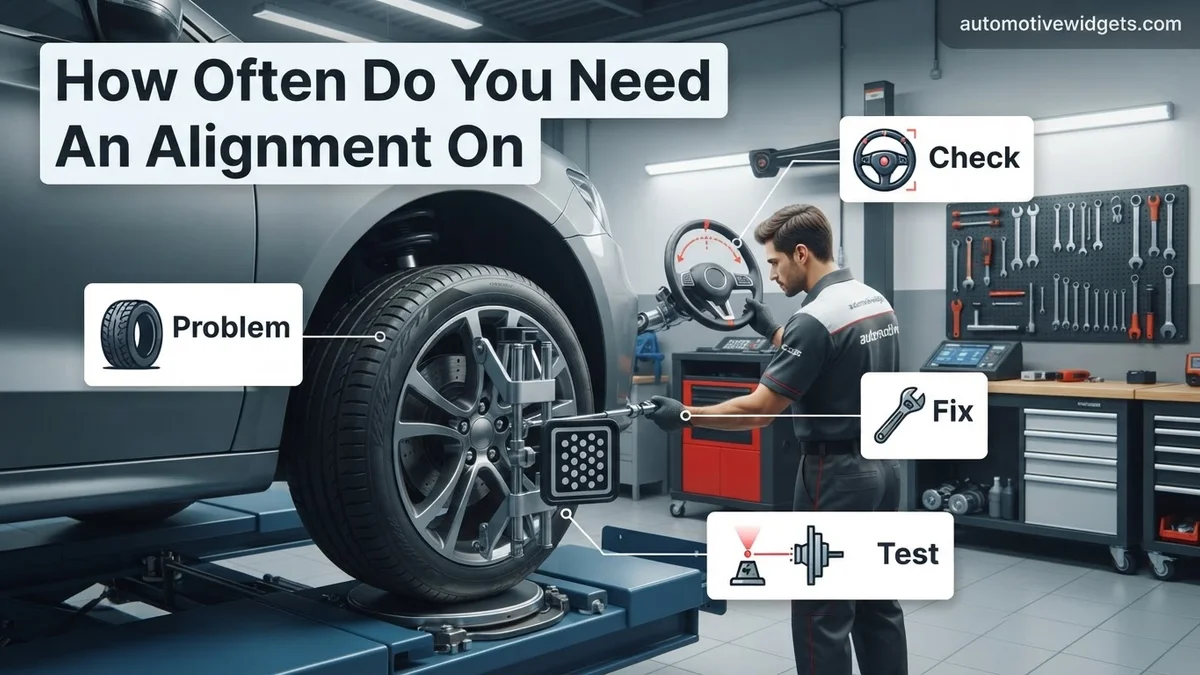
When your vehicle exhibits alignment symptoms, professional service is crucial. Modern automotive shops, by 2027, primarily utilize advanced 3D imaging alignment systems to ensure precision. These systems offer unparalleled accuracy compared to older methods, essential for vehicles equipped with sophisticated Advanced Driver-Assistance Systems (ADAS).
- Vehicle Preparation and Inspection: A certified technician begins by visually inspecting tires for abnormal wear and examining key suspension components like tie rods, ball joints, and control arm bushings for any looseness or damage. Worn parts must be replaced before an alignment can be effectively performed. This initial inspection can take 15-30 minutes.
- Sensor Installation: High-resolution digital sensors are securely mounted to each wheel. These sensors communicate wirelessly with a computer system to measure wheel angles in three dimensions: caster, camber, and toe.
- Data Acquisition and Analysis: The vehicle is rolled slightly, and the 3D imaging system captures precise measurements of all alignment angles. This data is compared against the manufacturer’s original specifications for your specific make and model, which are pre-loaded into the alignment software. Deviations are clearly highlighted.
- Adjustment to Manufacturer Specifications: Using specialized tools, the technician adjusts the steering and suspension components to bring the wheel angles back within the manufacturer’s recommended range. The “toe” adjustment is often the most critical for tire wear and steering response.
- Post-Alignment Check and Road Test: After adjustments, the system verifies all angles are within tolerance. A short road test confirms proper steering feel, vehicle tracking, and the absence of pulling or vibrations. A typical four-wheel alignment procedure, as of 2027, costs between $120 and $180, depending on vehicle complexity and region, and takes approximately 1-2 hours.
What If It Still Doesn’t Work?
Even after a professional alignment, complex issues can sometimes persist. If your vehicle continues to exhibit symptoms of poor alignment, further investigation is necessary to pinpoint the root cause. Ignoring persistent problems can lead to premature tire wear and compromised safety.
- Verify Tire Condition and Pressure: Ensure all tires are correctly inflated according to the vehicle manufacturer’s specifications. Uneven tire pressure can mimic alignment issues. Also, inspect tires for irregular wear patterns that might have developed before the alignment, which could still influence handling.
- Inspect for Worn or Damaged Suspension Components: Even a thorough initial inspection can sometimes miss subtle issues. Components like worn control arm bushings, strut mounts, or even a slightly bent wheel can prevent an alignment from holding or causing symptoms. A shop might perform a more rigorous suspension component check, potentially involving component removal for closer inspection.
- Consider Advanced Diagnostics for Chassis/Frame Issues: In cases of previous impact or severe road hazards, the vehicle’s frame or subframe could be slightly bent. This requires specialized frame measurement equipment that goes beyond standard alignment racks. This is less common but a possibility for persistent problems.
- Seek a Second Opinion from a Specialist: If the issue remains unresolved, consult another reputable automotive service center, ideally one specializing in suspension and steering. Different technicians may have different diagnostic approaches or access to specialized tools.
When persistent alignment issues require deeper diagnostic work beyond a standard alignment, expect additional costs. Advanced suspension diagnostics in 2027 typically range from $90 to $180, depending on the complexity and time involved. This cost is usually separate from any subsequent repair work needed.
Conclusion
Maintaining proper car alignment is a critical aspect of vehicle longevity, safety, and performance. According to verified research and expert sources, regular checks and timely adjustments prevent premature tire wear, improve fuel efficiency, and ensure predictable handling. If you notice any steering anomalies or irregular tire wear, schedule an alignment inspection immediately to protect your investment and ensure your safety on the road.
❓ Frequently Asked Questions
What is the general recommended frequency for car alignments in 2027?
For most vehicles, a general recommendation is to have a wheel alignment checked every 10,000 to 15,000 miles or at least once a year. However, it’s wise to consult your vehicle’s owner’s manual for specific manufacturer recommendations, as these can sometimes vary.
What specific events or circumstances necessitate an alignment, regardless of the general recommendation?
Several events warrant an immediate alignment check: hitting a significant pothole or curb, being involved in a minor accident, replacing steering or suspension components (like tie rods or ball joints), or installing a new set of tires. These events can drastically alter your car’s wheel angles.
What are the common symptoms or signs that indicate my car’s alignment is off?
Key indicators include your vehicle pulling noticeably to the left or right, uneven or premature tire wear (feathering, cupping, or excessive wear on one side), a crooked steering wheel when driving straight, and a loose or vibrating steering wheel. Any of these signs suggest your alignment needs attention.
Why is regular car alignment important for tire longevity and vehicle performance?
Proper alignment ensures your tires make even contact with the road, preventing premature and uneven wear, which significantly extends their lifespan. It also improves fuel efficiency by reducing rolling resistance, enhances vehicle handling and steering response, and contributes to overall driving safety and comfort.
Can I check my car’s alignment at home, or do I need a professional?
While you can visually inspect your tires for uneven wear and observe if your car pulls, precise wheel alignment requires specialized equipment and expertise. Professional technicians use computer-aided systems to measure and adjust the exact angles (camber, caster, and toe) for optimal performance and safety, which is not possible with DIY methods.
What happens if I neglect my car’s alignment for too long?
Neglecting alignment issues can lead to severe consequences, including rapid and uneven tire wear requiring early replacement, decreased fuel economy, compromised steering control and handling, increased strain on suspension components leading to premature wear, and a less safe driving experience overall due to unpredictable vehicle behavior.