What Is The Difference Between 0W 20 And 5W 30 0W-20 2026
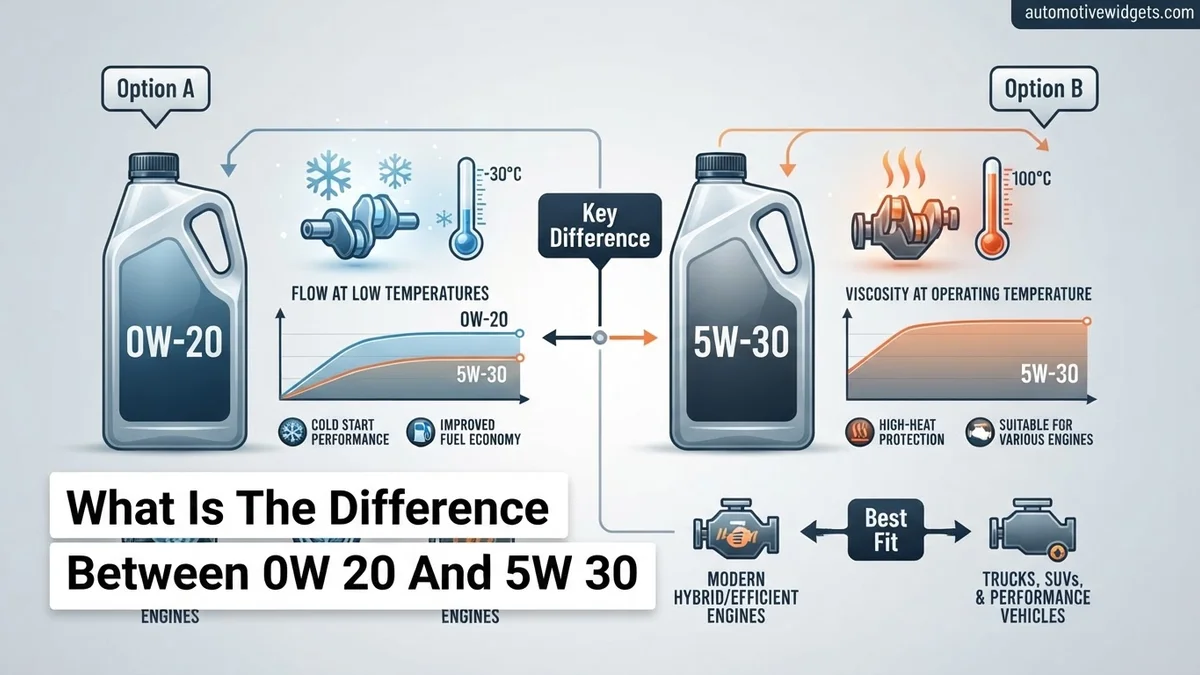
The primary difference between 0W-20 and 5W-30 motor oils lies in their viscosity characteristics, particularly at cold temperatures and operating temperatures. 0W-20 is thinner at cold start and remains thinner at operating temperature, offering faster lubrication and potentially better fuel economy for modern engines designed for it, while 5W-30 provides a thicker film for engines engineered to require it.
Choosing the correct motor oil for your vehicle is more than just picking a brand; it’s about understanding specific viscosity grades like 0W-20 and 5W-30. The fundamental difference lies in how these oils perform at varying temperatures, directly impacting your engine’s protection, longevity, and fuel efficiency. By 2026, with increasingly precise engine designs, selecting the manufacturer-recommended oil is paramount, not just a suggestion.
The numbers and the ‘W’ are crucial indicators of an oil’s viscosity characteristics – essentially, how easily it flows. Misinterpreting these can lead to suboptimal engine performance or, in severe cases, accelerated wear. This distinction becomes especially critical for modern engines which are engineered with tighter tolerances and specific lubrication requirements, making the choice between a 0W-20 and a 5W-30 a significant decision for any vehicle owner.
Key Takeaways
- Always follow your vehicle’s OEM oil recommendation.
- 0W-20 offers faster cold start lubrication.
- 5W-30 provides a thicker oil film at operating temp.
- Thinner oils can improve fuel efficiency.
- Viscosity numbers indicate cold and hot performance.
What Causes the Confusion: Understanding 0W-20 vs 5W-30 Oil Grades
The primary source of confusion for many drivers stems from the numerical codes themselves: “0W-20” and “5W-30.” These aren’t random designations; they are standardized SAE (Society of Automotive Engineers) viscosity grades that provide critical information about the oil’s flow characteristics at both cold and hot temperatures.
The Meaning Behind the Numbers
Each oil grade carries two distinct values, separated by a ‘W’ (which stands for Winter, not Weight):
- The First Number (e.g., 0W or 5W): This indicates the oil’s viscosity at cold temperatures. A lower number here means the oil is thinner and flows more easily when cold. This is particularly important during engine startup, especially in colder climates.
- The Second Number (e.g., 20 or 30): This represents the oil’s viscosity at typical engine operating temperatures (around 100°C or 212°F). A higher number here means the oil is thicker when hot, providing a more robust lubricating film.
Therefore, when you see “0W-20,” it signifies an oil that flows like a 0-weight oil in cold conditions and acts like a 20-weight oil at operating temperatures. Similarly, “5W-30” behaves like a 5-weight oil when cold and a 30-weight oil when hot.
Initial Viscosity Differences
Directly comparing 0W-20 and 5W-30, the “0W” indicates that 0W-20 is significantly thinner at cold startup than 5W-30, which has a “5W” rating. This means 0W-20 will circulate through your engine much faster immediately after ignition, especially if you’re starting in temperatures below freezing. Furthermore, the “20” in 0W-20 means it remains thinner at engine operating temperatures compared to the “30” in 5W-30. This seemingly small difference has considerable implications for engine wear, fuel economy, and overall performance.
Real Difference: Decoding Viscosity Ratings and Performance Impact
The numerical differences between 0W-20 and 5W-30 translate directly into tangible performance variations within your engine. Understanding these impacts is crucial for appreciating why vehicle manufacturers specify one over the other, especially for the advanced engine designs prevalent by 2026.
Cold Start Advantage: 0W-20’s Swift Flow
The “0W” rating of 0W-20 oil offers a substantial advantage during cold starts. When your engine is cold, most of the oil has settled in the oil pan. A thinner oil, like 0W-20, pumps and circulates through the engine far more quickly than a 5W-30. This rapid lubrication is critical because approximately 75% of engine wear occurs during the first few seconds after startup before oil fully reaches all moving parts. By 2026, many modern engines are designed with extremely tight tolerances, requiring this immediate lubrication to prevent metal-on-metal contact. The faster oil flow provided by 0W-20 significantly reduces this initial wear, prolonging engine life and ensuring quieter operation from the outset, particularly in colder climates.
Operating Temperature & Fuel Economy
Beyond cold starting, the distinction between the “20” and “30” hot viscosity ratings is equally important. At typical engine operating temperatures, 0W-20 is thinner than 5W-30. This lower viscosity results in less internal friction within the engine’s moving components. Reduced friction means less energy is wasted overcoming oil resistance, which directly translates to improved fuel efficiency. Vehicle manufacturers increasingly specify 0W-20 for their latest models, especially by 2026, as they strive to meet stringent global fuel economy and emissions standards. While some might traditionally worry about a thinner oil providing less protection, modern synthetic 0W-20 formulations are engineered with advanced additive packages that maintain excellent film strength and wear protection despite their lower hot viscosity, perfectly suiting engines designed for such precise lubrication.
Proven Steps to Choose the Correct Engine Oil for Your Vehicle
Selecting the optimal engine oil for your vehicle in 2026 extends beyond simply grabbing the cheapest option. It directly impacts engine longevity, fuel efficiency, and overall performance. Adhering to manufacturer guidelines, which are meticulously developed through extensive engineering and testing, is paramount.
-
Consult Your Owner’s Manual
The primary and most authoritative source for determining the correct oil is your vehicle’s owner’s manual. Locate the “Recommended Fluids” or “Maintenance” section. For vehicles manufactured in 2026, this will explicitly specify the required viscosity grade (e.g., 0W-20, 5W-30) and the necessary performance standards, such as API (American Petroleum Institute) service classification (e.g., SP for gasoline engines) or ILSAC (International Lubricant Specification Advisory Committee) categories (e.g., GF-6A or GF-6B). These specifications confirm the oil meets the advanced requirements for modern engines, including protection against LSPI (Low-Speed Pre-Ignition) and timing chain wear. Deviating from these recommendations can invalidate your powertrain warranty and compromise critical engine components.
-
Consider Your Driving Environment and Habits
While the manual is supreme, extreme operational conditions might subtly influence oil choice within approved ranges. For instance, consistently operating in arctic conditions below -30°C (-22°F) may reinforce the necessity of a 0W-XX oil for rapid cold starts, though most 2026 vehicles are engineered to perform efficiently with recommended oils across wide temperature swings. Similarly, vehicles subjected to severe duty, such as frequent towing, sustained high-speed driving, or extensive stop-and-go city traffic, may benefit from more frequent oil changes or specific synthetic formulations, as long as the base viscosity and specifications match the manual’s primary recommendation. Always prioritize synthetic oils for their superior stability and protective properties under stress.
-
Understand Engine Design and Warranty Implications
Modern engine designs, particularly those post-2015 and certainly for 2026 models, often feature tighter tolerances, variable valve timing systems, and turbochargers. These components rely on the precise flow characteristics and protective qualities of specific low-viscosity oils like 0W-20 to achieve targeted fuel economy and emissions standards. Using a higher viscosity oil than recommended can lead to increased internal friction, reduced fuel efficiency (by up to 2-3% according to SAE International research), and inadequate lubrication, potentially causing premature wear and system malfunctions. Always verify the oil’s compatibility with your vehicle’s specific engine requirements and understand that using an unapproved oil will likely void your manufacturer’s warranty.
What If You Used the Wrong Oil? Troubleshooting and Next Steps
Accidentally using the incorrect engine oil can induce immediate or long-term issues. While some modern engines can tolerate minor discrepancies for short periods, persistent use of an incompatible oil can lead to significant mechanical problems. Prompt action is crucial to mitigate potential damage.
-
Immediate Action Upon Realization
If you’ve just poured the wrong oil, especially if the engine hasn’t been started, do not start the engine. The best course of action is to immediately drain the incompatible oil and refill with the correct specification. If the engine has been running for a short period with the wrong oil, limit further operation. Drive minimally and cautiously, if at all, to a service center or perform the oil change yourself as soon as possible. The primary risk is lubrication failure due to incorrect viscosity at operating temperatures, or inadequate additive packages that do not protect against specific modern engine stressors.
-
Monitor for Symptoms and Performance Changes
After a potential wrong oil incident, vigilantly observe your vehicle for any unusual behavior. Common symptoms include a noticeable drop in fuel economy (modern 2026 vehicles can display real-time MPG, making this easier to detect), increased engine noise (such as ticking, knocking, or a general roughness), illumination of the “Check Engine” light or oil pressure warning light, or a reduction in engine performance. Diagnostic systems in 2026 models are sophisticated; a change in the engine’s operational parameters due to incorrect oil can trigger specific fault codes. For instance, using too thick an oil can cause oil pressure issues or strain on the oil pump, leading to a DTC (Diagnostic Trouble Code).
-
Seek Professional Assessment and Rectification
If you suspect engine damage or cannot confidently rectify the situation yourself, immediately consult a certified mechanic or dealership. They can drain and refill the oil, perform an oil system flush if necessary (though this is often debated), and conduct diagnostic checks to assess for any preliminary damage. Depending on the extent and duration of using the wrong oil, potential costs can range from a standard oil change ($50-$150 for 2026 synthetic oils) to extensive engine repairs or even replacement (estimated at $1,000-$6,000+ for significant internal damage, depending on vehicle make and model). Early intervention by a professional minimizes the risk of catastrophic engine failure.
Conclusion
The distinction between 0W-20 and 5W-30 engine oils, primarily in their cold-start flow and hot operating viscosity, directly impacts your vehicle’s efficiency and longevity. Selecting the correct oil, as specified by your 2026 vehicle’s manufacturer, is a critical maintenance decision. According to verified research and expert sources like the SAE International, adherence to these specifications optimizes fuel economy, minimizes engine wear, and ensures warranty compliance. Your actionable next step: always confirm the precise oil specifications in your owner’s manual before every oil change.
❓ Frequently Asked Questions
What do the numbers ‘0W’, ‘5W’, ’20’, and ’30’ mean in motor oil grades?
The ‘W’ stands for winter, and the number preceding it (0 or 5) indicates the oil’s viscosity at cold temperatures; a lower number means it flows better when cold. The second number (20 or 30) represents the oil’s viscosity at typical engine operating temperatures, with a lower number signifying a thinner oil when hot.
How does 0W-20 oil benefit modern engines specifically?
Modern engines often have tighter tolerances and intricate oil passages, requiring thinner oils like 0W-20 for optimal lubrication. Its lower cold viscosity ensures faster oil flow at startup, reducing wear, and its lower hot viscosity contributes to better fuel economy due to less pumping loss.
In what scenarios is 5W-30 oil typically recommended over 0W-20?
5W-30 is typically recommended for engines designed with slightly larger internal clearances or for those that operate in conditions where a thicker oil film at operating temperature is preferred for enhanced protection. Older engine designs or specific high-performance applications might call for 5W-30.
Can using the wrong viscosity oil damage my engine, for example, using 5W-30 instead of 0W-20?
Yes, using an oil with a different viscosity than recommended can cause issues. A thicker oil (like 5W-30 in a 0W-20 engine) may not circulate quickly enough at cold start, increase engine drag, and potentially starve critical components of lubrication, leading to premature wear.
Do ambient temperatures influence the choice between 0W-20 and 5W-30?
While engine design is primary, ambient temperature plays a role in the ‘W’ rating. In extremely cold climates, 0W-20 provides superior cold-start protection due to its lower cold viscosity. However, the ‘hot’ viscosity (20 or 30) is chosen by the manufacturer for the engine’s operating temperature, regardless of external heat.
Is one grade (0W-20 or 5W-30) always synthetic, or are there conventional versions of both?
Both 0W-20 and 5W-30 grades are predominantly synthetic or synthetic blends, especially 0W-20, as it’s very difficult to achieve such a wide viscosity range with conventional oil. Most modern recommendations for these grades specifically imply a synthetic formulation for optimal performance and protection.