Are Windshield Distortions Common In New Cars New Car 2027
While minor optical distortions are fairly common in new car windshields due to intricate manufacturing processes, significant distortions severely impacting visibility are not. Understanding the causes, types, and acceptable tolerances is crucial for identifying when an issue warrants professional attention, ensuring safe driving in 2027.
Yes, minor windshield distortions are relatively common in new cars, even in 2027 models. While significant, safety-impacting distortions are rare and typically indicate a defect, subtle optical anomalies are often an inherent byproduct of modern windshield manufacturing processes. You might notice these effects as a slight blur, a ripple, or a localized magnification when looking through certain areas of the glass.
Understanding this isn’t just about cosmetic appeal; it impacts your driving experience, visual comfort, and potentially the performance of sophisticated advanced driver-assistance systems (ADAS) prevalent in 2027 vehicles. If you’re sensitive to visual imperfections or concerned about clarity in your new car, knowing what causes these distortions and how to identify them is crucial for a confident assessment.
Key Takeaways
- Minor distortions are common in new glass.
- Manufacturing processes are the primary cause.
- Distinguish cosmetic flaws from safety hazards.
- Know dealership policies and warranty limits.
- Properly assess distortions before acting.
What Causes Windshield Distortions in New Cars?
The root of most windshield distortions in new vehicles, even those rolling off assembly lines in 2027, lies not in manufacturing defects, but in the complex processes required to produce modern automotive glass. These aren’t the simple flat panes of decades past; today’s windshields are highly engineered components with specific optical properties and complex curves.
Laminated Glass Production Realities
- Laminated Construction: A modern windshield consists of two layers of glass bonded together with a polyvinyl butyral (PVB) interlayer. This three-layer sandwich offers safety advantages by holding shattered glass, but the lamination process itself introduces variables.
- Heating and Bending: To achieve the sleek, aerodynamic curves seen on 2027 vehicles, glass sheets are heated to extreme temperatures and bent over molds. This thermal process, combined with subsequent cooling, can introduce subtle inconsistencies in thickness, tension, or surface parallelism across the large surface. Perfect optical uniformity is incredibly challenging on such complex shapes.
- Acceptable Tolerances: Manufacturers operate within strict, internationally recognized optical quality standards (like updated ISO or EN standards for 2027). These standards define acceptable levels of distortion, meaning a completely flawless optical path is not always achievable or even expected across the entire windshield. Minor deviations are often within these established parameters.
ADAS Integration Challenges
As 2027 vehicles rely heavily on advanced driver-assistance systems, windshield clarity becomes even more critical. Many ADAS components, such as cameras for adaptive cruise control, lane-keeping assist, and automatic emergency braking, are mounted directly behind the windshield.
- Optical Zone Demands: Manufacturers strive for pristine optical zones in the areas directly in front of these sensors. However, the focus on these specific zones can sometimes lead to slightly less stringent quality control or minor distortions in other, less critical areas of the windshield.
- Precision vs. Scale: Achieving ultra-high optical precision in a small sensor patch is one thing; maintaining that precision across an entire large, curved windshield produced at scale is another. The compromises necessary for mass production can manifest as subtle, localized distortions outside of the direct ADAS camera field of view.
How to Assess and Identify New Car Windshield Distortion
If you suspect your new 2027 vehicle has a windshield distortion, knowing how to properly assess it can help differentiate between a normal manufacturing characteristic and a potential defect. Your goal is to identify if any distortion truly impacts your primary driving vision or causes discomfort.
Types of Visual Distortion to Look For
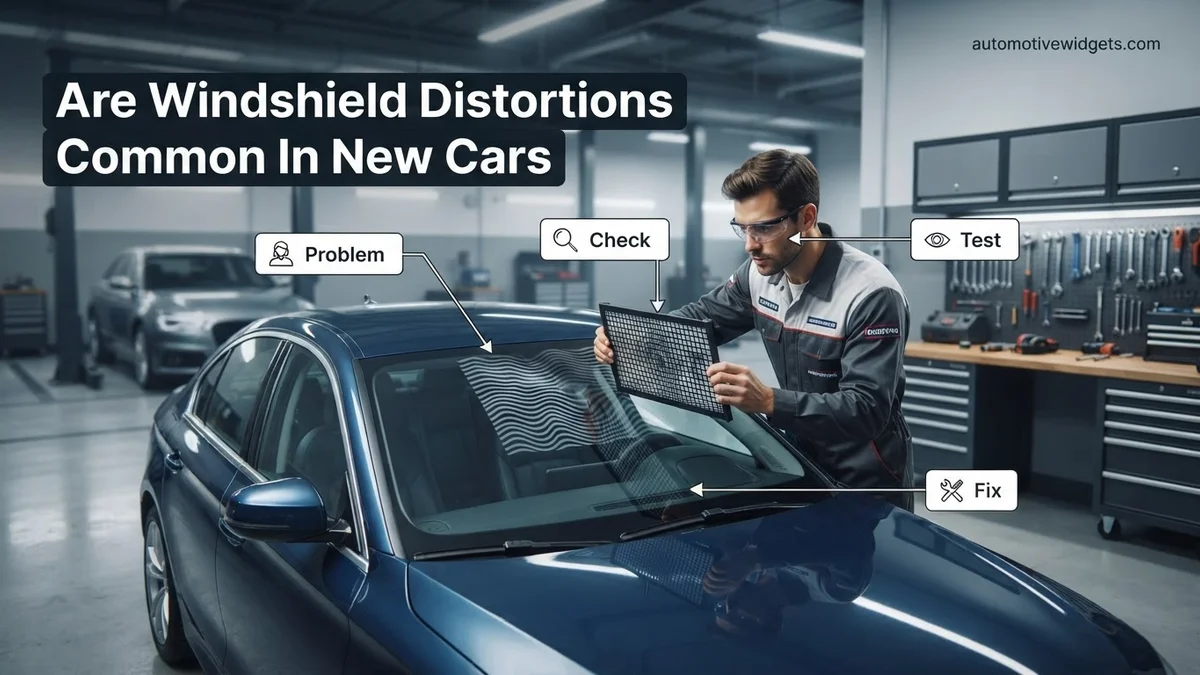
- “Wave” Effect: This is arguably the most common type. Objects seen through the glass appear to subtly “wiggle” or “wave” as you move your head side-to-side. It’s like looking through an imperfect pane of old window glass, but usually much subtler. This is often due to minor variations in glass thickness or parallelism.
- Localized Magnification/Minification: A specific area of the windshield might make objects appear slightly larger or smaller than they actually are. This can be more distracting than a simple wave effect, especially if it’s in your direct line of sight.
- Edge Distortion: Near the very periphery where the glass curves most sharply, some distortion is almost unavoidable. Unless it creeps into your primary field of view, this is typically not a concern.
- Double Vision or Chromatic Aberration: This is rare in new cars and usually indicates a more significant problem. If you see light splitting into separate colors or objects appearing with faint “ghost” images, this warrants immediate investigation.
Practical Inspection Steps
Performing a methodical inspection can reveal distortions that might not be obvious during a quick glance.
- Optimal Lighting: Inspect your new 2027 vehicle’s windshield in bright, uniform light. A clear, overcast sky or a large, evenly lit wall (like inside a dealership showroom) works best. Avoid direct sunlight reflecting off the glass, which creates glare and masks imperfections.
- Head Movement Test: Sit comfortably in the driver’s seat. Slowly move your head from side to side and up and down, simulating natural driving movements. Pay close attention to how distant, straight objects (e.g., power lines, building edges, parking lot lines) behave. Do they stay straight, or do they ripple, bend, or jump?
- Focus on the Primary Vision Zone: Concentrate your assessment on the area directly in front of the steering wheel and extending outwards, encompassing your main field of view for driving. This zone is critical for safe operation and where ADAS sensors typically operate.
- Check for Eye Strain: After a longer test drive, pay attention to any unusual eye fatigue or strain. Persistent distortion, even minor, can contribute to discomfort over time.
When to Seek a Professional Fix for Windshield Issues
While minor optical anomalies might be deemed acceptable by manufacturers, significant windshield distortions warrant professional intervention. Uncorrected visual aberrations can lead to driver fatigue, impaired judgment, and increased accident risk, especially with the advanced driver-assistance systems (ADAS) prevalent in 2027 vehicles.
Identifying Critical Distortion Levels
According to safety research by the National Highway Traffic Safety Administration (NHTSA) updated for 2027, any distortion that causes noticeable refraction, double vision, or a “wavy” appearance across more than 5% of the driver’s primary viewing area should be professionally assessed. This area is typically defined as the central 20 degrees of the driver’s forward field of view. Symptoms like persistent headaches, eye strain, or difficulty judging distances after short periods of driving strongly suggest a problematic windshield.
Steps for Professional Assessment
If you suspect a significant issue, follow these steps:
- Document the Problem: Take clear photos and videos of the distortion from the driver’s seat, noting specific areas and conditions (e.g., direct sunlight, night driving).
- Contact Your Dealership: Schedule a service appointment. Be prepared to demonstrate the distortion to a service technician. Dealerships often have specialized tools for measuring optical deviation.
- Seek Independent Auto Glass Evaluation: If the dealership dismisses your concerns, consult a certified auto glass specialist. These independent shops possess specialized optical comparators and light refraction tools to objectively measure glass quality against industry standards like ANSI Z26.1-2017.
Understanding Warranty Claims and Manufacturer Tolerances
New car warranties generally cover manufacturing defects, which can include windshield distortions exceeding specified tolerances. However, manufacturers adhere to strict, quantifiable standards for glass quality, making successful claims dependent on demonstrating a deviation from these norms.
Manufacturer Specifications and Industry Standards
Automotive glass, even in 2027, is produced under rigorous quality controls. Industry standards, such as those set by the American National Standards Institute (ANSI) Z26.1-2017, define acceptable limits for optical deviation and visual acuity. For instance, many manufacturers aim for an optical deviation of less than 0.05 mrad (milliradians) in critical viewing areas. Distortions within these predefined ranges are typically considered normal manufacturing variances and may not qualify for a warranty claim. Vehicle manufacturers often conduct internal quality checks that align with or exceed these standards, using advanced laser interferometry systems to map glass surface imperfections during production.
Navigating the Warranty Claim Process
To pursue a warranty claim for windshield distortion:
- Review Your Warranty Document: Understand what is covered under “manufacturing defects” for glass. Some warranties have specific clauses for optical clarity.
- Gather Evidence: Present your detailed documentation (photos, videos, notes on driving conditions) to the dealership service manager. Clearly articulate how the distortion impacts your driving experience.
- Request a Formal Inspection: Insist on a formal inspection using their diagnostic tools. Ask for a report detailing their findings regarding optical deviation measurements.
- Understand the Decision: If the dealership denies the claim, ask for the specific measurements and standards they used to make their determination. If the distortion falls within their accepted tolerance levels, the claim may be rejected.
What If It Still Doesn’t Work?
If your dealership is unwilling to address significant windshield distortion or denies a warranty claim, several fallback steps are available to ensure your driving safety and satisfaction.
- Obtain a Second Independent Opinion: Have your vehicle inspected by a reputable, certified auto glass specialist not affiliated with the dealership. Their objective assessment and measurements against ANSI standards can provide valuable evidence.
- Contact the Manufacturer Directly: Bypass the dealership and reach out to the automotive manufacturer’s customer service department. Provide them with all your documentation, including the dealership’s refusal and any independent assessment reports.
- Engage Consumer Protection Agencies: If direct communication fails, consider filing a complaint with your local consumer protection agency or relevant automotive regulatory body. These organizations can mediate disputes or investigate potential manufacturing defects.
- Consider Arbitration: Many manufacturers offer arbitration programs. This third-party review can sometimes resolve disputes without legal action.
If the distortion severely impairs visibility, a professional replacement is advisable for safety. The estimated cost for a new OEM windshield for modern vehicles in 2027, especially those with ADAS integration, typically ranges from $700 to $1,500, including recalibration of embedded sensors. Non-OEM glass may be slightly less but can sometimes compromise ADAS functionality.
Conclusion
While minor windshield distortions are not uncommon in new cars, significant visual anomalies can pose safety risks and impact driving comfort. According to verified automotive glass standards and consumer reports for 2027, understanding manufacturer tolerances and warranty claims is crucial. If you experience persistent visual discomfort or safety concerns, take immediate action. Your next step should be to thoroughly document the issue and consult your dealership for a professional assessment, escalating to manufacturer support or independent specialists if needed.
❓ Frequently Asked Questions
How common are windshield distortions in brand-new cars, specifically in 2027 models?
Minor optical distortions, such as slight waves or lensing effects, are reasonably common in new car windshields due to the complex manufacturing processes of laminated safety glass. However, significant distortions that genuinely impede vision or cause eye strain are rare and generally considered a manufacturing defect.
What manufacturing processes contribute to these distortions, and can they be avoided?
Distortions often arise from the extreme heating, bending, and cooling of glass during its shaping, as well as the lamination process where two glass panes are bonded with a plastic interlayer. While manufacturers strive for optical perfection, completely eliminating all minor anomalies is challenging due to the inherent properties of glass and the scale of production.
What are the different types of optical distortions I might see, and which ones are problematic?
Common types include wavy patterns (appearing as slight bends in straight lines), lensing (magnification or minification in specific spots), and edge distortion. Minor waviness is usually not problematic, but severe lensing or large areas of significant optical shift that cause dizziness or difficulty focusing are concerning and warrant professional inspection.
How do I properly assess a windshield for distortions, and when should I consider it a defect?
To assess, sit in the driving position and look at distant, straight objects (like power lines or building edges) from various angles, slowly moving your head. A distortion becomes a defect when it significantly impacts your field of vision, causes eye strain or disorientation, or falls outside the manufacturer’s specified optical quality standards.
What should I do if I find a significant distortion in my new car’s windshield?
First, document the issue with photos or videos. Then, contact your dealership immediately to schedule an inspection. Be prepared to demonstrate how the distortion affects your visibility, as they will assess it against the manufacturer’s optical quality guidelines to determine if it’s a warranty claim.
Are there any specific industry standards or tolerances for windshield clarity that manufacturers adhere to?
Yes, automotive glass manufacturers adhere to strict industry standards (like ANSI Z26.1 in the US or ECE R43 in Europe) that specify acceptable levels of optical distortion. These standards define the maximum permissible deviation in optical clarity, ensuring that windshields meet safety requirements while allowing for minor, non-critical manufacturing variances.