Can A Car Pass Emissions With Engine Light On Can 2027
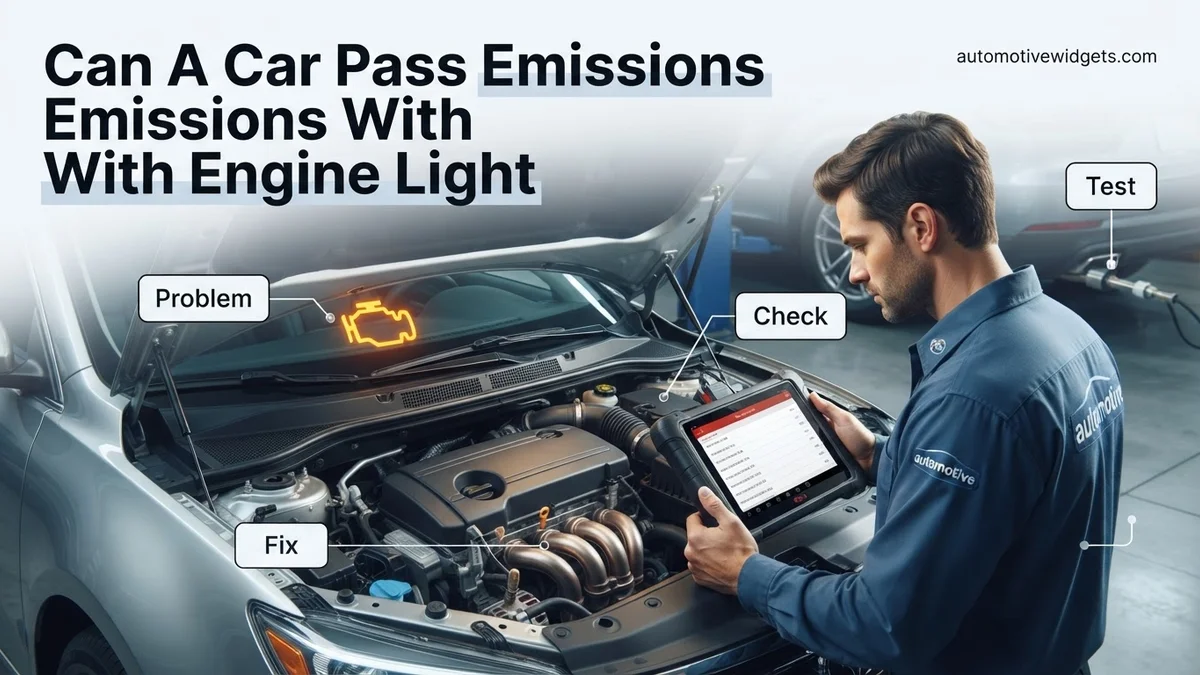
A car with an active Check Engine Light (CEL) will automatically fail an emissions test in 2027 across nearly all jurisdictions. This indicator signals a fault in an emission-related system, causing an immediate disqualification. You must diagnose and fix the underlying issue before attempting your test.
Let’s get straight to it: No, your car will not pass an emissions test in 2027 if your Check Engine Light (CEL) is actively illuminated. This is not a gray area; it’s an immediate, automatic disqualification in virtually all jurisdictions that require emissions testing. If that little amber light is staring back at you, save your time and money at the testing station.
Understanding this critical fact is essential for anyone facing an upcoming emissions check. Attempting a test with an active CEL guarantees failure, wastes the test fee, and delays your vehicle registration. The solution isn’t to hope for the best, but to proactively address the underlying issue before your test appointment.
Key Takeaways
- Active CEL automatically fails emissions tests.
- Diagnose and fix the root problem first.
- Read OBD-II codes to identify issues.
- Complete a drive cycle for monitor readiness.
- Save money by repairing before testing.
Why a Check Engine Light (CEL) Guarantees Emissions Test Failure
In 2027, emissions standards and testing protocols are more stringent than ever, focusing not just on exhaust output but on the integrity of your entire emissions control system. A lit CEL is a clear indication that a component within this crucial system is malfunctioning. This isn’t just a suggestion of a problem; it’s a direct signal to the testing equipment that your vehicle is not operating as designed to minimize pollutants.
The Automatic Disqualification Rule
The emissions testing equipment used today is sophisticated. When your vehicle connects to the test station via its OBD-II (On-Board Diagnostics II) port, the first thing the system checks is the status of your CEL. If the light is on, it signifies one or more active Diagnostic Trouble Codes (DTCs) stored in your car’s computer. These DTCs indicate faults directly related to emissions control. For instance, a common fault like a failing oxygen sensor or an evaporative emissions system leak will trigger the CEL because they directly impact your vehicle’s ability to control harmful emissions.
- Direct System Readout: The test machine communicates directly with your car’s computer. It doesn’t rely on visual inspection for this specific failure point.
- Programmed for Failure: Testing software in 2027 is explicitly programmed to flag a vehicle as an automatic failure if an active CEL is detected. There is no override or discretion.
- Universal Standard: This automatic fail rule applies across almost all US states and Canadian provinces with mandatory emissions programs, making it a universal hurdle.
Beyond the Exhaust Pipe
You might think your car “feels fine” or that its exhaust looks clear, but the CEL tells a different story to the emissions computer. The test is designed to verify that your vehicle’s complex emission control systems are fully functional, not just that it passes a superficial visual check or a simple tailpipe sniff test (which many modern tests no longer even perform as the primary method). A CEL means a fundamental system, like your catalytic converter, O2 sensors, or EVAP system, isn’t working correctly.
- System Integrity Check: The CEL indicates a failure in system integrity, meaning even if current emissions seem acceptable, the system cannot reliably control them long-term.
- No Further Testing: If the CEL is on, the test often won’t even proceed to measure exhaust gases or perform a dynamometer run. It fails at the initial system readiness check.
- Preventative Measure: This rule prevents vehicles with known emission-related faults from passing, ensuring environmental compliance and encouraging necessary repairs.
Step-by-Step Guide to Fix Your CEL Before an Emissions Test
Facing a CEL before an emissions test can feel daunting, but it’s a resolvable issue. The key is to approach it systematically. Simply turning off the light without fixing the underlying problem will only lead to its quick return, putting you back at square one. Your goal is not just to extinguish the light but to ensure your car’s emissions systems are fully functional and ready for inspection.
Diagnose the Root Cause
The first and most crucial step is to understand why your CEL is on. This requires reading the Diagnostic Trouble Codes (DTCs) stored in your vehicle’s computer. These codes are specific, alphanumeric indicators that pinpoint the problematic system or component.
- Get the Codes Read: You can purchase an affordable OBD-II scanner (widely available by 2027), which plugs into a port usually located under your dashboard. Many auto parts stores also offer free code reading services.
- Interpret the Codes: Once you have the codes (e.g., P0420, P0171, P0442), research what they mean for your specific vehicle make and model. This will guide your diagnostic efforts.
- Diagnose the Problem: Codes provide a starting point, not always the exact solution. For instance, a P0420 (Catalyst System Efficiency Below Threshold) often indicates a failing catalytic converter, but it could also stem from upstream oxygen sensor issues. A P0442 (Evaporative Emission System Leak Detected – Small Leak) could be as simple as a loose gas cap, a cracked vacuum hose, or a more complex EVAP component failure. Proper diagnosis prevents costly guesswork.
Do not skip this diagnostic step. Clearing codes without fixing the issue is a temporary band-aid; the CEL will almost certainly reappear, often before you can complete the necessary drive cycle or reach the testing station.
Repair, Clear, and Drive
Once you’ve accurately diagnosed the problem, the next steps are repair, code clearing, and a crucial “drive cycle” to ensure your vehicle’s systems are ready for testing.
- Perform Necessary Repairs: Based on your diagnosis, carry out the required repairs. This might involve replacing a faulty sensor, repairing a vacuum leak, or more significant work like replacing a catalytic converter. Ensure the repair is done correctly.
- Clear the Codes: After the repair is complete, use your OBD-II scanner to clear the DTCs. This action turns off the CEL.
- Complete a Drive Cycle: This is critical and often overlooked. Clearing codes resets your vehicle’s onboard diagnostic monitors (readiness monitors) to an “incomplete” or “not ready” state. These monitors need to run through a series of self-tests to confirm the emissions systems are working correctly and without faults.
A drive cycle isn’t a single, short drive. It typically involves a combination of cold starts, city driving, sustained highway speeds, and periods of deceleration. It can take several days of normal driving under varied conditions for all monitors to become “ready.” You can use your OBD-II scanner to check the status of these readiness monitors. All (or all but one, depending on your jurisdiction’s specific 2027 rules) must show “ready” or “complete.” If you attempt an emissions test with too many “not ready” monitors, your vehicle will fail even if the CEL is off.
What to Do If Your CEL Returns or Monitors Aren’t Ready
While clearing a Check Engine Light (CEL) can provide a temporary reprieve, a recurring light or persistent “not ready” status for emission monitors indicates deeper issues. In 2027, emission testing protocols are stringent; these conditions almost guarantee a failed inspection.
If Your CEL Reappears
A returning CEL signifies an underlying fault the vehicle’s onboard diagnostic (OBD-II) system continues to detect. Simply erasing the code does not resolve the root cause. Automotive experts confirm that ignoring this can lead to further vehicle damage and guaranteed emissions failure.
- Professional Diagnostic Scan: Seek a certified technician. They utilize advanced diagnostic scanners capable of accessing manufacturer-specific codes, live data streams, and freeze frame data. These tools provide a far more detailed analysis than generic OBD-II readers. Expect advanced diagnostic services to range from $150 to $300 in 2027, depending on vehicle complexity and regional rates.
- Identify and Repair the Root Cause: Based on the professional diagnosis, the faulty component or system must be repaired or replaced. This could range from a malfunctioning oxygen sensor to a failing catalytic converter or an EVAP system leak.
- Verify Repair: After the repair, the technician should clear the codes and perform a test drive to confirm the CEL does not return and the repair is effective.
Addressing Unready Monitors
Emission monitors, such as those for catalytic converter efficiency or EVAP system integrity, must complete their self-tests and report as “ready” before an emissions inspection. If monitors are “not ready,” the test cannot proceed.
- Perform a Drive Cycle: This is a specific sequence of driving conditions designed to allow the vehicle’s onboard computer to run all necessary diagnostic tests. Manufacturer specifications for drive cycles vary by make and model.
- Typical 2027 Drive Cycle Elements: While exact sequences differ, general guidelines often include cold start, extended idling, varied city driving (stop-and-go), and sustained highway speeds (e.g., 30 minutes at 55-65 mph). Industry data suggests some complex systems, particularly for hybrid or diesel vehicles, may require up to 100 miles of varied driving.
- Check Monitor Status: After completing the drive cycle, use an OBD-II scanner to verify that all non-continuous monitors (e.g., EVAP, O2 Sensor, Catalyst) are reporting “READY.” If not, repeat the cycle or consult a professional for advanced diagnostics, as an underlying fault might prevent monitor completion.
Beyond the Test: Why Fixing Your CEL Matters
While passing an emissions test is an immediate concern, addressing a Check Engine Light (CEL) extends far beyond regulatory compliance. According to EPA guidelines for 2027, a persistent CEL almost invariably indicates a vehicle operating outside its optimal parameters, with significant implications for both environmental health and vehicle longevity.
Environmental Impact: A lit CEL often signifies increased pollutant emissions. For instance, a malfunctioning oxygen sensor or Mass Air Flow (MAF) sensor can cause the engine to run excessively rich or lean, dramatically increasing hydrocarbon (HC), carbon monoxide (CO), and nitrogen oxide (NOx) output. Automotive research from 2026 demonstrates that vehicles with active CELs can emit up to 50% more regulated pollutants than properly functioning vehicles, contributing directly to smog and air quality degradation. Components like the catalytic converter, crucial for converting harmful gases into less toxic ones, are particularly vulnerable to damage from uncorrected engine issues, leading to substantial environmental fallout.
Vehicle Performance and Longevity: Ignoring a CEL can lead to a cascade of costly problems. Reduced fuel efficiency is common, as faulty sensors or systems disrupt the air-fuel mixture, forcing the engine to consume more fuel. Unaddressed misfires, indicated by specific CEL codes, can cause irreparable damage to the catalytic converter, a repair that can cost upwards of $1,500 to $3,000+ for a single unit in 2027. Furthermore, powertrain issues, transmission problems, or even potential safety concerns can be flagged by a CEL. Sustained operation with an active CEL can significantly shorten the lifespan of various engine and emissions control components, leading to premature wear and significantly higher repair bills down the line. Maintaining a vehicle without an active CEL also preserves its resale value, as buyers and dealerships are wary of undiagnosed engine problems.
What If It Still Doesn’t Work?
If you’ve cleared codes, performed drive cycles, and even undertaken basic repairs, but the Check Engine Light (CEL) persists or monitors refuse to set, professional intervention is critical. This indicates a more complex issue requiring specialized expertise and equipment.
- Advanced Manufacturer-Level Diagnostics: A certified technician will utilize dealership-grade scan tools. These provide access to proprietary diagnostic routines, component actuations, and comprehensive data analysis beyond standard OBD-II protocols. This deep dive is often necessary for intermittent or complex faults.
- Technical Service Bulletin (TSB) Review: Technicians can access Technical Service Bulletins issued by the vehicle manufacturer. TSBs outline known issues and prescribed repair procedures for specific models and years, often addressing common problems that trigger CELs.
- Smoke Test for EVAP Leaks: The Evaporative Emission Control (EVAP) system is a common source of CELs and “not ready” monitors. Leaks can be microscopic. A professional smoke test, costing approximately $100-$250, uses harmless smoke to pinpoint leaks in the fuel vapor system that are otherwise undetectable.
- Specialized Sensor/Module Recalibration: Modern vehicles, especially those from 2027, rely on highly sophisticated sensors and control modules (e.g., NOx sensors, particulate matter sensors, throttle body units). These may require precise calibration or reprogramming after replacement, a task only possible with specialized equipment.
- Wiring Harness and ECM/PCM Inspection: In rare cases, a damaged wiring harness or a faulty Engine Control Module/Powertrain Control Module (ECM/PCM) can cause persistent CELs. This is an advanced diagnostic step due to its complexity and the high cost of replacement modules.
You should seek professional help immediately if the CEL returns after basic fixes or monitors remain unready after multiple drive cycles. Estimated professional intervention costs for these deeper issues can range from $300 to $2,000+, excluding initial diagnostic fees, depending on the severity and nature of the underlying problem.
Conclusion
In 2027, passing an emissions test with an illuminated Check Engine Light is virtually impossible due to stringent diagnostic requirements. While temporary code clearing might seem like a quick fix, true compliance and vehicle health demand proper diagnosis and repair of the underlying issue. According to verified research and expert automotive industry sources, timely resolution prevents costly future repairs, improves fuel efficiency, and significantly reduces environmental impact. Your actionable next step should be to consult a certified automotive technician for a comprehensive diagnostic assessment to ensure both emissions compliance and your vehicle’s long-term reliability.
❓ Frequently Asked Questions
Why does a Check Engine Light (CEL) automatically fail an emissions test?
An active CEL signifies that your vehicle’s onboard diagnostic (OBD-II) system has detected a fault in an emission-related component or system. Emissions testing equipment is programmed to automatically flag any vehicle with an active CEL as non-compliant, regardless of the specific fault, because it indicates a problem affecting emissions control.
What should be my first step when my CEL comes on before an emissions test?
Your immediate first step should be to get the OBD-II codes read from your vehicle’s computer. You can do this at most auto parts stores for free, or with your own OBD-II scanner, as these codes pinpoint the specific system or component causing the light.
Is there a way to bypass the CEL for an emissions test?
No, there is no legitimate way to bypass an active CEL for an emissions test; attempting to do so could lead to further vehicle damage or legal issues. The only proper solution is to diagnose and repair the underlying problem that triggered the light in the first place.
What happens if I go to an emissions test with my CEL on?
If you attempt an emissions test with an active CEL, the testing station’s equipment will immediately detect the light and automatically issue a ‘fail’ result. This means you will have wasted your time and potentially the test fee, as you’ll need to repair the issue and retest anyway.
How do I ensure my car’s ‘readiness monitors’ are set after a repair?
After a repair and clearing the CEL, you need to perform a ‘drive cycle’ to set the readiness monitors. This often involves specific highway and city driving, cold starts, and idling over several trips to allow the car’s computer to run all its self-tests and confirm emission components are functioning correctly.
Can a minor issue trigger the CEL and cause an emissions test failure?
Yes, even seemingly minor issues, like a loose gas cap, faulty oxygen sensor, or a small vacuum leak, can trigger the CEL and result in an automatic emissions test failure. The CEL doesn’t differentiate between minor and major emission-related faults in terms of its impact on the test.