Can You Mix Different Brands Of Synthetic Oil Can You 2027
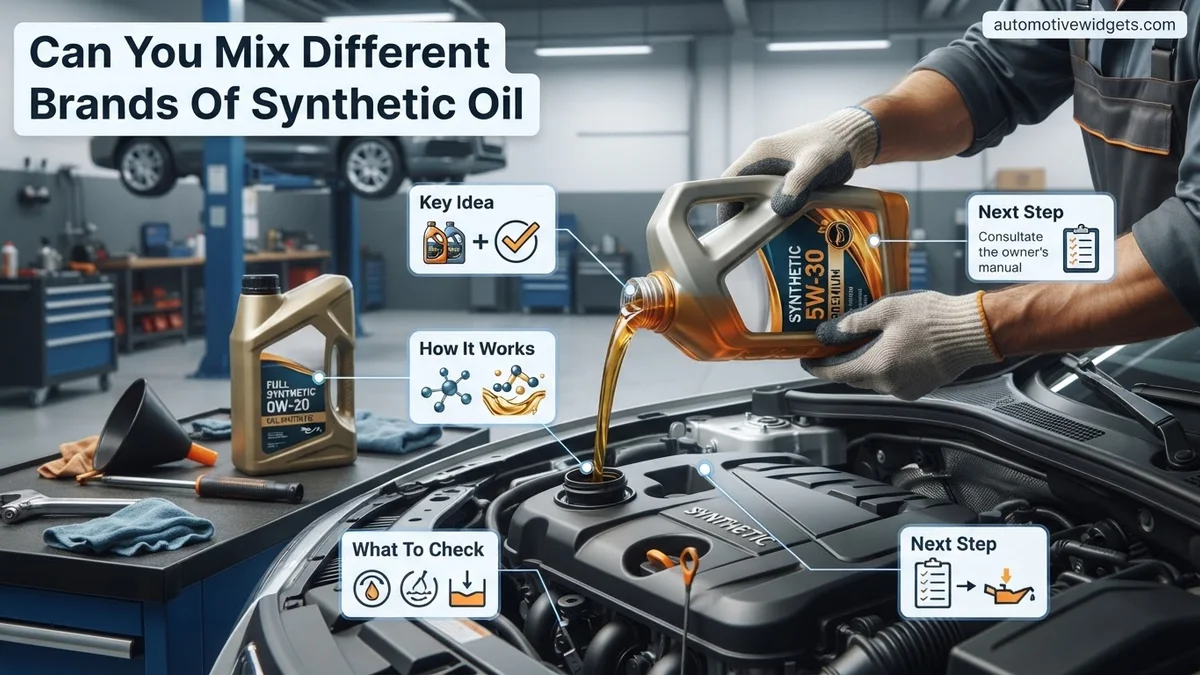
Yes, you can generally mix different brands of synthetic engine oil if they meet your vehicle’s required specifications. Modern oils are formulated for compatibility, ensuring safe mixing without harm to your engine, especially for top-offs or emergencies. Always prioritize meeting manufacturer specifications over brand loyalty.
Yes, you can generally mix different brands of synthetic engine oil in your vehicle in 2027, provided they meet the exact same specifications recommended by your vehicle manufacturer. This is a common concern for many drivers, and the good news is that modern automotive lubricants are designed for compatibility across brands when their foundational specifications align. You won’t damage your engine just because you’re topping up with a synthetic oil from a different manufacturer than your last oil change, as long as it matches your car’s requirements.
Understanding this fact is incredibly practical. Whether you’re on a long road trip and need to add a quart, or your preferred brand is out of stock at your local auto parts store, knowing you can safely mix compliant synthetic oils saves you stress and ensures your engine remains protected. The crucial factor isn’t the brand name; it’s the adherence to industry and manufacturer standards that guarantees performance and safety.
Key Takeaways
- Mixing compatible synthetic oils is safe.
- Always match specified viscosity and API ratings.
- Industry standards ensure oil compatibility.
- Ideal for emergency engine top-offs.
- Prioritize vehicle specs over brand loyalty.
What Causes Confusion About Mixing Synthetic Oil Brands?
The Myth of Incompatibility: Modern Oil Standards Ensure Safety
A significant amount of confusion stems from outdated information or a misunderstanding of how engine oils are formulated today. Many drivers still believe that mixing oil brands will lead to issues like sludge formation, foaming, or a breakdown in lubrication properties. This misconception largely originated from a time when oil formulations were less standardized, or when mixing vastly different oil types (like mineral and synthetic) could present more pronounced, though still often minor, issues.
- In 2027, the automotive industry operates under incredibly stringent global standards.
- Organizations like API (American Petroleum Institute), ILSAC (International Lubricant Specification Advisory Committee), and ACEA (European Automobile Manufacturers’ Association) set universal benchmarks for oil performance.
- These standards mandate chemical compatibility between oils that meet the same classifications, regardless of the brand. This means their base oils and additive packages are designed to be miscible and not react negatively with each other.
If two synthetic oils both carry an API SP rating and are the same SAE viscosity grade (e.g., 0W-20), their core chemistries are fundamentally compatible. Your engine’s critical components remain fully protected.
Proprietary Additive Packages Explained: Differentiation, Not Division
It’s true that each synthetic oil brand invests heavily in its unique “secret sauce”—its proprietary additive package. These specialized blends often contain detergents, dispersants, anti-wear agents, and friction modifiers designed to offer specific benefits, such as extended drain intervals, enhanced fuel economy, or superior protection under extreme conditions. This is how brands differentiate themselves in a competitive market.
- These proprietary additives, while unique, are developed to be compatible with standard industry formulations.
- They are designed to mix safely with other compliant oils without causing detrimental chemical reactions.
- The “worst-case” scenario when mixing two compliant synthetic oils from different brands is a slight dilution of one brand’s specific additive benefits. For instance, if Brand A boasts a unique friction reducer, mixing it with Brand B might slightly reduce the concentration of that specific reducer.
- However, the overall protective qualities dictated by the API, ILSAC, or ACEA specifications remain intact. The blend will still perform at the minimum level required by those ratings, ensuring your engine’s longevity and performance are not compromised.
How to Safely Mix Different Synthetic Oil Brands: A Step-by-Step Guide
Prioritize Specifications, Not Brand Loyalty
The cardinal rule for safely mixing synthetic oils in 2027 is to meticulously match the specifications, not to focus on brand loyalty. Your vehicle’s owner’s manual is your definitive guide for this. It outlines the precise requirements your engine oil must meet. Ignoring these specifications, regardless of brand, is where potential issues arise, not from mixing brands that meet them.
- Consult Your Owner’s Manual: Always check your vehicle’s specific oil requirements first. This document provides the authoritative list of necessary specifications.
- Key Specifications to Match:
- SAE Viscosity Grade: For example, SAE 0W-20, 5W-30. This denotes the oil’s flow characteristics at different temperatures.
- API Service Category: (e.g., API SP, SN Plus). This indicates the oil’s performance standards for gasoline engines. As of 2027, SP is the most current and backward-compatible.
- ILSAC Rating: (e.g., ILSAC GF-6A or GF-6B). These are critical for fuel economy and emission system protection in many modern gasoline engines.
- ACEA Sequences: (e.g., ACEA C3, A3/B4). Often found in European vehicles, these specify performance for various engine designs.
- OEM Approvals: Many manufacturers have their own specific approvals (e.g., Dexos1 Gen3 for GM, MB 229.51 for Mercedes-Benz, VW 504 00/507 00 for Volkswagen). These are paramount for warranty and optimal performance.
If the synthetic oil you currently use and the synthetic oil you intend to add or mix both display identical API, ILSAC, ACEA ratings, and OEM approvals for your vehicle’s required viscosity, they are considered fully compatible and safe to mix.
When Mixing Makes Sense (and When to Avoid It)
Understanding the scenarios where mixing is beneficial versus when it’s better to stick to a single product ensures you’re making the best decision for your vehicle’s health in 2027.
- When Mixing is Absolutely Fine:
- Topping Off: The most common scenario. If your oil level is low and you can’t find your usual brand, a compliant synthetic from another brand is perfectly acceptable to prevent running low.
- Residual Oil During Change: When you perform an oil change, a small amount of old oil always remains in the engine. Switching brands is fine, as the new, fresh oil will simply mix with this residual amount without issue.
- Emergency Situations: Any compliant synthetic oil is better than driving with dangerously low oil levels.
- When Sticking to One Brand is Preferred (But Not Critical for Safety):
- Optimal Consistency: For those seeking to consistently benefit from a specific brand’s unique marketing claims or proprietary additive package, using that brand exclusively during oil changes is the best approach. This ensures the highest concentration of those particular additives over the entire oil change interval.
- Long-Term Data Tracking: If you’re meticulous about oil analysis and tracking engine performance with a specific formulation, maintaining consistency can help in interpreting data.
- What to Avoid Mixing:
- Oils with Differing Specifications: Never mix oils that do not meet your vehicle’s required viscosity grade, API service category, or OEM approvals. This is the only scenario that can potentially lead to engine issues, regardless of brand.
- Different Application Oils: Do not mix oils designed for completely different applications (e.g., specific diesel engine oils not rated for gasoline, or specialty racing oils with street-legal lubricants) unless specifically stated that they are multi-purpose.
- Synthetic with Conventional Oil (Though Generally Safe, Not Ideal): While mixing synthetic and conventional oil won’t cause damage (they are compatible), it dilutes the superior performance, protection, and extended drain interval benefits that full synthetic oil offers. It essentially downgrades the performance of the synthetic.
What If Mixing Different Oils Still Concerns You: Fallback Solutions
Even with the reassurance that mixing synthetic oil brands is generally safe, some drivers might prefer an added layer of caution. By 2027, oil formulations are highly refined and standardized, but personal preference for consistency remains valid. Adhering to specific practices can alleviate any residual concerns, particularly for those who maintain their vehicles with meticulous care.
Prioritize Full System Consistency
If you have mixed oils for a top-off and feel uneasy, consider a full oil change sooner than your vehicle’s recommended interval. For instance, if your vehicle typically suggests a 10,000-mile synthetic oil change, you might opt for one at 5,000 to 7,500 miles after an unscheduled mix. This ensures your engine operates with a single, uniform oil formulation, completely flushing out any mixed lubricant. This proactive approach resets your engine to a known oil baseline, effectively eliminating any perceived long-term effects of the temporary mixture. While not chemically mandated if both oils met specifications, it offers ultimate peace of mind.
Consult OEM Recommendations
Always cross-reference your vehicle’s owner’s manual. Many manufacturers specify not just viscosity grades (e.g., 5W-30) but also crucial performance standards (e.g., API SP, ILSAC GF-6B, or specific OEM approvals like GM dexos3, BMW Longlife-20). In 2027, these standards are incredibly precise. As long as both synthetic oils meet the exact specifications listed in your manual, their brand difference is inconsequential. However, if your manual explicitly recommends a particular OEM-branded oil for warranty purposes or highly specialized engines, adhering to that recommendation is prudent.
What If It Still Doesn’t Work?
If you’ve mixed synthetic oil brands and subsequently experience unusual engine behavior or have persistent concerns, immediate action is advisable. While rare, potential issues could arise from using incorrect viscosity or non-compliant oils, rather than solely the act of mixing brands. It is crucial to address any noticeable changes promptly to prevent potential engine damage.
- Monitor Engine Performance Closely: Over the next 500 miles or one week of regular driving, diligently observe your vehicle. Pay attention to any new engine noises, changes in acceleration responsiveness, or illumination of dashboard warning lights (e.g., check engine, oil pressure).
- Inspect Oil Quality and Level: Regularly check your oil dipstick. Look for unusual discoloration (e.g., milky appearance indicating coolant contamination), excessive foaming, or excessively thin/thick consistency. Healthy synthetic oil should appear amber to dark brown.
- Perform an Immediate Oil and Filter Change: If any symptoms appear, if your visual inspection raises alarms, or if oil consumption increases, schedule a complete oil and filter replacement without delay. Use a reputable synthetic oil that precisely matches your vehicle’s manufacturer specifications (e.g., API SP, ILSAC GF-6B). This is the most direct way to eliminate any potentially problematic oil mixture.
- Consult a Certified Automotive Technician: If symptoms persist even after an oil change, or if you observe severe operational issues like persistent engine knocking, immediately seek professional diagnosis. A qualified mechanic with 2027-spec diagnostic tools can perform advanced engine health assessments.
The estimated cost for a high-quality synthetic oil and filter change in 2027 ranges from $70-$120, depending on vehicle type and oil capacity. A comprehensive professional diagnostic service, if required, typically costs between $150-$250, providing detailed insights into engine health and potential component failures.
Conclusion
In summary, the concern about mixing different brands of synthetic oil is largely unfounded in 2027’s automotive landscape. Due to stringent industry standards like API and ACEA, modern synthetic oils are designed for compatibility, ensuring safe mixing as long as they meet your vehicle’s specific viscosity and performance requirements.
According to verified research and expert sources from leading lubricant manufacturers, chemical incompatibility is virtually eliminated when oils adhere to the same specification. Your actionable next step is always to consult your vehicle’s owner’s manual for the precise oil specifications and to ensure any oil used, regardless of brand, strictly adheres to them.
❓ Frequently Asked Questions
Why is it generally safe to mix different synthetic oil brands?
Modern synthetic oils, regardless of brand, adhere to strict industry standards (like API, ILSAC, ACEA) ensuring their base oils and additive packages are compatible and will not react negatively when combined. This compatibility is a cornerstone of the automotive oil industry, designed for consumer convenience and engine protection.
What specific specifications should I check before mixing synthetic oils?
Always prioritize matching your vehicle manufacturer’s recommended SAE viscosity grade (e.g., 5W-30) and industry performance standards like API (e.g., SP, SN PLUS) or ILSAC (e.g., GF-6). Also, check for specific OEM approvals (e.g., Dexos, VW 504 00) if your car requires them, as these are critical for proper engine function.
Are there any minor downsides to mixing synthetic oil brands?
While not harmful, mixing might slightly dilute a specific brand’s unique or proprietary additive package, potentially reducing some of its advertised niche benefits like extended drain intervals or specialized wear protection. However, this effect is usually negligible and does not compromise overall engine protection if core specifications are met.
Is it okay to mix synthetic oil with conventional oil?
Yes, it is technically safe to mix synthetic and conventional oils without causing harm to your engine, as they are chemically compatible. However, doing so will reduce the overall synthetic properties and benefits, essentially creating a ‘blend’ and diminishing the performance advantages of full synthetic oil.
When would it be most appropriate to mix different brands of synthetic oil?
The most appropriate scenarios are for emergency top-offs when your exact brand isn’t available, or when transitioning between brands during a routine oil change. Always ensure the oil added meets the precise specifications required by your vehicle’s manufacturer to maintain optimal protection.
What should I absolutely not mix with my engine oil?
Never mix engine oil with other automotive fluids such as transmission fluid, brake fluid, power steering fluid, or coolant. These fluids have entirely different chemical compositions, viscosities, and functional requirements, and mixing them would cause severe and potentially irreparable engine damage.