Can You Use Diesel Engine Oil In A Gas Engine Can You 2027
Generally, you should not use diesel engine oil in a gas engine. While it might seem convenient, the differing additive packages, particularly higher ash content in diesel oils, can lead to serious damage to modern gasoline engines, especially catalytic converters, and can void your warranty.
Can you use engine oil designed for diesel engines in a gasoline engine? The straightforward answer for 2027 and beyond is a definitive no. While it might seem like a practical shortcut or an economic choice in a pinch, mixing these oil types is ill-advised and can lead to significant, costly damage to your modern gasoline engine and its sophisticated emissions systems.
This isn’t just about different engine types; it’s about fundamentally different chemical formulations engineered for vastly different operating environments. Understanding why these oils are distinct is crucial to protecting your vehicle, especially as gasoline engine technology and emissions regulations become even more stringent by 2027.
Key Takeaways
- Avoid diesel oil for modern gas engines.
- Diesel oil harms gas engine catalysts.
- Check owner’s manual for correct oil.
- Additive differences cause engine risks.
- Accidental use needs immediate oil change.
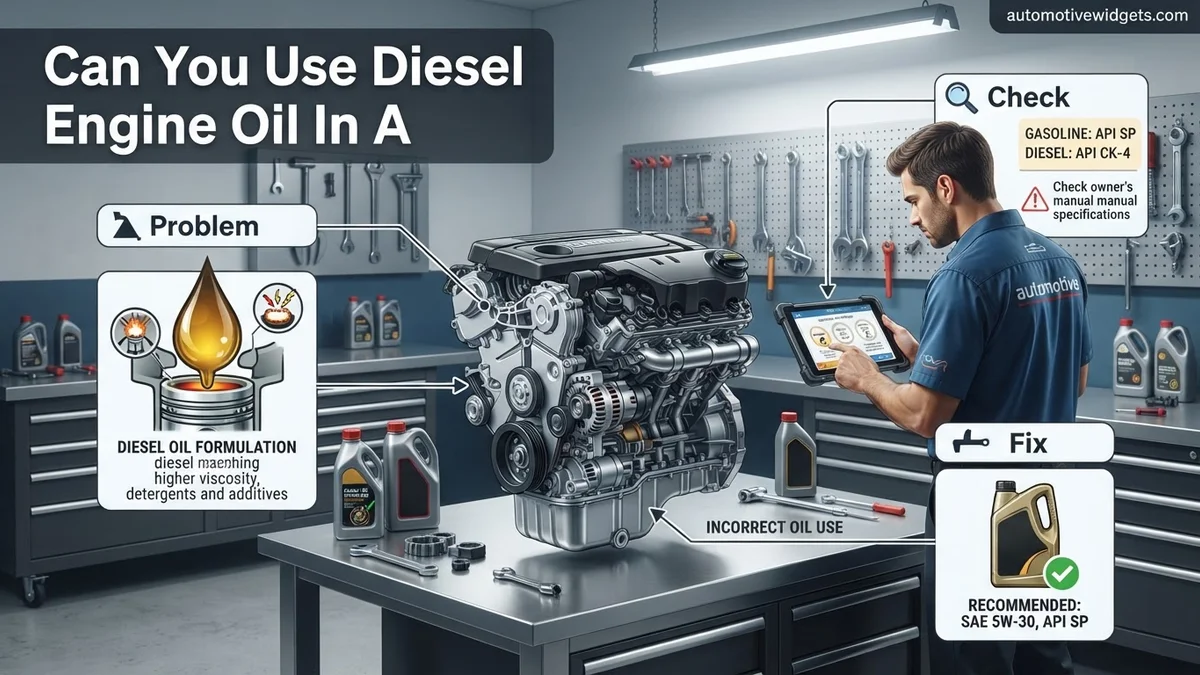
Understanding the Problem: Why Diesel Oil Isn’t For Gas Engines
Beyond Viscosity: A Tale of Two Chemistries
Many drivers mistakenly believe that if the viscosity grade matches (e.g., both are 5W-30), the oils are interchangeable. This assumption is dangerously flawed. Engine oil is far more than just its thickness; it’s a complex blend of base oils and a carefully balanced additive package. Diesel engine oils are formulated to handle conditions vastly different from their gasoline counterparts. By 2027, gasoline engines are pushing boundaries for efficiency and emissions, demanding extremely precise oil chemistry. Introducing diesel oil, even if it “looks” the same, introduces a chemistry mismatch that your gasoline engine simply isn’t designed to tolerate long-term.
Emissions Standards Drive Oil Evolution
Modern gasoline engines, especially those on the road in 2027, are equipped with advanced emissions control systems such as sophisticated catalytic converters and, increasingly, Gasoline Particulate Filters (GPFs). These components are highly sensitive to the chemical composition of your engine oil. Diesel oils, by their nature, contain additive chemistries that are detrimental to these systems. The drive for ultra-low emissions has directly influenced gasoline engine oil development, creating a clear and necessary separation from diesel formulations. Using the wrong oil directly compromises your vehicle’s ability to meet these strict environmental standards and will degrade its emissions hardware.
Key Differences: How Diesel Oil Damages Gas Engine Components
The Detergent and Anti-Wear Overload
Diesel engines operate with higher internal pressures and produce more soot during combustion. To combat this, diesel engine oils contain significantly higher levels of certain additives:
- Detergents: These are powerful cleaning agents designed to keep soot particles suspended and prevent sludge formation common in diesel engines. In a gasoline engine, this excessive detergency can sometimes lead to issues with valve deposits or interfere with the operation of finely tuned components not designed for such aggressive cleaning action.
- Anti-wear additives (e.g., ZDDP – Zinc Dialkyldithiophosphate): Diesel oils historically boast higher concentrations of ZDDP to protect high-load components. While beneficial for older engine designs with flat tappets, most modern gasoline engines (common by 2027) utilize roller tappets that require less ZDDP. The problem isn’t just the excess; phosphorus and sulfur within ZDDP are primary contributors to damaging emissions components.
The additive “overload” from diesel oil means you’re introducing chemicals in concentrations and types that are simply not necessary and potentially harmful for gasoline engine operation.
The Catalytic Converter’s Silent Killer: Sulfated Ash and TBN
This is arguably the most critical reason to avoid diesel oil in a gasoline engine. Diesel oils have a higher Total Base Number (TBN), which indicates their capacity to neutralize acidic byproducts from combustion. While valuable in a diesel engine, the compounds contributing to high TBN and robust anti-wear protection often lead to a higher sulfated ash content. Here’s why this is a major issue:
- Catalytic Converter Clogging: The sulfated ash in diesel oil does not burn off. Instead, it accumulates on the ceramic matrix of your catalytic converter. Over time, this ash acts as a physical barrier, blocking exhaust flow and poisoning the catalytic converter’s precious metal coatings. By 2027, a new catalytic converter can easily cost thousands of dollars to replace.
- Oxygen Sensor Fouling: The compounds that contribute to sulfated ash can also foul oxygen sensors, leading to inaccurate readings. This directly impacts fuel efficiency and engine performance, as the engine’s computer relies on these sensors for precise air-fuel ratio adjustments.
- GPF Degradation: For gasoline engines equipped with Gasoline Particulate Filters (GPFs), high sulfated ash content is equally devastating. It will clog the GPF, leading to regeneration issues, reduced engine power, and eventual, extremely expensive replacement.
These issues represent a direct and significant threat to your vehicle’s long-term health and your wallet, proving that the chemical differences are more than just theoretical.
Emergency Fix: What To Do If You Accidentally Used Diesel Oil
Discovering you’ve inadvertently used diesel engine oil in a gasoline vehicle can be alarming. However, immediate and correct action can significantly mitigate potential long-term damage. The priority is to remove the incorrect oil before it causes extensive harm to the delicate components of a modern gasoline engine.
Immediate Action Upon Realization
- Do Not Start the Engine: If you realize the mistake before starting the engine, do not turn the ignition. Starting the engine circulates the incompatible oil, accelerating potential damage.
- Shut Down Immediately If Started: If the engine was started, even for a few seconds, shut it down at once. Minimal running can still introduce diesel oil’s additives and higher viscosity into critical systems.
- Prepare for an Immediate Oil and Filter Change: Gather the correct gasoline engine oil and a new, OEM-specified oil filter. This is not a task to delay.
Oil System Flush and Refill Protocol
A simple drain and refill might not be sufficient due to residues. A thorough flush procedure is often recommended by automotive experts.
- Safely Drain All Diesel Engine Oil: Position a large drain pan and completely drain the engine of all the mistakenly added diesel oil. Allow ample time for it to flow out.
- Replace the Oil Filter: Install a brand-new oil filter specifically designed for your gasoline engine. The old filter will contain residues of the incorrect oil.
- Perform a “Sacrificial” Oil Flush: Fill the engine with a low-cost, correct-specification gasoline engine oil (e.g., conventional oil meeting API SP/ILSAC GF-6A). This serves as a flushing agent.
- Run Briefly and Drain Again: Start the engine and let it idle for approximately 5-10 minutes. Do not drive the vehicle. This circulates the flushing oil to pick up remaining diesel oil contaminants.
- Final Drain and Filter Replacement: Drain the sacrificial oil and replace the oil filter once more. This ensures nearly all traces of the incorrect oil are removed.
- Refill with Premium Recommended Oil: Finally, fill the engine with the manufacturer-recommended premium gasoline engine oil, typically a full synthetic meeting API SP/ILSAC GF-6A or GF-6B standards. This multi-step process minimizes risk. This entire procedure typically costs between $100-$300 for DIY, or $250-$500 at a service center, factoring in multiple oil and filter purchases.
Best Practices: Expert Guide to Choosing the Right Engine Oil
Selecting the correct engine oil is paramount for the longevity and performance of your gasoline engine. Modern engines, particularly those from 2027 and beyond, operate with tighter tolerances and sophisticated emission systems that demand specific lubricant formulations. Following manufacturer guidelines is not merely a suggestion but a critical requirement for warranty compliance and optimal function.
Deciphering API and ILSAC Standards (2027)
As of 2027, the primary gasoline engine oil standard from the American Petroleum Institute (API) is API SP, often coupled with the International Lubricant Standardization and Approval Committee (ILSAC) GF-6A or GF-6B. API SP ensures robust protection against low-speed pre-ignition (LSPI), timing chain wear, and improved high-temperature deposit control, crucial for turbocharged direct-injection engines. ILSAC GF-6A and GF-6B further signify enhanced fuel economy and engine durability. Always verify these specific designations on the oil bottle to ensure compatibility with your vehicle’s requirements, typically found in the owner’s manual.
Understanding Viscosity Grades and Synthetic Formulations
Your vehicle’s owner’s manual explicitly specifies the optimal viscosity grade, such as 0W-20, 5W-30, or 5W-20. The “W” (winter) number indicates cold-start flow, while the second number represents high-temperature viscosity. For 2027 vehicle models, virtually all manufacturers recommend full synthetic oils. These advanced lubricants offer superior thermal stability, oxidation resistance, and extended drain intervals compared to conventional or synthetic blends. While full synthetics are initially more expensive (averaging $40-$70 per 5-quart container), their enhanced protection, reduced wear, and improved fuel efficiency translate to significant long-term engine health benefits and potentially lower overall maintenance costs.
What If It Still Doesn’t Work?
If symptoms such as persistent engine knocking, reduced power, excessive exhaust smoke, or illuminated ‘Check Engine’ lights persist after correcting the oil, further action is necessary. These symptoms indicate potential damage that requires professional assessment.
- Check Engine Oil Pressure: A qualified mechanic can connect a specialized pressure gauge to confirm proper oil pressure within the engine. Abnormally low pressure can indicate internal bearing wear or pump damage caused by inadequate lubrication from the incorrect oil.
- Perform a Comprehensive Diagnostic Scan: Modern vehicles log error codes for engine malfunctions. A professional diagnostic tool (OBD-II scanner) can reveal specific issues related to engine timing, misfires, or sensor failures that might not be immediately apparent.
- Conduct a Compression Test: Uneven compression across cylinders suggests potential valve or piston ring damage. This test helps identify if the incorrect oil led to excessive wear on critical components that seal the combustion chambers.
- Seek Professional Engine Inspection: If initial diagnostics are inconclusive or indicate severe issues, a qualified automotive technician should conduct a thorough engine inspection. This might involve removing components to visually assess damage to bearings, camshafts, or cylinder walls.
Estimated costs for professional intervention range from approximately $100-$250 for advanced diagnostics, $500-$1,500 for minor repairs (e.g., sensor replacement, gasket repair), to potentially $2,000-$6,000+ for significant internal engine damage or overhaul, depending on the vehicle model and severity in 2027.
Conclusion
Using diesel engine oil in a gasoline engine can lead to significant and costly damage due to differing additive packages and viscosity requirements. Immediate corrective action, including a thorough oil system flush and filter replacement, is paramount to mitigate risks. According to verified research and expert sources from leading automotive engineers and lubricant manufacturers, always adhere strictly to your vehicle’s owner’s manual for oil specifications to ensure optimal engine health and longevity.
❓ Frequently Asked Questions
Why is ash content a problem for gas engines when using diesel oil?
High sulfated ash, common in diesel oils to combat soot, can clog and poison the precious metals in gasoline catalytic converters. This significantly reduces the converter’s efficiency, leading to increased emissions, engine warning lights, and costly replacement.
How do additive packages differ significantly between gasoline and diesel engine oils?
Diesel oils have higher concentrations of detergents, dispersants, and anti-wear additives like ZDDP, designed to manage higher soot loads and acidic byproducts unique to diesel combustion. These additives are often unnecessary or even detrimental to the specific operating environment and emission systems of a gasoline engine.
Can using diesel engine oil in my gasoline car void my car’s warranty?
Yes, using an engine oil that does not meet the manufacturer’s specified API service category, viscosity grade, or other certifications (like ILSAC GF-6) can be considered improper maintenance. This can lead to engine damage not covered by your warranty, making future repairs your sole financial responsibility.
What happens to engine performance and longevity if I consistently use the wrong oil?
Consistently using diesel oil in a gas engine can lead to a range of issues including increased engine wear due to improper lubrication, sludge buildup from mismatched additive packages, reduced fuel efficiency, and compromised emissions system performance, ultimately shortening the engine’s lifespan and reducing its performance.
What are the correct oil specifications I should look for when choosing oil for a modern gas engine?
For modern gasoline engines, you should always consult your owner’s manual. It will specify the required API service category (e.g., SN Plus, SP), ILSAC GF-6 standard, and the correct viscosity grade (e.g., 0W-20, 5W-30). These specifications ensure optimal lubrication, fuel economy, and emission system protection.
What should I do immediately if I accidentally put diesel engine oil in my gas engine?
If you haven’t started the engine, do not. Have the oil drained immediately and refilled with the correct type. If you have driven the vehicle, it’s crucial to get an oil change as soon as possible, potentially including an engine flush, to minimize the duration of exposure to the incorrect oil and prevent long-term damage.