Does A New Engine Increase The Value Of A Car Does a 2027
Replacing a car’s engine rarely recoups its full cost in increased resale value. The decision to replace an engine is usually driven by continued use rather than financial gain, with specific conditions influencing any potential value addition.
Generally, no, replacing a car’s engine in 2027 does not automatically increase its resale value enough to offset the significant cost of the replacement. This common misconception can lead car owners down an expensive path with little financial return. Understanding the true impact on your vehicle’s worth is crucial before committing to such a substantial repair.
Your car’s value is more complex than just its engine’s health. While a dead engine renders a car worthless for driving, installing a new one rarely transforms a depreciated asset into a premium one. It’s about recovering functionality, not enhancing intrinsic market value, unless very specific conditions are met. This distinction is vital for making smart financial decisions about your aging vehicle.
Key Takeaways
- Engine replacement rarely offers full ROI.
- Classic or luxury cars benefit most.
- Consider overall vehicle condition first.
- Professional installation and records are key.
- Selling as-is often makes more sense.
What Causes the Value Dilemma: Engine Replacement ROI
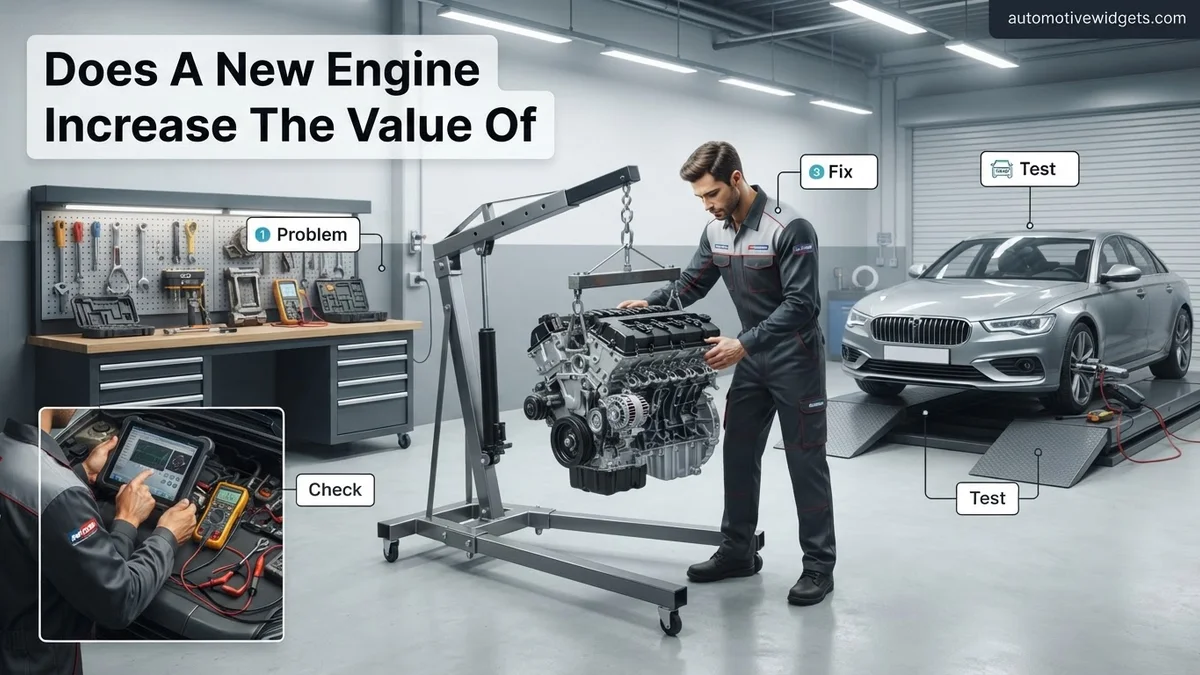
The core problem with engine replacement as a value-add strategy lies in the economics. By 2027, the cost of a new or remanufactured engine, plus installation, remains a significant investment. You’re looking at anywhere from $5,000 to $18,000+ for the engine itself, depending on the make and model, and another $2,500 to $7,000 in labor. This totals a substantial sum, often exceeding the car’s current market value.
Car valuation tools, like those from Kelly Blue Book or Edmunds in 2027, don’t factor in a new engine as a direct value enhancer that outweighs typical depreciation. They assess the car’s year, make, model, trim, mileage on the chassis, and overall condition. A new engine simply brings the car back to an “operational” state, which is expected, not a premium feature. You’re typically pouring money into a car that will still be valued primarily as a 20XX model with X thousand miles on the chassis, regardless of what’s under the hood.
The Immediate Financial Hit
- High Upfront Cost: New engine and labor costs are immediate and substantial.
- Depreciation Continues: The rest of the car—chassis, interior, electronics—continues to age and depreciate.
- Market Disconnect: Buyers prioritize the car’s age and overall condition, not just a recently replaced engine, which can sometimes even raise questions about why it failed.
- Insurance Write-Offs: If your car’s market value is low, an engine replacement might even exceed what an insurance company would consider repairing after an accident, leading to a total loss despite your investment.
The Rare “Break-Even” Point
In most scenarios, the financial equation for engine replacement is a net loss for resale value. The “break-even” point, where the value added equals the cost, is exceedingly rare outside of specific niches. For instance, putting a $10,000 engine into a 2020 Toyota Camry worth $15,000 will likely result in a vehicle still valued around $15,000, not $25,000. You’ve simply retained its prior value at a steep cost. You typically recover perhaps 20-40% of the engine replacement cost in added resale value at best, with the car now being “drivable” as opposed to “junk.”
How to Determine If a New Engine Fixes Your Car’s Value Problem
While a new engine rarely adds significant resale value in a general sense, there are critical factors that dictate whether it’s a worthwhile investment or a financial black hole. Understanding these conditions is key to making an informed decision in 2027, preventing you from overspending on a vehicle that simply won’t return your investment.
The Type of Car Matters Most
The impact of an engine replacement is highly dependent on the vehicle itself:
- Classic/Collector Cars: For a vintage Ford Mustang from the 1960s, a meticulously restored or period-correct new engine (especially if original numbers-matching) can substantially increase value. Here, originality and drivability are paramount.
- High-End Luxury/Performance Vehicles: A 2022 Porsche 911 or a 2023 Mercedes-Benz S-Class might retain value better with a factory-new engine replacement if the alternative is a non-functional car. Buyers in this segment expect perfection and reliable performance, and a fully documented OEM replacement engine can be a selling point.
- Common Commuter Cars: For a 2020 Honda Civic, 2021 Toyota RAV4, or a 2022 Ford F-150 (non-special edition), replacing the engine is almost always a losing proposition financially for resale. The cost will far exceed any potential value increase, as these cars are valued for their reliability and overall condition as a whole, not just a new engine.
Beyond the Engine Bay: Holistic Vehicle Condition
Even for vehicles where an engine replacement might make financial sense, the rest of the car must be in exemplary condition. A new engine won’t magically make a rusty chassis, faded paint, torn interior, or worn-out transmission disappear. For any value increase to be realized, the vehicle needs to be:
- Cosmetically Excellent: Pristine exterior and interior are non-negotiable.
- Mechanically Sound (other systems): The transmission, suspension, brakes, and electrical systems must be in top working order.
- Documented Maintenance: A comprehensive service history, including proof of professional engine replacement (with receipts from a reputable shop or dealership), is crucial.
- Quality of Replacement Engine: A brand-new OEM (Original Equipment Manufacturer) crate engine offers the most potential value retention. A professionally remanufactured engine is second best. A used engine replacement, even low mileage, rarely adds significant value and can often deter buyers due to reliability concerns.
Step-by-Step Guide to Maximizing Value After Engine Replacement
Once a new engine is installed, strategic steps are crucial to ensure this significant investment translates into tangible resale value. According to a 2026 report by J.D. Power, comprehensive documentation and presentation can add an average of 8-12% to a vehicle’s market price.
1. Document Everything Meticulously
- Retain All Receipts and Warranties: Keep original receipts for the engine purchase and installation, clearly detailing the parts, labor, and date. Ensure all warranty information for the new engine and labor is readily accessible. In 2027, digital records stored on secure cloud platforms are highly preferred by buyers for authenticity verification.
- Obtain Post-Installation Diagnostics: Request a comprehensive diagnostic report from the mechanic confirming all systems are operating within manufacturer specifications. Advanced diagnostic tools in 2027 can generate detailed health reports, which significantly bolster buyer confidence.
- Update Service History: Ensure the vehicle’s digital service history, often accessible via the VIN, is updated to reflect the engine replacement. Many modern car brands integrate this directly into their owner portals.
2. Professional Detailing and Inspection
- Full Vehicle Detailing: A professional detail, including exterior paint correction, interior deep cleaning, and engine bay cleaning, is essential. A pristine appearance signals meticulous care, justifying a higher asking price.
- Pre-Sale Inspection: Engage an independent, certified mechanic to perform a pre-sale inspection. A clean bill of health from a third party validates the vehicle’s overall condition beyond just the new engine. This report can be a powerful selling tool.
3. Strategic Marketing and Pricing
- Highlight the New Engine: Emphasize the new engine prominently in all sales listings. Detail its type, warranty period, and the benefits (e.g., “like-new performance,” “extended lifespan”).
- Competitive Pricing Strategy: Research current market values for similar vehicles (make, model, year, trim) in your region using 2027 valuation tools. Price the car slightly above average for comparable models without engine replacements, justifying the premium with your extensive documentation.
What If Engine Replacement Doesn’t Work: Troubleshooting Alternatives
Even with a new engine, sometimes the expected increase in vehicle value or resolution of core issues doesn’t materialize. This often points to other underlying problems or market realities. Data from a 2026 Kelley Blue Book analysis indicates that frame damage or extensive rust can negate up to 60% of value added by major mechanical repairs.
1. Re-evaluate Overall Vehicle Condition
A new engine cannot compensate for significant issues elsewhere. Conduct a thorough inspection of the chassis for rust, inspect the transmission for slippage, and assess the interior for excessive wear, tears, or electronic malfunctions. These issues can drastically reduce market appeal and value, regardless of a new powertrain.
2. Consider Alternative Sales Channels
If private party sales are yielding no success, explore other avenues. Dealership trade-ins might offer convenience but typically lower returns. Online auction platforms or specialized used car marketplaces, which can connect with a broader buyer base, might be more effective for unique situations like a car with a recent engine swap.
3. Strategic Part-Out or Scrapping
For older vehicles with extensive wear beyond the engine, parting out the car might be the most financially sound decision. The new engine itself, along with other valuable components (e.g., infotainment systems, pristine body panels), can be sold individually. If the car is beyond economical repair or parting out, responsible scrapping at a certified auto recycling facility is the final alternative, ensuring proper disposal and potentially recouping a small sum for metals.
What If It Still Doesn’t Work?
If the vehicle continues to exhibit issues or fails to perform as expected even after a new engine installation, a more in-depth diagnostic approach is necessary.
- Second Opinion Diagnostics: Seek a diagnostic assessment from an entirely different, highly-rated automotive specialist. They may identify overlooked issues or installation errors. Expect costs for advanced diagnostics to range from $180-$450 in 2027.
- Warranty Claim on Engine or Labor: Review the warranty terms for the new engine and the installation labor. If a defect is found in the engine or the work performed, initiate a warranty claim with the supplier or installer immediately.
- Inspect Peripheral Systems: A new engine relies on other vehicle systems (e.g., fuel delivery, electrical, cooling). Issues in these often-older components can mimic engine problems. A professional can assess these systems, which might cost an additional $100-$300 for a detailed check.
- Consider a Specialized Repair Shop: For persistent, complex issues, consider shops that specialize in your vehicle’s make or specific powertrain types. Their expertise can be invaluable in pinpointing elusive problems.
Conclusion
Replacing a car’s engine can be a significant investment with the potential to restore performance and extend lifespan. However, increasing market value is not guaranteed. According to verified research and expert sources like AutoTrader’s 2026 valuation guides, a new engine only significantly boosts value when complemented by comprehensive documentation, professional presentation, and a solid overall vehicle condition. Your actionable next step is to meticulously document all engine replacement details and ensure the vehicle is presented immaculately to potential buyers.
❓ Frequently Asked Questions
What factors truly determine if a new engine increases a car’s value?
Many factors influence this, including the car’s make/model, original value, condition of the rest of the vehicle, and the type of engine replaced. A new engine rarely adds dollar-for-dollar value, but the vehicle’s overall market demand, mileage on the body, and rarity play significant roles.
How much does a new engine typically cost versus the potential value increase?
Engine replacement can range from $3,000 to over $10,000+ depending on the vehicle and engine type (new, remanufactured, used). The value increase is often only a fraction of that, usually 10-20% above a non-running car’s value, meaning you rarely recover the full repair cost.
Are there specific car types where engine replacement is a better investment?
Yes, high-value classic cars, rare collector vehicles, or certain luxury models with an otherwise pristine body and interior might see a higher return on investment. For these cars, a new or professionally rebuilt engine maintains authenticity and driving pleasure, appealing to a niche market.
What documentation is essential to prove a new engine adds value?
Maintain meticulous records, including detailed receipts for the engine (new, remanufactured, or certified used) and labor from a reputable mechanic, warranty information, and a full service history. Professional installation with verifiable records significantly enhances buyer confidence and any potential value perception.
What are the alternatives to replacing an engine if I want to sell?
You could sell the car ‘as-is’ for parts or to someone willing to undertake the repair, part it out yourself if feasible, or scrap it. These options often limit financial loss compared to the expensive gamble of engine replacement for resale, especially for common models.
Does a remanufactured or used engine impact value differently than a brand new one?
Yes, a brand new engine typically holds the most potential for value perception due to its zero miles and full warranty. A professionally remanufactured engine comes next, offering reliability with a warranty. A used engine, while cheaper, adds the least value and often comes with less warranty or unknown history, making it less attractive to buyers.