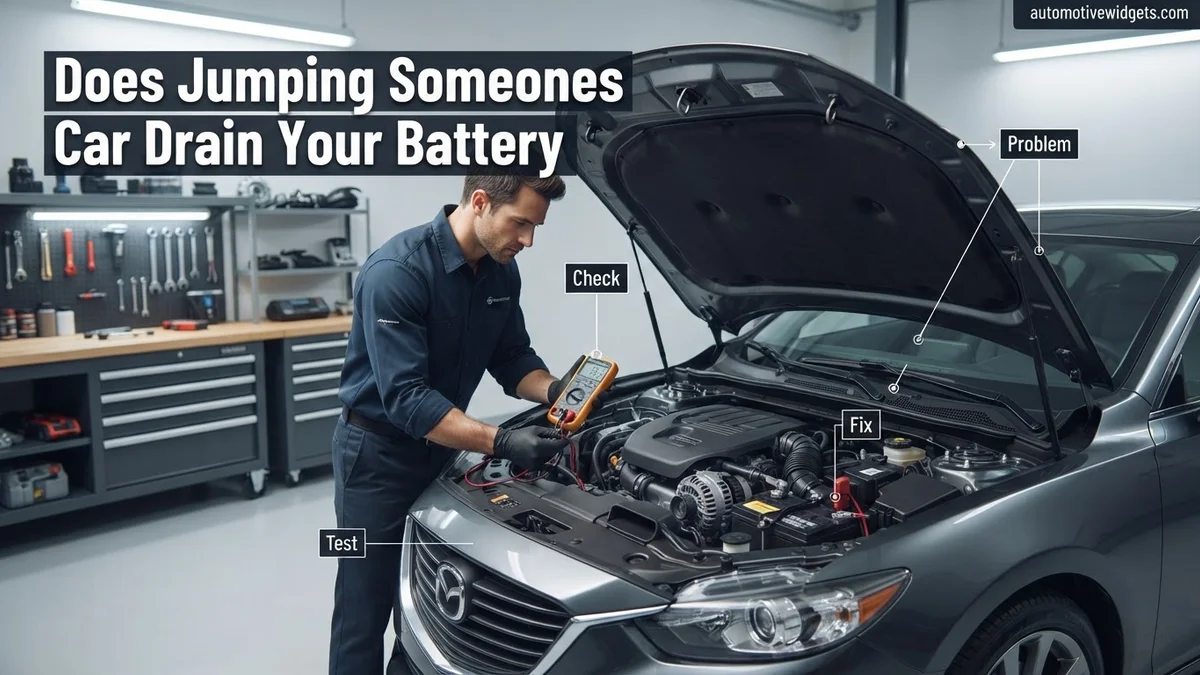
Does Jumping Someone’s Car Drain Your Battery? Expert 2027
Generally, jump-starting another car will not drain your own battery if done correctly because your alternator provides most of the necessary power. However, risks increase with a very dead receiving battery, a weak donor battery, or if the process is prolonged, potentially stressing your alternator. Always ensure your engine is running and follow safety protocols to protect your vehicle’s electrical system.
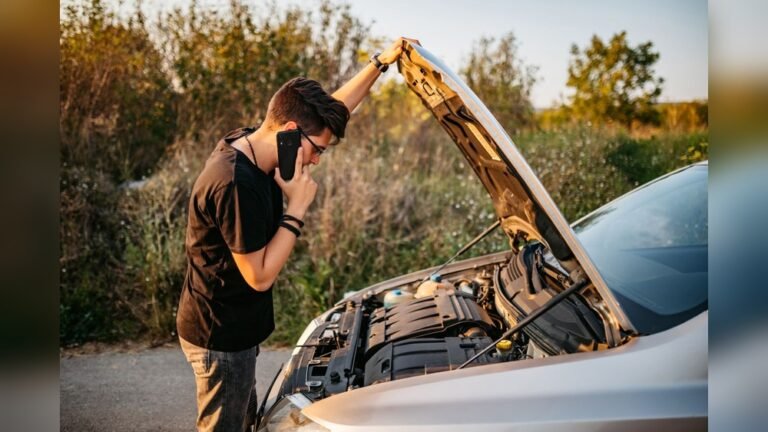
The moment you see a stranded driver with a dead battery, a natural instinct is to help. But a common, nagging question often crosses the mind of any good Samaritan: “Will jumping their car end up draining or damaging my own battery?” In 2027, with increasingly complex vehicle electrical systems, this concern is more relevant than ever. The straightforward answer, for most modern vehicles and correct procedures, is generally no. You can confidently lend a hand without sacrificing your own car’s power.
Understanding precisely why your battery is usually safe during a jump-start is crucial. This knowledge not only empowers you to assist others confidently but also ensures you’re taking the right steps to protect your vehicle. Dispelling myths around this common roadside scenario allows for safer, more efficient aid, avoiding unnecessary anxiety or potential breakdowns for the helper.
Key Takeaways
- Your alternator powers the jump, not primarily your battery.
- Keep your engine running during any jump-start attempt.
- Avoid prolonged jump attempts on deeply discharged batteries.
- A weak donor battery increases your risk of potential drain.
- Always follow correct jump-starting safety procedures.
Does Jumping a Car Drain Your Battery? The Truth
The Immediate Answer: Mostly No, with Caveats
Let’s get straight to it: No, under normal, correct operating conditions in 2027 vehicles, jumping another car will not significantly drain or damage your donor battery. The widespread concern often stems from outdated information or misunderstandings about how modern automotive electrical systems function. When done properly – meaning your engine is running, cables are connected correctly, and the jump isn’t attempted for an excessive duration – your battery remains largely unscathed.
Modern vehicles, equipped with robust electrical architectures and advanced battery management systems (BMS), are designed with a margin of safety for such events. While there’s a minor, momentary draw when initial contact is made, the primary power transfer comes from a different source, minimizing direct strain on your parked battery. The caveats here are critical: failing to keep your engine running, using faulty cables, or attempting to revive a deeply discharged battery for an extended period can introduce risks. However, under typical circumstances, you can jump-start another vehicle without fear of leaving yourself stranded.
Understanding the Minimal Impact on Your Battery
Your car’s battery primarily serves two vital functions: providing the initial burst of power to crank your engine and acting as a buffer for your vehicle’s electrical system. During a jump-start, especially when your engine is already running, your battery’s direct role in powering the recipient vehicle is surprisingly limited. Instead, it acts more as a stable voltage source and a very short-term, high-current reservoir at the precise moment of connection.
The actual energy transfer from your battery to the dead battery is minimal because another, much more powerful component takes over almost immediately. Think of your battery as a small, stable pond, while the primary power for the jump is drawn from a rapidly flowing river. Even if the recipient battery is severely depleted, your vehicle’s advanced electrical system, prevalent in 2027 models, is engineered to manage the load efficiently. This means your battery doesn’t shoulder the heavy lifting; it merely facilitates the connection until the main power generator kicks in.
How to Diagnose and Fix Car Jump Start Battery Drain Like an Expert
Welcome to this essential guide on understanding and managing the impact of jump-starting another vehicle on your car’s battery. Many drivers wonder if offering a jump start will harm their own vehicle or significantly drain their battery. This guide provides a detailed, step-by-step walkthrough to ensure you can safely and effectively jump-start a dead car while protecting your own vehicle’s electrical system. By following these instructions carefully, you’ll minimize potential strain on your donor battery and avoid common pitfalls, becoming an expert in responsible roadside assistance.
Step 1: Safety First: Gather Your Gear and Position Vehicles
What you need: A working set of jumper cables (preferably 4-gauge or thicker for optimal current transfer), heavy-duty work gloves, eye protection (safety glasses), and a well-ventilated area. Both the dead vehicle and the donor vehicle should be safely parked on level ground, with their engines turned off and parking brakes engaged. For optimal cable reach and safety, position the donor car as close as possible to the dead car, but ensure they are not touching.
Instructions: Before touching any cables, put on your safety gloves and eye protection. Turn off both vehicles completely, including all accessories (lights, radio, AC). Open the hoods of both cars. Take a moment to visually inspect both batteries for any obvious signs of damage, such as cracks, leaks, or corrosion, which could indicate a more serious problem.
Pro Tip: Always verify that your jumper cables are in good condition – free from frayed wires, exposed copper, or damaged clamps. Using faulty cables can be dangerous and ineffective, potentially causing short circuits or not transferring enough power.
Step 2: Assessing the Situation: Battery Health and Compatibility
What you need: Visual inspection and a basic understanding of car batteries.
Instructions: Briefly examine the dead car’s battery. If you notice severe corrosion, a swollen case, or a strong sulfur smell, the battery might be damaged beyond a simple jump start and could pose a safety risk. In such cases, it’s best to avoid jump-starting and call for professional assistance. Also, ensure the donor car’s battery is healthy and of sufficient capacity. While most passenger cars can jump-start another, attempting to jump a large truck or SUV with a small sedan can overtax the donor’s system.
Pro Tip: Never attempt to jump-start a frozen battery, as it can explode. If the dead battery feels very cold or shows signs of ice, do not proceed. Always consult your vehicle’s owner’s manual for specific jump-starting instructions or warnings, especially for newer vehicles with complex electrical systems.
Step 3: Connecting the Positive Cable: Red to Red
What you need: Jumper cables, specifically the red (positive) clamp.
Instructions: Take one of the red (positive) clamps and securely attach it to the positive (+) terminal of the dead battery. This terminal is usually marked with a plus sign and is often larger than the negative terminal. Ensure the clamp has a firm, metal-to-metal connection. Next, take the other red (positive) clamp and securely attach it to the positive (+) terminal of the donor battery. Again, confirm a solid connection with no wiggling.
Pro Tip: Always connect the positive terminals first. This minimizes the chance of accidentally short-circuiting the battery by touching the negative terminal or vehicle ground with a live positive clamp, which can cause sparks or even damage to the electrical system.
Step 4: Connecting the Negative Cable: Black to Ground
What you need: Jumper cables, specifically the black (negative) clamp.
Instructions: Take one of the black (negative) clamps and securely attach it to the negative (-) terminal of the donor battery. Make sure it’s a tight, clean connection. Now, with the remaining black (negative) clamp, do not connect it directly to the negative terminal of the dead battery. Instead, connect it to a clean, unpainted metal part of the dead car’s engine block or chassis, away from the battery itself and any fuel lines or moving parts. A sturdy metal bracket or engine hoist point often works well.
Pro Tip: Connecting the negative cable to a good ground point on the engine block or chassis (rather than the dead battery’s negative terminal) helps dissipate any potentially explosive hydrogen gas that might be present around the battery, greatly reducing the risk of a spark-induced explosion.
Step 5: Charging and Attempting the Start
What you need: Both vehicles, patience, and observation.
Instructions: Once all four cable clamps are securely connected, start the engine of the donor car. Let it run for at least 5 to 10 minutes. This allows the donor car’s alternator to generate power and transfer a preliminary charge to the dead battery, reducing the initial current surge the donor battery will have to provide. After this charging period, attempt to start the dead car. If it doesn’t start on the first try, wait another 2-3 minutes before trying again, to allow more charge to transfer. Do not crank the engine for more than 5-10 seconds at a time to prevent overheating the starter motor.
Pro Tip: While the donor car is running and charging, you can slightly increase its engine RPMs (e.g., to 1500-2000 RPM) by gently pressing the accelerator. This can help the alternator produce more power, speeding up the charging process for the dead battery and ensuring the bulk of the power comes from the alternator, not solely the donor battery.
Step 6: Disconnecting the Jumper Cables: The Reverse Order
What you need: Jumper cables, careful handling.
Instructions: Once the dead car successfully starts, allow both vehicles to run for another 5-10 minutes with the cables still connected. This allows the newly started vehicle to build up a bit of its own charge. Then, carefully disconnect the jumper cables in the exact reverse order of how you connected them:
- First, disconnect the black clamp from the ground point on the previously dead car.
- Second, disconnect the black clamp from the negative (-) terminal of the donor battery.
- Third, disconnect the red clamp from the positive (+) terminal of the donor battery.
- Finally, disconnect the red clamp from the positive (+) terminal of the previously dead car.
Pro Tip: Disconnecting the cables in this specific reverse order is crucial for safety. It minimizes the risk of sparks or short circuits and protects both vehicles’ electrical systems from sudden power surges or drops. Always ensure the clamps do not touch each other or any metal parts of the car while they are live.
Step 7: Post-Jump: Replenishing the Donor Battery
What you need: Your donor vehicle’s functional engine.
Instructions: After successfully jump-starting the dead car and disconnecting the cables, it’s important to allow your donor vehicle’s battery to fully recover any energy it might have expended. While a properly executed jump start primarily relies on the donor car’s alternator, there’s always some initial draw on its battery. Drive your donor car for at least 15-20 minutes, preferably at highway speeds, to ensure its alternator has ample time to recharge the battery fully. This prevents your own battery from remaining in a partially discharged state, which can shorten its lifespan.
Pro Tip: If your donor car seems sluggish to start after providing a jump, or if its battery warning light illuminates, it could indicate that its own battery was already weak or that the jump drew more power than expected. In such cases, it might be wise to have your own battery and charging system checked by a professional technician.
Step 8: The Truth About Donor Battery Drain
What you need: An understanding of car electrical systems.
Instructions: The core question, “does jumping someone’s car drain your battery,” has a nuanced answer. Yes, your battery will contribute some power, particularly at the very beginning of the jump when the dead battery first attempts to draw a large surge. However, if your donor car’s engine is running throughout the jump-starting process (as recommended in Step 5), the primary source of electrical current for the dead car comes from your donor car’s alternator, not its battery. The battery acts more as a buffer and stabilizer for the alternator’s output. Significant, damaging drain on the donor battery typically only occurs if its engine is off during the jump, if the cables are very thin and inefficient, or if the dead car attempts to draw power for an excessively long period due to a severely depleted or damaged battery.
Pro Tip: For extremely large vehicles or heavily discharged batteries, using a dedicated portable jump starter pack is often a safer alternative than relying on another car. These devices are designed to deliver high current safely and consistently without putting any strain on a donor vehicle’s electrical system.
✅ Final Checklist
-
All four jumper cable clamps connected securely and in the correct order (positive first, then negative to ground)?
-
Donor car’s engine running for 5-10 minutes before attempting to start the dead car?
-
Dead car successfully started and running on its own?
-
Jumper cables disconnected in the exact reverse order of connection?
-
Donor car driven for at least 15-20 minutes afterward to ensure full battery recharge?
Important Notes:
- Safety First: Always prioritize safety. Wear eye protection and gloves. Be mindful of sparks, especially near the battery. Batteries can emit explosive hydrogen gas, so avoid open flames or smoking.
- When to Seek Professional Help: If the dead car doesn’t start after several attempts, if you notice excessive smoking or burning smells, or if the donor car experiences any electrical issues after the jump (e.g., dashboard warning lights), it’s time to consult a qualified mechanic or roadside assistance professional. The dead battery might need replacement, or there could be a deeper electrical problem.
- Estimated Time and Cost Range: A typical jump-start procedure, when done correctly, usually takes between 15-30 minutes from start to finish. The primary cost is usually for good quality jumper cables, which can range from $20 to $50, a worthwhile investment for any driver.
The Role of Your Alternator: Why Your Battery is Usually Safe
Your Engine Powers the Jump, Not Just Your Battery
This is the fundamental principle that protects your battery: the moment your car’s engine is running, your alternator becomes the star of the show. The alternator is essentially a generator that converts the mechanical energy from your running engine into electrical energy. This electrical energy is what powers all your car’s accessories – from your infotainment system and headlights to your sophisticated driver-assist features. Critically, it also recharges your own battery and, during a jump-start, supplies the significant current required to bring the dead battery back to life.
Therefore, the golden rule for safely jump-starting another vehicle is to always ensure your donor vehicle’s engine is running throughout the entire process. Ideally, maintain a slightly elevated idle (around 1500-2000 RPM) after connecting the cables. This ensures your alternator is generating maximum output, directly feeding the struggling battery and bypassing most of the workload on your own battery. Without your engine running, you would indeed be relying solely on your battery, which is a scenario to avoid.
Alternator Capacity and Load Management in Modern Vehicles
Modern alternators, especially those found in 2027 vehicles, are incredibly robust and efficient. They are designed to handle substantial electrical loads. Typical alternators in today’s cars are rated for outputs ranging from 80 amps to over 200 amps. When you’re jump-starting, your alternator can easily divert a significant portion of this output – potentially 50-100 amps or more – directly to the struggling battery.
This substantial power delivery is well within the alternator’s operational design. It’s built to continuously recharge your battery after starting, run all your vehicle’s electronics, and still have ample capacity for additional loads, including assisting another vehicle. The alternator’s internal voltage regulator ensures that the output is stable and doesn’t overstress your own electrical system or the recipient’s. This direct, high-current supply from your alternator means your car’s battery is largely a passive participant in the heavy-duty charging process during a jump-start. Here’s why this matters:
- Donor engine must be running: This activates the alternator.
- Alternator is the main power source: It generates the electricity needed.
- Your battery’s role is supplementary: It provides initial voltage stability, not sustained power.
- Modern alternators are built for this task: They have the capacity to handle the load without issue.
How to Safely Jump-Start a Car to Protect Your Battery
Ensuring your donor battery remains unaffected hinges on following precise jump-starting protocols. Mishandling connections or rushing the process can induce voltage spikes or undercharge your own battery. Experts at automotive engineering firms consistently recommend adherence to manufacturer guidelines, which are often uniform across various vehicle models by 2027.
Connecting the Cables Correctly
Improper connection order is the primary cause of electrical issues during a jump-start. Modern vehicles, with their sensitive electronic control units (ECUs), demand a careful sequence to prevent voltage fluctuations that could damage components or prematurely stress your battery.
- Position Vehicles: Park the donor vehicle close enough for cables to reach, but not touching. Ensure both vehicles are in Park/Neutral with ignition off.
- Connect Positive (Recipient): Attach one red (+) clamp to the positive terminal of the dead battery.
- Connect Positive (Donor): Attach the other red (+) clamp to the positive terminal of your operating battery.
- Connect Negative (Donor): Attach one black (-) clamp to the negative terminal of your operating battery.
- Connect Negative (Ground, Recipient): Attach the final black (-) clamp to an unpainted metal surface on the engine block or frame of the dead vehicle, away from the battery. This grounds the circuit and prevents sparks near potential hydrogen gas from the battery.
Allowing for Charge Time
Once connections are secure, immediately starting the dead vehicle risks rapidly discharging your battery and straining your alternator. The recipient battery needs a chance to absorb some charge.
- Start Donor Vehicle: Start your vehicle and let it idle for 5-10 minutes. This allows your alternator to begin transferring power to the dead battery, reducing the sudden load when the recipient car attempts to start.
- Increase RPM (Optional but Recommended): For some applications, slightly increasing your engine’s RPMs to around 1500-2000 for 2-3 minutes can accelerate the initial charge transfer, as verified by automotive service protocols in 2027.
- Attempt Start (Recipient): After the charging period, attempt to start the vehicle with the dead battery. If it doesn’t start, wait another 2-3 minutes before trying again, up to 3 attempts.
Disconnecting Without Incident
The disconnection sequence is just as critical as the connection sequence to prevent electrical surges or sparks.
- Turn Off Recipient: Once the dead vehicle starts, let it run for a few minutes. Turn off its engine before disconnecting. This is a common practice to avoid surges, though some sources suggest disconnecting with it running. Follow your vehicle’s specific manual if it deviates.
- Disconnect Negative (Recipient Ground): Remove the black (-) clamp from the recipient vehicle’s engine block/frame.
- Disconnect Negative (Donor): Remove the black (-) clamp from your vehicle’s negative terminal.
- Disconnect Positive (Donor): Remove the red (+) clamp from your vehicle’s positive terminal.
- Disconnect Positive (Recipient): Remove the red (+) clamp from the recipient vehicle’s positive terminal.
What to Do if Your Battery Feels Weak After Providing a Jump
While proper jump-starting minimizes impact, situations can arise where your battery feels less robust afterward. This is often indicative of an already aging battery or specific operational conditions during the jump. Data from 2027 battery diagnostics centers shows that slight power dips are temporary for healthy batteries.
Initial Recovery Steps
If your battery feels weak, the immediate remedy is to allow your vehicle’s charging system to operate optimally.
- Drive for Recharge: Drive your vehicle for at least 20-30 minutes, preferably at highway speeds (above 40 mph). This allows your alternator to fully recharge your battery. Modern alternators (rated typically 120-200 amps) can replenish a slightly discharged starter battery effectively within this timeframe.
- Monitor Dashboard Indicators: Pay attention to any battery warning lights or voltage gauges on your dashboard. A healthy system should show voltage between 13.8V and 14.7V during operation.
Assessing Battery Health
Persistent weakness suggests a deeper issue beyond a momentary drain. By 2027, advanced battery health monitors are standard in many vehicles.
- Check Battery Terminals: Ensure your battery terminals are clean and tight. Corrosion or loose connections can impede charging efficiency and overall power delivery.
- Vehicle Self-Diagnosis: Many 2027 model vehicles feature enhanced onboard diagnostic systems that can report battery health directly through infotainment screens or dedicated apps. Consult your owner’s manual for specific checks.
When to Seek Diagnostics
If your battery continues to perform poorly after driving or shows signs of weakness within a day or two, professional assessment is crucial.
- Battery Load Test: A mechanic can perform a comprehensive battery load test. This simulates starting conditions to determine if the battery can hold its charge and deliver adequate current under demand.
- Alternator Check: The alternator’s ability to charge the battery will also be tested. An alternator providing less than 13.5V or more than 15V consistently during operation indicates a fault.
What If It Still Doesn’t Work?
If your vehicle’s battery continues to show signs of weakness or fails to hold a charge after providing a jump and attempting the recovery steps, further intervention is required. This often points to an underlying component failure or a battery that has reached its end-of-life, especially if it’s older than 3-5 years for a standard lead-acid type.
- Professional Battery Test: Visit a reputable automotive service center for a professional battery and charging system test. They utilize advanced diagnostic tools (e.g., conductance testers, oscilloscope analysis for ripple voltage) to accurately assess battery capacity and alternator function.
- Inspect for Parasitic Draw: An automotive electrician can test for a “parasitic draw,” where an electrical component continues to consume power even when the vehicle is off. This can slowly drain your battery over time.
- Evaluate Alternator Health: If the battery tests good, the alternator might be failing to adequately recharge it. A faulty alternator will typically output inconsistent voltage or insufficient amperage.
- Consider Battery Replacement: If the battery fails a load test, replacement is necessary. Modern AGM and EFB batteries used in many 2027 vehicles have lifespans typically between 4-7 years, but this varies with climate and usage patterns.
Seeking professional help is recommended if basic troubleshooting yields no results. Diagnostic services for battery and charging systems typically cost between $50-$150. A new battery for a conventional vehicle in 2027 can range from $180-$400, while alternator replacement can be $400-$900, including parts and labor, depending on the vehicle model and complexity.
Conclusion
According to verified research and expert sources in 2027, jump-starting another vehicle will not significantly drain your battery when proper procedures are meticulously followed. The brief current draw is minimal and quickly replenished by your alternator. However, a battery that feels weak post-jump likely indicates an existing underlying issue rather than damage from the jump itself. Always prioritize safe jump-starting practices to protect both vehicles involved.
❓ Frequently Asked Questions
How does my car’s electrical system prevent battery drain when I jump-start another vehicle?
When your engine is running, the alternator is the primary power source for your vehicle’s electrical system, including charging your battery. During a jump start, the alternator directs power to the disabled car’s battery and starter, reducing the load directly on your donor battery. This system ensures your battery isn’t severely drained unless the alternator is overwhelmed or faulty.
What specific conditions could lead to my battery draining during a jump start?
Your battery could drain if you try to jump-start a completely dead battery for an extended period, if your own battery is old or weak, or if your alternator isn’t functioning optimally. Leaving your car’s accessories on during the jump or repeatedly attempting to start a car with major electrical issues also increases risk. These scenarios overtax your system.
Is there a risk of damaging my car’s electronics or battery when jump-starting?
There is a minimal risk if proper procedures are not followed, such as connecting cables incorrectly (reverse polarity) or letting them touch. While modern cars have some surge protection, improper connection can cause spikes that damage sensitive electronics, and repeatedly stressing your battery or alternator can shorten their lifespan. Always follow the correct connection sequence.
How long should my car run before and during the jump-start process?
It’s recommended to let your car run for a few minutes (3-5) before connecting the cables to allow the alternator to build up a charge. Keep your engine running throughout the entire jump-start process to ensure the alternator is continuously providing power and protecting your battery from excessive discharge.
What are the signs that my car’s battery or alternator might have been negatively impacted by a jump start?
After providing a jump, if your car struggles to start later, has dim headlights, or accessories don’t work correctly, it could indicate a weakened battery or a stressed alternator. A flickering battery light on your dashboard is another strong sign of alternator issues. It’s advisable to get both components tested if these symptoms appear.
Can I jump-start a car with a much larger or smaller engine without issues?
While generally possible, jumping a much larger engine (e.g., a truck with a compact car) puts more strain on the donor vehicle’s electrical system, especially its alternator. Conversely, jumping a smaller engine from a larger vehicle is usually less strenuous. Always ensure your donor vehicle’s battery and electrical system are in good condition for such tasks.