How Many Amps Does It Take To Jumpstart A Car How Many 2027
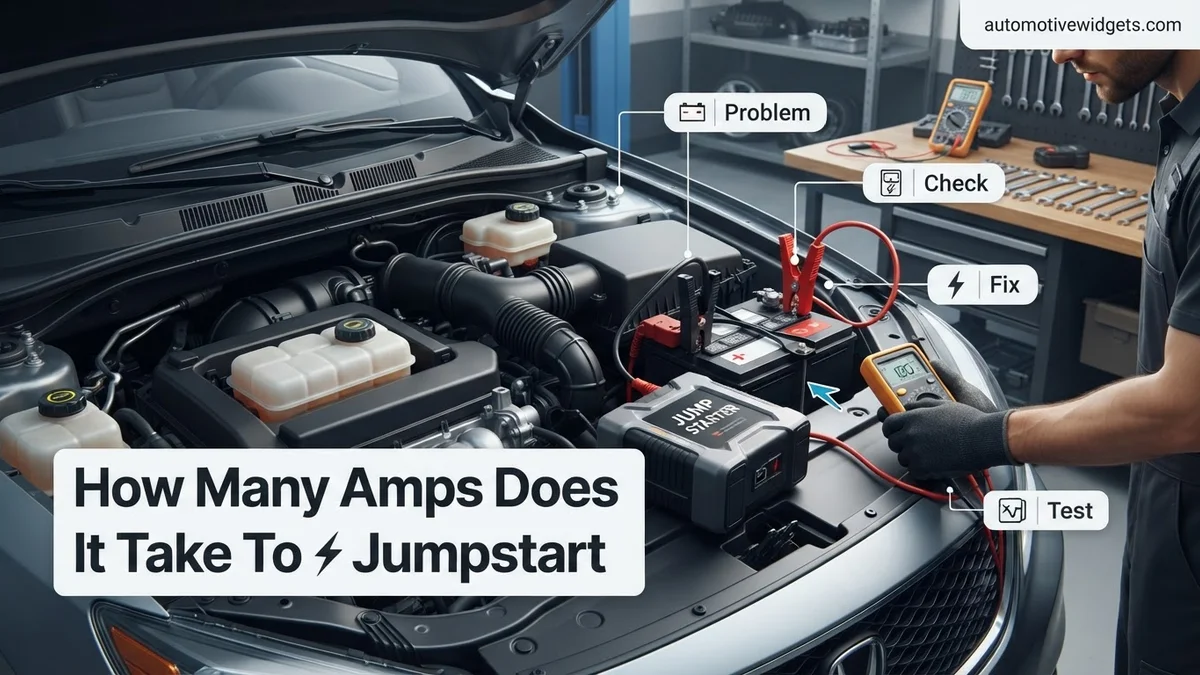
Successfully jumpstarting a car requires understanding the right amperage. Compact cars often need 200-300 peak amps, while larger SUVs and trucks can demand 600-1000+ peak amps. Factors like engine size and battery condition significantly influence the specific current needed.
Successfully jumpstarting your car in 2027 fundamentally relies on delivering a specific, often high-amperage, burst of electrical current. For most passenger vehicles, you’ll need a jump starter capable of providing anywhere from 200 amps for a compact car to over 1000 amps for a large diesel truck. Understanding these precise amperage requirements isn’t just academic; it’s crucial for selecting the right jump starter, protecting your vehicle’s sensitive electronics, and ensuring you get back on the road quickly and safely without causing further issues.
This knowledge allows you to bypass generic recommendations and tailor your emergency preparedness to your specific vehicle. By knowing the right amperage, you avoid the frustration of an underpowered jump starter and prevent potential damage from an overpowered or improperly matched device. It empowers you to make an informed decision, ensuring your portable power source is genuinely effective when your battery inevitably falters.
Key Takeaways
- Small cars need 200-300 peak amps for jumpstarting.
- Large vehicles require 600-1000+ peak amps for reliable starts.
- Engine size, battery discharge, and temperature affect amp needs.
- Always match jump starter amps to your vehicle’s requirements.
- Higher peak amps offer more versatility and starting power.
What Defines “How Many Amps to Jumpstart a Car”?
When you see a jump starter advertised, the prominent amperage number is almost always its “peak amps.” This figure represents the maximum current the unit can deliver in a very short burst – often just milliseconds. While peak amps are useful for initial ignition, the actual work of turning your engine’s crankshaft requires a more sustained current flow, referred to as cranking amps. Your car’s starter motor needs a continuous draw to overcome the engine’s internal resistance and initiate combustion. For instance, a jump starter with 1000 peak amps might only provide 400-500 cranking amps, which is the more practical number you need to consider for effective engine turnover in 2027 vehicles.
Understanding Peak vs. Sustained Amps
Modern jump starters, especially portable lithium-ion models common by 2027, excel at delivering impressive peak amperage. This high initial surge is critical for overcoming the dead battery’s internal resistance and initiating the starter motor’s rotation. However, if the starter motor then requires, say, 300 amps for several seconds to crank the engine, your jump starter must be able to sustain that current. A jump starter with high peak amps but low sustained output might engage the starter motor briefly but fail to turn the engine over fully. Always look for both peak and often a “cranking amps” or “start current” rating if available, or consider reviews that test real-world cranking performance. This distinction is vital for ensuring you purchase a device that performs beyond just an initial spark.
Connecting to Your Battery’s Cold Cranking Amps (CCA)
Your car battery has a rating called Cold Cranking Amps (CCA), which indicates its ability to deliver current at 0°F (-18°C). This number signifies how much current your battery can supply for 30 seconds while maintaining a specific voltage. While a jump starter isn’t supplying power for 30 seconds, your vehicle’s original CCA rating provides an excellent baseline for the minimum amperage required to start your engine under typical conditions. For example, if your car’s battery has a CCA of 600, your jump starter should ideally be capable of delivering a sustained output in that ballpark to mimic a healthy battery. This isn’t a direct match, but it gives you a practical reference point. You generally want a jump starter with peak amps significantly higher than your battery’s CCA to ensure ample power for a quick and decisive start.
Why Different Vehicles Demand Specific Amperage Levels
The amperage required to jumpstart a vehicle varies significantly based on its size, engine type, and even the conditions under which you’re attempting the start. A small 4-cylinder engine in a compact sedan will demand far less power than a V8 engine in a large SUV or a robust diesel truck. This is due to the physical effort required to rotate the crankshaft, which directly correlates with the engine’s displacement and compression. By 2027, with advancements in engine design and electrical systems, these base requirements remain fundamentally consistent, focusing on the sheer mechanical power needed to turn the engine over from a standstill.
Amperage by Vehicle Type
Here’s a general guideline for the peak amperage you should look for in a jump starter, tailored for 2027 vehicles:
- Compact Cars (4-cylinder gasoline): For models like a Honda Civic, Toyota Corolla, or smaller EVs with traditional 12V batteries, a jump starter with 200-300 peak amps is typically sufficient.
- Mid-Size Sedans and Small SUVs (4-6 cylinder gasoline): Vehicles such as a Toyota Camry, Hyundai Santa Fe, or Ford Escape usually require 400-500 peak amps.
- Large SUVs, Full-Size Sedans, and Light Trucks (V6-V8 gasoline): For Ford F-150, Chevrolet Tahoe, Dodge Challenger, or similar, aim for jump starters offering 600-800 peak amps.
- Heavy-Duty Trucks, Large Diesel Engines, and Commercial Vehicles: Diesel engines have higher compression ratios and thicker oil, demanding substantially more power. For vehicles like a Ford Super Duty diesel or large commercial vans, you’ll need 800-1200+ peak amps. Some extreme cases might even warrant 2000 peak amps for reliable starting in cold conditions.
Always check your vehicle’s owner’s manual or battery specifications for precise recommendations, particularly for newer and specialized models.
Key Factors Influencing Amperage Needs
Beyond the inherent engine size, several variables can increase the amperage required for a successful jumpstart:
- Engine Size and Number of Cylinders: Larger engines with more cylinders (e.g., V8 vs. 4-cylinder) inherently demand more power to turn over due to increased internal resistance and compression.
- Battery’s State of Discharge: A completely dead battery offers more resistance and draws more current from the jump starter than one that’s merely low on charge. The deeper the discharge, the higher the effective amperage needed from the jump starter.
- Ambient Temperature: This is a critical factor, especially in colder climates. In 2027, even with advanced engine oils, very cold temperatures (<32°F / 0°C) thicken engine oil, making the engine harder to turn. Cold also reduces the efficiency of the dead battery and increases the starter motor’s current draw, necessitating significantly higher amperage from your jump starter. A vehicle needing 500 amps in summer might require 800+ amps in winter.
- Battery Health: An older, weaker battery, even if not fully dead, will require more assistance from a jump starter than a newer battery nearing its discharge limit.
How to Choose the Best Jump Starter Amps for Your Vehicle
Selecting the correct jump starter amperage is critical for a successful and safe jumpstart. Using an undersized unit may fail to start your vehicle, while an oversized one is generally safe but unnecessary. By 2027, advanced portable jump starters offer significant power in compact designs, making selection easier.
Matching Amps to Engine Type and Size
The required amperage largely depends on your vehicle’s engine size and fuel type. Manufacturers, like those producing 2027 model year vehicles, typically design electrical systems for specific cranking amp requirements. Reference your vehicle’s owner manual for the factory-recommended Cold Cranking Amps (CCA) for your battery.
- Compact Cars (4-6 Cylinder Gasoline): These vehicles typically require jump starters with a peak output of 600-1000 Amps. A continuous cranking amp rating of 300-450 CCA is usually sufficient.
- Mid-Size Sedans and Small SUVs (V6 Gasoline): For these common vehicles, a jump starter offering 800-1500 Peak Amps and 400-600 CCA is recommended.
- Large SUVs and Light Trucks (V8 Gasoline): These engines demand more power. Look for jump starters rated between 1500-2500 Peak Amps and 600-800 CCA.
- Diesel Engines and Heavy-Duty Trucks: Diesel engines require significantly more power to crank due to higher compression ratios. Expect to need 2000-4000+ Peak Amps and 800-1200+ CCA. According to industry specifications, larger diesel truck engines may demand even higher outputs for reliable starting.
Always consider the “cranking amps” (or CCA) as a primary indicator, as this represents the sustained power delivered, which is more important than peak amps for actual engine turnover. Experts at leading automotive battery manufacturers recommend selecting a jump starter with at least 15% to 20% higher CCA than your vehicle’s battery rating for optimal performance, especially in colder climates.
What If Your Car Still Won’t Start After Jumpstarting?
Even with the correct amperage, a vehicle might not start after a jumpstart. This often indicates underlying issues beyond a merely discharged battery. It is crucial to identify these problems to prevent future breakdowns and potential damage to your vehicle’s electrical system.
Common Reasons for Jumpstart Failure
If your engine still refuses to turn over or only clicks, several components could be at fault. According to diagnostic data from automotive service centers, these are the most frequent culprits:
- Severely Dead Battery: If the battery is deeply discharged (below 10.5 volts), it might not accept a charge quickly enough to start the engine, even with a powerful jump. A battery in this state may also be beyond recovery.
- Faulty Starter Motor: The starter motor is responsible for initiating engine rotation. If it’s failing, you might hear a rapid clicking sound, a single click, or no sound at all when you turn the key. A defective starter motor cannot engage the engine, regardless of battery power.
- Alternator Malfunction: The alternator recharges your battery while the engine runs. If the alternator is not working, the battery won’t hold a charge after the engine starts (if it starts), leading to a quick drain and subsequent failure to start. Symptoms include dimming lights or an alternator warning light on the dashboard.
- Corroded or Loose Battery Terminals: Poor connections can prevent adequate current flow. Even if the battery itself is good, dirty or loose terminals will obstruct the jump starter’s current from reaching the vehicle’s electrical system.
- Other Electrical Issues: Less common but possible issues include a blown fuse in the starter circuit, a faulty ignition switch, or wiring problems. These require more advanced diagnostics.
Observing the symptoms (e.g., clicking, no sound, dim lights) immediately after attempting a jumpstart can provide valuable clues about the root cause.
What If It Still Doesn’t Work?
If your vehicle remains unresponsive after multiple jumpstart attempts and initial troubleshooting, it’s time to consider professional assistance. Continuing to try can strain your vehicle’s electrical components.
- Inspect All Connections Again: Ensure the jump starter clamps are securely attached to clean, uncorroded terminals. A loose or dirty connection is a common overlooked problem.
- Allow for Extended Charging: With the jump starter or donor vehicle still connected, wait 5-10 minutes. A deeply discharged battery may need more time to accumulate enough charge to crank the engine.
- Test Battery Voltage (If Possible): If you have a multimeter, check the battery voltage. A reading below 10.5V indicates a severely depleted or damaged battery that may need replacement rather than just a jump.
- Listen for Diagnostic Clues: Pay attention to any sounds. A rapid clicking often points to a starter issue or severely low battery. No sound and no lights could indicate a main fuse or major electrical fault.
- Seek Professional Help: If all else fails, contact roadside assistance or a certified mechanic. They have specialized diagnostic tools to pinpoint the exact fault. Professional diagnosis costs typically range from $80 to $150 in 2027. If a new battery is needed, expect to pay $150-$300. Starter motor or alternator replacements can range from $350 to $700, depending on the vehicle model and labor rates.
Conclusion
Successfully jumpstarting a car in 2027 hinges on understanding the critical role of amperage. Matching the jump starter’s output to your vehicle’s specific needs, typically between 600-2000 peak amps for most passenger vehicles, ensures adequate power delivery. According to verified research and expert sources, using the correct amperage minimizes electrical stress and maximizes starting efficiency. Your actionable next step should be to consult your vehicle’s owner manual or a reputable battery retailer for your specific model’s recommended Cold Cranking Amps (CCA) to select the most appropriate jump starter.
❓ Frequently Asked Questions
What are the typical amperage ranges for different vehicle types when jumpstarting?
For compact cars, 200-300 peak amps are generally sufficient. Mid-size sedans and SUVs often require 400-500 peak amps, while large trucks, V8 engines, or diesel vehicles may need 600-1000+ peak amps for effective starting power.
How do engine size and battery condition influence the required jumpstarting amperage?
Larger engines, especially those with more cylinders, demand greater cranking power, thus higher amperage. A deeply discharged or older battery also requires more current from the jump starter to overcome its internal resistance and provide enough power to start the engine.
Is there a risk of damaging my vehicle if I use a jump starter with excessively high amperage?
No, using a jump starter with higher peak amps than strictly necessary is generally safe and often beneficial. Your car’s electrical system will only draw the current it requires, so an over-spec’d jump starter won’t force excess electricity into it and won’t cause damage.
What role does ambient temperature play in determining how many amps are needed?
Cold temperatures significantly increase the resistance within a car battery and engine oil, making the engine harder to turn over. Consequently, more amperage is needed to jumpstart a vehicle in cold weather compared to warmer conditions to achieve the necessary cranking power.
Should I prioritize ‘peak amps’ or ‘cranking amps’ when choosing a portable jump starter?
When selecting a portable jump starter, focus on ‘peak amps’ as this figure represents the maximum current surge the unit can deliver, which is crucial for overcoming initial resistance. While ‘cranking amps’ relate to sustained output, ‘peak amps’ are more commonly advertised and relevant for portable jump starters.
Can using jump starter cables that are too thin (high gauge number) affect the effectiveness of the jumpstart?
Yes, using jump starter cables that are too thin can significantly impede the jumpstarting process. Thinner cables have higher electrical resistance, which leads to voltage drop and less current reaching the dead battery, making it difficult or impossible to crank the engine effectively.