How Much Does It Cost To Fix A Car Thermostat Fix Car 2027
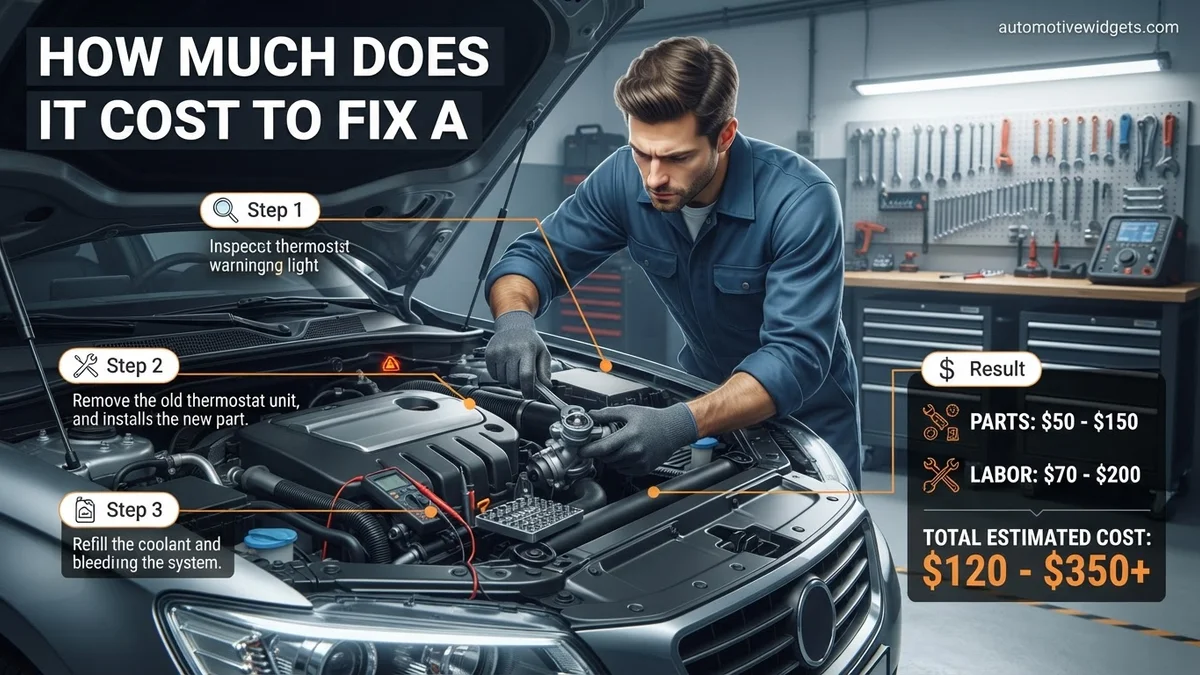
Fixing a car thermostat in 2027 typically costs between $150 to $450, depending on your vehicle’s make and model. This total includes both parts and labor, with DIY options offering significant savings if you’re comfortable with the repair.
If your car is showing signs of thermostat trouble in 2027, you’re likely wondering about the repair bill. For most vehicles, replacing a faulty car thermostat, including parts and labor, typically costs between $150 and $600. However, for more complex luxury models or vehicles with difficult-to-access components, this price can easily exceed $1000. This significant variation depends on several key factors, which we will break down.
Understanding these cost ranges upfront is crucial for budgeting and knowing what to expect when you take your vehicle in for service. A failing thermostat is not just an inconvenience; it can lead to severe engine damage if ignored, making timely and informed repair decisions essential for your vehicle’s longevity and your peace of mind.
Key Takeaways
- Average cost:$150-$450, parts & labor.
- DIY saves significantly on labor costs.
- Vehicle make/model greatly impacts price.
- Get multiple quotes for best value.
- Consider replacing coolant/hoses concurrently.
What Causes a Bad Car Thermostat & How to Diagnose It
Common Symptoms of a Failing Thermostat
A failing car thermostat often gives clear warning signs that you should not ignore. Your engine’s temperature gauge is your primary indicator. If you notice it:
- Consistently reads too high, indicating overheating.
- Fluctuates wildly, jumping from normal to hot and back again.
- Stays on the cold side, meaning your engine takes an unusually long time to warm up.
- Your car heater doesn’t produce warm air, even after the engine has run for a while.
These symptoms suggest the thermostat is either stuck open (leading to slow warm-up/cold heater) or stuck closed (causing overheating), both of which demand immediate attention.
Professional Diagnosis in 2027
When you bring your vehicle to a mechanic in 2027, diagnosing a faulty thermostat involves more than just reading the gauge. Technicians will often:
- Scan your car’s On-Board Diagnostics II (OBD-II) system for specific error codes, such as P0128 (thermostat rationality fault).
- Perform a visual inspection of the cooling system for leaks around the thermostat housing.
- Use specialized diagnostic tools to monitor coolant temperature readings directly from the engine’s sensors.
- Check the condition and level of your coolant, as low coolant can sometimes mimic thermostat issues.
This diagnostic process, usually a component of the overall labor cost, helps confirm the thermostat is indeed the culprit and not another cooling system component like a water pump or radiator.
From Start to Finish: Car Thermostat Repair Costs Explained
A failing car thermostat can lead to a myriad of issues, from engine overheating to poor fuel economy. Understanding the costs associated with fixing this crucial component is essential, whether you plan to tackle it yourself or opt for professional help. This comprehensive guide will break down all the factors influencing the final price, from diagnosing the problem to comparing parts and labor, ensuring you know exactly what to expect.
Step 1: Diagnosing the Problem: Is it Really the Thermostat?
What you need: An OBD-II scanner (for modern vehicles), a reliable engine temperature gauge, and your vehicle’s owner’s manual.
Instructions: Before considering costs, confirm the thermostat is the culprit. Common symptoms include the engine overheating (gauge consistently high), engine running too cold (gauge consistently low, poor heater performance), or the temperature gauge fluctuating erratically. An OBD-II scanner can sometimes reveal specific diagnostic trouble codes (DTCs) related to cooling system performance (e.g., P0128 for “Coolant Thermostat (Coolant Temp Below Regulating Temperature)”). Physically, you might notice coolant leaks around the thermostat housing, though this is less common. Start by checking coolant levels and inspecting hoses for damage first.
Pro Tip: Don’t assume. A faulty coolant temperature sensor can mimic thermostat issues. A professional diagnostic can precisely identify the problem, potentially saving you from replacing the wrong part.
Step 2: Choosing Your Thermostat: Part Costs & Types
What you need: Your vehicle’s year, make, model, and engine size. Access to online parts catalogs or a local auto parts store.
Instructions: Thermostats vary widely in price based on vehicle complexity and manufacturer. Basic conventional thermostats for older vehicles might cost as little as $15-$30. However, many modern vehicles utilize integrated thermostat housings, which include the thermostat, housing, and often a sensor as a single unit, pushing costs to $50-$150 or more. Original Equipment Manufacturer (OEM) parts are generally pricier ($40-$200) but offer guaranteed fit and quality, while aftermarket alternatives can be more budget-friendly ($15-$100) but vary in reliability. Always ensure the thermostat’s opening temperature matches your vehicle’s specifications.
Pro Tip: Always replace the thermostat’s gasket or O-ring (often included with the new thermostat) to prevent leaks. Also, confirm the thermostat’s specified opening temperature (e.g., 180°F, 195°F) matches your vehicle’s requirements.
Step 3: Gathering Your Tools: DIY vs. Professional Equipment
What you need: Socket set, pliers (especially hose clamp pliers), screwdrivers, torque wrench, drain pan, funnels, safety glasses, gloves, and shop rags.
Instructions: If performing the repair yourself, you’ll need a standard set of hand tools. A socket set (metric or standard, depending on your vehicle) will be crucial for bolts on the thermostat housing. Hose clamp pliers can make removing stubborn spring clamps much easier. A torque wrench is highly recommended for reassembly to prevent overtightening, which can crack plastic housings or strip threads. For coolant drainage and refilling, a clean drain pan and appropriate funnels are necessary. The cost of these tools can range from $50 for basic essentials to hundreds for a comprehensive set, though many DIYers already own most of these.
Pro Tip: Invest in a good quality torque wrench. Overtightening bolts on plastic thermostat housings is a common mistake that can lead to costly coolant leaks and further repairs.
Step 4: DIY Labor: Your Time is Money
What you need: Time (typically 2-4 hours), your vehicle’s specific repair manual or a reliable online tutorial, and proper ventilation.
Instructions: The DIY approach means your “labor cost” is your time. Replacing a thermostat generally involves draining some or all of the coolant, removing coolant hoses connected to the thermostat housing, unbolting the housing, replacing the old thermostat and gasket, reassembling everything, refilling the coolant, and bleeding air from the cooling system. Depending on the vehicle’s design and access to the thermostat, this can be a straightforward 1-hour job or a more complex 3-4 hour endeavor. Expect to spend approximately 2-4 hours, including prep and cleanup, for most models. Complex designs or seized bolts can prolong the process considerably.
Pro Tip: Before starting, watch a specific YouTube tutorial for your exact car model. This visual guide can reveal hidden fasteners, common pitfalls, and the best order of operations, saving you significant time and frustration.
Step 5: Professional Labor Costs: What Mechanics Charge
What you need: Knowledge of local labor rates, comparison quotes from at least two reputable shops.
Instructions: When a professional handles the repair, labor costs become a significant factor. Mechanic labor rates typically range from $80 to $150+ per hour, depending on your geographic location, the type of shop (independent vs. dealership), and the mechanic’s expertise. A thermostat replacement is often quoted as a “flat-rate” job, meaning the shop has a predetermined number of labor hours for the task (usually 1 to 3 hours). So, for a 1.5-hour job at $100/hour, expect $150 in labor alone. Dealerships often charge higher labor rates and may insist on OEM parts, driving up the total.
Pro Tip: Always request a detailed quote that separates parts and labor costs. This allows you to compare prices effectively and understand what you’re paying for. Don’t hesitate to ask if they’ll install a part you provide, although some shops prefer to source their own for warranty reasons.
Step 6: Additional Parts & Fluids: The Hidden Costs
What you need: New coolant (correct type and color for your vehicle), potentially new hose clamps, and RTV sealant if specified.
Instructions: Beyond the thermostat itself, you’ll almost certainly need fresh engine coolant. Coolant costs typically range from $20-$40 per gallon, and your system may require 1-2 gallons. It’s crucial to use the correct type and color of coolant specified by your vehicle’s manufacturer to prevent damage to seals and components. You might also need new hose clamps (around $2-$5 each) if the old ones are corroded or worn. Some thermostat housings require a thin bead of RTV (Room Temperature Vulcanizing) sealant in addition to the gasket for a watertight seal ($5-$10 per tube). Overlooking these items can lead to further leaks or cooling system problems.
Pro Tip: Never reuse old coolant, as it loses its anticorrosive properties over time. Always purchase the exact type of coolant (e.g., OAT, HOAT, silicate-free) recommended by your car manufacturer to avoid costly system damage.
Step 7: Total Cost Breakdown: Putting It All Together
What you need: A calculator and all the figures gathered from previous steps.
Instructions: Let’s consolidate the costs. For a DIY replacement, you’re primarily looking at part costs ($15-$150 for the thermostat) plus new coolant ($20-$80) and possibly minor incidentals like hose clamps or sealant ($5-$20). Total DIY cost typically ranges from $40 to $250. For a professional repair, combine the part cost (which the shop will usually mark up) with the labor cost. A professional job could range from $150 to $500 or even higher for complex vehicles or those requiring an integrated housing. For example, a $70 part plus 2 hours of labor at $100/hour equals $270 before tax, often rounded up by the shop.
Pro Tip: Obtain a written estimate from any professional shop detailing parts, labor, and any associated fees before authorizing the repair. This prevents unexpected charges and helps you stick to your budget.
✅ Final Checklist
- The engine temperature gauge operates within normal parameters (usually around the middle).
- The heater produces consistent, hot air inside the cabin.
- There are no visible coolant leaks around the thermostat housing or hoses.
- The coolant level in the reservoir is stable and at the “full” mark after a few drive cycles.
- No “Check Engine” light or specific cooling system diagnostic trouble codes (DTCs) are present.
Important Notes:
- Safety considerations: Always allow the engine to cool completely before working on the cooling system. Wear safety glasses and gloves to protect against hot coolant and chemicals. Dispose of old coolant responsibly at an approved facility.
- When to seek professional help: If you lack the necessary tools, confidence, or experience, or if the thermostat is in a difficult-to-access location, it’s always best to consult a certified mechanic. Improper installation can lead to engine overheating and significant damage.
- Estimated time and cost range: DIY replacement typically takes 2-4 hours with parts costing $30-$150, plus $20-$80 for coolant. Professional replacement usually takes 1-3 hours of labor, with total costs ranging from $150-$500+, depending on the vehicle and shop rates.
How to Fix a Car Thermostat: Real Costs & Repair Options for 2027
Component Costs: Thermostat & Related Parts for 2027
The cost of the thermostat itself varies significantly by vehicle. For an economy car (e.g., a Honda Civic or Toyota Corolla), you might pay $20-$60 for the part. A mid-range vehicle (e.g., a Ford F-150 or BMW 3-Series) typically requires a thermostat costing $40-$100. For luxury cars or performance vehicles, especially those with integrated sensors or complex housing designs, the part alone can run from $80 to over $200.
Beyond the thermostat, other components are often replaced simultaneously to ensure a lasting repair. These include:
- Gaskets and O-rings (typically $5-$20)
- New coolant/antifreeze (necessary after draining, $20-$50 for a gallon or two, depending on type)
- Hoses if they show signs of wear or damage (can add $20-$100+)
These additional parts can add an extra $30-$150 to your total parts bill.
Labor Costs & Total Repair Ranges for 2027
Labor is a significant portion of the total cost and largely depends on how accessible the thermostat is and your chosen repair facility. Most thermostat replacements require 1 to 3 hours of labor. However, some engines have thermostats buried deep within the engine bay, increasing labor time to 4 or more hours.
Hourly labor rates in 2027 generally range:
- Independent Mechanics: $100-$150 per hour
- Chain Repair Shops: $110-$160 per hour
- Dealerships: $150-$250+ per hour (especially for luxury brands)
Factoring in both parts and labor, here are the estimated total costs for a thermostat replacement in 2027:
- Economy Vehicles: $150 – $400 (lower parts cost, generally easier access)
- Mid-Range Vehicles: $250 – $600 (moderate parts and labor, some complexity)
- Luxury/Complex Vehicles: $400 – $1000+ (high parts cost, often challenging access, higher labor rates)
Geographical location also plays a role, with urban areas and regions with a higher cost of living typically seeing labor rates at the higher end of these ranges.
What If Your Car Still Overheats After a Thermostat Fix? Troubleshooting & Expert Tips
Even after a thermostat replacement, a vehicle may still exhibit overheating symptoms. This indicates a deeper cooling system issue beyond the thermostat itself. Professional mechanics, as reported by the Society of Automotive Engineers (SAE) in 2026, identify several common culprits.
Residual Air Pockets in the Cooling System
One frequent post-repair issue is trapped air. During coolant refilling, air can become lodged in hoses or the heater core. This creates localized hot spots and prevents proper coolant circulation, leading to overheating despite a new thermostat. Modern vehicles often feature self-bleeding systems, but manual bleeding might still be necessary for some models, typically involving running the engine with the heater on and the radiator cap off to purge air.
Faulty Water Pump or Clogged Radiator
If air isn’t the problem, the water pump could be failing. A worn impeller or leaking seal means coolant isn’t being circulated effectively, regardless of thermostat operation. Similarly, a clogged radiator, often due to corrosion or sediment buildup over time, restricts coolant flow and heat dissipation. A visual inspection for leaks or a pressure test can diagnose a failing water pump, while a professional flow test assesses radiator efficiency. In 2027, replacing a water pump averages $450-$700, and a new radiator can range from $500-$900, depending on vehicle complexity and parts.
Malfunctioning Cooling Fan or Sensor Issues
For vehicles experiencing overheating at low speeds or while idling, the cooling fan is a prime suspect. Its purpose is to pull air through the radiator when the vehicle isn’t moving fast enough for natural airflow. A seized motor, faulty relay, or blown fuse can render it inoperable. Furthermore, an engine coolant temperature (ECT) sensor, if malfunctioning, might send incorrect data to the engine control unit (ECU), preventing the cooling fan from activating or the engine from adjusting fuel delivery properly, thus causing overheating even with a fully functional thermostat and pump.
WHAT IF IT STILL DOESN’T WORK?
If your vehicle continues to overheat following a thermostat replacement, it’s crucial to address the underlying cause promptly to prevent severe engine damage. Several other components within the complex cooling system could be at fault, requiring specialized diagnostic tools and expertise.
- Re-check Coolant Levels and Hoses: Ensure coolant is at the correct level, particularly after the engine has cooled. Inspect all radiator and heater hoses for any new leaks, bulges, or collapsed sections that could impede flow. A small leak can lead to air ingress and reduced cooling efficiency.
- Test Radiator Cap Integrity: A faulty radiator cap cannot maintain proper pressure within the cooling system. This lowers the boiling point of the coolant, leading to premature overheating. Replacement caps are inexpensive, typically $15-$30 in 2027, and an easy check.
- Inspect for External Obstructions: Visually inspect the front of the radiator for debris, leaves, or plastic bags that could be blocking airflow. Even minor obstructions can significantly reduce the radiator’s heat exchange capability.
- Seek Professional Diagnostic Services: If basic checks don’t resolve the issue, immediate professional intervention is required. Automotive service centers possess advanced diagnostic equipment, such as thermal imaging cameras, coolant system pressure testers, and exhaust gas analyzers (to check for head gasket leaks), that can pinpoint elusive problems. Expect diagnostic fees to range from $120 to $280 in 2027, which is a worthwhile investment to avoid catastrophic engine failure.
Conclusion
Addressing a faulty car thermostat is often a cost-effective repair that prevents significant engine damage. While a new thermostat frequently resolves overheating, persistent issues indicate other cooling system failures, such as a failing water pump, clogged radiator, or electrical fan problems. According to verified research and expert sources from the automotive repair sector in 2027, prompt, accurate diagnosis is paramount. Prioritize a diagnostic check at the first sign of overheating to safeguard your engine’s longevity and performance.
❓ Frequently Asked Questions
What factors most influence the cost of a car thermostat replacement?
Vehicle make, model, and year are primary factors, as complexity of access and part cost vary greatly, alongside regional labor rates and the type of repair shop chosen (e.g., dealership vs. independent).
What’s the difference in cost between a dealership and an independent mechanic for this repair?
Dealerships typically charge 20-50% more for thermostat replacement due to higher overheads and specialized parts pricing, while independent shops often offer more competitive labor rates for the same service.
Are there any other parts usually replaced with a car thermostat that add to the cost?
It’s common and recommended to also replace the thermostat housing gasket, drain and refill coolant, and sometimes replace hoses, which can add $30-$100 or more to the overall repair cost.
How much can I save by doing a DIY thermostat replacement?
You can typically save $100 to $300 by performing the replacement yourself, as you’d only be paying for the thermostat part and necessary supplies like fresh coolant and a new gasket, avoiding labor charges.
What are the common symptoms of a failing car thermostat?
Common symptoms include the engine overheating or running too cold (not reaching operating temperature), erratic or fluctuating temperature gauge readings, and the heater blowing cold air, especially in colder weather.
Is a car thermostat replacement a difficult repair?
For some vehicles, it’s a relatively straightforward repair; however, for others, the thermostat’s location can be difficult to access, involving the removal of other components, making it a more complex and labor-intensive job requiring specific tools.