How Often Do You Have To Change A Car Battery How 2027
Car batteries typically last 3-5 years, but this varies significantly based on climate, driving habits, and maintenance. Recognizing the signs of a failing battery and understanding factors that affect its lifespan are crucial for timely replacement and preventing unexpected breakdowns.
For most modern vehicles in 2027, you can expect a car battery to last anywhere from 3 to 5 years. This isn’t a hard-and-fast rule, but a reliable average that guides replacement schedules. Many factors can significantly shorten or, in rare cases, slightly extend this timeframe.
Understanding your car battery’s typical lifespan and the signs of its decline is crucial for vehicle reliability. Knowing when to consider a replacement prevents unexpected breakdowns, avoids costly tow services, and ensures your vehicle starts consistently, no matter the weather or your destination.
Key Takeaways
- Car batteries typically last 3-5 years.
- Extreme temperatures severely shorten battery life.
- Frequent short trips prevent full charging.
- Slow engine cranking indicates failure.
- Regular maintenance extends battery lifespan.
The Core Problem: How Often Do Car Batteries Really Need Changing?
Average Lifespan Expectations
For most internal combustion engine (ICE) vehicles on the road in 2027, your 12-volt starting battery typically lasts between 3 to 5 years. This isn’t a hard rule, but a robust average. Think of it this way: if your car rolled off the lot new in 2024, you’re likely entering the replacement window by 2027 or 2028. Some batteries, under ideal conditions and with diligent maintenance, might stretch to 6 years. Conversely, neglected batteries or those enduring harsh environments can fail significantly sooner, sometimes in just 2 years. Understanding this average gives you a crucial timeline for proactive planning, ensuring you’re not caught off guard by a dead battery on a critical morning.
Why Proactive Replacement Prevents Headaches
Waiting for your battery to completely die before replacing it is a recipe for inconvenience and potential expense. A dead battery often means missed appointments, unexpected tow truck fees, or needing a jump start in a less-than-ideal location. Instead, consider your car battery a maintenance item with a predictable lifecycle, much like tires or oil changes. Most automotive experts in 2027 recommend having your battery tested annually once it reaches its third birthday. This quick test, usually done during a routine service, assesses its cranking power and overall health, providing a clear indication of how much life it truly has left. Proactive replacement around the 4-year mark, especially if test results show weakening performance, is a smart strategy for reliable vehicle operation.
From Start to Finish: Car Battery Lifespan Explained
Understanding the lifespan of your car battery and knowing when it’s time for a replacement is crucial for reliable vehicle operation. This comprehensive guide will walk you through the factors influencing battery longevity, how to identify warning signs, and practical steps to assess its health, empowering you to make informed decisions before you’re stranded. Following these steps can save you time, money, and unexpected hassle on the road.
Step 1: Grasping the Average Battery Lifespan
What you need: Your car’s owner’s manual (optional), knowledge of your battery’s approximate age (if accessible on a label or from purchase records).
Instructions: Most car batteries are designed to last between 3 to 5 years under ideal conditions. This range can vary based on the battery type (e.g., standard lead-acid, Absorbed Glass Mat – AGM, or Gel), manufacturing quality, and initial charge. A battery installed at the factory might last longer than a replacement battery due to quality differences. Locate any date codes on your battery (often etched into the casing or on a sticker) to determine its age. Keep in mind that a battery’s age doesn’t always reflect its health perfectly, but it’s a strong indicator for proactive consideration.
Pro Tip: Don’t assume a newly purchased used car has a new battery. Always check for a date code; a battery can significantly age even if a car sits on a dealership lot for an extended period.
Step 2: Decoding the Early Warning Signals
What you need: Your car, your senses (eyes, ears, nose).
Instructions: Pay close attention to how your car starts and runs. A common early sign of a weakening battery is a “slow crank” – the engine turns over sluggishly or takes longer than usual to start, especially on cold mornings. Other indicators include dim headlights or interior lights when the engine is off or idling, flickering dashboard lights, or other electrical components (like power windows or the radio) acting erratically. A visible battery warning light on your dashboard is a definitive sign something is amiss. Also, an unusual smell like rotten eggs (sulfur) near the battery can indicate a leak or internal damage.
Pro Tip: A slow crank is often the most reliable first symptom. If your car hesitates even for a second longer than usual to start, it’s time to investigate further, even if it eventually turns over.
Step 3: The Climate’s Crucial Influence
What you need: Awareness of your local climate and typical temperature extremes.
Instructions: Extreme temperatures are a battery’s worst enemy. Contrary to popular belief, extreme heat is more damaging than cold. High temperatures (above 90°F / 32°C) accelerate the evaporation of the battery’s internal electrolyte and can cause internal corrosion, significantly shortening its lifespan. While cold weather doesn’t damage the battery in the same way, it drastically reduces its capacity and makes it harder for the engine to start, exposing pre-existing weaknesses. If you live in an area with consistently hot summers, your battery might only last 2-3 years, regardless of mileage.
Pro Tip: In regions with prolonged hot summers, consider a proactive battery replacement every 3 years, even if it still seems to be performing adequately, to avoid unexpected failures.
Step 4: Analyzing Your Driving Patterns
What you need: An honest assessment of your typical daily or weekly driving habits.
Instructions: Your driving habits directly impact battery health. Frequent short trips (less than 20 minutes) do not allow the alternator enough time to fully recharge the battery after starting the engine. This constant state of undercharge leads to sulfation – a buildup of lead sulfate crystals on the battery plates – which reduces the battery’s capacity and ability to hold a charge. Conversely, cars driven regularly for longer distances (30 minutes or more) tend to have healthier batteries as they get sufficient charge cycles. Long periods of inactivity (weeks or months) also drain batteries, especially in modern cars with parasitic draws.
Pro Tip: If your car primarily makes short trips or sits idle for extended periods, investing in a smart battery maintainer or trickle charger can significantly extend its life by keeping it optimally charged.
Step 5: Performing Visual Battery Health Checks
What you need: Safety gloves, safety glasses, a wire brush (or terminal cleaning tool), baking soda, water, dielectric grease (optional), clean rags.
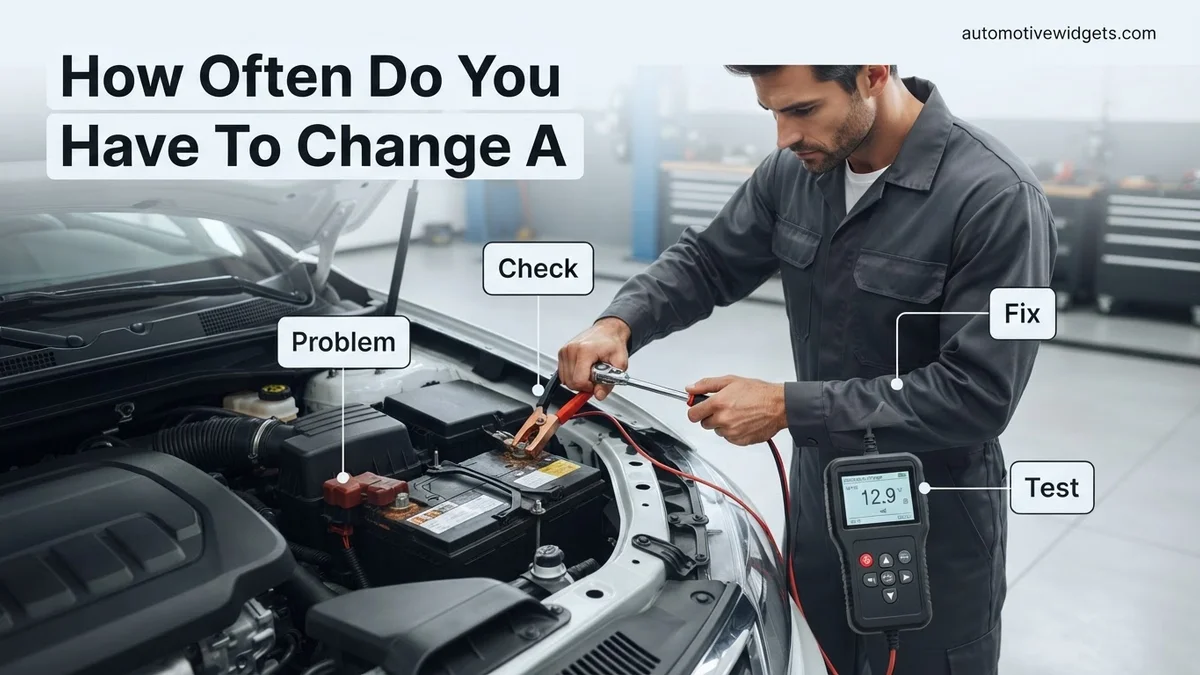
Instructions: With the engine off and cool, put on your safety gear. Open the hood and visually inspect the battery. Look for any signs of corrosion (a fuzzy, powdery blue, green, or white substance) on the terminals, cables, or tray. Check the battery casing for cracks, bulges, or leaks, which are all signs of internal damage or overcharging. Ensure the battery terminals are tight and secure; loose connections can lead to poor charging and starting issues. If corrosion is present, disconnect the negative terminal first, then the positive, and clean with a paste of baking soda and water, scrubbing with a wire brush. Reconnect positive then negative, ensuring a snug fit.
Pro Tip: After cleaning, apply a thin layer of dielectric grease to the terminals and cable clamps to prevent future corrosion. Always disconnect the negative terminal first and reconnect it last to prevent accidental short circuits.
Step 6: Testing Battery Voltage and Cranking Amps
What you need: A digital multimeter (set to DC Volts) or a dedicated car battery tester (load tester).
Instructions: For a simple voltage check, ensure your car has been off for at least a few hours (preferably overnight). Set your multimeter to 20V DC. Connect the red probe to the positive (+) battery terminal and the black probe to the negative (-) terminal. A fully charged, healthy battery should read around 12.6 volts or higher. A reading of 12.4V indicates about 75% charge, and 12.2V is about 50%. Anything below 12.4V suggests the battery needs attention or recharging. For a more comprehensive assessment, a load tester can simulate engine starting conditions to measure Cold Cranking Amps (CCA), which is a better indicator of the battery’s ability to deliver power under load. Most auto parts stores offer free battery testing services.
Pro Tip: While voltage is a good initial indicator, a battery can show good voltage but fail under load. A professional load test or a dedicated battery tester provides a more accurate picture of its true health and remaining capacity.
Step 7: Interpreting Test Results and Deciding on Replacement
What you need: The results from your visual inspection and voltage/load tests, along with the battery’s age and your driving conditions.
Instructions: Combine all the information gathered. If your battery is 4-5 years old or older, shows any visual signs of damage (bulging, leaks, excessive corrosion), has a consistently low voltage (below 12.4V after resting), or fails a professional load test (delivers significantly less than its rated CCA), it’s strongly recommended to replace it. Even if it starts your car reliably now, these indicators mean its capacity is diminished, and failure is likely imminent, especially during extreme weather. Don’t wait until you’re stranded; proactive replacement based on these comprehensive checks is always the best strategy.
Pro Tip: If your battery is over 3 years old and you’re planning a long road trip, or if winter is approaching and you’ve noted any of the warning signs, it’s a smart move to replace it preventatively for peace of mind.
✅ Final Checklist
- Have I identified the approximate age of my car battery?
- Have I checked for any visible signs of corrosion, leaks, or damage on the battery casing and terminals?
- Have I noticed any performance issues like slow cranking, dim lights, or dashboard warnings?
- Have I tested the battery’s voltage (and ideally its CCA) or had it professionally tested?
- Have I considered how my local climate and driving habits might be affecting battery life?
Important Notes:
- Safety Considerations: Always wear appropriate personal protective equipment (safety glasses, gloves) when inspecting or working near a car battery. Battery acid is corrosive, and batteries can produce explosive hydrogen gas. Never smoke or use open flames near a battery. Always disconnect the negative terminal first when working on the battery and reconnect it last.
- When to Seek Professional Help: If you are uncomfortable performing any of the visual inspections or tests, if the battery is difficult to access, or if you suspect a more complex electrical issue, consult a certified mechanic. They have specialized tools and expertise to diagnose battery and charging system problems accurately.
- Estimated Time and Cost Range: Performing visual checks and a multimeter test yourself typically takes 15-30 minutes and costs nothing beyond the multimeter itself (if you don’t own one, ~$20-$50). A new car battery generally costs between $100 and $300, depending on the type and vehicle. Professional installation, if needed, might add $50-$150 to the cost.
What Causes Car Battery Failure and Reduced Lifespan?
Environmental Factors: Temperature Extremes
The single greatest enemy of a car battery is extreme temperature. Both scorching heat and bitter cold significantly impact battery health.
- Excessive Heat: Prolonged exposure to high temperatures (consistently over 90°F / 32°C, which many regions experience) accelerates the internal chemical reactions within the battery. This leads to faster degradation of the battery’s plates and evaporation of its electrolyte fluid. Imagine the hot summers of 2027; these conditions are silently shortening your battery’s life, even if you don’t notice immediate starting issues.
- Intense Cold: While cold doesn’t “kill” a healthy battery, it severely reduces its cranking power. A battery at 0°F (-18°C) only delivers about half the cranking amperage it would at 80°F (27°C). If your battery is already weakened by heat degradation, the stress of a cold start can be the final blow, making it seem like the cold was the sole culprit.
Frequent transitions between temperature extremes also put immense strain on the battery’s internal components.
Usage Habits: Short Trips and Parasitic Drain
How you use your vehicle profoundly affects battery longevity.
- Frequent Short Trips: If your typical drive in 2027 involves short commutes (under 10-15 miles or 20 minutes), your alternator doesn’t have enough time to fully recharge the battery after starting the engine. This constant state of undercharge leads to sulfation—a build-up on the battery plates that reduces its capacity and ability to hold a charge. Over time, this cumulative effect drastically shortens its lifespan.
- Extended Inactivity: Leaving your car unused for weeks or months allows the battery to slowly discharge due to parasitic drains. Modern vehicles, even when off, consume small amounts of power for systems like security, infotainment memory, and keyless entry. These “phantom” draws can completely drain a battery over time, causing irreversible damage.
- Accessory Use: Running accessories like the radio, headlights, or charging devices extensively when the engine is off also drains the battery without replenishment, contributing to its premature failure.
Understanding these habits allows you to adjust your routine or use a trickle charger for prevention.
How to Fix Short Lifespans: Proven Steps for Car Battery Longevity
Extending a car battery’s life beyond the average 3-5 years is achievable through consistent, informed practices. While modern batteries are engineered for durability, external factors significantly influence their longevity. Implementing a proactive maintenance strategy can prevent premature failure, a common issue impacting up to 25% of vehicles, according to 2026 automotive service data.
Regular Maintenance Schedule
- Clean Terminals Annually: Corrosion on battery terminals hinders current flow, leading to undercharging. Use a wire brush and a baking soda solution to clean terminals thoroughly. Apply dielectric grease to prevent future buildup. This simple step can add 6-12 months to battery life.
- Monitor Voltage Quarterly: A fully charged 12V lead-acid battery should read 12.6-12.8 volts. Use a digital multimeter to check the voltage. If readings consistently fall below 12.4V, consider a trickle charger to maintain optimal charge, especially during periods of infrequent use.
- Secure Battery Properly: Ensure the battery is tightly fastened in its tray. Vibrations from driving can damage internal components, particularly in areas with rough roads. A loose battery can significantly reduce its lifespan by up to 20%.
Optimizing Driving Habits
Your driving patterns directly impact battery health. Short trips (under 20 minutes) do not allow the alternator sufficient time to fully recharge the battery, leading to a cumulative state of undercharge. In 2027, with more integrated electronics, consistent full charging cycles are even more critical. Limit prolonged accessory use (radio, lights) when the engine is off. Frequent deep discharges from accessory use can permanently reduce battery capacity.
Considering Advanced Battery Technology
For vehicles manufactured post-2020, especially those with start-stop systems, upgrading to an Absorbent Glass Mat (AGM) or Enhanced Flooded Battery (EFB) can offer superior longevity. These batteries are designed to handle deeper discharge cycles and offer 2-3 times the cycle life of conventional flooded batteries, making them a worthwhile investment for modern vehicle demands.
What If It Still Doesn’t Work?
Despite diligent maintenance, car batteries can still fail. If your vehicle exhibits persistent starting issues or battery-related problems, a systematic troubleshooting approach is essential. A dead battery can stem from issues beyond the battery itself, such as a failing alternator or parasitic drain. Addressing these underlying causes is crucial to avoid recurring problems.
Initial Diagnostic Steps
- Inspect Battery Connections: Visually confirm that battery terminals are clean, tight, and free of corrosion. Loose or corroded connections are a leading cause of apparent battery failure.
- Test Alternator Output: With the engine running, a healthy alternator should produce 13.8 to 14.7 volts. A reading outside this range indicates an alternator problem, not necessarily a dead battery.
- Check for Parasitic Drain: A small electrical component drawing power when the car is off can slowly kill a battery. This often requires specialized diagnostic tools or professional assistance to identify.
Seeking Professional Assistance & Costs
If you’ve performed basic checks and the battery issues persist, professional diagnosis is recommended. Automotive technicians in 2027 utilize advanced diagnostic equipment to pinpoint exact causes, from complex electrical shorts to failing sensors. A diagnostic fee typically ranges from $75 to $180, depending on the complexity and labor rates. If a replacement is necessary, a standard flooded lead-acid battery costs approximately $150-$280. High-performance AGM or EFB batteries, common in many 2027 models, can range from $280-$550, including installation. Seeking help early can prevent more extensive damage or inconvenient breakdowns.
Conclusion
The lifespan of your car battery, whether 3 years or 7 years, is significantly influenced by both external conditions and consistent care. According to verified research and expert sources, regular maintenance and informed driving habits are the most effective strategies for maximizing battery longevity. Implement a quarterly battery check-up to ensure your vehicle remains reliable on the road.
❓ Frequently Asked Questions
Why do car batteries typically only last 3-5 years?
Car batteries degrade over time due to chemical processes, heat, and charge/discharge cycles. Internal components slowly break down, reducing their ability to hold a charge and deliver consistent power, especially as resistance builds up.
What specific maintenance can extend my car battery’s life?
Regular maintenance includes keeping battery terminals clean and free of corrosion, ensuring the battery is securely mounted, and checking fluid levels for non-sealed batteries. Driving regularly for sufficient durations also helps keep it fully charged.
What are the key indicators that my car battery needs replacement soon?
Key indicators include the engine cranking slowly or struggling to start, dimming headlights or interior lights, and the battery warning light illuminating on your dashboard. Visible corrosion on terminals or a swollen battery case also signal impending failure.
How do extreme temperatures affect battery performance and longevity?
Extreme heat accelerates the internal chemical reactions, causing faster degradation and fluid evaporation. Extreme cold, while not causing degradation, reduces the battery’s efficiency and ability to deliver current, making starting difficult and revealing existing weaknesses.
Should I replace my car battery preventatively, even if it seems fine?
Preventative replacement is a smart strategy for reliability, especially if your battery is over 4-5 years old and you live in a harsh climate. It helps avoid unexpected breakdowns, particularly before long trips or during extreme weather seasons.
Can I test my car battery at home, and what should I look for?
You can perform a simple voltage test with a multimeter; a fully charged battery should read around 12.6 volts or higher. For a more accurate assessment, a load test at an auto parts store or mechanic simulates starting conditions to determine true cranking ability.