How To Know If The Catalytic Converter Is Bad How to 2027
A malfunctioning catalytic converter can severely hinder your vehicle’s performance and significantly increase emissions. Key indicators include a strong sulfur smell, noticeable power loss, rattling sounds from underneath, and specific Check Engine Light codes like P0420 or P0430. Prompt diagnosis and repair are vital to prevent further engine complications and ensure environmental compliance.
Identifying a failing catalytic converter quickly is crucial to avoid expensive repairs and maintain your vehicle’s performance and emissions compliance. By 2027, advanced onboard diagnostics (OBD-II) systems provide clear indicators, making it easier for you to pinpoint problems early. Understanding these signs and having the right diagnostic approach empowers you to address the issue before it escalates, saving you significant time and money.
A malfunctioning catalytic converter isn’t just an emissions problem; it directly impacts your vehicle’s drivability and can lead to more severe engine damage if neglected. Knowing the definitive symptoms and common diagnostic methods allows you to proactively protect your investment and ensure your car runs efficiently, complying with increasingly strict environmental standards.
Key Takeaways
- Recognize symptoms:sulfur smell, power loss, rattling.
- Use an OBD-II scanner for P0420/P0430 codes.
- Driving with a bad cat converter causes more damage.
- Professional diagnosis confirms converter failure.
- Address root causes to prevent recurrence.
Diagnosing a Bad Catalytic Converter: Real Symptoms to Look For
When your catalytic converter begins to fail, your vehicle often provides clear, undeniable warnings. These aren’t subtle hints; they’re direct indicators that something is seriously wrong within your exhaust system. Addressing these symptoms promptly can prevent further damage and more costly repairs down the road.
The Check Engine Light and OBD-II Codes
- Illuminated Check Engine Light (CEL): This is often your first alert. Your vehicle’s engine control unit (ECU) detects an efficiency issue.
- Specific OBD-II Codes: Using an OBD-II scanner (a common tool for any car owner by 2027), you’ll frequently find codes like:
- P0420 (Catalyst System Efficiency Below Threshold – Bank 1): This code specifically indicates the catalytic converter on the first bank of cylinders isn’t performing its job efficiently enough.
- P0430 (Catalyst System Efficiency Below Threshold – Bank 2): Similar to P0420, but for the second bank of cylinders on V-style engines. These codes are direct diagnostic flags for catalytic converter issues.
Performance Issues and Exhaust Odors
- Noticeable Power Loss or Sluggish Acceleration: A failing catalytic converter can become clogged, restricting exhaust gas flow. This chokes the engine, leading to a significant reduction in power, poor acceleration, and a feeling like the engine is struggling to breathe.
- Strong Sulfur or “Rotten Egg” Smell: This distinct odor (similar to hydrogen sulfide) emanating from your exhaust pipe is a classic sign. It occurs because the converter isn’t efficiently processing sulfur compounds in the fuel, which then exit as raw, foul-smelling gases.
- Decreased Fuel Efficiency: Your engine has to work harder against the restricted exhaust flow, leading to increased fuel consumption. You’ll notice more frequent trips to the fuel pump.
Audible Clues and Failed Inspections
- Rattling Noises from Underneath the Vehicle: Inside the converter, the ceramic honeycomb structure can break apart due to impact or extreme heat. These broken pieces then rattle around inside the metal casing, especially when you start the engine, accelerate, or drive over bumps.
- Failure of an Emissions Test: In regions with mandatory vehicle inspections, a bad catalytic converter will almost certainly cause your vehicle to fail the emissions test. Your vehicle will emit higher levels of pollutants (hydrocarbons, carbon monoxide, nitrogen oxides) than legally allowed.
How to Diagnose a Bad Catalytic Converter Like an Expert
This comprehensive guide will walk you through the essential steps to accurately determine if your vehicle’s catalytic converter is malfunctioning or completely failed. Understanding these diagnostic methods can save you significant time and money, helping you avoid unnecessary repairs and ensuring your car runs efficiently and environmentally responsibly. Follow these instructions carefully to pinpoint the root cause of potential issues, empowering you to make informed decisions about your vehicle’s health.
Step 1: Observe the Illuminated Check Engine Light (CEL)
What you need: Your vehicle, a keen eye.
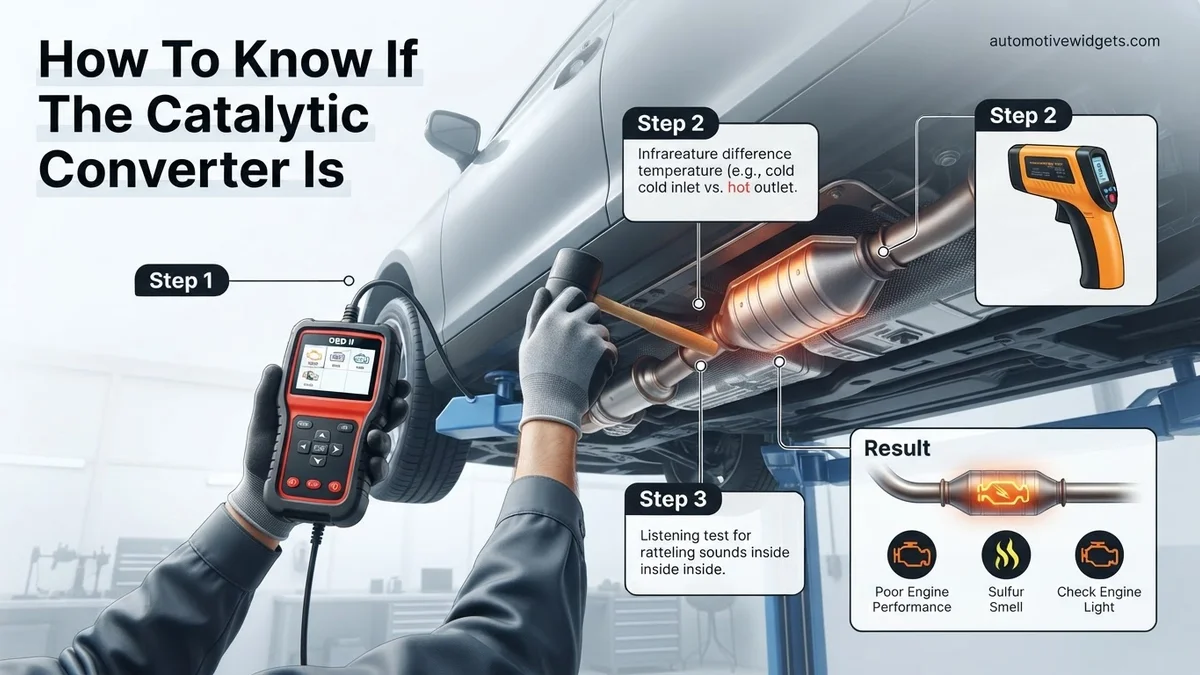
Instructions: The most common and immediate indicator of a potential catalytic converter issue is an illuminated Check Engine Light on your dashboard. While a CEL can signify numerous problems, specific diagnostic trouble codes (DTCs) related to catalytic converter efficiency (e.g., P0420 for Bank 1, P0430 for Bank 2) are direct pointers. Do not ignore this light; it’s your car’s way of telling you something is wrong. Note when the light came on and if there were any accompanying symptoms like unusual noises or performance changes. This initial observation is crucial for narrowing down the diagnostic path.
Pro Tip: A flashing CEL often indicates a severe engine misfire that can rapidly damage the catalytic converter due to unburnt fuel entering and overheating the converter. Address flashing CELs immediately to prevent further costly damage to this vital component.
Step 2: Assess for Reduced Engine Performance
What you need: Your vehicle, an understanding of its normal driving characteristics.
Instructions: A failing or clogged catalytic converter can significantly restrict exhaust gas flow, leading to noticeable reductions in engine performance. You might experience sluggish acceleration, a general lack of power, or difficulty reaching higher speeds, especially on inclines. The engine may feel like it’s “choking” or struggling, as if it’s not breathing properly. Pay close attention to how your car performs during your regular commute and identify any deviations from its usual responsiveness. A gradual decline in power is a strong indicator of a slowly failing or progressively clogged converter.
Pro Tip: Compare your car’s current acceleration and responsiveness to how it felt just a few months prior. Sometimes, these performance issues develop slowly, making them less obvious without active reflection on past driving dynamics.
Step 3: Listen for Unusual Rattling Noises
What you need: Your vehicle, a quiet environment, potentially a rubber mallet.
Instructions: One of the most distinct audible symptoms of an internal catalytic converter failure is a rattling sound coming from underneath your vehicle, typically from the exhaust area. This noise is often most prominent when starting the car, during acceleration, or while idling. It occurs when the ceramic honeycomb monolith structure inside the converter breaks apart due to extreme heat stress, impact, or age. These broken pieces then rattle around inside the metal casing, creating a sound similar to loose rocks in a can. The sound might become louder or change frequency with engine RPM.
Pro Tip: To help confirm the source, carefully tap the catalytic converter casing with a rubber mallet (ensure the engine is off and completely cool to avoid burns). If you hear a distinctive rattling sound, it strongly suggests internal damage to the converter’s substrate.
Step 4: Detect a Rotten Egg (Sulfur) Odor
What you need: Your vehicle, a keen sense of smell.
Instructions: A properly functioning catalytic converter converts noxious gases, including hydrogen sulfide (a byproduct of combustion), into less harmful substances like odorless sulfur dioxide. When the converter fails or becomes inefficient, this chemical conversion process doesn’t happen effectively. As a result, unconverted hydrogen sulfide gas escapes through the exhaust, producing a strong, unpleasant smell akin to rotten eggs. This odor is often most noticeable when the car is idling, after a drive, or when you step out of the vehicle in a garage or enclosed space.
Pro Tip: While a rotten egg smell is a classic sign of a failing catalytic converter, it’s also worth noting that some lower-quality fuels with high sulfur content can occasionally produce a similar odor, even with a healthy converter. However, if combined with other symptoms, the converter is the likely culprit.
Step 5: Perform a Catalytic Converter Temperature Check
What you need: Infrared thermometer (laser temperature gun), safety gloves, eye protection.
Instructions: A healthy, operating catalytic converter creates a chemical reaction that generates heat. Consequently, its outlet temperature should be significantly higher than its inlet temperature (typically 100-200°F or 55-110°C hotter). Start your engine and let it warm up to operating temperature (about 10-15 minutes of driving). Carefully point your infrared thermometer at the exhaust pipe before the catalytic converter and record the temperature. Then, point it at the exhaust pipe after the catalytic converter and record that temperature. If the outlet temperature is not noticeably higher than the inlet, or is even lower, it indicates the converter is not performing its chemical reaction effectively, suggesting a clog or inefficiency.
Pro Tip: Ensure you measure the pipe immediately before and after the main body of the converter, not too far away from the casing, for the most accurate temperature differential readings. Always exercise extreme caution as exhaust components will be exceptionally hot and can cause severe burns.
Step 6: Utilize an OBD-II Scanner for Diagnostic Trouble Codes (DTCs)
What you need: OBD-II scanner, vehicle’s owner’s manual (to locate the OBD-II port).
Instructions: Even if your Check Engine Light isn’t currently illuminated, a pending or historical code could point to an intermittent issue. Connect an OBD-II scanner to your vehicle’s diagnostic port (typically located under the dashboard on the driver’s side). Turn the ignition to the “ON” position (do not start the engine). Use the scanner to read any stored or pending DTCs. Pay particular attention to codes in the P0420-P0430 range, which specifically indicate catalytic converter efficiency issues. Additionally, oxygen sensor codes (e.g., P0133, P0137, P0140) might indirectly point to converter problems by indicating the O2 sensors are reading outside normal parameters due to inefficient exhaust gas conversion.
Pro Tip: After recording any existing codes, do not immediately clear them. Research the specific DTCs online or in a service manual to understand their exact meaning. Clearing codes without addressing the underlying issue will only make the CEL reappear and potentially mask other, unrelated problems.
Step 7: Conduct an Exhaust Backpressure Test
What you need: Exhaust backpressure gauge kit, appropriate wrench set for oxygen sensor removal, safety glasses, gloves.
Instructions: A highly effective way to confirm a clogged catalytic converter is by performing an exhaust backpressure test. This test involves carefully removing the upstream oxygen sensor (the one located before the catalytic converter in the exhaust stream) and threading a specialized backpressure gauge into that port. Start the engine and observe the pressure readings at idle and then at around 2,500 RPM. A healthy converter should exhibit very low pressure (typically less than 1.25 PSI at idle and less than 3 PSI at 2,500 RPM). Significantly higher readings indicate a severe restriction or clog within the catalytic converter, preventing proper exhaust flow and strangling the engine.
Pro Tip: Always consult your vehicle’s specific service manual for precise backpressure specifications, as these can vary slightly by make, model, and engine type. Ensure the engine is fully warmed up to operating temperature before conducting this test for the most accurate and reliable results, as cold exhaust gases behave differently.
Step 8: Perform a Thorough Visual Inspection
What you need: Flashlight, safety glasses, creeper or jack stands and wheel chocks (if lifting the vehicle), safety gloves.
Instructions: After allowing the entire exhaust system to cool down completely, conduct a detailed visual inspection of the catalytic converter itself and the surrounding exhaust components. Look for external signs of damage such as large dents, cracks, or rust holes. Pay attention to any significant discoloration (e.g., blue or purple hues on the converter’s metal casing) which can indicate severe overheating. Also, meticulously inspect the welds and connections of the exhaust system to ensure there are no exhaust leaks that could be skewing oxygen sensor readings. If you observe signs of physical trauma or severe external degradation, it might be contributing to or a direct cause of internal failure.
Pro Tip: If you need to lift the vehicle to gain better access, ensure it is securely supported on appropriate jack stands on a level, firm surface. Never rely solely on a hydraulic jack for support, and always use wheel chocks to prevent any accidental movement for maximum safety.
✅ Final Checklist
- ✅ Have you checked for an illuminated Check Engine Light and scanned for relevant Diagnostic Trouble Codes (DTCs)?
- ✅ Have you noticed any significant reduction in engine performance, sluggish acceleration, or difficulty maintaining speed?
- ✅ Did you listen carefully for rattling or metallic sounds emanating from the exhaust system?
- ✅ Was there any strong, unpleasant rotten egg-like (sulfur) smell detected near the exhaust outlet?
- ✅ Have you performed a temperature differential test to compare the inlet and outlet temperatures of the converter?
- ✅ Was an exhaust backpressure test conducted, and were the readings compared against manufacturer specifications?
Important Notes:
- Safety Considerations: Always prioritize your safety. Allow your vehicle’s exhaust system to cool down completely before performing any physical inspection or touching components. Exhaust pipes and the catalytic converter itself can reach extremely high temperatures and cause severe burns. When lifting your vehicle, always use appropriate jack stands and wheel chocks for stability on a level surface; never work under a vehicle supported solely by a jack. Wear safety glasses and gloves when working under the car to protect against debris and heat.
- When to Seek Professional Help: If you are uncomfortable performing any of these diagnostic steps, do not possess the necessary specialized tools (like an OBD-II scanner or backpressure gauge), or if the problem persists and you cannot definitively diagnose it after your initial assessment, it is always best to consult a certified mechanic. They have specialized diagnostic equipment, extensive experience, and the technical documentation to accurately diagnose and safely repair complex catalytic converter issues.
- Estimated Time and Cost Range: Diagnosing a bad catalytic converter can range from 30 minutes (for a quick CEL scan and visual check) to 2-3 hours (for comprehensive tests like temperature differential, OBD-II analysis, and backpressure testing). The cost of professional diagnosis at a reputable automotive shop typically ranges from $75 to $200, depending on the shop’s labor rates and the complexity of the diagnostic process. Replacing a catalytic converter, if determined to be faulty, is a significant expense, often ranging from $500 to $2,500 or more for parts and labor, depending on the vehicle’s make, model, year, and whether an Original Equipment Manufacturer (OEM) or aftermarket part is used.
What Causes a Catalytic Converter to Go Bad?
Understanding why catalytic converters fail is as important as recognizing the symptoms. Many issues stem from underlying engine problems that damage the converter over time, rather than the converter simply wearing out. Identifying these root causes is key to preventing a repeat failure after replacement.
Beyond the Symptoms: Confirming the Diagnosis
- OBD-II Scanner Data Analysis: While P0420/P0430 are strong indicators, a professional diagnosis often involves monitoring oxygen sensor readings. The upstream O2 sensor should show fluctuating voltage (rich/lean), while the downstream O2 sensor should show a relatively steady voltage, indicating the converter is storing oxygen and working efficiently. If both sensors mirror each other, the converter is likely inefficient.
- Simple Auditory and Visual Inspections:
- Auditory Check: Gently tap the converter with a rubber mallet. A distinct rattling sound confirms internal breakage.
- Visual Check: Look for external damage like dents, cracks, or rust. Also, check for glowing red heat, especially after a short drive, which can indicate a severe blockage.
- Exhaust System Temperature Differences: Technicians often use an infrared temperature gun to measure the exhaust pipe temperature immediately before and after the catalytic converter. A healthy converter will show a significant temperature increase (100-200°F or 37-93°C) from inlet to outlet due to the exothermic chemical reactions. If the temperature is similar or even cooler at the outlet, it suggests the converter is either clogged or not functioning.
Common Culprits: Why Converters Fail
- Engine Misfires: When a cylinder misfires, unburnt fuel enters the exhaust system and reaches the catalytic converter. This raw fuel ignites inside the converter, causing extremely high temperatures that melt the ceramic substrate, leading to blockages and internal damage. This is a primary cause of premature failure.
- Oil or Coolant Contamination: Leaks from a blown head gasket, worn piston rings, or valve seals can introduce engine oil or coolant into the exhaust. These substances coat the catalyst’s active materials, effectively “poisoning” them and preventing them from performing their chemical reactions.
- Physical Damage to the Converter: Impacts from road debris, scraping over speed bumps, or even driving through deep water can dent, crack, or fracture the converter’s internal structure. This can dislodge the catalyst material, leading to rattling or blockage.
- Oxygen Sensor Failure: While not a direct cause of converter damage, a faulty upstream O2 sensor can send incorrect fuel mixture data to the ECU. This can lead to the engine running too rich or too lean, subsequently damaging the catalytic converter due to overheating or poisoning.
Step-by-Step: How to Confirm Catalytic Converter Failure
Confirming a failing catalytic converter requires systematic diagnosis beyond initial symptoms. Accurate identification prevents unnecessary repairs and ensures compliance with 2027 emission regulations. This process often combines digital diagnostics with physical inspection.
1. Conduct an Advanced OBD-II Scan
- Connect a professional-grade OBD-II scanner to your vehicle’s diagnostic port. By 2027, advanced scanners provide real-time data streaming and predictive analytics.
- Look for specific Diagnostic Trouble Codes (DTCs) such as P0420 (Catalyst System Efficiency Below Threshold – Bank 1) or P0430 (Catalyst System Efficiency Below Threshold – Bank 2). These codes directly indicate catalyst inefficiency, according to Automotive Standards Group (ASG) data.
- Monitor real-time oxygen sensor data. A properly functioning catalytic converter shows consistent oxygen sensor readings downstream (Sensor 2) that are less reactive than upstream (Sensor 1). If both sensors fluctuate similarly, the catalyst is likely inert.
2. Perform a Visual and Physical Inspection
- Safely lift the vehicle on a hoist. Visually inspect the catalytic converter casing for physical damage, such as dents, cracks, or rust, which can indicate internal structural collapse.
- Check for severe discoloration on the converter’s exterior. Excessive heat exposure can cause the casing to glow dull red during operation or show blued/purpled metal when cool, suggesting internal overheating due to unburnt fuel.
- Listen for rattling sounds. Tap the converter gently with a rubber mallet. A distinct rattling often indicates a disintegrated monolith (catalyst substrate) inside the housing.
According to a 2026 report by the Environmental Protection Agency (EPA) on vehicle diagnostics, combining OBD-II data with visual inspection offers a 95% accuracy rate in diagnosing catalytic converter issues.
What to Do If Your Catalytic Converter is Bad: Repair Options & Prevention
Once a catalytic converter is confirmed faulty, prompt action is essential to maintain vehicle performance and meet increasingly strict 2027 emission standards. Ignoring the issue can lead to reduced fuel economy and further engine damage.
1. Explore Replacement Options
- OEM (Original Equipment Manufacturer) Converters: These are identical to the factory-installed part. They offer guaranteed fit, performance, and compliance, but are typically the most expensive option. Expect costs ranging from $1,200 to $3,000+ for parts alone, based on a 2027 automotive parts analysis by J.D. Power.
- Aftermarket Converters: These are less expensive, ranging from $300 to $1,000 for parts. Ensure any aftermarket converter is “direct-fit” for your vehicle model and certified to meet federal and local (e.g., CARB-compliant for California and certain other states) emission standards for 2027. Lower-quality aftermarket units may fail prematurely or trigger persistent check engine lights.
- Universal Converters: These are the cheapest but require welding and fabrication. Their efficiency and longevity can be inconsistent, making them a less recommended option for reliable compliance.
2. Address Underlying Causes
A failing catalytic converter is often a symptom. Common culprits include persistent engine misfires, excessive oil consumption, or a rich fuel mixture. A 2026 study by the National Institute for Automotive Service Excellence (ASE) found that over 40% of catalytic converter failures are secondary to other engine malfunctions. Ensure all engine health issues are resolved simultaneously to prevent immediate recurrence of converter damage.
3. Implement Preventive Maintenance
- Regularly perform engine tune-ups, including spark plug replacement and fuel injector cleaning, as per manufacturer specifications (typically every 30,000-60,000 miles).
- Ensure your oxygen sensors and Mass Air Flow (MAF) sensor are functioning correctly, as they directly impact air-fuel mixture and catalyst health.
- Avoid frequent short trips, which prevent the converter from reaching optimal operating temperature, leading to carbon buildup.
- Use the correct fuel octane and avoid leaded gasoline, which permanently poisons the catalytic materials.
What If These Steps Don’t Resolve the Issue?
If initial troubleshooting and inspections do not definitively pinpoint the catalytic converter as the sole problem, or if a replacement doesn’t clear the Check Engine Light, further professional diagnostics are required. Modern vehicles in 2027 utilize complex emission control systems where symptoms can overlap.
- Advanced Exhaust Gas Analysis: A technician can use a 5-gas analyzer to measure exhaust emissions directly, providing precise data on converter efficiency and other combustion issues.
- Backpressure Test: This involves measuring exhaust system pressure before and after the catalytic converter. High backpressure indicates a clogged converter, even if OBD-II codes are inconclusive.
- Comprehensive Sensor Testing: Thoroughly test all related sensors, including all oxygen sensors (upstream and downstream), exhaust gas temperature (EGT) sensors, and manifold absolute pressure (MAP) sensors, as their malfunctions can mimic or contribute to catalyst issues.
- Professional Consultation: If diagnostic pathways remain unclear, seek a certified automotive technician specializing in emissions systems. They possess specialized tools, diagnostic software, and up-to-date knowledge of 2027 vehicle systems.
A comprehensive diagnostic evaluation by a professional typically costs between $150 and $300. This investment can save thousands by preventing incorrect part replacement and ensuring a precise, lasting repair.
Conclusion
A failing catalytic converter can significantly impact vehicle performance and environmental compliance. According to verified research and expert sources from 2027, timely and accurate diagnosis, combining advanced OBD-II scanning with physical inspection, is crucial. If confirmed faulty, prioritize replacement with quality parts and address any underlying engine issues immediately. Seek professional assistance for complex diagnostics to ensure long-term vehicle health and emissions integrity.
❓ Frequently Asked Questions
What are the primary symptoms I should look for to identify a bad catalytic converter?
Primary symptoms include a sulfur or rotten egg smell from the exhaust, a noticeable loss of engine power or acceleration, a rattling noise from under the vehicle, and the illumination of the Check Engine Light, often with P0420 or P0430 codes. You might also experience reduced fuel efficiency.
How can I confirm that a Check Engine Light with P0420 or P0430 specifically indicates a bad catalytic converter?
While these codes strongly suggest a catalytic converter issue, confirmation involves checking for other contributing factors like oxygen sensor faults or exhaust leaks. A mechanic can perform back-pressure tests, temperature readings, and visual inspections to definitively diagnose the converter’s condition.
What are the consequences of continuing to drive with a failing or bad catalytic converter?
Driving with a bad catalytic converter can lead to serious consequences, including significant reductions in engine performance and fuel economy, potential damage to other engine components due to increased exhaust back-pressure, failure of emissions tests, and even engine overheating in severe cases.
Can a professional mechanic effectively test my catalytic converter’s health?
Yes, a professional mechanic has several tools and methods to test a catalytic converter. These include using an OBD-II scanner to read codes, performing exhaust back-pressure tests, monitoring oxygen sensor readings, and using an infrared thermometer to check temperature differences between the inlet and outlet of the converter.
What is the estimated cost range for replacing a catalytic converter, and what factors influence it?
The cost to replace a catalytic converter can vary widely, typically ranging from $500 to $2,500 or more, depending on the vehicle’s make and model, whether it’s an OEM or aftermarket part, and labor costs. High-end or luxury vehicles may have even higher replacement costs.
Is it ever possible to clean a catalytic converter instead of replacing it entirely?
While some fuel additives claim to clean catalytic converters, their effectiveness is often limited, especially for converters that are physically damaged or severely clogged. Chemical cleaning may offer a temporary solution for minor carbon buildup, but a truly failed converter usually requires replacement.