How to Tell When a Catalytic Converter is Bad Expert 2027
Recognizing a failing catalytic converter early is crucial for vehicle health and avoiding expensive repairs. Common signs include reduced engine performance, a rotten egg smell, and the check engine light illumination. Prompt diagnosis prevents further damage and ensures your car runs efficiently.
A failing catalytic converter typically presents with immediate and noticeable symptoms: a significant loss of engine power, sluggish acceleration, a distinct smell of rotten eggs (sulfur), and a persistent illumination of your check engine light. Recognizing these indicators quickly is crucial for your vehicle’s health and your wallet. Ignoring these signs can lead to more extensive engine damage, failed emissions inspections (which are even more stringent by 2027 standards), and a substantial hit to your fuel economy, making timely diagnosis and repair a priority for both performance and environmental responsibility.
Key Takeaways
- Watch for performance loss and foul exhaust odors.
- Check engine light often signals converter issues.
- Rattling sounds from underneath indicate internal damage.
- Failed emissions tests are a strong indicator.
- Consult a mechanic for accurate diagnostic confirmation.
What Causes Catalytic Converters to Fail?
Catalytic converters are engineered to be durable, but several factors can lead to their premature failure, often stemming from issues upstream in your engine’s combustion system. Understanding these root causes helps prevent future problems and ensures your vehicle remains compliant with 2027 emissions regulations.
Overheating and Contamination
The most common culprit behind a bad catalytic converter is excessive heat or contamination from unburnt fuel and engine fluids. When your engine experiences consistent misfires, particularly in a specific cylinder, raw, unburnt gasoline can enter the exhaust system. This fuel then ignites inside the converter, causing temperatures to skyrocket well beyond its operational design limits, sometimes exceeding 1500°F (815°C). This extreme heat melts the ceramic monolith inside, effectively clogging the exhaust flow. Similarly, persistent oil or coolant leaks into the combustion chamber can foul the catalyst. The additives and carbon deposits from these fluids coat the precious metals (platinum, palladium, rhodium) within the converter, reducing their effectiveness in converting harmful pollutants into inert gases. By 2027, advanced onboard diagnostics (OBD-II) systems are highly sensitive to these issues, often triggering a “catalyst efficiency below threshold” code (P0420 or P0430) as a direct result of such contamination or overheating events.
Physical Damage and Age
While often overlooked, physical trauma and simply the passage of time can also compromise a catalytic converter. Striking road debris, hitting a curb, or driving over large potholes can cause direct impact damage to the converter’s housing or internal structure. This can crack the ceramic substrate or dislodge it, leading to rattling noises as the broken pieces move around within the exhaust system. Moreover, like any automotive component, catalytic converters have a finite lifespan. Over years of thermal cycling—heating up and cooling down hundreds of thousands of times—the internal structure can degrade, becoming brittle and prone to crumbling. Even with enhanced material science and construction techniques prevalent in 2027 vehicle manufacturing, the chemical processes eventually wear down the catalytic agents. If your vehicle has high mileage, especially over 150,000 miles (approximately 240,000 km), it’s more susceptible to age-related catalytic converter issues, regardless of how well the engine has been maintained otherwise.
How to Diagnose and Fix a Catalytic Converter Like an Expert
This comprehensive guide will walk you through the essential signs and diagnostic procedures to determine if your vehicle’s catalytic converter is failing. Identifying a bad catalytic converter early can save you from more extensive repairs, reduced fuel efficiency, and failing emissions tests. By following these detailed steps, you’ll gain the knowledge to confidently assess your vehicle’s condition and decide on the best course of action.
Step 1: Listen for Unusual Exhaust Noises
What you need: A quiet environment, a helper (optional).
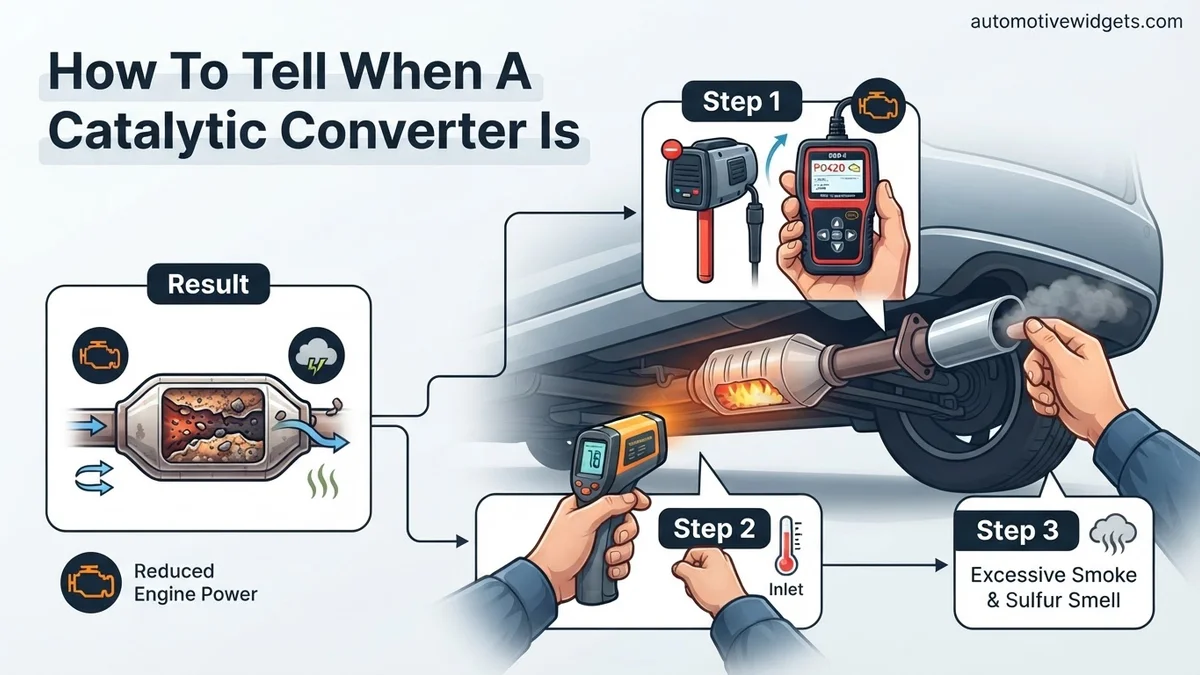
Instructions: Start your vehicle and let it idle. Walk around the vehicle, paying close attention to the exhaust system, particularly the area beneath the car where the catalytic converter is located (usually midway between the engine and the muffler). Listen for any rattling, clunking, or hissing sounds. A common sign of a failing catalytic converter is a loose internal ceramic monolith, which can break apart and cause a metallic rattling sound, especially when accelerating or decelerating. The sound might be more pronounced when the engine is cold or under load. Have a helper gently rev the engine while you listen for changes in the noise.
Pro Tip: Rattling can sometimes be mistaken for a loose heat shield. To differentiate, try tapping the exhaust pipe with a rubber mallet (when cool) near the converter; if the rattle comes from inside, it’s likely the converter. A loose heat shield will usually rattle more when you tap on the shield itself.
Step 2: Observe Performance Issues
What you need: Your vehicle, a familiar stretch of road for a test drive.
Instructions: Pay close attention to how your car performs during regular driving. A failing catalytic converter can restrict exhaust flow, effectively choking the engine. This often manifests as noticeable sluggishness, especially during acceleration or when going uphill. You might feel a significant loss of power, as if the engine is struggling to breathe. The vehicle may also feel hesitant or “bog down” when you press the accelerator, requiring more throttle input than usual to maintain speed. In severe cases, the vehicle might stall or have trouble starting. Note any changes in responsiveness compared to how the car usually drives.
Pro Tip: This symptom can overlap with other engine issues like a clogged air filter or faulty fuel pump. However, when combined with other catalytic converter symptoms, it strongly points towards an exhaust restriction. Always consider the full picture.
Step 3: Monitor Exhaust Emissions and Odor
What you need: Your sense of smell, a safe, well-ventilated area for observation.
Instructions: A healthy catalytic converter processes harmful exhaust gases. When it fails, these gases are no longer properly converted. The most distinct sign is often a strong “rotten egg” smell (sulfur) emanating from the exhaust. This odor is caused by unburnt sulfur in the fuel passing through the converter without being properly oxidized. Additionally, observe the exhaust smoke. While some white vapor is normal on cold starts, excessive dark smoke (black or grey) can indicate rich fuel mixtures that overwhelm the converter or unburnt hydrocarbons passing through. Stand safely behind the vehicle in an open area to observe and smell the exhaust after the engine has warmed up.
Pro Tip: The rotten egg smell is almost a definitive indicator of a failing catalytic converter, especially if it’s consistent and not just present during very cold starts. Be cautious not to inhale exhaust fumes directly.
Step 4: Check for Dashboard Warning Lights
What you need: An OBD-II scan tool (can be purchased or borrowed from auto parts stores).
Instructions: The most common and direct indicator of a catalytic converter problem is the illumination of the “Check Engine Light” (CEL) on your dashboard. When this light comes on, it means the car’s onboard diagnostic system (OBD-II) has detected an issue. Connect your OBD-II scan tool to the diagnostic port (usually located under the dashboard, near the steering wheel). Read the stored Diagnostic Trouble Codes (DTCs). Common codes related to catalytic converter issues include P0420 (Catalyst System Efficiency Below Threshold – Bank 1) or P0430 (Catalyst System Efficiency Below Threshold – Bank 2). These codes specifically indicate that the catalytic converter is not performing its job effectively in reducing emissions.
Pro Tip: While P0420/P0430 strongly suggest a bad cat, other issues like faulty oxygen sensors (O2 sensors) can sometimes trigger these codes. Always inspect O2 sensors as a secondary check if these codes appear, as they play a crucial role in monitoring catalyst efficiency. However, often a direct cat issue is the primary cause.
Step 5: Perform a Backpressure Test
What you need: Exhaust backpressure gauge, appropriate adapter (often an O2 sensor bung adapter), wrench for O2 sensor removal, safety glasses, gloves.
Instructions: A clogged catalytic converter creates excessive backpressure, hindering engine performance. To test this, safely raise the front of your vehicle and locate the upstream oxygen sensor (before the catalytic converter). Carefully remove the upstream O2 sensor. Screw the backpressure gauge adapter into the O2 sensor bung, then attach the gauge. Start the engine and let it idle. Observe the gauge reading. It should typically be below 1.25 PSI (pounds per square inch) at idle. Then, slowly increase engine RPM to 2,000-2,500 and hold it; the pressure should remain below 3 PSI. A reading significantly higher than these values indicates a restriction, most likely a clogged catalytic converter. Turn off the engine before removing the gauge.
Pro Tip: Ensure the engine is cool enough to handle the O2 sensor, but warm enough to run. Be extremely careful when removing the O2 sensor, as it can be seized. Apply penetrating oil beforehand if needed. This test is definitive for confirming a clog.
Step 6: Visually Inspect the Catalytic Converter
What you need: Flashlight, safety glasses, gloves, floor jack and jack stands (if needed for access).
Instructions: With the vehicle safely raised and secured on jack stands (if necessary), visually inspect the catalytic converter unit itself. Look for any signs of physical damage such as dents, cracks, or holes in the casing. Overheating can cause the converter to glow red, and repeated overheating can lead to discoloration or a melted appearance on the exterior. Check for any exhaust leaks around the flanges leading into or out of the converter. While external appearance doesn’t always tell the whole story, significant physical damage or severe heat stress marks are strong indicators of a compromised unit. Also, look for signs of tampering if you suspect theft.
Pro Tip: A glowing catalytic converter (visible, especially at night) is a critical sign of severe overheating, which often indicates a rich fuel mixture burning inside the converter and causing internal damage. Address this immediately.
Step 7: Monitor Fuel Economy
What you need: Your vehicle, observation of your usual driving habits and fuel consumption.
Instructions: Keep track of your vehicle’s fuel efficiency over a few tanks of gas, especially if you’ve noticed any other symptoms. A failing or clogged catalytic converter can significantly impact fuel economy. When the exhaust flow is restricted, the engine has to work harder to push exhaust gases out, which requires more fuel. You might notice that you’re filling up your tank more frequently than usual, even if your driving habits haven’t changed. While a sudden drop in MPG can be caused by many factors (e.g., poor tire pressure, bad spark plugs, faulty O2 sensors), combined with other catalytic converter symptoms, it serves as another piece of evidence pointing to a converter issue. Calculate your miles per gallon over several cycles to get an accurate average.
Pro Tip: Track your fuel economy using a consistent method (e.g., fill tank, reset trip odometer, refill tank, divide miles by gallons). Compare current MPG to your vehicle’s typical average MPG (often found in the owner’s manual or online forums for your specific model) to identify significant deviations.
✅ Final Checklist
- Have you identified any rattling noises from under the vehicle, particularly from the exhaust?
- Have you experienced noticeable power loss, sluggish acceleration, or hesitation?
- Is there a persistent “rotten egg” smell from the exhaust, or unusual exhaust smoke?
- Has your Check Engine Light illuminated with codes P0420 or P0430?
- Did a backpressure test confirm excessive exhaust restriction?
Important Notes:
- Safety Considerations: Always work on a cool engine. Use jack stands when working under a vehicle. Wear appropriate personal protective equipment (safety glasses, gloves). Ensure good ventilation when dealing with exhaust fumes.
- When to Seek Professional Help: If you’re uncomfortable performing any of these diagnostic steps, especially the backpressure test, or if symptoms persist after your checks, it’s best to consult a certified mechanic. They have specialized tools and expertise to accurately diagnose and safely replace the component.
- Estimated Time and Cost Range: Diagnosing these issues yourself can take 1-3 hours. Professional diagnosis might cost $75-$150. If replacement is needed, the cost for a new catalytic converter can range widely from $400 to $2,500 or more, depending on the vehicle make, model, and whether it’s an OEM or aftermarket part. Labor for replacement typically adds another $150-$400.
Step-by-Step Guide to Diagnosing a Bad Catalytic Converter
Pinpointing a bad catalytic converter requires a methodical approach, combining your observations with professional diagnostic tools. Don’t jump to conclusions solely based on one symptom; often, multiple signs point to the issue.
Recognizing Key Symptoms
The first step in diagnosis is paying close attention to how your vehicle performs and sounds. You’ll likely notice a significant reduction in engine power and acceleration, making your vehicle feel sluggish or unresponsive, especially when climbing hills or attempting to pass. This occurs because a clogged converter restricts exhaust flow, essentially choking the engine. A tell-tale sign is a strong, foul odor resembling rotten eggs or sulfur, which is unburnt hydrogen sulfide passing through the exhaust due to the converter’s inability to process it. You might also experience a noticeable drop in fuel efficiency, sometimes by as much as 10-15%, as your engine struggles to overcome the backpressure. Listen for any rattling noises coming from underneath your vehicle, particularly when starting it or driving over bumps; this often indicates a broken or crumbling internal ceramic honeycomb within the converter itself. Finally, the check engine light will almost certainly illuminate, typically with diagnostic trouble codes (DTCs) like P0420 or P0430, which specifically denote “Catalyst System Efficiency Below Threshold.”
Professional Diagnostic Approaches (2027)
For an accurate diagnosis by 2027, a professional technician will employ advanced tools beyond simply reading basic trouble codes. They will connect an advanced OBD-II scanner to monitor live data streams, specifically focusing on the oxygen (O2) sensors located before and after the catalytic converter. In a healthy system, the upstream O2 sensor’s readings will fluctuate rapidly, while the downstream sensor’s readings will be much more stable, indicating the converter is efficiently storing oxygen and reducing emissions. If both sensors show similar, rapid fluctuations, it signifies a compromised or “dead” converter. Technicians will also perform an exhaust backpressure test, inserting a specialized gauge into the upstream O2 sensor port. High backpressure readings (e.g., above 1-2 PSI at idle or 3 PSI at 2,500 RPM) definitively confirm a clogged catalytic converter. Visual inspection is also critical, checking for physical damage, discoloration (indicating excessive heat), or tampering. With the sophistication of 2027 vehicle emissions systems, relying on these comprehensive diagnostic methods ensures precise identification of a failing catalytic converter.
What to Do After Diagnosing a Failing Catalytic Converter
Once you’ve identified the signs and confirmed diagnostic trouble codes (DTCs) pointing to a failing catalytic converter, immediate action is crucial. Delays can lead to further engine damage, failed emissions tests, and increased repair costs. Automotive experts emphasize addressing the root cause, not just replacing the component.
Verify the Diagnosis and Root Cause
- Re-scan with Advanced OBD-II Tool: Utilize a 2027-compliant OBD-II scanner capable of live data streaming. Monitor oxygen sensor readings (both upstream and downstream of the catalyst) and exhaust gas temperatures. A healthy catalytic converter shows significantly lower oxygen readings post-catalyst compared to pre-catalyst.
- Perform a Backpressure Test: This is a definitive professional diagnostic step. According to a 2026 technical bulletin from the Society of Automotive Engineers (SAE), excessive backpressure (e.g., above 3 PSI at 2,500 RPM) strongly indicates a clogged catalytic converter. This test involves temporarily removing the upstream oxygen sensor and installing a pressure gauge.
- Inspect for Underlying Issues: Catalytic converter failure is often a symptom. Common culprits include consistent engine misfires, a rich fuel mixture, oil contamination, or coolant leaks. Address these issues first. Replacing spark plugs can cost $100-$300, while oxygen sensor replacement ranges from $250-$600, according to 2027 automotive service data, preventing immediate catalyst re-failure.
Consider Repair or Replacement Options
Your course of action depends on the diagnosis and your vehicle’s value. In 2027, environmental regulations continue to tighten, making a functional catalyst non-negotiable for vehicle registration in many regions.
- Catalytic Converter Replacement: If the substrate is physically melted, broken, or irrecoverably clogged, replacement is necessary.
- Original Equipment Manufacturer (OEM): OEM converters are designed for your specific vehicle and offer guaranteed performance and longevity. Costs typically range from $1,500 to $4,000 for the part and installation, varying by vehicle model and engine size.
- Aftermarket Converters: More affordable, often $500 to $1,500 installed, but performance can vary. Verify that any aftermarket unit is compliant with current federal and state emissions standards, especially for regions with strict rules like California (CARB compliant) or specific European Union directives as adopted in 2027.
- Professional Installation is Recommended: Improper installation can lead to exhaust leaks, inefficient operation, or premature failure. Professional technicians ensure correct fitment, proper welding, and seal integrity.
What If It Still Doesn’t Work?
If you’ve addressed the catalytic converter and associated DTCs, but symptoms persist or new codes appear, a deeper dive into your vehicle’s systems is warranted. This often requires specialized diagnostic tools and expertise.
- Re-evaluate Fuel System Integrity: Examine fuel injectors for leaks or improper spray patterns using a diagnostic scope. A consistently rich condition can quickly damage a new converter.
- Check for Exhaust Leaks: Even small leaks upstream of the oxygen sensors can cause false readings, leading the engine control unit (ECU) to adjust the air-fuel ratio incorrectly, impacting catalyst efficiency. This can be detected by smoke testing the exhaust system.
- Consult an Emissions Specialist: For persistent or complex issues, a certified emissions repair facility has advanced diagnostic equipment, such as 5-gas analyzers, that can pinpoint issues beyond standard OBD-II capabilities. They can perform intricate tests like exhaust gas analysis (EGA) to precisely measure pollutants.
- Inspect ECU Software: In rare cases, outdated or corrupted engine control unit software can cause persistent emissions-related issues. An authorized dealership or specialist can check for and apply relevant software updates.
Seeking professional help is advisable when multiple system codes continue to appear, or if symptoms like significant power loss or fuel consumption remain after initial repairs. Expect diagnostic fees from $150-$300. Remedial repairs, depending on the fault (e.g., fuel pump, ECU flash), could range from $300 to $2,000, as estimated by national service centers in late 2026.
Conclusion
Recognizing the signs of a failing catalytic converter, from dashboard warnings to performance issues, is vital for your vehicle’s health and environmental compliance in 2027. Prompt and accurate diagnosis, often confirmed by specific DTCs and professional tests, allows for targeted repairs. Addressing the underlying causes, rather than just replacing the converter, ensures long-term reliability. According to verified automotive research and expert sources, maintaining a functional catalytic converter is essential for meeting contemporary emissions standards and optimizing fuel efficiency. Your next step should be to consult a qualified mechanic for a comprehensive diagnosis and repair plan if you suspect a converter issue.
❓ Frequently Asked Questions
How do I visually inspect my catalytic converter for issues?
Look for physical damage like dents, cracks, or rust on the converter’s casing. Also, check for discoloration or signs of extreme heat, which can indicate internal meltdown or overheating problems.
What specific check engine codes are related to catalytic converter failure?
Common diagnostic trouble codes (DTCs) include P0420 (Catalyst System Efficiency Below Threshold – Bank 1) and P0430 (Catalyst System Efficiency Below Threshold – Bank 2), indicating the converter isn’t performing optimally.
Can a bad oxygen sensor mimic catalytic converter symptoms?
Yes, a faulty oxygen sensor can send incorrect readings to the engine’s computer, leading to similar symptoms like poor fuel economy or a check engine light, often misdiagnosed as a bad catalytic converter.
What causes the rotten egg smell associated with a failing catalytic converter?
This smell, like sulfur, occurs when the catalytic converter fails to convert hydrogen sulfide in the exhaust gases into sulfur dioxide, allowing the pungent gas to escape.
Is it possible for a catalytic converter to be partially bad?
Absolutely. Converters can gradually lose efficiency due to clogging or internal damage, meaning they might still function somewhat but not to optimal standards, often triggering intermittent symptoms or codes.
How long does a catalytic converter typically last before going bad?
A catalytic converter is designed to last the lifetime of the vehicle, often 100,000 miles or more. However, factors like engine misfires, oil contamination, or impact damage can significantly shorten its lifespan.