What To Do If Windshield Washer Fluid Freezes Fix 2027
When windshield washer fluid freezes, it’s crucial to act quickly to prevent damage and restore visibility. Learn proven, safe methods to unfreeze your reservoir, lines, and nozzles efficiently. Discover expert tips to prevent this issue from recurring in cold weather, ensuring clear visibility throughout 2027.
If your windshield washer fluid is frozen, you need immediate, actionable solutions to restore critical visibility. This isn’t just an inconvenience; it’s a significant safety hazard, especially with the increasingly unpredictable winter weather patterns seen leading into 2027. A frozen system means you can’t clear your windshield of salt, grime, or snow-melt, severely compromising your ability to see the road ahead.
Ignoring a frozen washer fluid system puts you and other drivers at risk. Timely intervention ensures your driving safety is maintained, allowing you to react quickly to changing road conditions. Understanding both how to unfreeze and how to prevent future occurrences is key to safe winter driving.
Key Takeaways
- Park in a warm garage or run engine to unfreeze.
- Use winter-grade fluid, rated for extreme cold.
- Never use boiling water; warm water is safer.
- Add rubbing alcohol carefully to melt ice.
- Flush summer fluid before winter for prevention.
What Causes Your Windshield Washer Fluid to Freeze?
Understanding why your washer fluid system freezes is the first step toward a quick fix and lasting prevention. It almost always boils down to the fluid itself being unable to withstand the ambient temperature.
Understanding Temperature Ratings and Fluid Types
- Inadequate Winter Formula: The most common culprit is using summer-grade washer fluid or a diluted mixture that isn’t rated for cold temperatures. Summer fluids typically freeze around 32°F (0°C).
- “Winter” Fluid Misconceptions: Even fluids labeled “winter formula” have specific temperature ratings, often down to -20°F or -30°F (-29°C to -34°C). If temperatures plummet below this rating, even winter fluid can freeze. Always check the bottle’s label for its exact freezing point.
- Pre-2027 Formulations: Older vehicles or fluids purchased prior to 2027 might not benefit from the latest ethanol or methanol blends that offer slightly better cold-weather performance in specific high-end fluids. Always aim for current, well-rated fluids.
The Role of Residual Summer Fluid
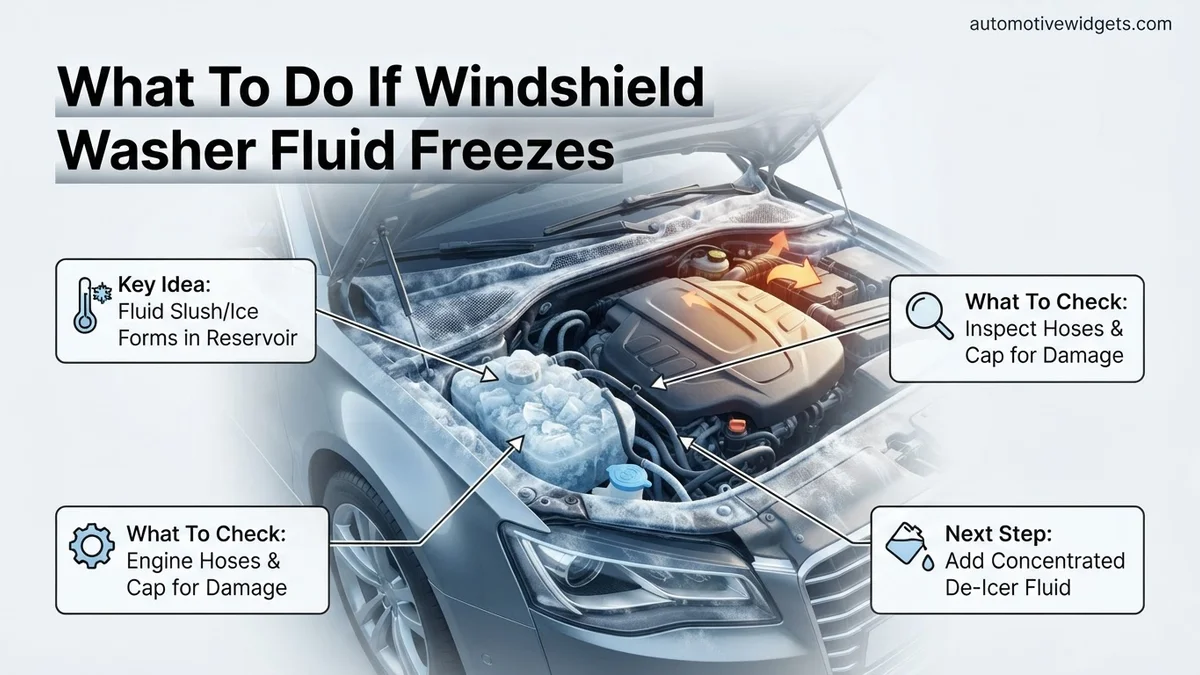
Even if you’ve added winter-grade fluid, pockets of summer fluid or diluted water can remain in the system. The reservoir itself, the thin lines running to the nozzles, and especially the nozzles themselves can retain enough old fluid to cause issues.
- Lines and Nozzles: These smaller, more exposed components are often the first to freeze because they contain less fluid and are more susceptible to ambient cold.
- Dilution Effect: Adding a small amount of winter fluid to a mostly-full reservoir of summer fluid will only slightly lower the freezing point, often not enough for severe cold snaps.
- Incomplete Flushes: Simply topping off with winter fluid isn’t enough. For optimal protection, especially as we head into 2027’s colder months, you need to ensure the system is flushed of any summer fluid before freezing temperatures arrive.
Expert Steps to Fix Frozen Washer Fluid System
When you’re faced with a frozen washer fluid system, immediate action is crucial. These steps prioritize safety and aim to thaw the system without causing damage to delicate components like pumps and lines.
Immediate Action: Moving to a Warmer Environment
The safest and most gentle way to unfreeze your system is to move your vehicle to a warmer area. This allows the ice to melt naturally without risk of component stress.
- Heated Garage or Parking Deck: If available, park your car in a heated garage or an underground parking structure. Give it several hours, preferably overnight, for the entire system – reservoir, lines, and nozzles – to thaw completely. For severe freezes, 4-6 hours may be enough, but overnight is ideal for thorough thawing.
- Shopping Mall Parking Garages: Many large retail centers have heated or semi-heated parking garages that can serve as a temporary thawing spot. Aim for the center levels, which are typically warmer.
- Run the Engine and Heat: Once in a warm environment, start your car and let it run with the heater on full blast. Direct the dashboard vents towards the windshield. While this primarily heats the cabin and windshield glass, the warmth radiated under the hood can help thaw the reservoir and lines. This might take 30 minutes to an hour for partial thawing.
Gentle Thawing Methods for Exposed Components
Once the vehicle is in a warmer spot, or if you can’t get it into one, you can focus on gently thawing specific, more exposed parts of the system. Always proceed with caution to avoid damage.
- Warm Water (Carefully Applied): For frozen nozzles or a partially frozen reservoir, you can carefully use warm (not boiling!) water.
- For Nozzles: Dip a cloth in warm water and gently hold it over the frozen nozzles. The heat will transfer and melt the ice. You can also use a spray bottle with warm water to target the nozzles, avoiding sensitive electrical components.
- For Reservoir: If the reservoir is easily accessible and you suspect only the top layer is frozen, you can slowly pour a small amount of warm water directly into the reservoir. Be careful not to spill onto hot engine components or electrical connections. This method should only be used if the reservoir isn’t completely solid, as adding water to a fully frozen block can crack the plastic.
- Rubbing Alcohol (Isopropyl Alcohol): As a temporary, emergency measure, you can use rubbing alcohol, which has a very low freezing point.
- Direct Application: For stubborn frozen nozzles, a cotton swab dipped in rubbing alcohol can be applied directly to the nozzle openings.
- Adding to Reservoir (Caution!): You can add a small amount (e.g., 1 cup per gallon of fluid) of 70% or 90% isopropyl rubbing alcohol directly to the washer fluid reservoir only if you can access the fluid and it’s not a solid block of ice. This will lower the freezing point of the existing mixture as it thaws and mixes. However, rubbing alcohol can potentially damage paint finishes and rubber components over time, so use this sparingly and flush the system with proper winter fluid as soon as possible after thawing.
Preventing Future Windshield Washer Fluid Freezes
Proactive measures are crucial to avoid the inconvenience and potential damage of frozen washer fluid. By 2027, the market offers highly effective winter formulations, making prevention straightforward.
1. Use Winter-Grade Washer Fluid Exclusively
The most critical step is to use a dedicated winter-grade windshield washer fluid, especially as temperatures drop. According to the Society of Automotive Engineers (SAE) guidelines for cold weather operation, these fluids typically contain methanol or ethylene glycol to depress the freezing point significantly. Always check the label for the freezing point, which should ideally be rated for -30°F (-34°C) or lower for regions experiencing harsh winters. As of 2027, premium brands like Prestone De-Icer or Rain-X Bug & Tar Winter Formula often guarantee protection down to -40°F (-40°C), providing ample margin for most climates.
2. Completely Drain Summer Fluid
If you’ve been using a summer-specific fluid, which primarily focuses on bug removal and often has a freezing point around 32°F (0°C), it’s essential to completely empty the reservoir before adding winter fluid. Partially mixing fluids can dilute the winter formulation, compromising its freeze protection. Drive the vehicle and spray the washers until the reservoir is empty. Then, refill with the appropriate winter-grade solution.
3. Top Up Before Freezing Temperatures Hit
Do not wait for the first frost to change your fluid. Experts from leading automotive service providers recommend topping off with winter-grade fluid when ambient temperatures consistently drop below 40°F (4°C). This ensures your system is prepared before extreme cold sets in, preventing a sudden freeze-up during unexpected temperature dips.
What If It Still Doesn’t Work?
If you’ve followed the thawing steps and preventive measures, but your windshield washer system remains unresponsive, further troubleshooting is necessary. This could indicate a deeper issue within the system.
- Check the Washer Fluid Fuse: Consult your vehicle’s owner’s manual to locate the fuse box and identify the fuse designated for the windshield washer pump. A blown fuse, often rated between 10-20 amps, will prevent the pump from operating. Replace it with a fuse of the exact same amperage. This is a common and inexpensive fix, typically costing under $5 for a pack of fuses in 2027.
- Inspect Hoses and Nozzles for Obstructions: Even after thawing, residual ice or debris can block the washer fluid lines or nozzles. Visually inspect the hoses for kinks, cracks, or disconnections. Use a thin needle or a compressed air can to gently clear out any blockages in the spray nozzles, which can become clogged with mineral deposits or dried fluid over time.
- Listen for the Pump: Have someone activate the washer while you listen near the fluid reservoir. If you don’t hear a faint humming sound, the washer pump itself may be faulty. Washer pumps are robust but can fail due to electrical issues or prolonged strain from trying to pump frozen fluid.
- Seek Professional Diagnostics: If the fuse is good and you hear no pump activity, or if the fluid streams weakly despite clear nozzles, it’s time for professional assistance. An ASE-certified technician can diagnose issues with the pump, electrical wiring, or hidden line blockages. As of 2027, a diagnostic fee typically ranges from $75 to $150, with pump replacement costs averaging between $200 and $400, including parts and labor. Addressing these issues promptly prevents further damage to the electrical system or motor.
Conclusion
A frozen windshield washer system is a common winter annoyance that compromises driving safety. Successfully thawing the system involves careful warming and can often be resolved with basic tools and patience. According to verified research and expert sources, preventing future freezes is straightforward: consistently use a high-quality winter-grade fluid rated for extreme cold. Always prioritize your vehicle’s winter preparation to ensure clear visibility and safe driving conditions throughout the colder months.
❓ Frequently Asked Questions
What are the immediate steps I should take if my windshield washer fluid freezes in extremely cold weather?
Immediately park your vehicle in a warm garage or a heated area if possible, allowing the ambient warmth to slowly melt the ice. Alternatively, run your engine for an extended period to generate heat that can radiate to the washer system components under the hood.
How can I effectively unfreeze the washer fluid lines and nozzles without causing damage?
To unfreeze lines, park in a heated area for several hours or use a hairdryer on a low setting, keeping it moving along the lines. For nozzles, carefully apply a de-icing spray, or use a small, non-metallic pick (like a plastic toothpick) to gently clear any visible ice blockages.
What type of washer fluid is best to prevent freezing, and how do I choose the right one?
Select a winter-grade washer fluid specifically formulated with a low freezing point, often rated down to -20°F or -30°F. Always check the bottle’s label for its lowest temperature rating, ensuring it safely exceeds the coldest temperatures you anticipate in your region.
Is it safe to add rubbing alcohol or antifreeze to my washer fluid reservoir?
Rubbing alcohol (isopropyl alcohol) can be added in small ratios (e.g., 1 part alcohol to 2 parts fluid) to help melt existing ice or lower the freezing point, but overuse can damage rubber components. Crucially, never add engine coolant (antifreeze) to the washer reservoir, as it is toxic, highly corrosive to paint, and not designed for this purpose.
What potential damage can occur if I ignore a frozen windshield washer system?
Ignoring a frozen system can lead to significant and expensive damage. Ice expansion can crack the washer fluid reservoir, repeated attempts to spray can burn out the electric washer pump, and extreme pressure from frozen fluid can rupture hoses or damage the delicate spray nozzles.
How can I ensure my windshield washer system is prepared for winter and won’t freeze again?
To prevent future freezes, ensure you completely drain any summer-grade fluid from your system before winter sets in, then refill with a high-quality, cold-weather rated washer fluid. Maintain a full reservoir, and consider adding an automotive washer fluid de-icer booster if you expect exceptionally harsh temperatures.