Why Does My Car Say Maintenance Required Soon? Real 2027
The ‘maintenance required soon’ message typically indicates a scheduled service reminder based on mileage or time, not an an immediate breakdown. It’s crucial to consult your owner’s manual to identify the specific service needed and schedule maintenance promptly to prevent future issues.
When your car displays a “Maintenance Required Soon” message in 2027, it’s not signaling an immediate breakdown or a critical malfunction. Instead, think of it as your vehicle’s proactive, intelligent reminder that routine, scheduled service is approaching or due. This notification is designed to keep your car running optimally and safely, prompting you to address standard upkeep like oil changes or tire rotations before they become overdue.
Ignoring this message can lead to preventable wear and tear, potentially voiding warranties, and incurring more expensive repairs down the line. Understanding what triggers this alert and how to respond properly ensures your vehicle remains reliable and efficient, safeguarding both your investment and your driving experience in the years ahead.
Key Takeaways
- It’s a routine service reminder, not an urgent fault.
- Check your owner’s manual for exact maintenance schedule.
- Address it promptly to avoid bigger car problems.
- Do not confuse with ‘check engine’ light warnings.
- Mechanics reset it after completing the service.
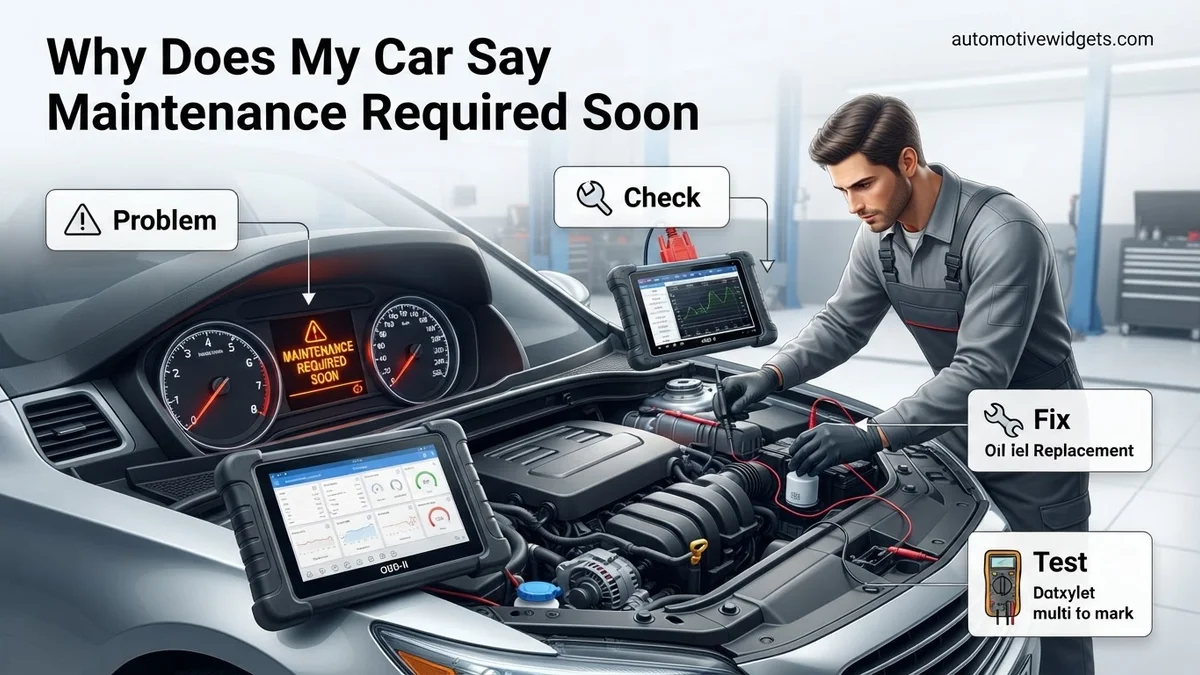
Diagnosing the ‘Maintenance Required Soon’ Warning
What ‘Maintenance Required Soon’ Really Means
The “Maintenance Required Soon” message, or an illuminated wrench symbol, is your car’s pre-programmed alert system. It signifies that your vehicle is approaching a predefined service interval based primarily on mileage or time since the last service. For instance, after driving 7,500 miles or six months since your last oil change, this light will likely appear. Modern vehicles in 2027 often feature more sophisticated algorithms that also consider your driving habits and engine operating conditions, making these reminders even more precise. However, at its core, it remains a prompt for routine maintenance, not an indicator of a current fault or problem with a specific component. Your car isn’t detecting a failure; it’s simply reminding you it’s time for its regular check-up, just like a doctor’s appointment reminder.
This system is distinct from a “Check Engine” light, which signals a detected issue within the engine or emissions system that requires immediate attention. The maintenance reminder is preventative, helping you stay ahead of potential problems by adhering to the manufacturer’s recommended service schedule. Think of it as a helpful nudge from your car’s onboard computer to maintain its health and longevity. It’s programmed to appear as a gentle heads-up, giving you ample time to schedule an appointment before the service becomes critically overdue.
Common Triggers for the Warning
While the exact services can vary by manufacturer and model, the “Maintenance Required Soon” message typically triggers for a set of common, essential upkeep items. These are the regular services vital for your car’s performance and safety.
- Oil Change and Filter Replacement: This is by far the most frequent trigger. Modern synthetic oils and advanced engine designs in 2027 often allow for longer intervals (e.g., 7,500 to 15,000 miles), but regular changes are still crucial.
- Tire Rotation: To ensure even wear and extend tire life, rotations are recommended every 5,000 to 7,500 miles. Your car’s system tracks this and will prompt you.
- Fluid Checks and Top-offs: This includes checking brake fluid, power steering fluid (if applicable), coolant, and windshield washer fluid. Maintaining proper fluid levels is key to system function.
- Air Filter Inspection/Replacement: Both the engine air filter and cabin air filter need periodic inspection and replacement to ensure optimal performance and air quality.
- Brake System Inspection: While not always a direct trigger for the “maintenance required soon” light itself, it’s a common item on scheduled service lists that this light signals. This involves checking brake pad wear and rotor condition.
These triggers are generally based on a predetermined schedule in your car’s computer, resetting after each service is performed. Some advanced systems might also factor in engine runtime or load, but the core function remains consistent: reminding you about routine care.
How to Diagnose and Fix ‘Maintenance Required Soon’ Like an Expert
Encountering a “Maintenance Required Soon” message on your car’s dashboard can be a bit unsettling, but it’s rarely a sign of immediate catastrophe. Unlike a “Check Engine” light which indicates a potential problem, this alert is typically a routine reminder, a gentle nudge from your vehicle’s onboard computer that it’s time for scheduled service based on mileage or time. This comprehensive, step-by-step guide will demystify this common notification, helping you understand its purpose, what actions to take, and how to address the underlying maintenance needs to keep your vehicle running smoothly and safely. Following these steps will not only help you resolve the alert but also contribute significantly to your car’s longevity and performance.
Step 1: Understand the ‘Maintenance Required Soon’ Alert
What you need: Your vehicle’s dashboard, a calm demeanor, and a basic understanding of your car’s service history.
Instructions: Before panic sets in, recognize that this message is most often a pre-programmed service reminder. Your car’s manufacturer designs these systems to alert you when an oil change, tire rotation, or other routine check-up is due, typically based on mileage (e.g., every 5,000 to 7,500 miles) or a set time interval (e.g., every 6 months). It is not usually an indication of an active malfunction or a critical mechanical failure. The message might appear intermittently at first, often at engine startup, before becoming more persistent as the service due date or mileage approaches. Pay attention to any other warning lights that might accompany it, but typically, this light stands alone as a reminder.
Pro Tip: Immediately check your odometer. If you’re within 500-1,000 miles of your last service interval (or estimated interval if you track manually), this message is very likely just your car doing its job reminding you.
Step 2: Consult Your Vehicle’s Owner’s Manual
What you need: Your car’s owner’s manual (physical copy or digital version) and a few minutes of quiet reading time.
Instructions: This is your ultimate source of truth for specific information about your particular make and model. Locate the section regarding dashboard warning lights and service indicators. Your manual will explain precisely what the “Maintenance Required Soon” (or similar wording like “Service Due” or “Oil Change Due”) light signifies for your vehicle. It will also detail the recommended service intervals and what maintenance items are typically performed at those milestones (e.g., oil and filter change, tire rotation, air filter replacement, fluid checks). Understanding your car’s specific schedule is crucial for addressing the alert correctly.
Pro Tip: Many newer vehicles offer a digital owner’s manual accessible through the infotainment system or a manufacturer’s app. This can be quicker than sifting through a printed book. Bookmark the relevant pages for future reference.
Step 3: Review Your Last Service Records
What you need: Your vehicle’s service history records (receipts, service stickers, digital logs) and an understanding of when your last major maintenance was performed.
Instructions: Gather any records from your last oil change or scheduled maintenance. Look for the date and mileage of the service. Compare this information with your current odometer reading and the manufacturer’s recommended service intervals outlined in your owner’s manual. For example, if your car recommends an oil change every 7,500 miles and your last one was at 60,000 miles, and your current reading is 67,000 miles, the “Maintenance Required Soon” message is perfectly normal and indicates you’re approaching the 67,500-mile service mark. This step helps confirm if the reminder is indeed accurate and timely.
Pro Tip: Keep a small logbook or use a dedicated app to track your car’s maintenance. This makes verifying service intervals much faster and helps you stay organized, preventing overdue services.
Step 4: Perform a Basic Visual Inspection
What you need: Good lighting (daylight or a bright flashlight), a clean rag, and a safe, level surface to park your car.
Instructions: Even if it’s just a reminder, a quick visual check can offer peace of mind. Pop the hood and inspect visible fluid levels: engine oil (see Step 5), coolant, brake fluid, and windshield washer fluid. Look for any obvious leaks under the vehicle (puddles of liquid). Check the condition of your tires for excessive wear or visible damage, and ensure all exterior lights (headlights, tail lights, brake lights, turn signals) are functioning. This brief walk-around ensures no other immediate issues are present that might coincidentally coincide with the service reminder.
Pro Tip: Make this visual inspection a routine habit, perhaps once a month or before long trips. Catching small issues early can prevent larger, more expensive problems down the road.
Step 5: Check Engine Oil Level and Condition
What you need: Your owner’s manual (to locate the dipstick), a clean rag or paper towel, and a few minutes with the engine off (and slightly cooled if it’s been running).
Instructions: The engine oil is vital for your car’s health and is a primary component of most routine services. Park your car on a level surface and ensure the engine has been off for at least 5-10 minutes to allow oil to settle. Locate the dipstick (usually with a brightly colored handle). Pull it out, wipe it clean, reinsert it fully, and then pull it out again. Observe the oil level relative to the “full” and “add” marks. The oil should be between these two marks. Also, note the oil’s color and consistency: clean oil is typically golden-brown, while very dark or gritty oil indicates it’s time for a change. Low or very dirty oil can contribute to engine wear and poor performance.
Pro Tip: If your oil level is consistently low between changes, it could indicate a leak or that your engine is burning oil. Consult a mechanic if you frequently need to add oil.
Step 6: Inspect Air and Cabin Filters
What you need: Potentially a screwdriver (for some air filter housings), your owner’s manual (for filter locations), and a clean work area.
Instructions: Both the engine air filter and the cabin air filter are crucial for your car’s performance and your comfort. The engine air filter prevents dirt and debris from entering the engine. Locate its housing (usually a large black box on top or to the side of the engine), open it, and remove the filter. Hold it up to a light; if you can’t see light through it or it’s heavily soiled with leaves, dust, and insects, it needs replacement. The cabin air filter (often behind the glove box or under the dash) cleans the air you breathe inside the car. Check its condition similarly. A dirty cabin filter can reduce airflow and cause musty odors. These are often routine service items.
Pro Tip: You can often replace these filters yourself with basic tools, saving on labor costs. Always ensure you purchase the correct filter type and size for your specific vehicle model.
Step 7: Check Tire Pressure and Tread Depth
What you need: A reliable tire pressure gauge, your owner’s manual (or driver’s side door jamb sticker for recommended PSI), and ideally a tread depth gauge (or a penny).
Instructions: Proper tire maintenance is critical for safety, fuel efficiency, and tire longevity. Use a tire pressure gauge to check the pressure in all four tires (and the spare, if accessible) when they are cold (i.e., before driving). Compare these readings to the recommended PSI (pounds per square inch) found on a sticker inside your driver’s side door jamb, not the maximum pressure listed on the tire itself. For tread depth, insert a penny into a tread groove with Lincoln’s head upside down; if you can see the top of his head, your tread is likely too low (below 2/32 inch) and needs replacement. Uneven wear can also indicate alignment issues.
Pro Tip: Under-inflated tires not only reduce fuel economy but also increase wear and tear on the tires’ outer edges, while over-inflation causes excessive wear in the center. Check your tire pressure at least once a month.
Step 8: Schedule Professional Maintenance
What you need: Contact information for your trusted mechanic or dealership, your service records, and a calendar.
Instructions: Once you’ve confirmed that the “Maintenance Required Soon” light is indeed a reminder for routine service and not an immediate fault (which it almost always is), the next step is to schedule the recommended maintenance. Even if you’ve done some basic checks yourself, a professional service will include a comprehensive inspection, fluid top-offs/changes, filter replacements, tire rotation, and a general check of your vehicle’s systems. Provide your mechanic with your service history and mention the dashboard message. They can then perform the necessary work according to your car’s specific maintenance schedule.
Pro Tip: When scheduling, ask if they offer a multi-point inspection as part of the service. This ensures a thorough check of various components, not just the basic oil change.
Step 9: Reset the Maintenance Reminder (After Service)
What you need: Your owner’s manual (for specific reset instructions) and access to your car’s dashboard controls.
Instructions: After the scheduled maintenance is completed, your mechanic should reset the “Maintenance Required Soon” light. However, sometimes they might forget, or you might perform the service yourself (e.g., an oil change). If the light remains on, consult your owner’s manual for instructions on how to manually reset it. The procedure varies greatly by make and model. It often involves a combination of pressing buttons on the dashboard or steering wheel while the ignition is in a specific position (e.g., “ON” without starting the engine). Follow these steps carefully to clear the reminder, ensuring it will reappear when the next service interval is due.
Pro Tip: If you attempt to reset it yourself, write down the specific steps for your car’s model. This will save you time and frustration for future maintenance reminders.
✅ Final Checklist
- ✔ Verified that the “Maintenance Required Soon” light is a service reminder, not an immediate fault.
- ✔ Consulted the owner’s manual for specific service intervals and recommended maintenance.
- ✔ Reviewed past service records to determine if scheduled maintenance is genuinely due.
- ✔ Performed basic visual checks (fluids, tires, lights) for any obvious ancillary issues.
- ✔ Scheduled and completed the necessary routine maintenance with a trusted professional.
- ✔ Confirmed the maintenance reminder light has been successfully reset.
Important Notes:
- Safety considerations or warnings: Always ensure your vehicle is on a flat, stable surface when performing any checks under the hood or around the tires. Allow the engine to cool before checking fluids like oil or coolant to prevent burns. Never work under a vehicle supported only by a jack; always use jack stands.
- When to seek professional help: If, after following these steps, you suspect there’s a more serious underlying issue (e.g., unusual noises, leaks, performance issues) that wasn’t addressed by routine maintenance, or if the “Maintenance Required Soon” light is accompanied by other warning lights (like a “Check Engine” light), it’s crucial to seek professional diagnostic help immediately. Do not ignore persistent or unusual symptoms.
- Estimated time and cost range:
- Time for DIY checks (Steps 1-7): Approximately 30-60 minutes, depending on your familiarity with your vehicle.
- Time for professional service (Step 8): Typically 1-3 hours for standard maintenance (oil change, tire rotation, basic inspection).
- Cost for routine maintenance: This can vary widely based on your vehicle’s make, model, age, and location. An basic oil change can range from $40-$100. A more comprehensive service including filters, fluid checks, tire rotation, and a multi-point inspection might cost anywhere from $150-$400. Always get a detailed quote before authorizing work.
Expert Steps to Address ‘Maintenance Required Soon’
Is It an Emergency? (Spoiler: No)
When your car flashes “Maintenance Required Soon,” it’s crucial to understand that this is generally not an emergency. Unlike a flashing check engine light, an illuminated oil pressure warning, or a low brake fluid warning, the maintenance reminder does not indicate an immediate breakdown or a safety hazard that requires you to pull over instantly. You can safely continue driving your vehicle. This distinction is vital for avoiding unnecessary panic. The message is designed to be a proactive, pre-emptive alert, giving you a reasonable window to schedule and perform the necessary service. It’s akin to a calendar notification for an upcoming appointment rather than a blaring alarm indicating an immediate problem. While you shouldn’t ignore it, there’s no need to cancel your immediate plans or rush to the nearest service center within the hour.
However, “not an emergency” does not mean “not important.” Delaying routine maintenance too long can degrade your vehicle’s performance, reduce its lifespan, and potentially lead to more significant, costlier repairs down the road. For example, consistently driving on old oil can cause premature engine wear. Therefore, while there’s no immediate danger, consider this warning as an important call to action that needs attention within a reasonable timeframe, typically within the next few hundred to thousand miles or a few weeks.
Your Immediate Action Plan
Once you see the “Maintenance Required Soon” message, taking a few simple, actionable steps will ensure your car remains in top condition and you address the reminder appropriately. The first and most critical action is to consult your vehicle’s owner’s manual. This often overlooked resource is the definitive guide to your specific car model’s maintenance schedule. It will outline exactly what services are due at particular mileage intervals or timeframes, clarifying what your car is likely reminding you about. The manual will detail the recommended service intervals for items like oil changes, tire rotations, and filter replacements, often breaking them down into schedules like “Service A” or “Service B.”
After checking your manual, the next step is to promptly schedule the recommended service with a trusted mechanic or dealership. Don’t procrastinate. Modern vehicles in 2027 are engineered with precise maintenance schedules that, when adhered to, maximize their lifespan, fuel efficiency, and overall reliability. Skipping these services can void warranties and contribute to premature wear on critical components. Be sure to mention the specific mileage or time when the light appeared, as this helps the service center determine the appropriate service package. Once the service is completed, the technician will reset the maintenance reminder system, ensuring it correctly tracks your next service interval.
What to Do If ‘Maintenance Required Soon’ Doesn’t Clear
If you’ve already addressed the presumed service (like an oil change or tire rotation) and the “Maintenance Required Soon” message persists, it indicates the service reminder system has not been properly reset. This is a common oversight, particularly with the advanced vehicle telematics and digital dashboards of 2027 models.
Manual Reset Procedures
- Consult Your Vehicle Manual: For 2027 models, the owner’s manual is the definitive source for service reminder reset procedures. These steps vary significantly by manufacturer and even by specific model year. For example, some Toyota models in 2027 might use a sequence of turning the ignition on/off while holding the trip meter button, while a Honda might require navigating through the infotainment system’s service menu.
- Access Digital Service Menus: Many contemporary vehicles allow resets through the main infotainment screen or instrument cluster controls. Navigate to “Vehicle Settings” or “Maintenance” options. Look for specific entries like “Oil Life Reset” or “Service Reminder Reset.” This usually requires confirming the action.
- Verify Service Completion: Double-check that the correct service was performed. For instance, if the reminder was for an oil change, ensure the oil filter was also replaced, as some systems might monitor associated parameters.
If the message still doesn’t clear after following the manual’s instructions precisely, there could be a deeper issue or an incorrect procedure, necessitating further investigation.
Proven Strategies for Proactive Car Maintenance
Preventing the “Maintenance Required Soon” alert from surprising you is entirely achievable with a proactive approach. Leveraging modern vehicle technology and understanding manufacturer guidelines are key to ensuring vehicle longevity and reliability in 2027.
Leveraging Vehicle Health Monitoring Systems
- Utilize In-Vehicle Telematics: Most 2027 vehicles feature advanced telematics systems that provide real-time vehicle health reports and upcoming maintenance alerts directly to your smartphone or the vehicle’s infotainment system. HondaLink, FordPass, or GM’s OnStar Guardian are prime examples. Set up these apps and notifications to receive timely reminders based on actual driving conditions, not just mileage.
- Adhere to OEM Service Schedules: Do not solely rely on the “Maintenance Required Soon” light. Consult your vehicle’s owner’s manual for the comprehensive factory-recommended maintenance schedule. This typically outlines inspections, fluid changes (including EV battery coolant or transmission fluid for hybrids), and filter replacements at specific mileage or time intervals. Skipping these can invalidate warranties and lead to premature wear.
- Maintain Digital Service Records: Keep meticulous records of all services performed, whether at a dealership or an independent shop. Many 2027 service centers now offer digital service records that are accessible online. This helps track compliance with the maintenance schedule and provides valuable documentation for resale.
Regular preventative care, guided by both your vehicle’s intelligent systems and the manufacturer’s expert recommendations, significantly reduces unexpected alerts and costly repairs.
What If It Still Doesn’t Work?
If you’ve followed all the steps for clearing the “Maintenance Required Soon” indicator and it stubbornly remains, it’s time to consider professional intervention. This could indicate an underlying issue with a sensor, the vehicle’s onboard computer, or a more complex system malfunction that isn’t immediately obvious.
- Check for Diagnostic Trouble Codes (DTCs): Even without a “Check Engine Light,” a specialized OBD-II scanner might reveal pending or stored codes related to service intervals or sensor anomalies. Modern scanners (available for purchase around $50-$150) can often identify these.
- Consult a Certified Technician: Seek out a professional diagnostic service. A certified technician with manufacturer-specific diagnostic tools can access deeper levels of the vehicle’s computer system. They can pinpoint sensor failures, software glitches, or other issues preventing the reset.
- Understand Potential Costs: A diagnostic fee for a specialist in 2027 typically ranges from $150 to $250. If a repair is needed, costs vary widely. For example, a faulty oil life sensor replacement could range from $200-$400, while a more complex software reflash might be $300-$600, depending on the vehicle’s make and model.
Ignoring a persistent “Maintenance Required Soon” light, especially after performing the expected service, is not advisable. It could mask more critical problems.
Conclusion
The “Maintenance Required Soon” message is a valuable reminder, usually for routine service like an oil change. According to verified research and expert sources, addressing it promptly, either by performing the service or resetting the system, is crucial for your vehicle’s longevity and performance. If the warning persists, consult your owner’s manual for specific reset procedures or seek professional diagnostics to ensure no underlying issues are present.
❓ Frequently Asked Questions
What’s the main difference between ‘maintenance required soon’ and ‘check engine’?
‘Maintenance required soon’ is a proactive reminder for routine service based on your car’s schedule, while the ‘check engine’ light indicates a potential malfunction or problem that needs immediate diagnostic attention. The former is a suggestion, the latter is a warning.
How quickly do I need to get service when this light appears?
While not an emergency, it’s advisable to schedule the service within a few hundred to a thousand miles of the light appearing, or as soon as convenient. Ignoring it for too long can lead to neglected maintenance, potentially causing larger issues down the road.
Can I reset the ‘maintenance required soon’ light myself?
Some vehicles allow owners to reset this light through specific dashboard button sequences, detailed in the owner’s manual. However, it’s crucial to only reset it after performing the necessary maintenance, as resetting it without service just postpones essential upkeep.
Does this warning mean there’s something wrong with my car?
Not necessarily. This warning primarily functions as a reminder for preventative maintenance tasks like oil changes, tire rotations, or fluid checks, designed to keep your car in optimal condition. It signifies a scheduled event, not typically a fault.
What if I just ignore the ‘maintenance required soon’ message?
Ignoring the message means you’re neglecting scheduled maintenance, which can lead to accelerated wear and tear on components, reduced fuel efficiency, and potentially more expensive repairs later on. It’s best to address it to ensure vehicle longevity and safety.
Will ignoring this light void my car’s warranty?
While the light itself doesn’t void a warranty, consistently failing to perform required maintenance outlined in your owner’s manual can be grounds for a warranty claim denial if a failure is directly linked to the neglected service. Always keep service records.