Why Is My Car Overheating When It Has Coolant Why Car 2027
Even with a full coolant reservoir, your car can overheat due to hidden mechanical failures or system blockages. Common culprits include a stuck thermostat, failing water pump, clogged radiator, or air trapped in the system, all of which prevent proper heat dissipation. Identifying the specific cause is crucial to prevent serious engine damage and ensure safe driving.
When your car’s temperature gauge creeps into the red despite a full coolant reservoir, it’s a frustrating and concerning scenario many drivers encounter by 2027. This isn’t a sign of low fluid; it unequivocally signals a mechanical failure within your vehicle’s intricate cooling system. Understanding these specific component malfunctions is crucial not just for fixing the problem, but for preventing far more severe and costly engine damage that can result from persistent overheating.
Your car’s cooling system is designed to maintain an optimal operating temperature, even in demanding conditions. When coolant is present but overheating occurs, it means the heat isn’t being removed or circulated effectively. Pinpointing the exact cause quickly can save you thousands in potential engine repairs, especially with the advanced, tightly integrated systems prevalent in 2027 models. Let’s dive into the core issues preventing proper heat dissipation.
Key Takeaways
- A stuck thermostat is a common, overlooked cause.
- Verify cooling fans function, especially at low speeds.
- Air pockets severely impair system efficiency.
- Inspect the radiator for internal clogs or debris.
- Address overheating promptly to prevent engine damage.
What Causes Your Car to Overheat Even With Coolant?
Faulty Thermostat & Water Pump Woes
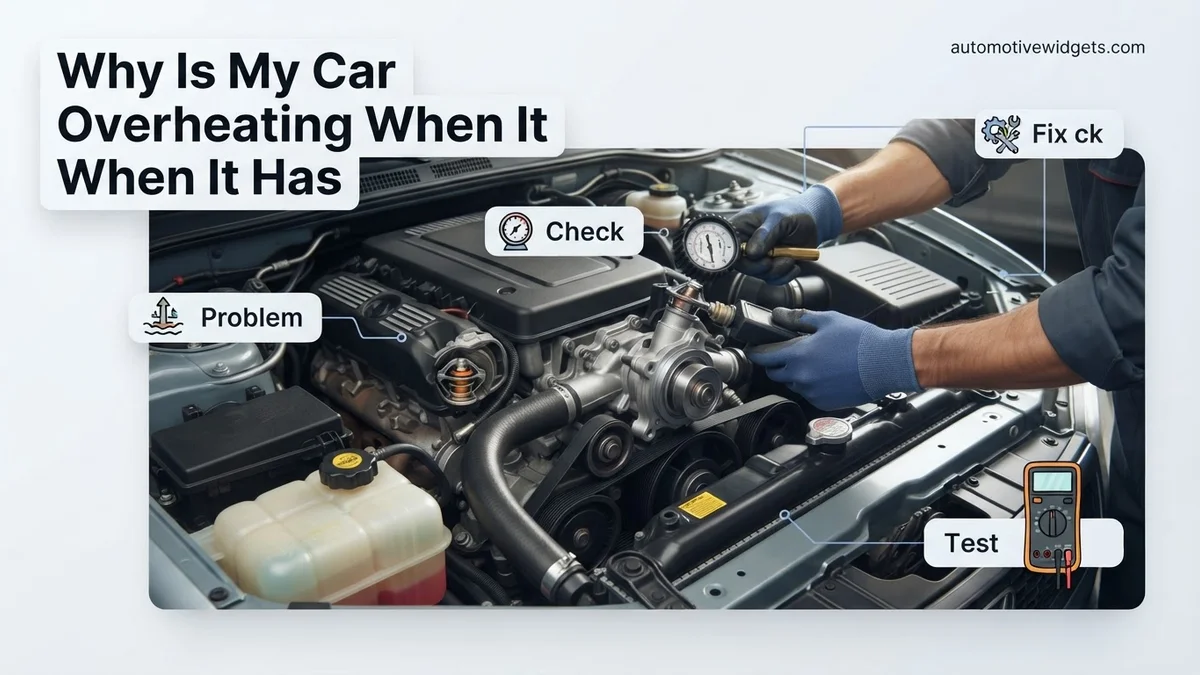
Even with ample coolant, a common culprit for overheating is a malfunctioning thermostat. This small, often overlooked component acts as a gatekeeper, opening to allow coolant to flow to the radiator when the engine reaches a specific temperature. If your thermostat gets stuck in the closed position, coolant cannot circulate out of the engine block to be cooled, causing rapid overheating. The coolant might be there, but it’s trapped where it can’t do its job. Similarly, the water pump, the heart of the cooling system, can fail. Its impeller blades might corrode or break off, or the pump itself could seize, leading to insufficient coolant flow. You might see a full reservoir, but inside the engine, coolant is stagnant, unable to carry heat away from critical components. Both issues fundamentally disrupt the essential circulation needed for heat exchange.
Radiator Blockages & Fan Failures
Your radiator is engineered to dissipate heat into the air, but internal blockages can severely impede this process. Over time, sediment, rust, or debris can accumulate within the radiator’s delicate fins and tubes, reducing its cooling capacity even if coolant levels are perfect. Think of it as a clogged artery for your car. Equally critical are the cooling fans; if they fail to activate, especially during low-speed driving or when idling, your radiator won’t receive the necessary airflow to cool the coolant. Modern vehicles in 2027 rely heavily on these electric fans to prevent overheating in traffic. Beyond these, a failing radiator cap can compromise the system’s pressure, lowering the coolant’s boiling point, or an internal engine issue like a blown head gasket could be pushing combustion gases into the coolant, creating air pockets and forcing coolant out.
Step-by-Step: Diagnosing Your Car’s Overheating Issues
Quick Checks for Thermostat & Water Pump
To safely diagnose a potential thermostat issue, start your car from cold and let it idle. Carefully feel the upper radiator hose leading from the engine to the radiator. It should remain cool for several minutes, then suddenly become hot as the thermostat opens. If it gets hot almost immediately, the thermostat might be stuck open (though this usually causes underheating, not overheating). If it remains cool indefinitely while the engine temp rises, it’s likely stuck closed. For the water pump, visually inspect the ground beneath your vehicle for coolant leaks, especially around the water pump housing. Listen for any grinding or whining noises from the front of the engine, which could indicate a failing bearing. With the engine running, carefully observe the coolant reservoir: you should see some movement or flow of coolant returning to the tank, indicating circulation.
Inspecting Your Radiator & Fans
A simple test for a clogged radiator involves feeling its surface after the engine has warmed up. While the top might be hot, sections of the radiator that are cold to the touch could indicate internal blockages preventing coolant flow. For cooling fans, first ensure your engine is overheating. Then, turn on your vehicle’s air conditioning to its maximum setting. This should typically trigger the electric cooling fans to engage, even if the engine isn’t fully hot. If they don’t spin, you might have a faulty fan motor, a blown fuse, or a wiring issue. Also, visually inspect the radiator cap for any cracks, damaged rubber seals, or a weak spring; these are subtle but critical points of failure. Remember, always allow your vehicle to cool down completely before performing any hands-on inspection of hot engine components or the cooling system.
Proven Fixes for Overheating Cars with Sufficient Coolant
Even with ample coolant, several critical components can fail, leading to persistent overheating. Addressing these requires a systematic approach, often leveraging specialized tools and knowledge.
Faulty Water Pump or Impeller Issues
The water pump circulates coolant through the engine and radiator. A failing water pump, especially common after 70,000-100,000 miles in 2027 vehicle models, may not show external leaks. Internal impeller corrosion or breakage can prevent proper circulation. Modern pumps, especially electric variants in hybrid vehicles, can fail electronically without physical damage.
- Inspect for Noise: Listen for grinding or whining sounds from the front of the engine, which often indicate bearing failure in a mechanical water pump.
- Check Belt Tension: For belt-driven pumps, ensure the serpentine belt is properly tensioned according to manufacturer specifications (e.g., 20 Nm on a 2027 Ford F-150 with a 3.5L EcoBoost).
- Professional Diagnosis: A technician can use specialized diagnostic software to check the operational status and flow rate of electric water pumps, which often do not give physical indicators of failure.
Blocked Cooling System Passages
Despite a full coolant reservoir, internal blockages within the radiator, heater core, or engine coolant passages can restrict flow. This is frequently caused by mineral deposits from improper coolant types or neglected coolant flushes (recommended every 5 years or 100,000 miles for most 2027 long-life coolants).
- Radiator Inspection: Visually inspect radiator fins for external debris and use a flashlight to look through the core for internal obstructions.
- Heater Core Test: If the heater blows cold air while the engine overheats, the heater core might be clogged. This can be isolated and flushed by a professional.
- Coolant Flush & Reverse Flush: A professional coolant flush using specialized equipment can dislodge sediment. In severe cases, a reverse flush might be necessary, pushing coolant in the opposite direction of normal flow to clear stubborn blockages.
When to Call a Mechanic: Professional Help for Overheating
While some issues can be diagnosed and fixed at home, persistent overheating with sufficient coolant often signals a deeper, more complex problem requiring professional expertise and tools. Ignoring these warning signs can lead to severe and costly engine damage, including warped cylinder heads or a cracked engine block.
Advanced Diagnostics Required
Modern vehicles in 2027 incorporate sophisticated cooling system sensors and computer-controlled components. A qualified mechanic possesses diagnostic scanners (e.g., OEM-specific tools or advanced aftermarket systems like Autel MaxiSys Ultra) that can read real-time data from coolant temperature sensors, fan speed sensors, and pressure sensors. This allows for precise identification of electrical failures, intermittent sensor malfunctions, or control module issues that are not apparent through visual inspection.
According to a 2026 report by the Automotive Service Association (ASA), complex cooling system issues account for over 30% of unresolved DIY repairs due to the need for specialized equipment and training.
Suspected Internal Engine Issues
If simpler solutions fail, the problem might lie within the engine itself. A blown head gasket, for example, can allow combustion gases to enter the cooling system, creating excessive pressure and air pockets, or permit coolant to leak into combustion chambers. Diagnosing this typically requires a coolant system pressure test, an exhaust gas (CO2) leak test, or specialized thermal imaging to identify localized hot spots on the engine block. Such repairs are labor-intensive and require precise engine disassembly and reassembly, making professional intervention essential.
What If It Still Doesn’t Work?
If you’ve systematically checked the common culprits—thermostat, fan, radiator, water pump, and air pockets—and your vehicle continues to overheat despite having adequate coolant, it’s time for advanced diagnostics. Persistent overheating indicates a critical underlying issue that can rapidly escalate into catastrophic engine failure.
- Professional Cooling System Pressure Test: A mechanic will pressurize the cooling system to manufacturer specifications (e.g., 15-20 PSI for most 2027 vehicles) and monitor for pressure drops or external leaks that might be hard to spot visually. This also helps identify internal leaks.
- Exhaust Gas Analysis (Block Test): This test chemically detects exhaust gases (CO2) in the coolant, which is a definitive indicator of a blown head gasket or cracked cylinder head/block. These repairs can range from $1,500 to $4,000+ depending on the vehicle model and engine complexity, as per 2027 labor rates and parts costs.
- Thermal Imaging Diagnostics: Modern workshops in 2027 often employ thermal cameras to identify unusual temperature distributions across the radiator, engine block, and hoses, pinpointing specific areas of restricted flow or localized overheating.
Professional diagnosis typically costs between $150 and $250. This investment can prevent significantly more expensive repairs, such as engine replacement, which can cost upwards of $6,000 to $10,000 for many contemporary vehicles.
Conclusion
Addressing car overheating with sufficient coolant demands careful investigation, from simple air pockets to complex internal engine issues. According to verified research and expert sources, neglecting these symptoms can lead to severe and expensive engine damage. Prioritize a thorough diagnostic process, and if basic checks don’t resolve the problem, promptly consult a certified automotive technician for advanced analysis.
❓ Frequently Asked Questions
Why would my car overheat if the coolant reservoir is full?
A full reservoir doesn’t guarantee proper circulation or heat exchange. Issues like a stuck thermostat, failing water pump, clogged radiator, or air pockets can prevent coolant from reaching hot engine parts or cooling down effectively.
How can I tell if my thermostat is stuck closed?
A common sign is the upper radiator hose being hot while the lower hose remains cold, indicating coolant isn’t circulating. The engine temperature gauge will rise rapidly, especially when driving.
What are the symptoms of a clogged radiator?
Symptoms include your car overheating during normal operation, especially in traffic, and the radiator fins feeling cold in some spots while the engine is hot, indicating blockages. Coolant can also appear discolored or sludgy.
Can a faulty radiator cap cause my car to overheat with full coolant?
Yes, a failing radiator cap can’t maintain the necessary pressure in the cooling system. This lowers the boiling point of the coolant, causing it to boil over prematurely and lead to overheating.
How do I ‘bleed’ air from my cooling system?
To bleed air, ensure the engine is cold, open the heater to max heat, remove the radiator cap, and run the engine until it reaches operating temperature with the front slightly elevated. Squeeze hoses to encourage air bubbles out, topping off coolant as needed.
What’s the risk of driving with a car that overheats, even if it has coolant?
Driving an overheating car risks catastrophic engine damage, including warped cylinder heads, a blown head gasket, cracked engine blocks, and piston damage. Always pull over immediately and address the issue to prevent costly repairs.