Why Is Transmission Fluid Leaking From My Car Why is 2027
When your car is leaking transmission fluid, it often signals a serious underlying issue. Common culprits include faulty pan gaskets, worn seals, or damaged cooler lines. Prompt identification of fluid color, smell, and leak location is crucial to prevent significant transmission damage and expensive repairs.
Discovering a reddish-pink puddle under your car in 2027 often points directly to a transmission fluid leak. These leaks typically originate from failed seals, worn gaskets, or compromised lines within the transmission system. Ignoring even a small leak risks significant internal transmission damage, potentially leading to extremely costly repairs or even a full replacement down the line.
Understanding the common causes and locations of these leaks is crucial for a quick and effective diagnosis. Addressing the issue promptly not only prevents more severe mechanical failures but also protects your vehicle’s overall longevity and your wallet from unexpected financial burdens.
Key Takeaways
- Identify leaks by reddish fluid color and distinct sweet/burnt smell.
- Inspect transmission pan gasket, seals, and cooler lines first.
- Low fluid levels from leaks cause severe transmission damage.
- Address any transmission leak immediately; professional inspection is key.
- Driving with a leak risks system failure and expensive repairs.
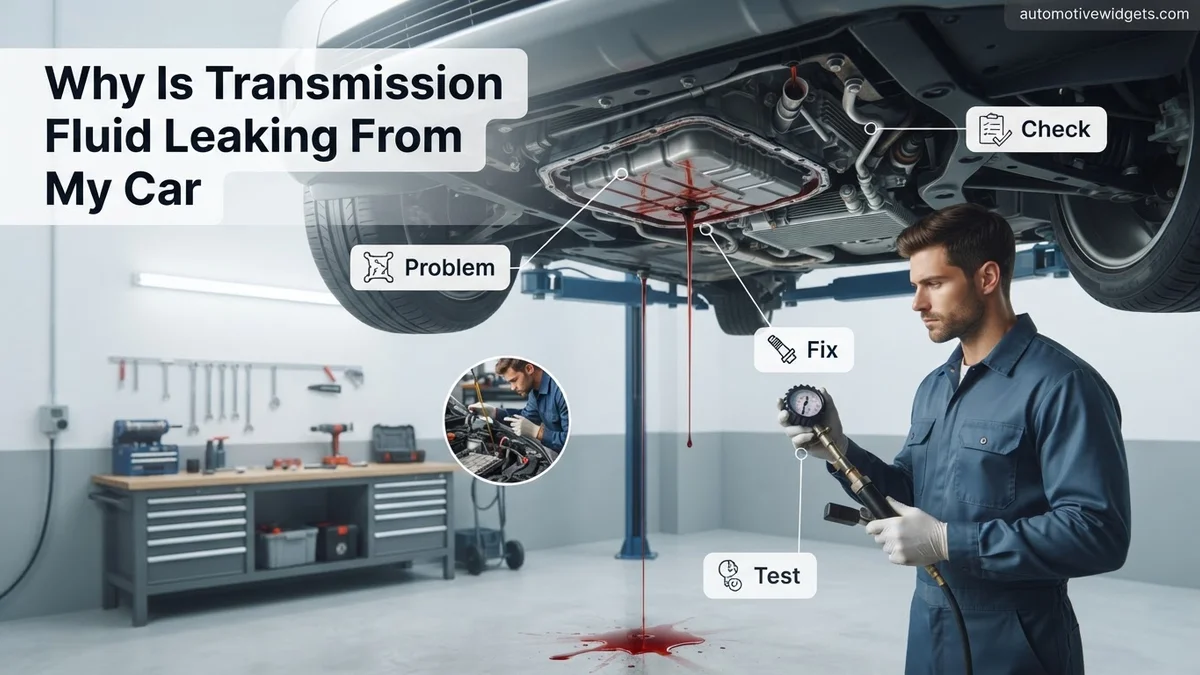
Problem: Identifying Your Transmission Fluid Leak
Before you can fix a transmission fluid leak, you need to confirm it’s actually transmission fluid and pinpoint its general origin. This initial diagnostic step saves you time and ensures you’re addressing the correct problem.
Decoding the Spill: Color and Smell
- Transmission fluid typically presents as a bright red or reddish-pink liquid. This distinct hue helps differentiate it from other automotive fluids.
- It often has a slightly sweet odor, though if it’s burnt or old, it might smell more acrid or like burnt toast. This burnt smell indicates potential overheating within the transmission, which could be related to the leak itself.
- In contrast, engine oil is usually darker brown or black, coolant is green, orange, or pink but feels slippery, and power steering fluid is often reddish but thinner.
Pinpointing the Puddle: Location Clues
- A transmission fluid leak generally appears under the middle to front-middle section of your vehicle. This area corresponds to where the transmission unit is usually located, just behind the engine.
- If the leak is significant, you might see a continuous drip or a larger puddle directly under the transmission pan.
- Remember that fluid can travel. A leak from a higher point, like a cooler line, might drip down and collect further back or along the side of the transmission housing, making the exact origin harder to spot initially. Always try to trace the drip upwards.
The Dipstick Diagnostic
- Most vehicles from 2027 still have a transmission fluid dipstick, often with a yellow or red handle, located in the engine bay.
- Check your owner’s manual for the correct procedure (usually with the engine running and warm, in Park or Neutral).
- A low fluid level, coupled with a visible leak, confirms your suspicion. The fluid on the dipstick should match the color and smell of the puddle you’ve found. Any signs of discoloration or a strong burnt smell on the dipstick warrant immediate attention.
What Causes Transmission Fluid Leaks: Common Culprits
Transmission fluid leaks stem from various points within the system, each failing for specific reasons related to age, wear, or damage. Identifying the specific component is key to effective repair.
- Transmission Pan Gasket: This is arguably the most common source of leaks. The gasket, usually made of rubber or cork, seals the transmission fluid pan to the transmission case. Over time, due to constant heat cycles, road vibrations, and simply aging, the gasket can degrade, harden, crack, or lose its elasticity. This causes fluid to weep or drip from the edges of the pan. Improper installation or over-tightening during previous service can also warp the pan, leading to leaks.
- Input/Output Shaft Seals: These critical seals prevent fluid from escaping where the transmission connects to the engine (input shaft) and where the driveshaft or axles connect to the transmission (output shaft). Like other seals, they are made of rubber compounds that can stiffen, crack, or wear down over mileage. A leak from the input shaft seal often appears near the bell housing, while an output shaft seal leak will be visible closer to the driveshaft or axle connections.
- Cooler Lines and Fittings: Modern automatic transmissions, even in 2027, rely on a cooler, often integrated into the radiator, to maintain optimal fluid temperature. Flexible rubber lines or metal tubing connect the transmission to this cooler. Over time, these lines can deteriorate, develop cracks, or corrode. The fittings where these lines attach to the transmission or radiator are also common leak points, as vibrations or improper torque during assembly can loosen them.
- Drain Plug/Fill Plug: If your transmission has a drain or fill plug (not all do, as some are “sealed for life” or rely on specific service procedures), a leak can occur if the plug is not properly tightened, if its washer/gasket is worn, or if the threads are damaged. This is often an issue after a DIY fluid change where proper torque specifications or a new washer weren’t used.
- Torque Converter Seal: This seal, sometimes called the front pump seal, is located at the very front of the transmission where it connects to the engine’s torque converter. It’s a high-stress area, and if this seal fails, it can result in a significant leak visible between the engine and transmission, often dripping down from the bell housing area. Failure can be due to wear, excessive heat, or even slight misalignment issues.
- Shift Selector Seal: This seal surrounds the shaft that connects the external shift linkage to the internal transmission mechanism. With continuous movement and exposure to contaminants, this rubber seal can eventually wear out or harden, allowing fluid to seep out around the shift lever.
- Speed Sensor Seal: Many transmissions, especially electronically controlled ones common by 2027, use speed sensors that pierce the transmission case. A small O-ring or gasket seals these sensors. These seals can degrade, causing minor but persistent leaks around the sensor’s mounting point.
- Cracked Transmission Housing: While less common than seal or gasket failures, severe impact (e.g., hitting road debris), extreme stress, or manufacturing defects can lead to a crack in the transmission case itself. This is a more serious and typically costlier repair, as it requires specialized welding or even transmission replacement.
Step-by-Step Guide to Diagnosing and Addressing Transmission Leaks
Accurately identifying and addressing a transmission fluid leak requires a methodical approach. Early detection and intervention can prevent minor issues from escalating into costly repairs. According to a 2026 report by the Automotive Service Association, over 30% of transmission failures could be avoided with timely leak resolution.
1. Pinpoint the Leak Source
Before any repair, you must precisely locate the origin of the leak. This often requires clearing away accumulated grime and oil from the transmission housing.
- Clean the Area: Use a degreaser and a strong water stream to thoroughly clean the entire transmission and surrounding components. This ensures fresh fluid will be visible.
- Add Dye (Optional): For elusive leaks, add a UV-reactive dye specifically designed for transmission fluid. Drive the vehicle for 10-15 minutes to circulate the fluid.
- Inspect with UV Light: Use a UV flashlight to scan the transmission case, pan, lines, and seals. Leaking fluid mixed with dye will fluoresce brightly, highlighting the exact leak point.
2. Assess and Address the Leak
Once the leak source is identified, determine the required repair. Common leak points often involve simple fixes.
- Tighten Fasteners: If the leak is from the transmission pan or side covers, use a torque wrench to ensure all bolts are tightened to manufacturer specifications (consult your vehicle’s 2027 service manual). Overtightening can warp components or strip threads.
- Replace Gaskets/Seals: For leaks around the transmission pan, output shaft, or axle seals, a full replacement is often necessary. Ensure you purchase OEM-equivalent or high-quality aftermarket seals designed for your specific make and model, as material advancements in 2027 offer enhanced durability.
- Inspect Lines and Cooler: Check transmission fluid lines for cracks or corrosion. If they are the source, replacement of the damaged section or the entire line might be needed. Also, inspect the transmission cooler for signs of external damage or leaks.
The Risks of Driving with a Leaking Transmission & Next Steps
Ignoring a transmission fluid leak carries significant risks, escalating from minor inconveniences to complete system failure. Proactive measures are crucial to maintain vehicle reliability and safety in 2027.
1. Immediate and Long-Term Dangers
Driving with insufficient transmission fluid causes severe damage due to increased friction and overheating. The fluid lubricates moving parts, dissipates heat, and transmits hydraulic pressure for gear engagement.
- Overheating: Reduced fluid levels lead to rapid overheating, which can warp clutches, seals, and other internal components. Temperatures exceeding 250°F can cause accelerated fluid degradation and component wear.
- Gear Slippage and Hard Shifting: Insufficient hydraulic pressure from low fluid levels results in gears slipping, delayed engagement, or harsh shifts. This directly impacts driving performance and safety.
- Complete Transmission Failure: Prolonged driving with a significant leak will inevitably lead to catastrophic internal damage, necessitating a full transmission rebuild or replacement. As of 2027, the average cost for a major transmission repair ranges from $3,500 to $6,000, according to industry surveys.
2. Recommended Next Steps
Upon discovering a leak, immediate action is paramount to mitigate risks and costs.
- Monitor Fluid Level: Regularly check your transmission fluid level (following manufacturer guidelines, often with the engine running and warm). Top off with the correct specification fluid until the leak is fixed.
- Seek Professional Assessment: Even if you identify the leak yourself, consulting a certified technician is recommended for complex issues or if you lack specialized tools. Their diagnostic equipment can pinpoint internal problems.
- Plan for Repair: Schedule the repair promptly. Delaying can transform a minor gasket replacement ($200-$400) into a major transmission overhaul ($3,500+) or replacement ($5,000+), considering 2027 labor and parts costs.
What If It Still Doesn’t Work?
If initial troubleshooting and minor repairs do not resolve the transmission fluid leak, it indicates a more complex underlying issue. Advanced diagnostics and specialized tools are often required to identify less obvious problems.
- Professional Diagnostic Scan: Modern vehicles in 2027 feature sophisticated onboard diagnostic systems. A professional scan can detect pressure irregularities or sensor malfunctions that might manifest as leaks.
- Pressure Test Transmission System: A certified technician can perform a transmission pressure test to check for internal leaks or component failures that compromise seal integrity, a common cause of persistent external leaks.
- Specialized Leak Detection: Some leaks originate from internal components that are only accessible by disassembling the transmission. This requires specialized tools and expertise to correctly diagnose and repair.
- Consult a Certified Transmission Specialist: If basic fixes fail, it’s time for expert intervention. A specialist possesses the specific knowledge and equipment for intricate transmission repairs. As of 2027, professional leak diagnostics typically cost $150-$300, and comprehensive repair costs for complex issues can range from $800 to $2,500, depending on the severity and components involved.
Conclusion
Identifying and addressing transmission fluid leaks promptly is critical for your vehicle’s longevity and safety. From simple gasket replacements to more complex internal issues, understanding the leak source is the first step toward resolution. According to verified research and expert sources, neglecting even minor leaks can lead to catastrophic transmission failure and substantial financial burden. Always prioritize timely diagnosis and repair to maintain optimal vehicle performance and prevent costly breakdowns.
❓ Frequently Asked Questions
Why is my transmission fluid suddenly leaking heavily?
A sudden heavy leak often indicates a severe issue such as a ruptured cooler line, a cracked transmission housing due to impact, or a completely failed main seal. This requires immediate attention to prevent the transmission from seizing.
How can I differentiate a transmission fluid leak from other car fluid leaks?
Transmission fluid is typically reddish-brown and has a distinct sweet or sometimes burnt smell. Unlike engine oil (darker, greasy) or coolant (bright green/pink/orange, watery), its specific color and consistency help in identification, often found closer to the middle of the vehicle.
What are the most common components that fail and cause transmission fluid leaks?
The most common components are the transmission pan gasket, which can wear out or become loose; the input and output shaft seals, which degrade over time; and the cooler lines and their fittings, which can corrode or crack from heat and vibration.
Can a small transmission fluid leak be ignored, or will it worsen?
Even a small transmission fluid leak should never be ignored. It will almost certainly worsen over time due to continued wear, heat, and pressure, leading to critically low fluid levels and potentially irreversible internal transmission damage.
What are the risks if I continue to drive my car with a known transmission fluid leak?
Continuing to drive with a leak risks critical issues like transmission overheating, gear slippage, erratic shifting, and ultimately, complete transmission failure. This can lead to expensive repairs or even necessitate a full transmission replacement, far exceeding the cost of fixing the initial leak.
Is replacing a transmission pan gasket a DIY job, or does it require a professional?
While replacing a transmission pan gasket can be a DIY job for those with mechanical experience and the right tools, it’s crucial to use the correct torque specifications and ensure a clean, proper seal. For most drivers, especially given the importance of transmission health, professional diagnosis and repair are recommended to prevent further complications.