
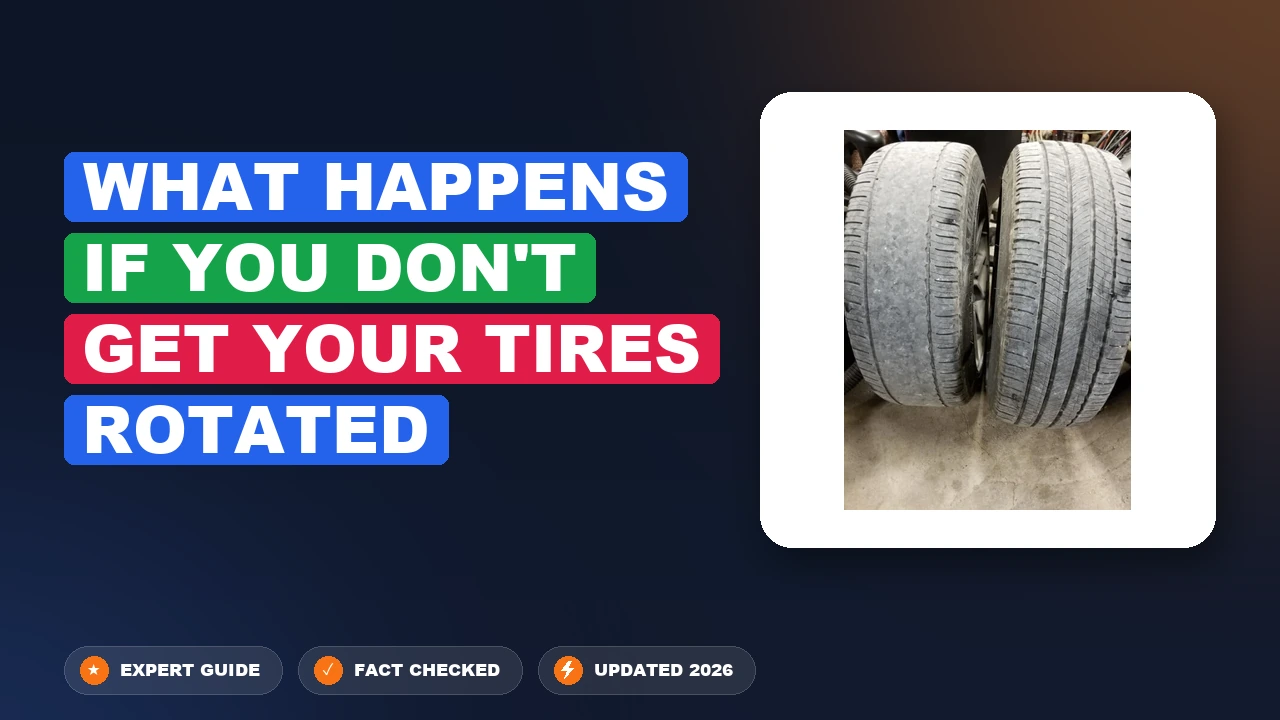
What Happens If You Don’t Get Your Tires Rotated 2026 Guide
Failing to rotate your tires leads to uneven tread wear that drastically shortens their lifespan and forces expensive premature replacements. Neglecting this crucial maintenance also creates severe safety hazards, including reduced traction, poor braking efficiency, and an increased risk of hydroplaning.
If you skip regular tire rotations, your tires will wear down unevenly, forcing you to buy expensive replacements thousands of miles early. Neglecting this simple maintenance routine strips away your tread prematurely, compromises your vehicle’s handling, and creates serious safety hazards on the road in 2026.
Most drivers do not realize that front, rear, driver, and passenger tires endure completely different forces during acceleration, braking, and steering. Without periodic rotation, these varied stress points destroy your tire investment. Let us examine the exact consequences of skipping this crucial service and how it damages your wallet and vehicle.
Key Takeaways
- Skipping rotations causes rapid, uneven tread wear that ruins tires prematurely.
- Uneven tires severely compromise vehicle handling, braking distance, and winter traction.
- Neglected tires increase rolling resistance, which directly lowers your fuel economy.
- Unrotated tires can place excessive, damaging strain on your suspension and alignment.
- Regularly scheduled tire rotations save hundreds of dollars in early replacement costs.
What Causes Uneven Tire Wear and Damage from Neglected Rotations
The Mechanics of Front-Versus-Rear Tire Stress
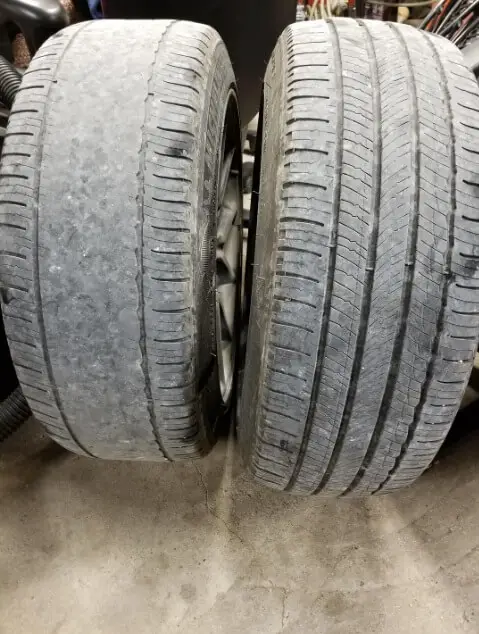
Your front tires handle the majority of the steering load and bear the weight of the engine during braking. Because of this, the outer shoulders of front tires typically wear down much faster than rear tires. On front-wheel-drive vehicles in 2026, the front tires also transfer engine power to the pavement, accelerating tread loss even further. Rear tires simply trail behind, experiencing a different friction pattern that leaves their tread relatively intact while your fronts go bald.
The Financial Toll of Premature Tread Destruction
When you neglect tire rotations, you destroy a full set of tires far before their actual mileage warranty expires. A standard set of modern tires can easily last up to 60,000 miles if rotated properly every 5,000 to 7,000 miles. Leaving them in place often results in front tires going completely bald by 30,000 miles. Replacing half your tires early or being forced to buy a brand new set of four years ahead of schedule wastes hundreds of dollars.
- Cupping and Scalloping: Unrotated tires develop choppy high-and-low spots on the tread blocks.
- Irreparable Alignment Strain: Uneven tires pull your steering alignment out of spec, causing your suspension components to wear out faster.
- Vibration and Road Noise: Irregular wear creates a loud humming sound and annoying cabin vibrations at highway speeds.
How to Fix Worn Tires and Implement a Proper Rotation Schedule
Assessing Current Damage and Knowing When It Is Too Late
You need to inspect your tread depth regularly using a depth gauge or the classic penny test. If your front tires are already bald while your rear tires have plenty of tread left, a rotation at this late stage will not fix the damage. Once tires develop severe cupping or exposed cords, you must replace them immediately. Rotating heavily damaged tires to the rear will only transfer the loud road noise, rough ride, and poor handling to the back of your vehicle.
Establishing a Reliable 2026 Rotation Schedule
Preventing premature tire failure requires a strict maintenance schedule integrated into your vehicle’s oil change routine. Most tire manufacturers and automotive experts recommend changing your tire positions every 5,000 to 7,000 miles. Stick to this routine to ensure even wear across all four contact patches. Consistent rotations maximize your tread life, save you money on fuel efficiency, and keep your vehicle operating safely on the road.
- Front-Wheel Drive: Move front tires straight back to the rear, and cross the rear tires to the front driving positions.
- Rear-Wheel or Four-Wheel Drive: Cross the rear tires straight to the front, and move the front tires straight back to the rear.
- Directional Tires: Keep them on the same side of the vehicle, moving them only straight front-to-back to maintain the correct rolling direction.
What If It Still Doesn’t Work and You Need New Tires or Alignment
Skipping tire rotations for too long creates permanent damage that simple maintenance cannot reverse. If your tread is already severely uneven, rotating the tires now will not restore a smooth ride or safe handling. By 2026, automotive service standards dictate that once tread depth varies by more than 2/32 of an inch across a single tire, structural correction is usually impossible.

Drivers facing persistent vibrations or handling drift after a late rotation need deeper diagnostic steps. Here are the fallback procedures to address advanced tire wear:
- Inspect for Suspension Wear: Worn shocks, struts, or ball joints accelerate cupping and feathering. Have a certified technician check your suspension components before installing new rubber.
- Perform a Professional Wheel Alignment: Misalignment ruins tires faster than missed rotations. A four-wheel alignment typically costs between $100 and $250, depending on your vehicle make.
- Check for Bent Rims or Hub Damage: Pothole impacts can bend wheels, causing persistent vibrations that rotation cannot fix. Rim repair usually costs $75 to $150 per wheel.
- Replace the Damaged Tires: If the tread wear rating has dropped below 2/32 of an inch or structural cords are exposed, replacement is mandatory. A standard set of four new passenger tires averages $600 to $1,200 installed in 2026.
- Consult a Tire Specialist: Visit a certified tire dealer for a manual tread depth measurement and safety audit if uneven wear patterns continue to recur.
Conclusion
Neglecting routine tire rotations drastically shortens the lifespan of your investment, compromises braking distances, and reduces fuel efficiency. Simple preventative maintenance every 5,000 to 7,000 miles saves hundreds of dollars in premature replacement costs. According to verified research and expert sources from the Rubber Manufacturers Association, proactive tire care remains the single most effective way to ensure vehicle safety on the road. Schedule your next rotation today to protect both your wallet and your driving safety.
❓ Frequently Asked Questions
What happens if you never get your tires rotated?
If you never rotate your tires, the front and rear sets will wear down at drastically different rates. This leads to bald spots, drastically reduced traction in wet or snowy conditions, and forces you to buy replacement tires much sooner than normal.

Will skipping tire rotations cause vibrations while driving?
Yes, uneven tread wear causes the tire contact patch to become irregular, which frequently translates into noticeable steering wheel vibrations and a noisy ride at highway speeds.
How much money does skipping tire rotations cost over time?
Skipping rotations can cut a tire’s expected lifespan in half, forcing you to purchase expensive full sets of replacement tires years earlier and wasting money on increased fuel consumption.
Can unrotated tires cause suspension damage?
Prolonged use of unevenly worn tires puts abnormal stress on your vehicle’s suspension components, wheel bearings, and steering system, potentially leading to expensive secondary mechanical repairs.
Is it safe to drive with cupped tires from lack of rotation?
No, cupped or choppy tire wear severely reduces the tire’s grip on the road, lengthening your braking distances and increasing your risk of a sudden blowout or loss of control.
Do all vehicles require the same tire rotation pattern?
No, the correct rotation pattern depends entirely on your vehicle’s drivetrain, whether it is front-wheel drive, rear-wheel drive, all-wheel drive, or four-wheel drive.
