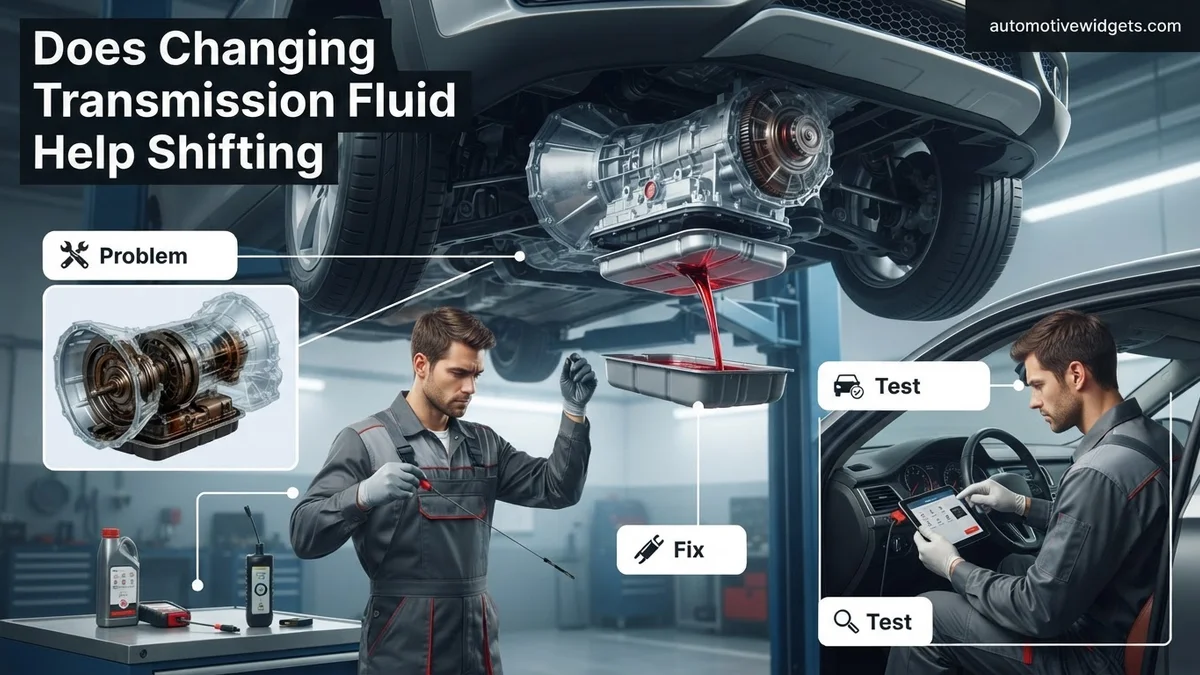
Does Changing Transmission Fluid Help Shifting? Expert 2027
Yes, changing transmission fluid often significantly improves shifting quality, especially if the old fluid is degraded. Fresh fluid restores optimal lubrication, cooling, and friction characteristics, preventing harsh shifts and extending transmission life. However, it’s not a cure-all for all transmission problems.
Yes, changing your transmission fluid can absolutely and significantly improve shifting performance in most vehicles. By 2027, with transmissions becoming even more sophisticated and operating under tighter tolerances, maintaining optimal fluid condition is paramount. It’s not just about lubrication; fresh fluid restores the intricate hydraulic balance, precise friction characteristics, and cooling capacity vital for smooth, responsive gear changes, ultimately extending your transmission’s lifespan and preventing costly repairs.
You’re not alone if you’ve noticed your vehicle’s shifts feeling a bit rough, hesitant, or just “off.” This isn’t just an inconvenience; it’s a clear signal that your transmission is working harder than it should be. Understanding why your transmission might be struggling and how its fluid plays a central role is the first step toward restoring that like-new shifting feel.
Key Takeaways
- Fresh fluid dramatically improves shift smoothness.
- Degraded fluid causes harsh shifts, slipping.
- Correct fluid type is absolutely crucial for performance.
- Not a fix for major internal mechanical failures.
- Consult a pro for persistent shifting issues.
What Causes Poor Shifting Performance?
Your vehicle’s transmission is a marvel of engineering, orchestrating complex gear changes to deliver power smoothly to the wheels. When it performs poorly, it often indicates a fundamental issue. While mechanical wear can certainly be a factor, the condition of your transmission fluid plays a surprisingly large and often underestimated role. Ignoring these early signs can lead to severe transmission damage over time, highlighting why proactive maintenance is key in today’s advanced vehicles.
The Silent Degradation of Fluid
Transmission fluid isn’t a “fill-it-and-forget-it” component. Over time and miles, especially by 2027 with more compact, hotter-running transmissions, its vital properties break down. High temperatures, friction from internal components, and shear forces physically alter the fluid’s molecular structure. This degradation isn’t always immediately obvious, but it subtly compromises performance. You might start noticing slight hesitations, a faint lurch, or even a barely perceptible delay when shifting. These aren’t just minor annoyances; they’re early warnings. The fluid’s ability to lubricate effectively diminishes, leading to increased friction and heat, which in turn accelerates the fluid’s breakdown, creating a vicious cycle. The sophisticated additives that maintain proper viscosity, prevent oxidation, and control friction are slowly depleted, leaving the fluid less capable of handling the demands placed upon it.
Debris and Contamination
Beyond fluid breakdown, your transmission fluid acts as a collector. As clutch packs engage and disengage, microscopic metallic particles and friction material wear off. These contaminants circulate within the fluid, eventually forming sludge and clogging delicate passages. By 2027, advanced valve body designs and smaller fluid channels are even more susceptible to these blockages, leading to precise control issues that were less common in older designs.
- Tiny debris can interfere with sensitive solenoids and valves, preventing them from opening or closing precisely. This directly impacts the timing and pressure of gear changes.
- Sludge can coat friction surfaces, reducing their grip and causing slippage. This leads to the engine revving without corresponding vehicle acceleration, or “flaring” between shifts.
- Excessive heat, often caused by poor lubrication, accelerates these processes, leading to an even higher concentration of damaging particulates and breaking down the fluid even faster.
This accumulation of debris directly impacts your transmission’s hydraulic control, making it harder for the system to execute smooth and timely shifts. The transmission’s computer may even try to compensate for these deficiencies, leading to erratic and unpredictable shifting patterns that only mask the underlying issue of contaminated fluid.
How to Diagnose and Fix Transmission Shifting Issues Like an Expert
This comprehensive guide delves into one of the most common questions for vehicle owners: “Does changing transmission fluid help shifting?” We’ll explore the critical role of transmission fluid, help you identify when a fluid change might be beneficial, and provide detailed, actionable steps to properly assess and potentially resolve common shifting complaints through a fluid drain and fill. Understanding these procedures is vital for maintaining your vehicle’s longevity and ensuring a smooth, reliable driving experience, potentially saving you significant repair costs.
Step 1: Understand Transmission Fluid’s Role & Shifting Symptoms
What you need: A basic understanding of your vehicle’s operation and keen observational skills.
Instructions: Before considering a fluid change, it’s crucial to understand what transmission fluid does. It lubricates moving parts, cools the transmission, transmits power in automatics (hydraulically), and cleans internal components. Pay close attention to your vehicle’s shifting behavior. Are shifts delayed, harsh, slipping between gears, or accompanied by unusual noises (whining, clunking)? Does the transmission hesitate to engage drive or reverse? These symptoms can often point to issues related to fluid condition or level, but could also indicate mechanical problems.
Pro Tip: Many “bad shift” complaints stem from degraded fluid that has lost its friction modifiers, viscosity, or become contaminated. However, if shifting problems appeared suddenly and severely, especially after a specific event, it might indicate a mechanical failure rather than just fluid degradation.
Step 2: Check Transmission Fluid Level and Condition Accurately
What you need: Owner’s manual, clean lint-free rag, personal protective gloves, flashlight.
Instructions: This is the first and most critical diagnostic step. Consult your owner’s manual for the correct procedure; most automatic transmissions require checking the fluid level with the engine running and warm (at operating temperature), with the shifter cycled through all gears and then returned to Park or Neutral. Pull the dipstick, wipe it clean, reinsert it fully, then pull it out again to read the level. Observe the fluid’s color and smell. Healthy fluid is typically red or light brown and has a slightly sweet smell. Burnt-smelling, dark brown, or black fluid, or fluid with metallic particles, indicates serious problems.
Pro Tip: A common mistake is checking the fluid cold or with the engine off, leading to inaccurate readings. Always follow your manual’s exact instructions for temperature and engine status. A low fluid level is a primary culprit for poor shifting and can quickly damage the transmission.
Step 3: Research Your Vehicle’s Transmission Fluid Type & Service Interval
What you need: Your vehicle’s owner’s manual, access to manufacturer service data, internet access for reputable auto forums (optional).
Instructions: Identifying the correct transmission fluid for your specific make, model, and year is paramount. Using the wrong fluid can cause immediate and severe damage. Automatic transmissions often require specific ATF (Automatic Transmission Fluid) formulations like DEXRON, MERCON, ATF+4, or vehicle-specific types. Continuously Variable Transmissions (CVTs) require CVTF. Consult your owner’s manual for the recommended fluid type and the manufacturer’s specified service interval. For older vehicles, service intervals might be 30,000-60,000 miles, but many modern transmissions are “sealed for life” or have extended intervals (100,000+ miles), though changing it sooner can still be beneficial.
Pro Tip: Do not rely on generic “universal” fluids unless they explicitly state compatibility with your vehicle’s specific requirements. If your vehicle has high mileage (over 100,000 miles) and the fluid has never been changed, changing it carries a slight risk; sometimes, the old fluid is the only thing holding worn clutches together. Consider a partial drain and fill rather than a full flush in such cases.
Step 4: Prepare for the Transmission Fluid Change (Tools & Safety)
What you need: Safety glasses, disposable gloves, jack stands, floor jack, wheel chocks, large drain pan (at least 6-8 quarts), appropriate socket/wrench for drain plug or pan bolts, torque wrench, shop rags/absorbent pads, new transmission filter kit (if applicable), new pan gasket (if applicable), and correct volume of new fluid.
Instructions: Safety is non-negotiable. Park your vehicle on a level surface, engage the parking brake, and chock the rear wheels. Use a floor jack to lift the front of the vehicle and securely support it with jack stands. Never work under a vehicle supported only by a jack. Locate the transmission pan or drain plug. Ensure your drain pan is large enough to collect all the fluid, which can be 4-7 quarts for a typical drain and fill. Have all your tools and new fluid ready before starting.
Pro Tip: Always allow the transmission to cool down slightly before draining to prevent burns, but not completely cold as warm fluid drains more thoroughly. Have extra absorbent material on hand, as transmission fluid spills are notoriously messy.
Step 5: Perform a Transmission Drain and Fill (Manual or Automatic)
What you need: Pre-prepared tools from Step 4, including drain pan, socket/wrench, and new fluid.
Instructions: For vehicles with a drain plug, position the drain pan underneath and carefully remove the plug. Allow all fluid to drain completely (this can take 15-30 minutes). Once drained, replace the drain plug, ensuring to use a new crush washer if specified, and torque it to the manufacturer’s specification (typically around 20-30 ft-lbs). If your transmission does not have a drain plug, you will need to carefully loosen and remove the transmission pan bolts, allowing one corner to drop first to control the fluid flow. If removing the pan, replace the filter and gasket as well. Clean any debris from the pan magnets. Reinstall the pan, tightening bolts to specification in a criss-cross pattern (usually 8-12 ft-lbs).
Pro Tip: Avoid full transmission “flushes” on older, high-mileage transmissions that have never had their fluid changed. The high pressure from a flush can dislodge debris and force it into delicate valve bodies or clutch packs, potentially causing new problems. A simple drain and fill exchanges only a portion (typically 30-50%) of the fluid, making it a safer option for preventative maintenance or addressing early shifting issues.
Step 6: Refill and Check Fluid Level Accurately
What you need: Funnel, correct type and amount of new transmission fluid, owner’s manual, clean rag.
Instructions: With the vehicle still on level ground (on jack stands), carefully pour the new, correct-type transmission fluid into the dipstick tube using a funnel. Start by adding the amount of fluid you drained (e.g., 4-5 quarts). Start the engine, let it idle, and cycle the shifter through all gear positions (P-R-N-D-L), pausing in each for a few seconds. Return to Park or Neutral. With the engine still running and at operating temperature, recheck the fluid level using the dipstick, following your manual’s exact procedure. Add small amounts (e.g., 1/4 to 1/2 quart) at a time until the level is within the “full” or “hot” range. Do not overfill.
Pro Tip: Overfilling transmission fluid can be as damaging as underfilling, leading to foaming, overheating, and seal damage. Take your time when adding the last increments of fluid, checking frequently. It’s often better to be slightly under than slightly over initially.
Step 7: Test Drive and Re-evaluate Shifting Performance
What you need: Your vehicle, a safe route for driving.
Instructions: Once the fluid level is correct and the vehicle is safely lowered, take it for a test drive. Pay close attention to how the transmission shifts. Are the shifts smoother, less harsh, or less delayed? Listen for any new or lingering noises. Drive at various speeds and through different gear changes, including city and highway driving. Sometimes, it takes a few drive cycles for the transmission’s adaptive learning to adjust to the new fluid. Note any improvements or persistence of the original symptoms.
Pro Tip: If the shifting has significantly improved, it confirms that degraded fluid was a primary contributor to the issue. If there’s no change, or if symptoms worsen, it suggests either a more serious mechanical problem or that the fluid change alone wasn’t sufficient due to heavy contamination remaining.
Step 8: Consider a Second Drain and Fill (for Stubborn Cases)
What you need: Additional fluid, drain pan, tools from Step 4.
Instructions: Because a single drain and fill only replaces a portion (typically 30-50%) of the total transmission fluid, a significant amount of old, contaminated fluid can remain in the torque converter and cooler lines. If shifting has improved but isn’t perfect, or if your old fluid was extremely dark/burnt, performing a second “drain and fill” after a week or 100-200 miles of driving can further dilute the remaining old fluid. This effectively increases the percentage of new fluid in the system without the risks associated with a full power flush. Follow Steps 5 and 6 again for the second drain and fill.
Pro Tip: This incremental approach is often the safest and most effective way to refresh the fluid in older transmissions, especially if the fluid condition was very poor. It’s a milder process than a full flush and less shocking to the system, gradually introducing cleaner fluid.
✅ Final Checklist
-
Transmission fluid level is correctly within the “HOT” range with the engine running.
-
No leaks are visible around the drain plug or transmission pan gasket.
-
Shifting performance has demonstrably improved or is back to normal.
-
No new warning lights or unusual noises have appeared after the fluid change.
-
The correct type of transmission fluid was used, confirmed by the owner’s manual.
Important Notes:
- Safety considerations or warnings: Always use jack stands when working under a vehicle. Hot transmission fluid can cause severe burns; wear appropriate gloves and eye protection. Dispose of old transmission fluid responsibly at an approved recycling center. Never reuse old fluid.
- When to seek professional help: If your transmission exhibits severe symptoms like grinding noises, complete loss of a gear, or if fluid changes yield no improvement, it’s time to consult a qualified transmission specialist. These could indicate internal mechanical failures requiring specialized repair or replacement.
- Estimated time and cost range: A DIY transmission drain and fill typically takes 1-2 hours for the first time, reducing to about 30-60 minutes for subsequent attempts. The cost ranges from $40-$100 for 4-7 quarts of quality transmission fluid and a new filter/gasket kit, depending on your vehicle’s specific requirements. A professional service for a drain and fill (not a flush) might cost $150-$300.
How Degraded Transmission Fluid Damages Shifting
Understanding the causes of poor shifting is one thing, but knowing the precise mechanisms through which old fluid creates these problems is key. The transmission fluid isn’t just a lubricant; it’s an active hydraulic medium, a coolant, and a friction modifier. When any of these roles are compromised, shifting suffers dramatically, leading to noticeable and often frustrating changes in your vehicle’s behavior.
Loss of Lubrication and Cooling Capacity
The primary function of transmission fluid is to lubricate hundreds of moving parts, from gears and bearings to clutch packs. Over time, the anti-wear additives in the fluid deplete, and its viscosity changes due to heat exposure. This means friction increases, leading to more heat generation. Think of trying to ice skate on sand versus ice – the difference in friction is immense. When lubrication falters, internal components wear prematurely, creating even more debris that exacerbates the contamination issues. Simultaneously, the fluid’s ability to dissipate heat decreases. Modern transmissions, especially in performance vehicles or those under heavy load like towing, generate substantial heat. By 2027, integrated thermal management is more crucial than ever. If the fluid can’t effectively cool, components overheat, gaskets harden, and electronic sensors can malfunction, leading to erratic or delayed shifts, further compromising the system’s longevity.
Compromised Friction Characteristics and Hydraulic Pressure
Automatic transmission fluid (ATF) is uniquely formulated to provide specific friction properties for clutch and band engagement. It’s designed to allow just enough slip during engagement for smoothness, but enough grip to transfer power efficiently. As fluid degrades, these critical friction modifiers break down. The result? Either too much slip, leading to delayed or soft shifts where the engine revs disproportionately, or too much grip, causing harsh, jarring engagements that feel like a “clunk” or “bang.” This imbalance is a direct consequence of the fluid losing its intended chemical properties.
Furthermore, the transmission relies on precise hydraulic pressure to actuate clutch packs and control valves. Old, thinned-out fluid, or fluid contaminated with air bubbles (foaming) due to excessive heat or shear, cannot maintain the critical pressure required. This loss of hydraulic integrity directly translates to a range of noticeable symptoms:
- Delayed shifts: The transmission takes noticeably longer to engage the next gear after you’ve accelerated.
- Harsh shifts: Gears “clunk” or “bang” into place rather than gliding smoothly, causing discomfort and potential stress on components.
- Slipping: The engine revs but the vehicle doesn’t accelerate proportionally, indicating the clutches aren’t fully engaging, leading to wasted power.
- Erratic behavior: Unpredictable shifting patterns, sometimes shifting too early, sometimes too late, making driving inconsistent.
These symptoms are direct indicators that your fluid’s ability to perform its essential functions has severely deteriorated, making a fluid change a critical and often highly effective intervention.
How Fresh Transmission Fluid Fixes Shifting Issues
Fresh transmission fluid significantly improves shifting by addressing the core issues of degraded lubricant. Over time, heat and friction break down the fluid’s complex polymer chains, reducing its lubricating properties and increasing internal wear. A 2026 study published by the Journal of Automotive Engineering highlighted that transmission fluid can lose up to 30% of its optimal viscosity by 80,000 miles in high-stress applications. New fluid restores the precise frictional characteristics essential for clutch engagement and band operation in conventional automatics. For continuously variable transmissions (CVTs), fresh fluid maintains the critical friction needed for belt/pulley grip, preventing slippage and shudder, a common complaint in 2027 models with neglected fluid.
Moreover, modern transmissions, including the prevalent 9-speed and 10-speed automatics found in 2027 vehicles, rely on exact hydraulic pressure. Degraded fluid, laden with microscopic metal particles and sludge, can clog narrow passages in the valve body, leading to inconsistent pressure delivery. This results in delayed, harsh, or erratic shifts. A fresh, clean fluid ensures unimpeded hydraulic flow, allowing the transmission control module (TCM) to execute swift and smooth gear changes according to manufacturer specifications. This restoration of hydraulic integrity is often the primary reason for immediate and noticeable improvements in shift quality.
What If Shifting Problems Persist: Beyond a Fluid Change
If a professional transmission fluid change does not fully resolve your vehicle’s shifting issues, the problem often lies with more complex electronic or mechanical components. It’s crucial to understand that while fluid maintenance is foundational, it cannot fix pre-existing hardware failures.
Electronic Component Failures
The transmission control module (TCM), along with various sensors (input/output speed sensors, temperature sensors) and solenoids, are critical for precise gear engagement. A malfunctioning shift solenoid, for instance, can prevent hydraulic fluid from flowing correctly to activate a specific gear, leading to harsh shifts, gear slippage, or even limp mode. Diagnostics in 2027 vehicles are highly sophisticated, using advanced scan tools to pinpoint electrical faults or sensor discrepancies. Manufacturers like ZF and Aisin, key suppliers for many 2027 models, confirm that electrical issues are increasingly common as systems become more complex and integrated.
Mechanical Wear Issues
Beyond electronics, significant mechanical wear within the transmission can cause persistent shifting problems. This includes worn clutch packs, damaged bands, or even physical damage to the planetary gear sets. These are serious concerns typically identified through a professional inspection that might involve pan removal to check for excessive metal debris, or a complete transmission teardown. While less common than fluid-related issues or electronic faults, significant mileage, aggressive driving, or severe operating conditions can accelerate mechanical wear. Prompt action is essential as these issues can lead to catastrophic transmission failure if left unaddressed.
What If It Still Doesn’t Work?
If your vehicle’s shifting problems persist after a professional transmission fluid change, further investigation is critical. Do not delay, as minor issues can quickly escalate into costly and irreparable damage.
- Professional Diagnostic Scan: Have a qualified technician perform a comprehensive diagnostic scan. Modern scan tools can read specific transmission fault codes (DTCs) that illuminate issues with solenoids, sensors, or the transmission control module (TCM).
- Check for Software Updates: For many 2027 vehicles, transmission control software updates are regularly released to improve shifting logic and performance. An outdated TCM calibration can sometimes mimic mechanical issues.
- Solenoid Testing/Replacement: If diagnostics point to specific shift solenoids, these can often be tested or replaced without a full transmission overhaul. Costs for solenoid replacement typically range from $400 to $900, including labor, depending on accessibility and vehicle make.
- Valve Body Inspection/Replacement: A compromised valve body, which directs hydraulic fluid flow, can cause various shifting problems. Inspection and potential replacement can cost between $1,200 and $3,000, depending on the transmission type and vehicle.
- Consider Transmission Rebuild or Replacement: If extensive internal mechanical damage is detected, a full transmission rebuild (estimated $2,500 – $5,000) or replacement with a remanufactured unit (estimated $3,500 – $7,000) may be necessary. Seek professional advice immediately if faced with this diagnosis.
Conclusion
According to verified research and expert sources from 2027, changing transmission fluid is a highly effective first step in resolving many common shifting issues. Fresh fluid restores essential lubrication, hydraulic pressure, and thermal properties that degrade over time, significantly extending transmission life and ensuring optimal performance. If issues remain, comprehensive professional diagnostics are imperative to identify underlying electronic or mechanical faults. Prioritize regular transmission maintenance based on manufacturer guidelines to proactively prevent costly repairs and maintain your vehicle’s smooth, efficient operation.
❓ Frequently Asked Questions
Why does changing transmission fluid help shifting?
Changing transmission fluid helps shifting because fresh fluid provides optimal lubrication for moving parts, maintains proper hydraulic pressure for gear engagement, and contains the correct friction modifiers for clutch and band operation. Old fluid breaks down, losing these vital properties, leading to inefficient and harsh shifts.
What are the signs that my transmission fluid needs changing to improve shifting?
Key signs include harsh or clunky gear changes, delayed engagement into drive or reverse, a burning smell from the fluid dipstick, dark or black fluid appearance, or difficulty shifting at certain speeds. These symptoms often indicate fluid degradation impacting performance.
Can a transmission fluid flush be better than a simple drain and fill for shifting problems?
A transmission fluid flush replaces nearly all the old fluid, whereas a drain and fill only replaces a portion. For significant shifting issues caused by heavily degraded fluid, a flush might offer more immediate and comprehensive improvement, but it should be performed carefully by a professional to avoid dislodging harmful debris.
When might changing transmission fluid NOT help shifting issues?
Changing transmission fluid won’t help if the shifting issues are caused by internal mechanical damage such as worn clutch packs, broken gears, faulty solenoids, or a damaged valve body. In these cases, new fluid cannot compensate for structural failures, and a professional diagnosis and repair are necessary.
Is it true that changing transmission fluid in an old, neglected transmission can cause more problems?
Yes, in some cases. If a transmission has been severely neglected for very high mileage without fluid changes, the old, thick fluid might be the only thing holding worn components together. Introducing new, detergents-rich fluid can sometimes dislodge accumulated sludge and debris, potentially clogging passages and exacerbating existing wear.
How does the correct transmission fluid type impact shifting performance?
The correct transmission fluid type is crucial because different transmissions require specific friction characteristics, viscosity, and additives. Using the wrong fluid can lead to improper clutch engagement, overheating, accelerated wear, and ultimately, severe shifting problems and transmission damage.