What Happens If You Drive Your Car With No Oil What 2027
Driving a car with no engine oil causes rapid, catastrophic internal engine damage due to extreme friction and heat, leading to component failure and engine seizure. Immediate symptoms include loud knocking noises and warning lights. The likely outcome is total engine replacement, making prevention crucial.
Driving your car with no engine oil guarantees severe, rapid, and often irreversible damage to its most vital component: the engine itself. Within moments, your engine will experience catastrophic failure, likely seizing entirely and becoming an incredibly costly, unusable hunk of metal. This isn’t a theoretical risk; it’s an absolute certainty.
Understanding these immediate and progressive consequences isn’t just about curiosity; it’s about preventing a complete engine replacement, which in 2027 can easily be the most expensive single repair your vehicle will ever need. Recognizing the warning signs and knowing the correct immediate action can mean the difference between a significant repair and scrapping your entire vehicle.
Key Takeaways
- Lack of oil causes immediate engine destruction.
- Listen for knocking, grinding noises instantly.
- Oil pressure light means stop car NOW.
- Engine seizure is the most common outcome.
- Prevention avoids costly engine replacement.
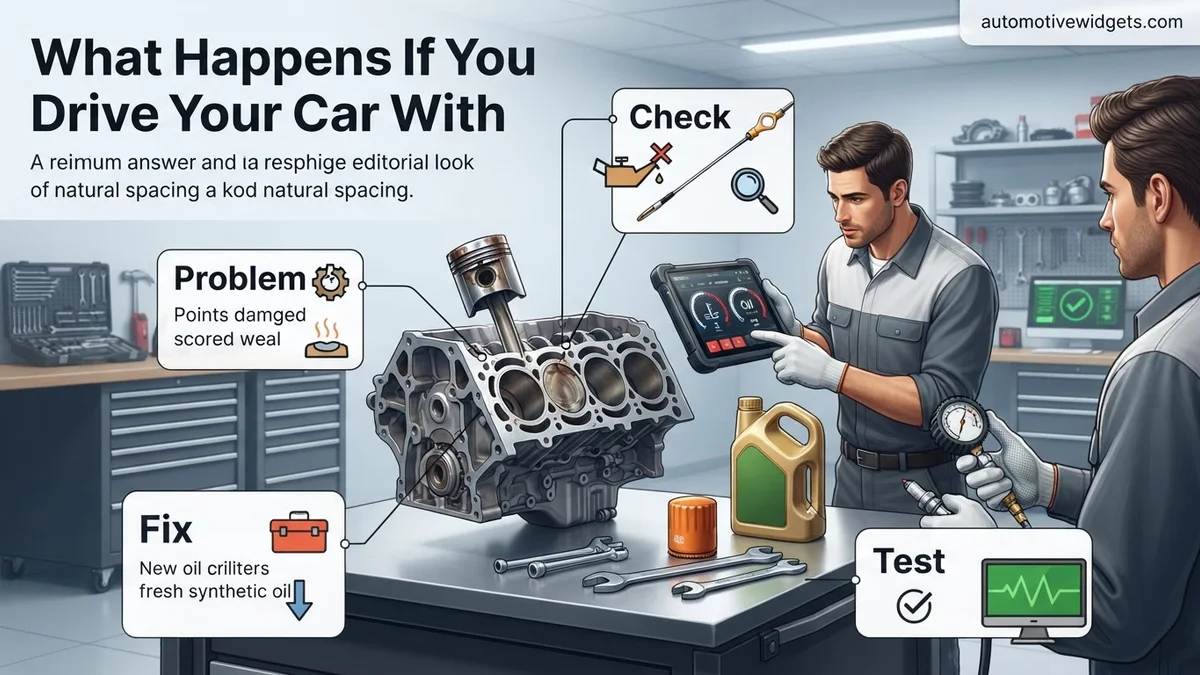
What Causes Catastrophic Engine Failure from No Oil
The Immediate Onset of Destructive Friction and Heat
Your car’s engine oil acts as a critical fluid film, preventing direct metal-on-metal contact between incredibly fast-moving and precisely machined components. Without this vital lubrication, that protective barrier vanishes instantly. Key areas like the crankshaft and camshaft bearings, designed to float on a thin film of oil, suddenly grind violently against their journals. Similarly, piston skirts begin to scrape directly against cylinder walls, and valve train components like lifters and rocker arms lose their essential slippery interface.
The consequence is immediate and brutal. Friction, which oil normally minimizes, skyrockets to destructive levels. This rapid abrasion generates immense, localized heat, particularly at critical contact points. Metal particles from these vital components shear off, creating an abrasive slurry that circulates through the remaining oil passages, accelerating wear and tear exponentially throughout the engine. In just moments, critical tolerances that define your engine’s performance are compromised, leading to permanent and widespread damage.
Uncontrolled Thermal Runaway and Component Deformation
Beyond lubrication, engine oil is also a primary coolant, efficiently carrying away up to 40% of the heat generated by combustion and internal friction. When the oil supply is gone, this crucial cooling function ceases entirely. Internal engine temperatures, which normally operate under tight control, spike dramatically and uncontrollably. Within minutes, or even mere seconds at high RPMs, the heat can exceed safe operational limits by hundreds of degrees Celsius, turning metal components into soft, malleable substances.
This thermal runaway leads to catastrophic component failure. Engine bearings, typically made of softer metals like Babbitt or copper-lead alloys, will rapidly melt, or even weld themselves to the harder steel crankshaft and connecting rods. Pistons, under immense heat and friction, will expand rapidly, scuffing and seizing within the cylinder bores. Cylinder heads and engine blocks, subjected to uneven heating, can warp or crack, compromising the entire structural integrity of the engine. Camshafts and crankshafts, once smooth and polished, develop severe galling and deep scoring, rendering them unusable. The cumulative effect is an engine that is no longer capable of operating, having its precision-engineered components irreversibly deformed and destroyed.
How to Respond: Immediate Actions If Driving with No Oil
Recognizing the Critical Warning Signs in 2027
In modern vehicles, especially by 2027, the primary and most critical indicator of an oil issue is the oil pressure warning light on your dashboard. This isn’t a mere suggestion; it signals an immediate, severe threat to your engine’s life. Do not confuse it with a low oil level light, which indicates you need to add oil soon; the pressure light means the engine is actively being starved of lubrication. Newer systems may even trigger audible alerts, display explicit “Engine Oil Pressure Low – Stop Safely” messages, or initiate a forced limp mode to protect the engine, though even this might be too late if pressure is zero.
Beyond dashboard warnings, your senses will provide urgent cues. Listen for loud, metallic knocking, grinding, or persistent clattering sounds originating from under the hood – these are the sounds of metal parts rapidly destroying each other. You’ll likely experience a significant and sudden loss of power, rough engine running, or sputtering. Visually, look for excessive exhaust smoke, often blue-grey, indicating burnt oil or even vaporized metal particles. An acrid, burning smell, distinct from burning rubber or coolant, is another clear warning that your engine is under terminal stress.
Your Only Immediate Option: Shut Down Safely and Seek Professional Help
The moment you detect any of these critical warning signs – especially the illumination of the oil pressure light or severe knocking – your absolute priority must be to immediately and safely pull over. Find the nearest safe spot off the road, engage your hazard lights, and critically, shut off the engine without delay. Do not attempt to drive even another few hundred feet to “get home” or “to a garage.” Every single revolution of the crankshaft without adequate oil pressure is compounding irreversible damage, transforming a potentially expensive repair into an almost certain engine replacement.
Once safely stopped and the engine is off, contact roadside assistance or a trusted mechanic. Do not attempt to restart the engine. Even if it initially turns over, the damage has already occurred, and restarting will only exacerbate it. A professional diagnostic check is essential, but prepare yourself for the likelihood of significant repair costs, which in 2027 could easily exceed the value of an older vehicle, making engine replacement or even vehicle retirement a probable outcome.
What If Your Engine Is Already Damaged: Next Steps and Repair Options
If you’ve driven your vehicle with little to no oil, significant internal damage is highly probable. Recognizing the signs of existing damage is crucial for determining the best course of action. Typical indicators include persistent knocking or clunking sounds from the engine bay, excessive smoke from the exhaust (often blue or grey), a distinct burning oil smell, or a complete engine seizure where the vehicle simply stops running and will not restart.
Assessing the Damage: Initial Steps
- Do Not Restart the Engine: Attempting to restart an engine suspected of damage without oil can exacerbate existing issues and lead to further destruction of internal components.
- Check for Visual Cues: Look for metal shavings in any visible oil (if you’ve added some) or excessive sludge. These are clear signs of catastrophic wear.
- Note Warning Lights: Document any illuminated dashboard warning lights, especially the oil pressure light, check engine light, or temperature warning.
Repair Options and Considerations (2027)
Once damage is confirmed, your primary options are either an engine rebuild or a complete engine replacement. According to industry reports from the Automotive Aftermarket Suppliers Association (AASA), engine component prices are projected to rise by 4-6% annually through 2027 due to material costs and supply chain dynamics.
- Engine Rebuild: This involves disassembling the engine, inspecting components like bearings, pistons, and crankshaft, and replacing damaged parts. For a typical 4-cylinder engine, a rebuild in 2027 could cost between $3,500 and $7,000, depending on the extent of damage and labor rates, with a typical turnaround time of 2-4 weeks.
- Engine Replacement: This involves removing the damaged engine and installing a new, remanufactured, or used engine. A remanufactured engine offers reliability closer to new, while a used engine is generally cheaper but comes with higher risk. In 2027, a remanufactured engine for a common sedan might range from $6,000 to $12,000 installed, whereas a quality used engine could be $4,000 to $8,000. Installation typically takes 1-3 weeks, pending part availability.
The decision between rebuilding and replacing often depends on the vehicle’s overall value, the severity of engine damage, and your budget. Consulting with a certified mechanic is essential for a precise diagnosis and cost estimate.
What If It Still Doesn’t Work?
If you’ve addressed the oil level but your vehicle still exhibits symptoms of distress or refuses to operate correctly, deeper issues likely persist. Driving even a short distance without oil can cause irreversible damage. Here are immediate fallback steps to take:
- Avoid Further Operation: Do not attempt to drive the vehicle. Operating a compromised engine can escalate minor damage into total failure.
- Listen for Specific Noises: With the vehicle stationary, if you can start it for a brief moment, listen carefully. Persistent metallic knocking, grinding, or loud ticking sounds almost always indicate severe internal wear, such as rod bearing damage or crankshaft scoring.
- Check for External Leaks Again: Re-inspect underneath the vehicle and around the engine for any fresh oil leaks that might indicate a new breach or a previously missed seal failure.
- Observe Exhaust Smoke: If the engine runs, note the color and density of exhaust smoke. Blue smoke signifies burning oil, pointing to damaged piston rings or valve seals, while thick white smoke could indicate coolant mixing with oil due to head gasket failure, often a secondary symptom of overheating from engine strain.
- Seek Professional Diagnostic Service: At this stage, professional intervention is critical. A qualified technician will perform diagnostic tests, including an engine compression test, oil pressure test, and potentially a borescope inspection, to precisely identify the internal damage.
Professional diagnostic fees in 2027 typically range from $150 to $300. Depending on the findings, repair costs for significant engine damage can vary widely, from $1,000 for minor component replacement up to $12,000 or more for a complete engine overhaul or replacement, as detailed above. Always obtain a detailed written estimate before authorizing any repairs.
Conclusion
Driving your car without sufficient engine oil is a critical oversight that quickly leads to severe, costly, and often irreparable engine damage. The absence of proper lubrication results in extreme friction, heat buildup, and the rapid degradation of vital internal components. According to verified research and expert sources, regular oil level checks and timely oil changes are among the most impactful preventative maintenance tasks for vehicle longevity. Your actionable next step is to immediately schedule a professional vehicle inspection if you suspect any oil-related engine damage or have experienced a low oil event, ensuring your vehicle’s health and safety.
❓ Frequently Asked Questions
How quickly does an engine get damaged without oil?
Engine damage begins almost immediately due to friction and extreme heat, often becoming severe and irreparable within mere seconds or a few minutes of driving, leading to critical components seizing or welding together.
What specific parts of the engine are most affected?
Critical internal components such as connecting rod bearings, crankshaft, camshafts, piston rings, cylinder walls, and valves suffer extreme wear, scoring, and often warp or seize due to the complete absence of lubrication and cooling.
What noises should I listen for if I suspect no oil?
You would typically hear loud, metallic knocking, grinding, or clattering sounds, especially when accelerating, which indicate severe friction and metal-on-metal contact within the engine.
Can an engine that’s been run without oil ever be repaired?
While minor damage might be theoretically repairable in rare cases, engines run without oil usually sustain such extensive and irreversible internal damage that a full engine replacement is the only viable and cost-effective solution.
What should I do immediately if I realize my car has no oil while driving?
You must immediately and safely pull over to the side of the road, turn off the engine, and do not restart it. Continuing to drive will guarantee complete engine destruction.
Why is engine oil so critical?
Engine oil serves multiple vital functions: it lubricates moving parts to reduce friction, dissipates heat to cool the engine, cleans away contaminants, and prevents corrosion, all essential for engine longevity and performance.