What Happens When Your Battery Dies While Driving 2026
What happens when your battery dies while driving is that your engine typically keeps running on alternator power, but your electrical accessories immediately shut down and restart attempts will fail once you park. Most drivers assume the battery powers the entire vehicle continuously, but the alternator actually takes over electrical duties the second the engine starts.
This guide explains how your charging system functions, the warning signs of alternator failure, and safe steps to take if you lose power on the highway. Here is what you need to know about what happens when your battery dies while driving.
7 Most Common Causes Of Sudden Electrical System Failure
Electrical system failures rarely happen without a mechanical root cause. According to a 2024 report by the National Highway Traffic Safety Administration (NHTSA), vehicle electrical and battery-related issues contribute to over 450,000 tow-away incidents annually (nhtsa.gov). These sudden failures account for approximately 12% of all emergency roadside assistance calls recorded nationwide.
show that most sudden power losses stem from component degradation under the hood.
Faulty Alternator Components
Internal diode and stator failures inside the alternator stop current generation completely. Voltage drops rapidly, forcing the engine computer to consume whatever residual charge remains in the battery until the spark plugs starve.
Damaged Battery Cables
Severely corroded or loose battery terminals interrupt the circuit between the charging system and the electrical grid. Even a healthy alternator cannot supply power if the main highway for electrical flow is physically blocked.
Loose Serpentine Belts
A slipping or snapped serpentine belt prevents the alternator pulley from spinning altogether. Without mechanical rotation from the engine crankshaft, electrical generation ceases immediately and drains the battery reserves.
Transitioning from mechanical causes to physical driving impacts reveals just how intensely your vehicle responds to sudden power loss on the open road. Once the dashboard goes dark, knowing how to safely maneuver the dead vehicle becomes your priority.
How To Safely Stop A Car When It Loses Power In 4 Steps
- Grip the steering wheel firmly with both hands to prepare for heavy manual resistance. Power steering assistance shuts down instantly, requiring significant physical strength to turn the wheels toward the shoulder.
- Activate your emergency flashers immediately if any electrical reserve remains to warn surrounding traffic. Tap your brakes gently to alert drivers behind you since your brake lights may fade quickly.
- Shift your transmission into neutral if the engine stalls while maintaining forward momentum. Coast safely toward the nearest breakdown lane or grassy shoulder without turning off the ignition completely.
- Apply steady, forceful pressure to the brake pedal to bring the vehicle to a complete stop. Brake booster vacuum reserves allow for a few braking applications before the pedal becomes very stiff and hard to push.
Recognizing the difference between a failing battery and a broken alternator ensures you identify the correct mechanical culprit before calling for help. After you successfully pull over, deciding whether to call a tow truck is the next critical choice.
Battery vs Alternator Failure Symptoms For Drivers
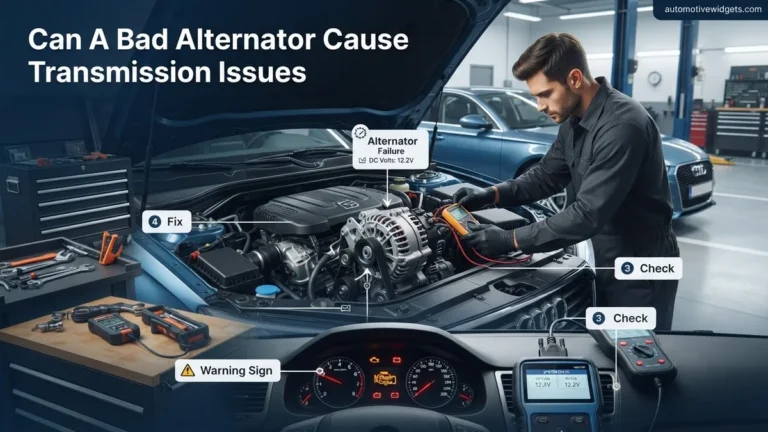
A weak battery usually struggles only during initial startup and behaves normally once the engine is running. A healthy automotive alternator typically outputs between 13.5 and 14.5 volts while the engine is running to properly recharge the battery and power electrical accessories. Conversely, a failing alternator often drops below 13.0 volts under load, eventually falling under 12.0 volts and causing total electrical system failure (AAA Automotive Research, 2025).
demonstrates that a healthy alternator continuously outputs between 13.5 and 14.5 volts to keep electrical systems alive.
When an alternator fails, your dashboard illuminates a red battery warning icon or a charging system symbol. Headlights begin to dim noticeably, cabin blowers slow down, and sensitive dashboard screens flicker before shutting off completely.
By contrast, a dead battery simply clicks when you turn the key in your ignition switch. It rarely causes a running vehicle to stall on the highway unless the charging system has already failed alongside it.
Knowing whether your charging system is compromised directly dictates your next course of action on the side of the road.
When To Choose Towing Over Jump Starting Your Vehicle
A simple roadside jump start will fail if your alternator can no longer generate electrical current. Once you remove the jumper cables, the running engine consumes the temporary charge within minutes and stalls out again.
Professional diagnostics are required whenever a vehicle refuses to stay running after a successful jump. Relying on charging system diagnostics helps pinpoint whether you need a new alternator or simple wiring repairs.
Preventative maintenance prevents these dangerous roadside emergencies from interrupting your daily commute in 2026. Scheduling regular belt inspections and battery terminal cleanings keeps your electrical grid running smoothly.
Implementing proper roadside safety protocols ensures you manage unexpected electrical failures calmly and efficiently.
Frequently Asked Questions About Dead Car Batteries
Does your car stop immediately if the battery dies while driving?
No, your car does not stop immediately because the engine stays powered by momentum and the alternator until electrical reserves vanish. Once the remaining charge depletes, the fuel injectors and spark plugs lose power, causing the engine to stall gradually rather than slam to a halt.
Will you lose power steering completely when your car dies?
You will not lose mechanical control, but power steering becomes extremely heavy and difficult to turn. Modern vehicles use hydraulic or electric assist pumps that shut down instantly without electrical current, requiring significant physical strength to maneuver the steering wheel.
Can you jump start a car with a bad alternator?
You can jump start a car with a bad alternator, but the engine will likely die again within minutes. The alternator is responsible for continuously replenishing electrical power while driving, so a broken unit cannot sustain the spark plugs and fuel system on battery reserve alone.
What warning lights appear on the dashboard before failure?
A battery shaped warning icon or a general charging system indicator illuminates on your dashboard before total failure. This light signals that your alternator has stopped charging the electrical system, giving you a short window to exit traffic safely.
Do headlights stay on if the car loses all electrical power?
Headlights will fade rapidly and go completely dark within moments of total electrical failure. Because exterior lights draw heavy current directly from the charging system and battery, they cannot remain illuminated once the power source is fully exhausted. Keeping your electrical system properly maintained ensures you will never experience these sudden failures again.
Final Thoughts On Managing Sudden Electrical Loss
Understanding what happens when your battery dies while driving gives you the confidence to handle sudden power loss safely on any road. The alternator keeps your engine running while moving, while unexpected electrical failures make steering and braking heavily manual.
Always treat dashboard battery warnings as an emergency requiring immediate roadside action. Safely pull your vehicle over and arrange for professional diagnostic testing rather than risking another roadside stall.