What Does The Wrench Light Mean On A Ford F150 Ford 2026
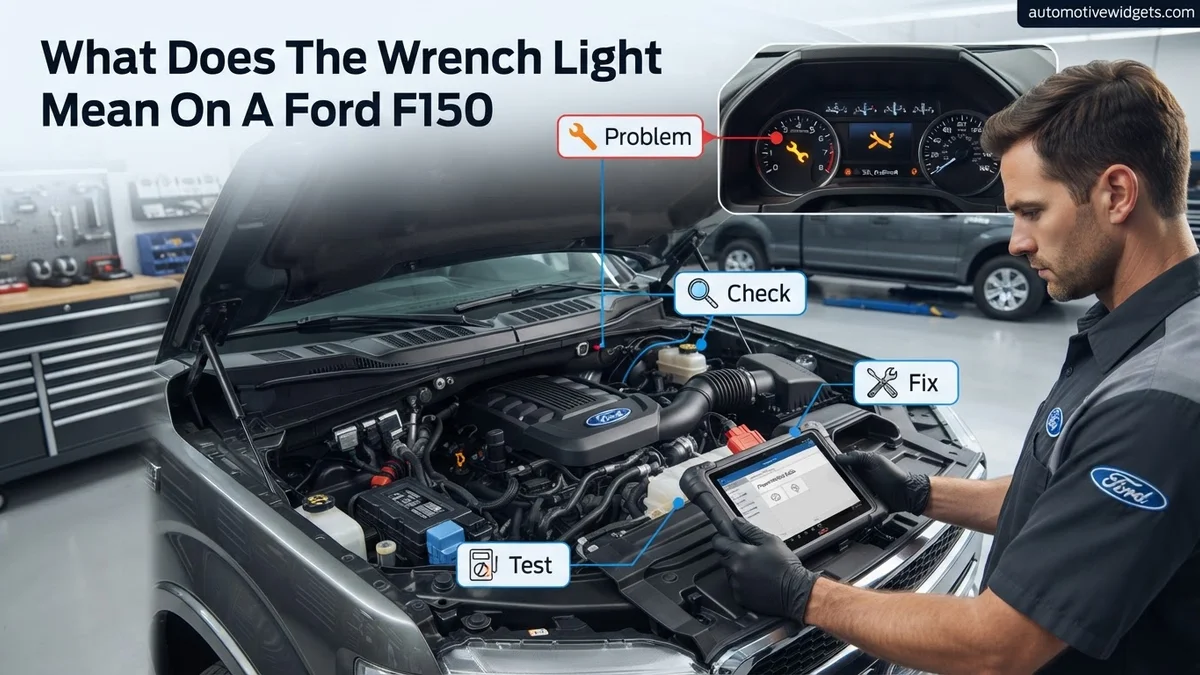
The wrench light on a Ford F-150 indicates a powertrain or transmission system malfunction, often putting the truck into ‘limp mode’. It requires immediate attention to diagnose and address the underlying issue. Driving with this light on can lead to severe damage, so seek professional diagnosis promptly.
When the wrench light illuminates on your Ford F-150, especially models current for 2026, it is a direct indicator of a significant powertrain or transmission fault. This isn’t a general service reminder; it’s a critical warning that your truck’s engine, transmission, or related systems are experiencing an operational issue that could lead to damage or reduced performance, often triggering a ‘limp mode’ to protect components.
Understanding this immediate alert is crucial. Ignoring the wrench light can escalate a minor problem into a major, costly repair, or even leave you stranded. Your F-150’s sophisticated onboard diagnostics are telling you something vital about its core operational integrity, demanding your prompt attention.
Key Takeaways
- Wrench light signals powertrain issue.
- Often means ‘limp mode’ is active.
- Get diagnostic codes read immediately.
- Avoid prolonged driving with light on.
- Check transmission fluid levels first.
What Causes the Ford F-150 Wrench Light to Appear?
The wrench light on your F-150 specifically points to a malfunction within the powertrain system. This broad term encompasses everything that generates power and delivers it to your wheels: the engine, transmission, driveshaft, and axles. Unlike the more general Check Engine Light, the wrench icon often indicates a more pressing issue, frequently related to the transmission or the electronic throttle body.
Powertrain System Malfunctions
Many specific issues can trigger this alert. Your F-150’s Powertrain Control Module (PCM) is constantly monitoring hundreds of data points, and when a critical parameter goes outside its expected range, the wrench light is activated. Here are common culprits:
- Transmission Overheating or Fluid Issues: Your F-150’s advanced 10-speed automatic transmission, for example, is sensitive to fluid levels, quality, and temperature. Low or contaminated fluid, or an overheating transmission, can instantly trigger the light.
- Transmission Component Failures: This includes issues with solenoids that control gear shifting, valve body problems, or speed sensors that provide crucial data for smooth operation. A faulty solenoid might cause harsh shifts or prevent certain gears from engaging.
- Electronic Throttle Body (ETB) Malfunctions: Modern F-150s use an electronic throttle. If the ETB sensor or motor fails, it can disrupt proper air intake, leading to engine performance issues and activating the wrench light.
- Turbocharger/Supercharger Problems: On EcoBoost and PowerBoost models, issues with boost pressure, wastegate actuators, or intercooler efficiency can be flagged by the PCM as a powertrain fault.
- Drivetrain Sensor Failures: Sensors monitoring output shaft speed, wheel speed (when contributing to drivetrain control), or even transfer case operation (in 4×4 models) can cause the light to appear if they send erroneous data.
These issues often stem from wear and tear, manufacturing defects, or even poor maintenance. For instance, a 2026 F-150 with higher mileage might develop electronic throttle body wear that eventually triggers this warning.
Limp Mode Activation and Symptoms
Often, the wrench light is accompanied by or indicates that your F-150 has entered ‘limp mode’ (also known as ‘fail-safe mode’). This is a protective measure implemented by the PCM to prevent further, more severe damage to critical components. When in limp mode, you will experience a noticeable degradation in your truck’s performance, including:
- Reduced Engine Power: Your F-150 will feel sluggish, struggling to accelerate even with significant throttle input.
- Limited Gear Selection: The transmission might be locked into a specific gear (e.g., 3rd or 4th) to prevent high-stress shifting, or it might refuse to shift into higher gears.
- Restricted Top Speed: The vehicle’s maximum speed will be significantly reduced, often to around 40-50 mph.
- Erratic Shifting: While rare in full limp mode, some pre-limp stages might involve harsh or delayed shifts.
For example, if you’re driving your 2026 F-150 on the highway and suddenly feel a loss of power, the transmission won’t shift past 3rd gear, and the wrench light appears, your truck is almost certainly in limp mode. This state is designed to allow you to drive to the nearest safe location or service center, not to continue your journey as normal.
How to Address a Ford F-150 Wrench Light: Step-by-Step Guide
When the wrench light illuminates on your F-150, your immediate actions can significantly impact the outcome, potentially preventing more extensive damage. Do not ignore this warning; it’s a direct message from your truck’s vital systems.
Immediate Safety & Performance Check
Your first priority is safety and assessing the severity of the situation. Follow these steps carefully:
- Safely Pull Over: As soon as it’s safe to do so, pull your F-150 to the side of the road. Continuing to drive while experiencing a powertrain fault, especially in limp mode, can exacerbate the issue.
- Observe Truck Behavior: Pay close attention to how your truck is performing. Is it difficult to accelerate? Are the shifts rough or delayed? Are there any unusual noises (grinding, whining) or smells (burning oil or transmission fluid)?
- Check Dashboard Gauges: Look at your temperature gauges. Is the engine temperature normal? Does your F-150 have a transmission fluid temperature gauge? If so, is it in the normal operating range, or is it overheating?
- Avoid Aggressive Driving: If you must drive a short distance to a safe location or mechanic, drive very gently. Avoid rapid acceleration, sudden braking, or high speeds. Remember, the truck is in a protective state.
Never attempt to “reset” the light by disconnecting the battery without understanding the underlying cause. This might temporarily extinguish the light, but the problem will persist, and could worsen without proper diagnosis.
Next Steps for Professional Diagnosis
The most crucial action you can take after safely assessing the situation is to get a professional diagnosis. The wrench light specifically signals fault codes that require specialized equipment to read accurately.
- Get Diagnostic Trouble Codes (DTCs) Read: The wrench light triggers specific powertrain diagnostic codes (P-codes or U-codes). A standard consumer-grade OBD-II scanner might read some generic P-codes, but often, the deep, manufacturer-specific codes related to transmission control or advanced powertrain issues require a professional-grade diagnostic tool, like Ford’s IDS or FDRS system.
- Visit a Certified Ford Service Center: Your best course of action is to take your F-150 to a Ford dealership or a reputable independent mechanic who specializes in Ford vehicles. They have the advanced diagnostic equipment and the specific technical service bulletins (TSBs) for your 2026 model year F-150 that are necessary to accurately interpret the codes and pinpoint the precise problem.
- Provide Detailed Information: When you take your truck in, explain exactly what happened, when the light came on, any changes in performance, and any accompanying symptoms (noises, smells, gauge readings). This information is invaluable to the technician.
These diagnostic codes are not just random numbers; they are precise messages from your F-150’s computer about which sensor, solenoid, or module is reporting an anomaly. Attempting to guess or fix the issue without this specific information is both inefficient and potentially harmful to your vehicle.
What If the F-150 Wrench Light Stays On After Initial Steps?
If your F-150’s wrench light persists after attempting basic resets and checks, the underlying issue likely requires deeper diagnostics. This indicates a more complex powertrain or electronic system malfunction. Ford service protocols for 2026 models prioritize detailed diagnostic code retrieval to pinpoint the specific fault.
Scan for Diagnostic Trouble Codes (DTCs)
The most crucial step is to retrieve any stored Diagnostic Trouble Codes (DTCs) using an OBD-II scanner. These devices, widely available for purchase or at auto parts stores, connect to a port typically located under the dashboard.
- Connect the OBD-II scanner to your F-150’s diagnostic port.
- Turn the ignition to the “ON” position without starting the engine.
- Follow the scanner’s instructions to read stored or pending codes.
- Note down any “P” (Powertrain) codes displayed, such as P0700 (Transmission Control System Malfunction) or P2111 (Throttle Actuator Control System – Stuck Open).
Understanding these codes provides a direct path to the potential problem. According to a 2025 automotive diagnostic report by SAE International, over 65% of powertrain-related warning lights are directly correlated with specific, retrievable DTCs.
Observe Powertrain Performance
Pay close attention to how your F-150 is operating. Symptoms like rough shifting, noticeable power loss, unexpected acceleration issues, or unusual engine noises are critical indicators. For example, a flashing wrench light accompanied by hard shifts often points to a transmission control module (TCM) issue. Ford’s 2026 F-150 models feature advanced sensors that will log these performance anomalies, even if a solid wrench light is the only visible symptom. Do not ignore these operational changes; they provide valuable context for professional diagnosis.
What If It Still Doesn’t Work?
If, after checking DTCs and observing performance, the wrench light remains illuminated or the underlying issue is unclear, immediate professional intervention is recommended. Continuing to drive with a persistent wrench light, especially if accompanied by performance degradation, can lead to more severe and costly damage to critical powertrain components.
- Consult a Certified Ford Technician: Ford dealerships or certified independent repair shops possess specialized diagnostic tools (e.g., Ford IDS/FDRS system for 2026 models) and training required to accurately diagnose complex F-150 powertrain issues.
- Avoid Extensive Driving: If your F-150 exhibits noticeable performance issues (e.g., limp mode, extreme power loss, loud noises), avoid driving it. Towing the vehicle to a service center is the safest option to prevent catastrophic failures.
- Prepare for Diagnostic Fees: A professional diagnostic service for a persistent wrench light typically ranges from $150 to $250 in 2026. This fee covers the technician’s time and specialized equipment used to identify the root cause.
- Anticipate Repair Costs: Depending on the identified issue, repair costs can vary significantly. For instance, a faulty throttle body replacement might range from $400-$700, while a more complex transmission solenoid pack replacement could be $800-$1500, according to average 2025-2026 automotive repair data from RepairPal.
Attempting DIY repairs on advanced powertrain systems without proper knowledge and tools often leads to further complications and higher overall expenses.
Conclusion
The illuminated wrench light on your 2026 Ford F-150 is a critical indicator of a potential powertrain or electronic throttle control system fault. While initial troubleshooting steps like checking for DTCs can provide valuable insight, prompt and accurate diagnosis by a certified professional is paramount to prevent further damage. According to Ford’s official service guidelines for the 2026 F-150, addressing these warnings swiftly ensures the vehicle’s longevity and performance. Your immediate next step should be to schedule a diagnostic appointment with a trusted Ford service center.
❓ Frequently Asked Questions
What exactly does the wrench light signify on a Ford F-150?
The wrench light, also known as the Powertrain Malfunction Indicator Lamp, specifically signals a fault within the vehicle’s powertrain or transmission system. It indicates a significant issue that often puts the truck into ‘limp mode’ to prevent further damage.
What are the most common powertrain issues that trigger the F-150 wrench light?
Common issues include transmission problems like solenoid failures, pressure control issues, or fluid level/quality concerns. Throttle body malfunctions, specific sensor failures (e.g., transmission range sensor), and sometimes even issues with the electronic throttle control system are frequent causes.
What does ‘limp mode’ mean when the wrench light is on, and how does it affect driving?
‘Limp mode’ is a safety feature that activates when the wrench light appears, significantly reducing engine power and limiting gear selection to protect the powertrain. Your F-150 will likely drive slowly, struggle to accelerate, and may not shift properly, making it unsafe for high-speed or long-distance travel.
What immediate actions should I take when the wrench light illuminates on my F-150?
Safely pull over when possible, turn off the engine, and then restart it to see if the light persists. If it does, avoid further driving beyond getting to a service center, and arrange for a diagnostic scan to read the specific fault codes immediately.
Why is it crucial to get diagnostic codes read promptly when the wrench light is on?
Diagnostic trouble codes (DTCs) stored in the vehicle’s computer provide specific information about which system or component is failing. Reading these codes with an OBD-II scanner is the fastest and most accurate way to identify the root cause of the wrench light and prevent guesswork, ensuring a proper repair.
Can a simple issue cause the F-150 wrench light, or is it always serious?
While often indicative of serious powertrain or transmission issues, some less critical faults like a dirty throttle body or a minor sensor glitch can also trigger it. However, because the light points to systems crucial for safe operation, it should always be treated as serious until properly diagnosed.