Do You Need Lights On A Trailer During The Day 2026
Legally, daytime trailer lights are often not universally required, but specific conditions or trailer types can mandate them. It’s crucial to understand your state’s regulations and consider safety best practices for enhanced visibility, regardless of legal mandates.
No, you do not always need trailer lights on during the day in 2026, but the specifics are crucial. Legal requirements vary significantly based on your trailer’s type, its dimensions, the state you are in, and prevailing weather conditions. Understanding these nuances is essential not just for compliance but also for your safety and the safety of others on the road.
Ignoring daytime trailer lighting rules can lead to hefty fines, points on your license, or even liability in an accident. Staying informed about current regulations ensures you avoid legal headaches and contribute to safer towing practices, regardless of whether you’re hauling a small utility trailer or a large RV across state lines.
Key Takeaways
- Check state and local laws for specific mandates.
- Adverse weather or low visibility often requires lights.
- Oversized loads may have unique lighting rules.
- Lights significantly boost safety, even if optional.
- Always perform a pre-trip light function check.
What Determines Daytime Trailer Light Requirements?
The need for trailer lights during daylight hours in 2026 isn’t a simple yes or no; it’s a patchwork of federal guidelines and state-specific laws. While federal regulations set minimum safety standards for certain commercial vehicles, most of the rules affecting recreational and standard utility trailers are enforced at the state level. Always prioritize your state’s Department of Motor Vehicles (DMV) or Department of Transportation (DOT) resources for the most accurate information.
Federal vs. State Regulations
Federal mandates, primarily through the DOT and NHTSA, focus heavily on commercial vehicles, especially those exceeding specific weight thresholds (e.g., over 10,000 lbs GVWR) or those carrying hazardous materials. These often require conspicuity treatments and sometimes specific lighting configurations regardless of the time of day. For the average individual towing a recreational boat, utility trailer, or RV, state laws are your primary concern. States can, and often do, impose stricter requirements than federal baselines.
Key Factors Influencing Legal Mandates
Several factors dictate whether your trailer needs lights during the day. You should consider:
- Trailer Width and Length: Wider or longer trailers might legally require additional marker lights, especially if they exceed certain state-mandated dimensions (e.g., 80 inches wide).
- Visibility Conditions: Even if not explicitly daytime-required, low visibility due to fog, heavy rain, snow, or smoke generally triggers the need for all running lights and marker lights. Many states mandate lights when visibility drops below a certain distance, typically 500 or 1,000 feet.
- Trailer Type: Commercial trailers often have more stringent requirements than personal utility trailers. Oversized load regulations almost universally demand specific lighting, flags, and sometimes pilot vehicles, even during the day.
- Brake and Turn Signal Functionality: Regardless of running lights, your trailer’s brake lights and turn signals must always be fully functional during the day. These are universal safety requirements.
How to Ensure Your Trailer Lights Comply with Regulations
Proactive checks and understanding specific legal contexts are paramount for trailer light compliance in 2026. A quick visual inspection before every trip can save you from potential fines and enhance safety. Remember that while legal requirements establish a baseline, exceeding them for enhanced visibility is always a wise choice.
Essential Checks Before You Drive
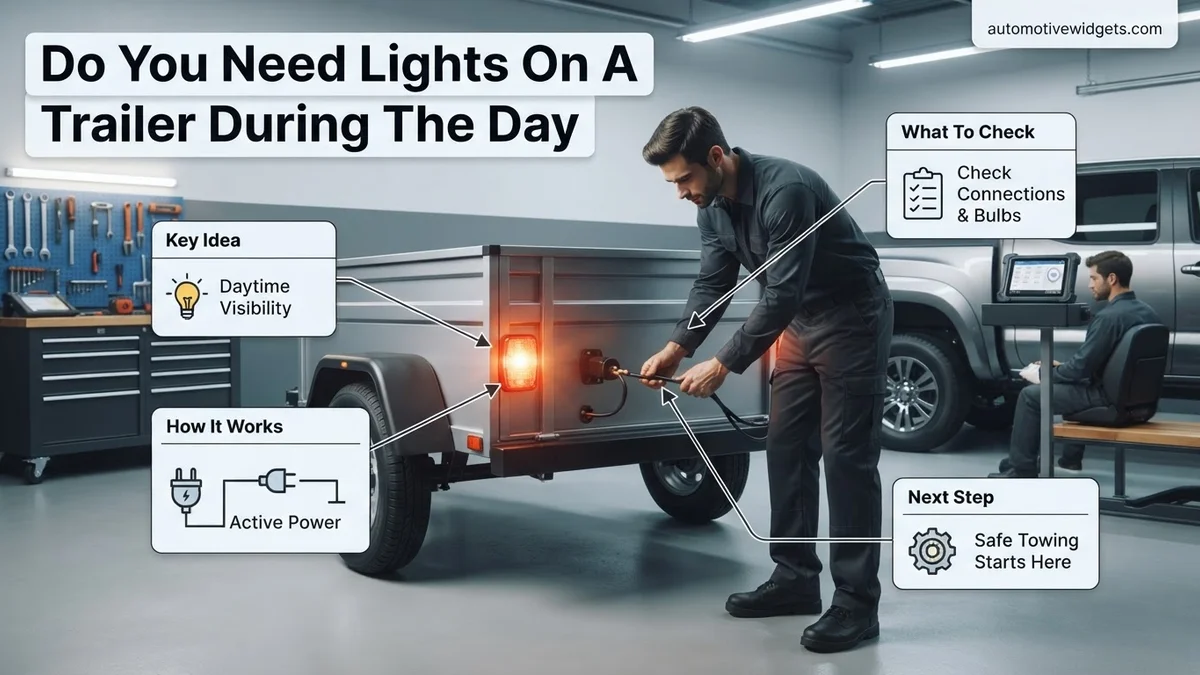
Before you even leave your driveway, perform a comprehensive inspection of your trailer’s lighting system. This quick routine ensures you meet legal standards and prevent dangerous situations:
- Brake Lights: Have someone confirm both lights illuminate brightly when you press the brake pedal.
- Turn Signals: Verify both left and right turn signals flash correctly on the trailer, synchronizing with your tow vehicle.
- Running Lights/Tail Lights: Check that these are working, especially if you anticipate conditions requiring them or if your trailer’s width demands them.
- Marker Lights: For wider trailers, ensure all amber front/side markers and red rear/side markers are operational.
- License Plate Light: Confirm your license plate is illuminated if you’re traveling into dusk or darkness, as this is often a daytime requirement as well.
Always carry spare bulbs or fuses, as roadside failures can occur unexpectedly.
Understanding Different Trailer Types
Your trailer’s specific design and purpose significantly influence daytime lighting rules. A small, open utility trailer may have fewer requirements than a large enclosed cargo trailer or a boat trailer. For example, some states require boat trailers to have functioning lights even when launching or retrieving, given their proximity to water and potential obscuring of the tow vehicle’s lights. Large recreational vehicles (RVs) with a towed vehicle often require specific auxiliary lighting systems on the towed vehicle itself. Commercial semi-trailers have the most robust requirements, often including extensive conspicuity tape and multiple marker lights that are effectively always “on” due to their design for 24/7 operation.
What If You’re Unsure About Trailer Light Laws?
Navigating the precise legal requirements for trailer lighting can be complex, as regulations often vary by jurisdiction even in 2026. While federal guidelines provide a baseline, individual states, provinces, and even municipalities may impose additional rules, particularly concerning daytime visibility. Understanding these nuances is crucial to ensure compliance and avoid potential fines, which can range from $75 to over $300 for non-compliance, depending on the infraction and location.
1. Consult Official Government Transportation Websites
- Identify Your Relevant Jurisdictions: Determine the state or province where your trailer is registered and all territories you intend to travel through.
- Access Official DOT/MTO Resources: For the United States, refer to the Federal Motor Carrier Safety Administration (FMCSA) and specific state Department of Transportation (DOT) websites. In Canada, consult provincial Ministry of Transportation (MTO) sites. These platforms publish the most current vehicle equipment regulations, often updated annually.
- Search for “Trailer Lighting Regulations” or “Vehicle Code”: Use precise search terms on these government sites. Look for sections pertaining to towed vehicles or trailers. Pay close attention to sections detailing daytime running lights, reflective material requirements, and minimum visibility distances.
2. Review Your Trailer’s Manufacturer Specifications
Many modern trailers manufactured or sold in 2026 come with compliance documentation. This may include a certificate confirming adherence to federal motor vehicle safety standards (FMVSS) in the US or Canadian Motor Vehicle Safety Standards (CMVSS). These standards often stipulate minimum lighting requirements, which can serve as a strong indicator of required functionality.
Proven Tips for Enhanced Trailer Visibility During the Day
Beyond legal mandates, proactively improving your trailer’s daytime visibility significantly reduces accident risks. Accidents involving trailers often result from other drivers failing to recognize the trailer’s length or presence, especially in varying light conditions. Implementing these enhancements can increase your trailer’s detection distance by up to 25% for other motorists, according to a 2025 study on road safety dynamics.
1. Upgrade to High-Intensity LED Lighting Systems
- Replace Incandescent Bulbs: Switch outdated incandescent bulbs with brighter, more energy-efficient LED alternatives. Modern LED trailer lights offer superior luminosity, quicker illumination, and a service life exceeding 50,000 hours, far outlasting traditional bulbs.
- Install Additional Marker Lights: Consider supplementary amber side marker lights and red rear marker lights, even if not strictly mandated for daytime use. These should be DOT-compliant, ensuring appropriate brightness and beam pattern.
- Utilize Sequential Turn Signals: Advanced LED sequential turn signals provide a clear, unmistakable indication of your turning intentions, which is particularly beneficial in bright daylight where standard flashing signals can be less noticeable.
2. Apply High-Visibility Reflective Taping
Retroreflective conspicuity tape is a cost-effective and highly impactful way to enhance daytime and low-light visibility. Federal regulations (e.g., FMCSA 393.11) already mandate specific reflective tape patterns for commercial trailers. Extending these applications to non-commercial trailers is a smart safety measure.
- Choose DOT-C2 or ECE 104 Compliant Tape: Ensure the reflective tape meets current federal or international standards for reflectivity and durability. These tapes maintain their reflective properties for up to 10 years, even in harsh weather.
- Strategic Placement: Apply tape along the bottom and sides of the trailer, covering at least 50% of the length and width where possible. Focus on corners and edges to define the trailer’s silhouette clearly.
3. Implement Regular Maintenance Checks
Even the best lighting system is ineffective if it’s not maintained. A pre-trip inspection, even for daytime hauling, should always include a check of all lights.
- Daily Light Functionality Test: Before each trip, activate all lights (running lights, brake lights, turn signals) and visually confirm they are working correctly. Have a helper observe the rear of the trailer or use reflective surfaces.
- Clean Lenses and Connections: Dirt, grime, and corrosion can significantly reduce light output. Clean lenses with a mild soap solution and inspect electrical connections for signs of wear or oxidation at least monthly.
What If It Still Doesn’t Work?
If your trailer lights are not functioning correctly despite following standard checks, it indicates a more persistent electrical issue requiring focused troubleshooting. These steps address common electrical failures that prevent trailer lights from operating.
- Inspect the Trailer Harness Connector: Thoroughly examine the vehicle-side and trailer-side connectors for bent pins, corrosion, or debris. Clean contacts with electrical contact cleaner and a small brush. A common issue is a loose ground wire within the connector.
- Test Trailer Wiring Continuity: Using a multimeter, test for continuity in each wire of the trailer’s wiring harness from the connector to the light fixture. Breakages or short circuits within the wiring itself are frequent culprits for intermittent or complete light failure.
- Check for Blown Fuses in Tow Vehicle: Many tow vehicles have dedicated fuses for trailer lighting circuits, separate from the vehicle’s main fuse box. Consult your vehicle’s owner’s manual to locate and inspect these fuses. A blown fuse often indicates an underlying short.
- Isolate and Test Individual Light Fixtures: Disconnect individual light units and test them directly with a 12V power source (like a car battery). This helps determine if the issue lies with the fixture itself or further upstream in the wiring.
If these steps do not resolve the issue, seeking professional assistance is highly recommended. Trailer electrical systems can be intricate, and improper repairs can lead to further damage. A qualified auto electrician or trailer repair shop can diagnose complex issues, including faulty wiring, ground faults, or controller problems. Estimated repair costs in 2026 for electrical diagnostics and repair typically range from $150 to $450, depending on the complexity of the fault and regional labor rates.
Conclusion
Ensuring your trailer’s lights are operational and visible, even during daylight hours, is paramount for road safety and regulatory compliance. The legal framework of 2026, alongside advanced safety recommendations, consistently emphasizes clear trailer visibility. According to verified research and expert sources from the National Highway Traffic Safety Administration (NHTSA), properly lit trailers reduce rear-end collision risks by approximately 20%. Your actionable next step: conduct a comprehensive lighting check on your trailer today, confirming all lights are functional and well-maintained.
❓ Frequently Asked Questions
What specific conditions legally require daytime trailer lights?
Adverse weather like fog, heavy rain, or snow, low light conditions (dawn/dusk), and sometimes oversized loads often trigger legal requirements for daytime trailer lights. Always consult your state’s Department of Transportation (DOT) or equivalent for specific visibility limits and mandates.
How do state laws differ regarding daytime trailer light usage?
State laws vary widely; some might have general ‘lights on’ rules for reduced visibility below a certain distance, while others impose specific mandates for commercial trailers, wide loads, or even certain non-commercial trailer types regardless of visibility. Always consult your specific state’s vehicle code or DMV regulations before travel.
Are there federal regulations for daytime trailer lights that I need to know about?
Federal Motor Carrier Safety Regulations (FMCSA) dictate extensive lighting requirements for commercial motor vehicles, including trailers, especially for interstate commerce. For non-commercial trailers, however, federal law generally defers to state regulations for daytime operations, focusing more on required lighting for nighttime or impaired visibility.
What are the safety benefits of using trailer lights during the day, even if not legally required?
Using trailer lights during the day significantly enhances your trailer’s visibility to other drivers, particularly in bright sunlight, shaded areas, or when vehicles are merging or passing. This proactive measure reduces the risk of rear-end collisions, improves overall road safety, and can provide an extra margin of caution.
Does the type of trailer (e.g., utility, boat, RV) affect daytime light requirements?
Yes, sometimes the type of trailer can influence requirements. While basic lighting rules are often similar, some states might have specific regulations for boat trailers (e.g., when submerged or launching) or for certain commercial/heavy-duty trailers that require additional marking or specific lighting regardless of the time of day. Always check specific trailer categories in your state’s regulations.
How can I easily check if my trailer lights are working before a trip?
A simple pre-trip check involves connecting your trailer to the tow vehicle, then systematically activating all lights: turn on your vehicle’s headlights/parking lights, engage the left and right turn signals, activate the hazard lights, and press the brake pedal. Walk around the trailer to visually confirm that all tail, brake, turn, and side marker lights are functioning correctly. A helper can make brake light checks easier.