How Often Should You Change Differential Fluid How 2026
Differential fluid change intervals vary significantly, typically ranging from 30,000 to 100,000 miles, depending on your vehicle and driving conditions. Neglecting this maintenance can lead to premature wear and costly differential failure, making adherence to manufacturer guidelines or adjusted intervals crucial for longevity.
For most vehicles in 2026, you should generally plan to change your differential fluid every 30,000 to 60,000 miles, or roughly every 3 to 5 years, whichever comes first. This isn’t a one-size-fits-all rule, however, as manufacturer specifications and your driving conditions significantly influence the ideal schedule. Neglecting this maintenance item can lead to premature wear of crucial drivetrain components, resulting in expensive repairs that are far more costly than a simple fluid change. Keeping your differential fluid fresh is a straightforward way to ensure smooth power delivery and extend the life of your vehicle’s axles and gears for years to come.
Understanding when to refresh your differential fluid is essential for maintaining your vehicle’s performance and longevity. The differential, whether front, rear, or part of an all-wheel-drive system, is responsible for allowing your wheels to spin at different speeds, which is critical for turning and maintaining traction. This component operates under immense pressure and heat, making its fluid a vital lubricant. Regular fluid changes prevent costly damage and ensure your vehicle continues to operate reliably in 2026 and beyond.
Key Takeaways
- Consult your vehicle manual for precise differential fluid change intervals.
- Heavy use (towing, off-road) drastically shortens fluid life.
- Old, contaminated fluid causes increased wear and expensive damage.
- Synthetic fluids often extend intervals and offer superior protection.
- Proactive differential fluid changes prevent costly drivetrain failures.
What Causes Differential Fluid to Degrade and Why It’s Crucial to Change?
Heat, Pressure, and Shear Stress
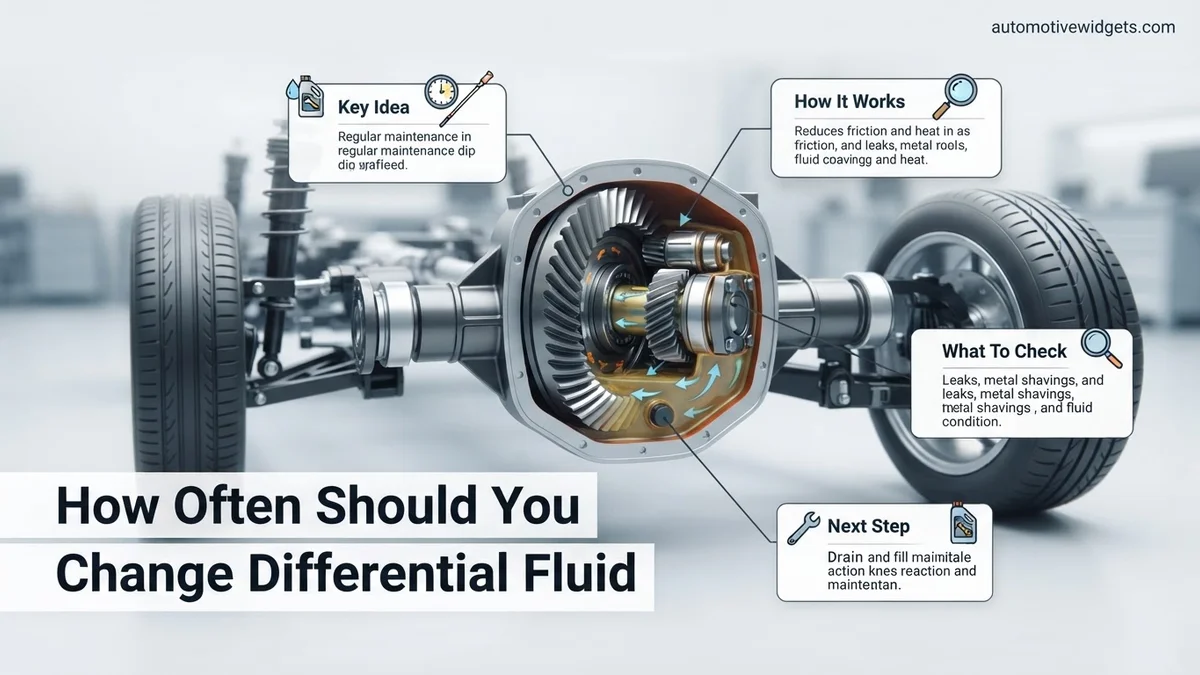
Differential fluid degrades primarily due to intense heat, extreme pressure, and shear stress generated by the gears working within the differential housing. As your vehicle drives, the ring and pinion gears are constantly meshing, creating friction and raising fluid temperatures. These high temperatures break down the fluid’s lubricating properties and its vital additives, such as anti-wear agents and corrosion inhibitors. Modern gear oils are engineered for durability, but continuous operation under these conditions will eventually diminish their effectiveness. The physical shearing action of the gears further contributes to this breakdown, reducing the fluid’s viscosity and its ability to protect moving parts. Once the fluid loses its protective qualities, metal-on-metal contact increases, leading to accelerated wear and potential gear failure.
Contamination from Wear and the Environment
Another significant factor in fluid degradation is contamination. Over time, microscopic metal particles from normal gear wear become suspended in the fluid. While these are often captured by magnetic drain plugs, excessive accumulation can turn the fluid into an abrasive slurry, actively grinding down the gears it’s supposed to protect. Additionally, differentials are not perfectly sealed environments; moisture from condensation, especially during temperature fluctuations or after water crossings, can infiltrate the housing. This water emulsifies with the oil, reducing its lubricating ability and promoting rust inside the differential. Dust, dirt, and other environmental contaminants can also find their way in, further compromising the fluid’s integrity and speeding up component wear. Changing the fluid flushes out these harmful contaminants, providing a clean, fresh lubricant to keep your gears operating optimally.
From Start to Finish: Differential Fluid Maintenance Frequency Explained
Understanding when to change your vehicle’s differential fluid is a critical, yet often overlooked, aspect of automotive maintenance. This guide will walk you through all the factors you need to consider, from your owner’s manual to your driving habits, to establish an optimal differential fluid change schedule. Properly maintaining your differential fluid ensures the longevity and smooth operation of your vehicle’s drivetrain, preventing costly repairs down the line.
Step 1: Consult Your Owner’s Manual – The Primary Authority
What you need: Your vehicle’s owner’s manual (physical copy or digital version) and a few minutes of focused reading.
Instructions: Your owner’s manual is the definitive source for maintenance intervals specific to your make and model. Locate the “Maintenance Schedule” section, often found under “Service and Maintenance” or “Scheduled Maintenance.” Look for “differential fluid,” “rear axle fluid,” or “front axle fluid” (if applicable for 4WD/AWD vehicles). The manual will typically provide intervals in miles or kilometers, and sometimes in months or years. Pay close attention to distinctions between “normal service” and “severe service” conditions, as these will significantly impact recommended intervals.
Pro Tip: Many manuals have different schedules for different drivetrain types (e.g., 2WD vs. 4WD) or specific engine packages. Ensure you’re referencing the correct section for your exact vehicle configuration.
Step 2: Understand Your Driving Habits and Conditions
What you need: An honest assessment of your typical driving style and environmental conditions.
Instructions: Differential fluid works hardest under stress. If your driving includes frequent heavy towing (e.g., trailers, boats), consistent off-roading, extensive stop-and-go city traffic, short trips that don’t allow the fluid to reach optimal temperature, or operation in extreme hot or cold climates, your vehicle falls under “severe service” conditions. These activities generate more heat, cause greater shear stress on the fluid, and can introduce contaminants more rapidly, necessitating more frequent fluid changes than the normal schedule suggests. For severe conditions, it’s common to halve the manufacturer’s “normal” interval.
Pro Tip: Even if you don’t tow heavy loads, living in a mountainous region with frequent uphill climbs and descents can be considered severe service due to the increased load on the differential.
Step 3: Identify Your Differential Type and Fluid Specifications
What you need: Knowledge of your vehicle’s differential type (open, limited-slip differential – LSD, or locker) and its specific fluid requirements.
Instructions: Different differential types place varying demands on their lubricants. Limited-slip differentials (LSDs) often have clutch packs that rely on specific friction modifiers within the fluid to operate smoothly and prevent chatter. Using the wrong fluid or omitting the necessary additive in an LSD can lead to premature wear, noise, or improper operation. While the fluid change frequency for LSDs might not differ wildly from open differentials under normal use, adhering strictly to the correct fluid type and additive (if required) is paramount. Your owner’s manual will specify the required fluid type (e.g., GL-5, 75W-90, 80W-140) and any necessary additives.
Pro Tip: Some factory LSDs come with the friction modifiers already blended into the gear oil, while others require a separate bottle of additive. Always verify this before purchasing fluid.
Step 4: Consider the Type and Quality of Fluid Used
What you need: Awareness of whether your differential currently contains conventional or synthetic gear oil, and its quality.
Instructions: Modern synthetic gear oils generally offer superior performance characteristics compared to conventional petroleum-based fluids. They often provide better high-temperature stability, improved shear resistance, and enhanced lubrication in cold weather. While synthetics can sometimes extend the lifespan of your differential fluid, you should still prioritize the manufacturer’s recommended intervals, especially for severe service. Do not assume that using synthetic fluid automatically doubles your change interval; always cross-reference with the manual and consider professional advice if you plan to deviate significantly.
Pro Tip: If your vehicle came with conventional fluid from the factory, switching to a high-quality synthetic can offer added protection, but don’t immediately extend your change intervals without consulting specific vehicle guidance.
Step 5: Monitor for Symptoms of Degrading Fluid
What you need: A keen ear, a watchful eye, and an awareness of your vehicle’s normal operating sounds and feel.
Instructions: Your vehicle will often give you clues when its differential fluid is past its prime. Listen for unusual noises coming from the rear (or front) axle, such as whining, clunking, or grinding sounds, especially during acceleration, deceleration, or when turning. A strong, pungent sulfurous, or burnt smell emanating from the differential area (particularly after a drive) is a definite red flag. With LSDs, you might experience chatter or binding during turns. These symptoms indicate the fluid has lost its lubricating properties or is contaminated, and a change is needed immediately, regardless of mileage.
Pro Tip: New noises from the drivetrain should never be ignored. Addressing a fluid issue promptly can prevent irreversible damage to internal differential components, which can be extremely expensive to repair.
Step 6: Perform Visual Inspections and Fluid Checks
What you need: Safety equipment (jack stands, wheel chocks), a wrench to remove the fill plug, a flashlight, and a clean paper towel or rag.
Instructions: Periodically (e.g., during oil changes or tire rotations), safely lift your vehicle on level ground using jack stands. Locate the differential’s fill plug (usually on the side, near the top). Carefully remove it. The fluid level should be just below or even with the bottom of the fill hole. Dip your finger or a clean tool into the fluid and inspect its color and smell. It should ideally be translucent and relatively clear, with a characteristic gear oil smell. If it’s very dark, milky (indicating water contamination), or has a strong burnt odor, it’s time for a change. If your differential has a magnetic drain plug, inspect it for excessive metallic sludge when the fluid is changed.
Pro Tip: A small amount of very fine metallic paste on a magnetic drain plug is normal wear, but visible chunks or an excessive amount of grit indicates accelerated wear and warrants immediate attention.
Step 7: Consider the “Break-In” Period for New/Rebuilt Differentials
What you need: Knowledge of your vehicle’s history, especially if the differential is new from the factory or has been recently rebuilt or replaced.
Instructions: Many manufacturers recommend an initial, early differential fluid change for new vehicles or after a differential has been rebuilt or gears have been replaced. This “break-in” service is crucial for removing any microscopic metal particles or manufacturing debris that might accumulate during the initial seating of the new components. Typically, this change occurs after the first 500 to 3,000 miles. Failing to perform this initial fluid change can lead to premature wear and significantly shorten the lifespan of your differential by allowing these contaminants to circulate.
Pro Tip: If you’ve recently had your differential serviced or replaced, double-check with the mechanic or the parts manufacturer for their specific break-in fluid change recommendations.
Step 8: Establish a Proactive Maintenance Schedule
What you need: A reliable method for tracking vehicle maintenance, such as a logbook, spreadsheet, or a mobile app.
Instructions: Synthesizing all the above information, create a personalized differential fluid change schedule. For “normal” driving conditions, a general guideline is every 30,000 to 60,000 miles. For “severe” conditions (towing, off-road, extreme temperatures), consider changing the fluid annually or every 15,000 to 30,000 miles. Always refer back to your owner’s manual as the baseline and adjust based on your specific use and fluid inspection results. Log every fluid change, noting the date, mileage, and type of fluid used, to stay on top of your maintenance.
Pro Tip: When in doubt, err on the side of changing the fluid slightly more frequently. The cost of differential fluid is minimal compared to the potential repair or replacement cost of a damaged differential.
✅ Final Checklist
- Owner’s manual consulted for factory-recommended intervals and fluid specifications.
- Your specific driving conditions (normal vs. severe) have been accurately assessed.
- Differential type (open, LSD) and correct fluid requirements are understood.
- Fluid condition has been visually checked for level, color, and smell.
- Maintenance log updated with current fluid change information or planned intervals.
Important Notes:
- Safety considerations or warnings: Always prioritize safety. Use sturdy jack stands and wheel chocks when working under a vehicle. Differential fluid can be hot if the vehicle has been recently driven; allow it to cool. Wear appropriate personal protective equipment, including gloves and eye protection. Dispose of used fluid responsibly at an authorized recycling center.
- When to seek professional help: If you are unsure about the type of differential your vehicle has, the correct fluid specifications, or if you encounter difficulties or unusual findings during inspection, it’s best to consult a qualified mechanic. Likewise, if you hear persistent noises from the differential despite having good fluid, professional diagnosis is essential.
- Estimated time and cost range: Determining frequency takes minimal time (15-30 minutes of reading and assessing). If you were to perform the actual fluid change yourself, it typically takes 1-2 hours for a DIY enthusiast. Professional differential fluid change costs can range from $80 to $250 per differential, depending on the vehicle, fluid type (conventional vs. synthetic), and shop labor rates.
Establishing Your Differential Fluid Change Interval for 2026 Vehicles
General Guidelines by Vehicle Type and Differential
Determining the right differential fluid change interval in 2026 depends heavily on your specific vehicle and its intended use. While there’s no universal magic number, here are some typical ranges:
- Passenger Cars (RWD/AWD): For light-duty sedans and crossovers, a general recommendation is every 50,000 to 100,000 miles, or 5-7 years. Front and rear differentials usually follow similar intervals.
- Light-Duty Trucks & SUVs: Pickups and larger SUVs often work harder, suggesting intervals of 30,000 to 60,000 miles, or 3-5 years. Front differentials on 4WD vehicles may have slightly different requirements than the rear, so always check your manual.
- Heavy-Duty Trucks & Commercial Vehicles: These vehicles operate under the highest stress. Fluid changes could be needed as frequently as 15,000 to 30,000 miles, or annually, especially for constant heavy hauling.
- Limited-Slip and Locking Differentials: These specialized differentials often require specific friction-modifying additives and may have slightly shorter service intervals, perhaps every 30,000 to 50,000 miles, due to the additional friction components and heat generation.
Always consult your vehicle’s 2026 owner’s manual first. Manufacturers provide the most accurate and up-to-date service schedules based on their specific components and factory-fill fluids. Newer vehicles often use long-life synthetic fluids that extend these intervals, but even these aren’t indestructible.
Factors Significantly Shortening Service Life
Certain driving conditions demand more frequent differential fluid changes, even for vehicles built in 2026. If any of these apply to you, consider reducing the standard interval by 30-50%:
- Heavy Towing: Regularly towing trailers, especially those close to your vehicle’s maximum towing capacity, subjects the differential to extreme heat and load. This rapidly breaks down fluid.
- Frequent Off-Roading: Driving on rough terrain, through mud, sand, or water crossings puts immense strain on the drivetrain. Water intrusion is also a significant risk here.
- Extreme Temperatures: Consistently operating in very hot climates (above 90°F) or frigid cold (below 0°F) can accelerate fluid degradation or thicken it beyond optimal viscosity.
- Aggressive Driving: Frequent hard acceleration, rapid braking, racing, or activities like burnouts generate excessive heat and stress on the differential gears.
- Mountainous Terrain: Constant uphill and downhill driving, especially with heavy loads, increases differential workload and heat.
- Older Vehicles: Vehicles with higher mileage or older seals might be more prone to fluid contamination or leakage, necessitating closer monitoring.
Ignoring these factors means your differential fluid could be depleted long before the standard recommended interval. Proactive fluid changes under severe conditions are a cost-effective way to prevent serious mechanical issues down the road.
What If You’ve Neglected Your Differential Fluid? Potential Fixes
Ignoring differential fluid maintenance can lead to significant mechanical issues, affecting your vehicle’s performance and safety. As of 2026, industry data from organizations like the Automotive Maintenance & Repair Association (AMRA) indicates that deferred differential service accounts for approximately 15% of all driveline-related repairs.
Recognizing the Signs of Neglect
If you’ve missed several recommended service intervals, your differential might exhibit clear symptoms of distress. These often include:
- Whining or Howling Noise: This typically indicates worn gears or bearings due to insufficient lubrication or excessive heat. The sound may be more pronounced during acceleration or deceleration.
- Clunking or Banging Sounds: A more severe symptom, suggesting loose gears, excessive backlash, or worn-out U-joints that put stress on the differential.
- Vibrations: Can be felt through the floorboards or steering wheel, often signaling imbalanced components or fluid contamination affecting smooth operation.
- Leaks: Visible fluid puddles or seepage around the differential housing indicate deteriorating seals, allowing crucial fluid to escape.
Initial Steps for Addressing Neglect
Should you notice any of these symptoms, immediate action is crucial to prevent catastrophic failure.
- Professional Inspection: Do not attempt a DIY fluid change if severe symptoms are present. A qualified automotive technician specializing in driveline components should perform a thorough inspection. They will assess gear wear, bearing condition, and housing integrity.
- Fluid Analysis: If a fluid change is deemed safe, the old fluid should be examined. Extremely dark, thick, or metallic-flecked fluid confirms severe wear and potential internal damage.
- Controlled Fluid Change: In some cases of moderate neglect without severe symptoms, a fluid change with a high-quality synthetic differential fluid meeting or exceeding API GL-5 specifications (as recommended by most OEMs for 2026 vehicles) can be beneficial. However, replacing fluid in a severely worn differential can sometimes exacerbate issues if the old, thick fluid was the only thing cushioning damaged components.
Beyond Fluid: When to Get Professional Differential Inspection
While proper fluid maintenance is fundamental, there are specific situations where a comprehensive differential inspection by a certified professional is warranted, even if your fluid changes are on schedule. According to a 2025 technical bulletin from the Society of Automotive Engineers (SAE), early diagnosis of differential wear can reduce repair costs by up to 40% compared to addressing a catastrophic failure.
Persistent Symptoms Despite Fluid Changes
If you’ve adhered to the recommended fluid change schedule but still experience unusual noises, vibrations, or handling characteristics, a deeper inspection is necessary. This suggests the issue isn’t merely fluid-related but indicates mechanical wear or damage.
- Recurring Noise: A persistent whine or hum after a fresh fluid change indicates worn gears or bearings. The technician will use specialized listening devices to pinpoint the source.
- Excessive Play or “Slop”: If the vehicle exhibits a noticeable clunk when shifting from drive to reverse, or during acceleration/deceleration, there might be excessive backlash between the ring and pinion gears or worn U-joints.
Indicators of Physical Damage or Wear
Physical signs that necessitate professional attention extend beyond fluid quality:
- Visible Leaks: Any persistent oil sheen or drip beneath the differential housing, even after seal replacement, warrants investigation into housing cracks or internal pressure issues.
- Off-Road or Heavy-Duty Use: Vehicles regularly subjected to towing heavy loads, aggressive off-roading, or racing endure increased stress on their differentials. Manufacturers like Dana and Eaton recommend specialized inspections every 50,000 miles or 3 years under these conditions, regardless of fluid schedule, to check for micro-fractures or premature wear.
- Post-Accident Assessment: After any rear-end collision or impact that could have affected the axle or driveline, a differential inspection is critical to ensure no structural damage or misalignment has occurred, which could compromise gear engagement.
A professional inspection involves checking for proper gear mesh, bearing preload, axle shaft play, and seal integrity, using specialized tools and diagnostic equipment that exceed typical DIY capabilities.
What If It Still Doesn’t Work?
If you’ve addressed differential fluid maintenance and potentially even had an initial inspection, but issues like persistent noise, leaks, or poor performance remain, further action is necessary.
- Detailed Diagnostic Scan: Modern vehicles (2018 onwards) often have sensors that can detect driveline anomalies. A professional diagnostic scan can sometimes reveal underlying electronic or mechanical faults not immediately obvious.
- Specialized Driveline Shop: Seek out a repair shop that specializes specifically in differentials and driveline components. These shops possess the specific tools, expertise, and calibration equipment for complex differential repairs or rebuilds.
- Differential Rebuild vs. Replacement: Depending on the extent of damage (worn gears, damaged bearings, housing cracks), the technician will recommend either rebuilding the existing differential or replacing it with a new or remanufactured unit. A rebuild typically involves replacing internal components.
- Consider Related Components: Sometimes the differential issue is a symptom of a problem elsewhere in the driveline, such as a worn driveshaft, U-joints, or axle bearings. Ensure these are also thoroughly checked.
When to seek professional help is immediately upon noticing any persistent, unusual sounds or fluid leaks. The estimated cost for major differential repair or replacement for a typical passenger vehicle in 2026 can range significantly, from $800 for a minor rebuild to $3,000+ for a complete replacement, depending on the vehicle type and labor rates.
Conclusion
Ensuring timely differential fluid changes is paramount to preventing costly repairs and maintaining your vehicle’s driveline health. Neglecting this crucial service can lead to accelerated wear, excessive noise, and eventual component failure. According to verified research and expert sources like ASE-certified mechanics, adhering to manufacturer-recommended intervals—typically every 30,000-60,000 miles or 2-3 years, and more frequently for severe duty—is the most effective preventative measure. Your next actionable step: consult your vehicle’s owner’s manual for the precise 2026 differential fluid service schedule and adhere to it diligently.
❓ Frequently Asked Questions
What are the typical mileage recommendations for changing differential fluid in different vehicles?
For most passenger cars, rear differential fluid might need changing every 30,000 to 60,000 miles. Trucks, SUVs, and performance vehicles, especially those with limited-slip differentials or used for towing/off-roading, often require changes every 15,000 to 30,000 miles, or more frequently under severe conditions. Always check your vehicle’s owner’s manual for precise manufacturer guidelines.
What specific factors would shorten the recommended differential fluid change interval?
Severe driving conditions drastically reduce fluid life. These include frequent towing of heavy loads, extensive off-road driving, aggressive driving (racing, heavy acceleration/braking), driving in extremely hot or cold climates, and consistent short trips that don’t allow the fluid to reach optimal operating temperature. These factors introduce more heat and stress, accelerating fluid breakdown.
What’s the difference between front and rear differential fluid changes?
Front and rear differentials often have different fluid requirements and change intervals, especially in 4WD/AWD vehicles. The front differential might experience less stress than the rear in some setups, but both require specific attention based on manufacturer recommendations. Ensure you use the correct fluid type and viscosity for each, as specified in your owner’s manual, and check both when servicing.
Can using the wrong type of differential fluid cause damage?
Absolutely. Using the wrong type of differential fluid (e.g., incorrect viscosity, not having friction modifiers for limited-slip differentials) can lead to improper lubrication, increased friction, overheating, and accelerated wear of the differential components. This can result in costly damage, noise, and premature failure of the differential unit, requiring expensive repairs.
What are the signs that my differential fluid is already bad?
Common signs of degraded differential fluid include a distinct burning smell, which indicates overheating. You might also hear unusual noises like whining, humming, or clunking coming from the differential area, especially during turns or acceleration. Grinding sensations or shuddering during tight turns can also point to fluid issues, particularly with limited-slip differentials, signaling it’s time for a change.
Is it okay to just ‘top off’ differential fluid instead of changing it?
Topping off differential fluid is generally not sufficient as a substitute for a full fluid change. While it can address low fluid levels, it doesn’t remove the accumulated metallic particles, sludge, or degraded additives that are suspended in the old fluid. A complete fluid change ensures all contaminants are removed and fresh fluid with full protective properties is introduced, maximizing differential lifespan.