How Much Does It Cost To Paint A Jeep Wrangler Real 2026
The cost to paint a Jeep Wrangler in 2026 varies significantly, primarily influenced by paint quality, the extent of bodywork needed, and the type of shop chosen. Expect a range from a basic respray to a high-end custom job, each with distinct price points and inclusions, from $300 to over $7,000.
Planning to give your Jeep Wrangler a fresh coat of paint in 2026? You’re looking at a significant investment, with professional paint jobs typically ranging from
Understanding these cost drivers upfront allows you to budget realistically and make informed decisions. We’ll break down exactly what influences these price tags, from the type of paint used to the amount of bodywork required, ensuring you know what to expect when getting quotes for your Wrangler’s transformation.
Key Takeaways
- Budget $300-$7,000+ for a Wrangler paint job.
- Bodywork and prep significantly increase cost.
- Color changes are always more expensive.
- Get multiple itemized quotes from shops.
- Shop reputation and location impact pricing.
Understanding the Real Factors Driving Jeep Wrangler Paint Costs
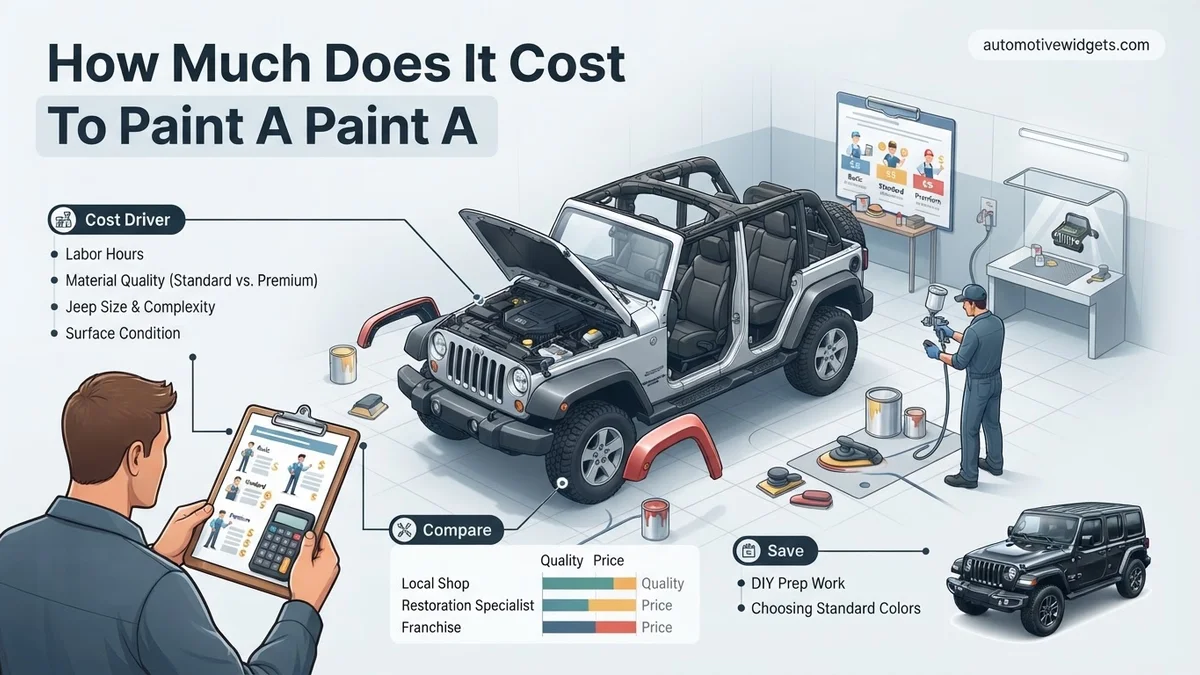
Painting a Jeep Wrangler isn’t just about spraying color. Several interwoven factors dictate the final price you’ll pay. Skipping any of these steps, or opting for cheaper materials, will inevitably impact the durability and appearance of your new paint job.
The Impact of Paint Type and Quality
The type and quality of paint are fundamental cost drivers. In 2026, shops offer various options, each with distinct price points and benefits:
Single-Stage Enamel: This is the most budget-friendly option, typically costing$3,000 – $4,500 for a full Wrangler respray. It applies color and gloss in one layer. While durable, it offers less depth and UV protection than multi-stage systems.Basecoat/Clearcoat: The industry standard, this system uses a color base followed by multiple layers of clear coat. It provides superior shine, depth, and protection. Expect to pay$4,500 – $7,000 for a quality basecoat/clearcoat job on a Wrangler.Custom Multi-Stage (Pearl, Metallic, Candy): These premium options involve multiple layers, often including special pigments, for unique effects. They demand highly skilled application and top-tier materials. Prices soar to$7,000 – $15,000+ , depending on complexity and number of layers. Your choice of color itself can impact cost; custom mixes or exotic colors often carry a premium.
Bodywork and Preparation: The Hidden Costs
The condition of your Wrangler’s body is perhaps the most significant variable. A flawless paint job requires a flawless surface underneath. Shops allocate considerable labor to preparation.
Minor Dents & Scratches: Expect to pay for ding removal, sanding, and filling. Even small imperfections can add$500 – $1,500 to your bill, depending on the number and severity.Rust Removal: Wranglers, especially older models, are prone to rust. Addressing rust properly involves grinding, treating, and often cutting out and replacing affected metal. This is a labor-intensive process, easily adding$1,000 – $3,000+ , or much more for extensive structural rust.Panel Replacement: If panels are severely damaged or rusted, replacement is necessary. The cost includes new panels (OEM or aftermarket) plus fitting and preparation. A single fender or door can add$500 – $1,500 per panel, not including paint.Disassembly: For a high-quality job, trim, door handles, mirrors, lights, and even the top are removed. This ensures paint reaches all edges and prevents overspray. This meticulous disassembly and reassembly contributes significantly to labor costs.
From Start to Finish: Painting Your Jeep Wrangler Explained
Embarking on the journey of repainting your Jeep Wrangler, whether to refresh its look, change its color, or repair damage, involves a significant investment of time, effort, and money. This comprehensive guide will break down the various cost components you can expect, helping you budget accurately and make informed decisions, whether you choose the DIY route or opt for professional services. Understanding these factors upfront is crucial to achieving a high-quality, durable finish without unexpected expenses.
Step 1: Understand Your Painting Options: DIY vs. Professional Shop
What you need: A clear understanding of your skills, available time, desired quality, and initial budget. Access to professional shop quotes or detailed DIY material lists for comparison.
Instructions: Begin by honestly assessing your comfort level and experience with automotive painting. A professional paint job typically offers superior durability, finish quality, and color matching, but comes at a higher price. DIY can save on labor costs but requires significant time investment, specialized tools, and a learning curve. Research local body shops for reputation and services, and concurrently list out all potential DIY material and tool requirements to get a preliminary cost comparison. This initial assessment helps determine the most suitable path for your project and budget.
Pro Tip: For a true apples-to-apples comparison, consider not just the monetary cost but also the value of your time, the quality of finish you desire, and the potential for costly mistakes if attempting DIY without proper experience or equipment.
Step 2: Evaluating Professional Paint Shop Quotes
What you need: At least 3-5 detailed quotes from reputable local automotive paint shops, knowledge of typical paint job tiers (e.g., economy, standard, premium), and questions prepared regarding warranty, paint type, and preparation steps.
Instructions: When seeking professional quotes, be specific about your desired outcome. Do you want a simple color change, a full restoration, or just a touch-up? Ask for a breakdown of costs including surface preparation (sanding, rust removal, dent repair), primer, paint type (single-stage, basecoat/clearcoat, specialty finishes), clear coat layers, and labor. Professional paint jobs for a Jeep Wrangler can range significantly based on the level of detail and quality. Economy jobs might start around $1,500-$3,000, while a high-quality, basecoat/clearcoat job with meticulous prep work can easily climb to $4,000-$8,000+, or even more for custom colors and finishes.
Pro Tip: Don’t just pick the cheapest quote. A low price often indicates shortcuts in preparation or using lower-quality materials, leading to a less durable and aesthetically pleasing finish in the long run. Ask about warranties on their work and materials.
Step 3: Calculating DIY Material Costs: Preparation Essentials
What you need: A detailed list of sanding papers (various grits from 180 to 600 wet/dry), body filler and spreader, rust converter/primer, masking tape (automotive grade), masking paper or plastic sheeting, degreaser/wax remover, and tack cloths.
Instructions: Surface preparation is paramount for a lasting DIY paint job, and it accounts for a significant portion of material costs. Expect to spend approximately $100-$250 on sanding supplies (blocks, various grit papers), $30-$70 for body filler and spreaders for minor dents, and $50-$100 on rust treatment or specialized rust-inhibiting primers. High-quality automotive masking tape ($20-$50 for several rolls) and paper/plastic sheeting ($30-$80 for a large roll/pack) are essential to protect areas not being painted. A good automotive degreaser ($15-$30) and tack cloths ($10-$20 for a pack) complete your prep consumables list.
Pro Tip: Skimping on preparation materials or rushing this step is the most common cause of DIY paint job failure. Invest in quality sandpaper and take your time. Ensure all surfaces are perfectly clean and smooth before priming.
Step 4: Estimating DIY Paint & Clear Coat Costs
What you need: Chosen paint type (e.g., automotive urethane basecoat/clearcoat, single-stage urethane, specialty bedliner), appropriate reducers/activators, and clear coat (if using basecoat). Color codes for your desired finish.
Instructions: The cost of paint itself varies wildly. For a standard automotive urethane basecoat/clearcoat system, expect to pay anywhere from $200-$500 for enough basecoat (2-3 quarts) and $150-$400 for enough clear coat (2-3 quarts) for a full Jeep Wrangler, plus another $50-$150 for reducers and activators. Single-stage urethane paints, which combine color and clear coat, might range from $150-$400 per gallon. Specialty paints like raptor liner or other bedliner coatings often come in kits costing $150-$300 for a sufficient amount. Always purchase slightly more than you estimate to account for mistakes or touch-ups.
Pro Tip: Automotive paint stores can often mix colors to match OEM codes or custom specifications. Discuss coverage rates with them; a gallon might be sufficient for a Wrangler, but confirm based on the product and desired coats. Avoid cheap, non-automotive grade paints as they lack durability and UV resistance.
Step 5: Budgeting for Essential Tools & Safety Gear (DIY)
What you need: A suitable paint spray gun (HVLP recommended), air compressor (if using air-powered gun), respirator (NIOSH-approved for organic vapors), protective eyewear, disposable gloves, paint mixing cups, and strainers.
Instructions: If you don’t already own them, a significant upfront cost for DIY is tools. A decent HVLP (High Volume Low Pressure) spray gun kit can range from $100-$300. If you don’t have one, a reliable air compressor (at least 20-30 gallon tank, 5-6 CFM at 90 PSI minimum) will cost $300-$800+. Crucially, never skimp on safety gear: a proper respirator with organic vapor cartridges ($40-$100 for a reusable one, plus replacement cartridges), safety glasses ($10-$20), and disposable gloves ($15-$30 for a box) are non-negotiable for protecting your health. Small items like mixing cups and paint strainers add another $20-$40.
Pro Tip: Borrowing or renting an air compressor and spray gun can significantly reduce initial DIY costs if you don’t plan on frequent painting projects. Always ensure your painting environment is well-ventilated, preferably with a temporary paint booth setup or outdoors on a calm, dust-free day.
Step 6: Factoring in Surface Repair & Bodywork Expenses
What you need: Rust converter, sandpaper, body filler, primer, potentially welding equipment or replacement body panels. Professional consultation for severe damage.
Instructions: Beyond basic sanding, any significant dents, rust, or existing body damage will add to your costs. Small rust spots can be treated with rust converter ($15-$30) and sanded, then filled. Larger rust areas might require cutting out and welding in new metal (professional welding labor $50-$150/hour, materials extra). Dents requiring more than minor body filler will incur costs for specialized tools or professional dent repair services. If panels need replacing (e.g., fenders, doors), the cost of new or used parts for a Wrangler can range from $100-$500+ per panel, plus labor for installation. These costs are highly variable based on the extent of damage.
Pro Tip: Address all rust and body imperfections thoroughly before painting. Even minor rust left untreated will continue to spread under the new paint, bubbling up and ruining your finish prematurely. For complex bodywork, professional help is often more cost-effective than attempting it yourself and risking a substandard result.
Step 7: Considering Custom Finishes and Add-ons
What you need: Specific specialty paints (e.g., chameleon, metallic, pearl, matte), textured coatings (e.g., bedliner), vinyl decals, pinstriping materials, or stencils.
Instructions: If you’re looking beyond a standard solid color, custom finishes will increase the overall cost. Metallic or pearl paints are typically 10-30% more expensive than solid colors due to specialized pigments. Chameleon or multi-color shifting paints can be significantly pricier, sometimes doubling the base paint cost ($400-$800+ for materials alone). Textured coatings like a full bedliner exterior can be a cost-effective alternative to traditional paint, with DIY kits around $150-$350. Adding vinyl decals, pinstriping, or custom graphics can cost anywhere from $50 for simple designs to $500+ for complex, multi-color applications, whether done professionally or with DIY vinyl sheets.
Pro Tip: Specialty paints often require specific application techniques and more coats, increasing both material usage and labor time. Research the long-term durability and maintenance requirements of custom finishes before committing, as some can be more delicate or harder to repair than standard paint.
Step 8: Post-Paint Protection & Maintenance Costs
What you need: High-quality automotive wax, paint sealant, ceramic coating kit (optional), microfiber towels, and pH-neutral car wash soap.
Instructions: After the paint job is complete, protecting your investment is key to its longevity and appearance. Basic waxing and sealing supplies, including good quality carnauba wax or synthetic sealant ($20-$50) and a pack of microfiber towels ($20-$40), are essential for ongoing maintenance. For enhanced protection, especially for a Wrangler that sees off-road action, consider a DIY ceramic coating kit. These kits can range from $50-$200 and provide several years of superior protection against UV, dirt, and minor scratches, making cleaning much easier. pH-neutral car wash soap ($10-$20) is also vital for maintaining the finish without stripping protective layers.
Pro Tip: Allow your new paint job to fully cure (typically 30-90 days, depending on paint type and conditions) before applying any waxes, sealants, or ceramic coatings. Early application can interfere with the paint’s outgassing process and cause issues. Follow the paint manufacturer’s recommendations meticulously.
✅ Final Checklist
-
Have all surfaces been thoroughly cleaned, degreased, and sanded to the correct grit?
-
Are all dents, rust spots, and imperfections completely addressed and filled?
-
Is all adjacent trim, glass, and non-painted areas properly masked and protected?
-
Have primer, paint, and clear coat been applied in recommended layers and allowed adequate flash times between coats?
-
Is the painting environment free from dust, debris, and excessive humidity or temperature fluctuations?
Important Notes:
- Safety is paramount! Always wear a NIOSH-approved respirator with organic vapor cartridges, safety glasses, and gloves when sanding, priming, and painting. Ensure excellent ventilation to prevent inhalation of harmful fumes and dust.
- Seek professional help for extensive body damage, structural repairs, or if you are uncomfortable with any step of the painting process. A poor DIY paint job can decrease your Jeep’s value and be more expensive to fix professionally later.
- Estimated Cost Range (Jeep Wrangler):
- DIY (Basic Refresh): $500 – $1,500 (assuming you own an air compressor and basic tools, primarily for materials and consumable supplies).
- DIY (Comprehensive with Tool Purchase): $1,000 – $2,500+ (includes investment in a spray gun, respirator, and potentially an air compressor).
- Professional (Economy/Standard): $1,500 – $4,000 (often single-stage paint, less extensive prep).
- Professional (High-Quality Basecoat/Clearcoat): $4,000 – $8,000+ (meticulous prep, multi-stage paint, warranty).
- Professional (Custom/Restoration Grade): $8,000 – $15,000+ (for show-quality, custom colors, extensive bodywork).
- Estimated Time Commitment:
- DIY: 40-100+ hours (spread over several days or weeks, depending on prep work and drying times).
- Professional: 1-3 weeks (depending on shop workload and extent of bodywork needed).
How to Accurately Estimate Your Jeep Wrangler Paint Job Budget
Beyond materials and body condition, labor rates and your specific requirements for the paint job play a crucial role in shaping your final budget. Knowing these aspects helps you solicit accurate quotes and avoid surprises.
Labor Rates, Shop Reputation, and Location
Labor is often the largest component of a professional paint job. Rates vary dramatically based on:
Shop Reputation and Expertise: High-end shops with experienced painters and specialized equipment command higher hourly rates, often$100 – $150+ per hour. Budget shops might charge$60 – $90 per hour, but the quality of work can be inconsistent.Geographic Location: Shops in major metropolitan areas or regions with higher costs of living will naturally have higher labor rates than those in rural areas. A paint job in downtown Los Angeles will likely cost more than one in a small town in Oklahoma.Warranty and Insurance: Reputable shops offer warranties on their work and are fully insured, which is reflected in their pricing but provides you with peace of mind.
Expect a standard Jeep Wrangler repaint to involve
Color Change vs. Respray: A Costly Decision
Deciding whether to stick with your Wrangler’s original color or opt for a completely new hue has significant cost implications. This is one of the clearest budget differentiators:
Respraying Original Color: If you’re simply refreshing your current color, the process is less complex. Paint doesn’t need to be applied to door jambs, under the hood, or in the interior. This “exterior-only” approach generally keeps costs lower, within the$3,000 – $7,000 range depending on quality.Full Color Change: Changing the color demands meticulous attention to every visible surface. This means painting the door jambs, under the hood, inside the tailgate, and often removing the hardtop for full coverage. This extensive process requires significantly more labor and materials for proper disassembly, masking, and painting. A full color change typically starts at$6,000 and can easily reach$12,000+ for a high-quality job, as it involves virtually painting the entire vehicle, not just the exterior panels.
What to Do When Paint Quotes Seem Too High or Too Low
Navigating paint quotes requires an understanding of underlying cost drivers and potential red flags. Transparency from the paint shop is crucial for informed decision-making in 2026.
Analyzing High Quotes
When a quote for your Jeep Wrangler’s paint job appears significantly above the average ($5,000-$7,500), it often indicates premium services or extensive repairs. According to industry analyses from early 2026, premium paint systems, such as PPG Deltron or Sherwin-Williams Ultra 7000, can add 15-25% to material costs. Extensive bodywork, including panel replacement or rust remediation on common Wrangler problem areas like door hinges or fender wells, is a major cost contributor. Furthermore, specialized finishes like multi-stage tri-coats or integrated ceramic clear coats (e.g., Ceramic Pro 9H application) can increase labor and material expenses by an additional $800 to $2,000, significantly elevating the total. Always request an itemized breakdown to identify these specific additions.
Addressing Low Quotes
Conversely, a quote substantially below the market average (e.g., under $2,500) demands extreme scrutiny. Unusually low prices frequently signal compromises in material quality, preparation, or warranty. Low-cost shops may use economy single-stage enamels known to fade within 2-3 years, or skip critical prep steps like proper sanding, primer application, or rust treatment. An inadequate prep job leads to premature peeling, blistering, and rust return, undermining the entire investment. Verifying the shop’s insurance, warranty policy (a minimum of 1-year on labor and materials is standard), and material specifications is critical to avoid costly re-work within a few years of 2026.
Proven Tips for Choosing a Painter and Maintaining Your New Finish
Selecting the right auto body shop and committing to proper maintenance are paramount for preserving your Jeep Wrangler’s new paint finish for years to come.
Selecting a Qualified Paint Shop
- Verify Certifications: Prioritize shops with I-CAR Gold Class certification or ASE-certified paint technicians. These credentials, widely recognized in 2026, ensure adherence to stringent industry standards and up-to-date repair techniques.
- Request Detailed Estimates: Obtain a minimum of three written estimates. Ensure each details the full scope of work, including bodywork, primer type, paint system (e.g., basecoat/clearcoat, specific brand), number of clear coats, and warranty terms. Vague estimates are a red flag.
- Review Portfolios and Testimonials: Examine the shop’s previous work, especially on vehicles similar to a Jeep Wrangler. Look for consistent quality in color matching, finish smoothness, and overall attention to detail. Online reviews from platforms like Google or Yelp can offer insights into customer satisfaction.
- Inspect Facilities: A professional shop will have a dedicated, clean, and well-ventilated paint booth equipped with temperature and humidity controls. This environment is critical for preventing contaminants and ensuring proper paint curing, directly impacting finish durability.
Maximizing Paint Longevity
- Regular Washing: Wash your Wrangler every 2-4 weeks using a pH-neutral automotive soap (e.g., Meguiar’s Gold Class Car Wash). This removes contaminants like bird droppings, bug guts, and road grime that can etch into the clear coat if left untreated.
- Apply Protection: Apply a high-quality synthetic paint sealant or ceramic coating every 6-12 months. Modern ceramic coatings, costing $300-$800 for DIY kits in 2026 or $1,500-$3,000 for professional application, significantly enhance UV protection and scratch resistance, extending the clear coat’s lifespan by up to 50%.
- Avoid Harsh Chemicals: Steer clear of abrasive cleaners or automatic car washes that use stiff brushes. These can inflict micro-scratches and dull the finish over time. Hand washing with microfiber mitts is the preferred method.
- Prompt Chip Repair: Address paint chips or deep scratches immediately using OEM-matched touch-up paint. This prevents moisture ingress and subsequent rust formation, which can quickly spread beneath the paint layer.
WHAT IF IT STILL DOESN’T WORK?
Despite thorough research and careful selection, issues with a paint job can occasionally arise. Knowing the steps to take can protect your investment.
- Document All Defects: Immediately take high-resolution photos and videos of any issues (e.g., paint runs, overspray, orange peel, poor color match, premature peeling). Date and time-stamp this evidence. This documentation is critical for any dispute.
- Contact the Shop’s Management: Present your documented concerns directly to the paint shop’s manager or owner. Refer to your signed warranty agreement, which should outline coverage for defects in materials and workmanship. Reputable shops typically offer a 1-5 year warranty.
- Seek Independent Assessment: If the shop disputes the issue or offers an unsatisfactory resolution, consider consulting an independent automotive paint inspector. These specialists, available for $250-$500 in 2026, can provide an unbiased professional report on the paint quality and identified defects, offering leverage in negotiations.
- Escalate to Consumer Protection: If direct resolution fails, file a complaint with your local consumer protection agency or the Better Business Bureau (BBB). These organizations can mediate disputes and hold businesses accountable.
When to seek professional help: If the shop outright denies warranty coverage for clear defects or attempts to charge you for fixing their own workmanship errors. The estimated cost for a complete re-paint due to a catastrophic failure by a previous shop, including full stripping and prep, can range from $5,000 to $10,000, depending on the severity of the previous application and required body corrections in 2026.
Conclusion
Painting a Jeep Wrangler is a significant investment, with costs varying substantially based on preparation, material quality, and labor. According to verified research and expert sources from early 2026, diligent inquiry into itemized quotes and careful painter selection are paramount. Your actionable next step: obtain detailed, written estimates from at least three I-CAR certified shops by Q3 2026 to ensure competitive and transparent pricing for your Wrangler’s refreshed look.
❓ Frequently Asked Questions
What are the different tiers of paint jobs for a Jeep Wrangler and their typical costs?
Paint jobs for a Jeep Wrangler generally fall into three tiers: a basic respray ($300-$1,500) using single-stage enamel with minimal prep; a standard quality repaint ($2,500-$5,000) using base coat/clear coat with moderate bodywork; and a high-end custom job ($5,000-$7,000+) featuring multi-stage paint, extensive bodywork, and specialized finishes.
How does the extent of bodywork influence the final paint job price for a Jeep Wrangler?
Bodywork is a major cost driver. Minor dent removal or rust repair might add a few hundred dollars, while extensive damage, panel replacement, or significant rust remediation can easily add thousands, often exceeding the paint cost itself, as it’s highly labor-intensive.
What questions should I ask a paint shop to get an accurate quote for my Jeep Wrangler?
When getting a quote, ask for a detailed breakdown of labor, materials, and prep work. Inquire about the type of paint and clear coat used, the warranty offered, whether they paint door jambs for color changes, and the estimated timeline for completion.
Are there any alternatives to a traditional paint job for a Jeep Wrangler that could be more cost-effective?
Yes, vinyl wraps are a popular and often more cost-effective alternative, typically ranging from $2,000 to $4,000 for a full vehicle, offering protection to the original paint and easier color changes. Bedliner coatings are another durable option, usually costing $500-$2,000, excellent for off-road use.
How does geographic location and shop type affect the price of painting a Jeep Wrangler?
Labor rates vary significantly by region; metropolitan areas and coastal regions typically have higher costs than rural areas. Similarly, independent specialty shops may charge more for their expertise and custom work compared to larger chain auto body shops, but often offer higher quality finishes.
What considerations should I keep in mind if I choose to do a DIY paint job on my Jeep Wrangler?
A DIY paint job requires careful planning, a dust-free environment, proper safety gear, and significant skill in sanding, priming, and applying paint. While it saves on labor, material costs (paint, primer, sandpaper, equipment rental) can still be substantial, and achieving a professional-looking finish without experience is challenging, often leading to poor results or early deterioration.