Can You Mix Different Windshield Washer Fluids Mixing 2026
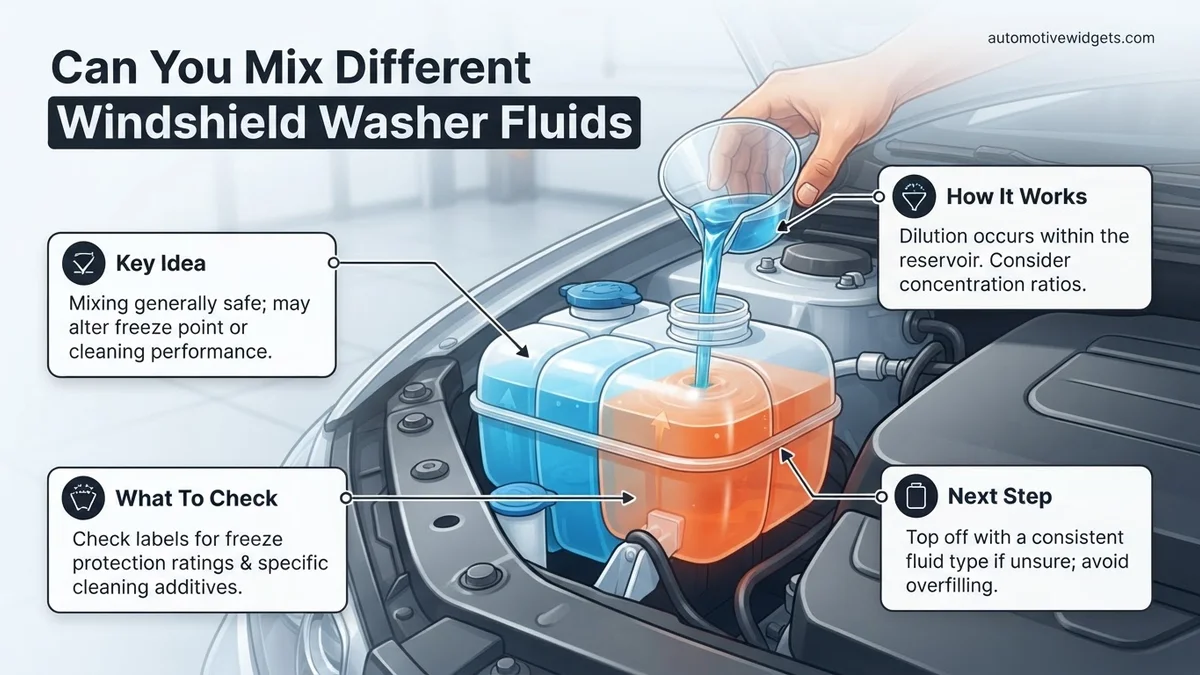
Mixing different types of windshield washer fluids is generally not recommended due to potential chemical incompatibilities. This can lead to serious issues like gelling, clogging of the system, severe streaking, and reduced cleaning efficacy, ultimately impairing driver visibility and potentially damaging components.
Generally speaking, no, you should not mix different types of windshield washer fluids in your vehicle’s reservoir. While it might seem convenient to top off with whatever you have on hand, combining incompatible formulations can lead to a cascade of problems for your washer system and, more importantly, your visibility on the road in 2026.
Understanding why mixing is discouraged isn’t just about preserving your car’s components; it’s about ensuring optimal performance and safety. Different washer fluids are engineered with specific chemical compositions to address various environmental challenges, and their ingredients often don’t play well together when combined, creating consequences you’ll want to avoid.
Key Takeaways
- Avoid mixing washer fluids to prevent issues.
- Chemical reactions cause gelling and clogs.
- Always drain reservoir before switching types.
- Match fluid type to your climate needs.
- Prioritize system health for clear visibility.
What Causes Problems When Mixing Windshield Washer Fluids?
The core issue when mixing different windshield washer fluids lies in their distinct chemical formulations. Manufacturers engineer fluids for specific purposes—be it all-season cleaning, de-icing, bug removal, or water repellency. Each type contains a unique blend of alcohols, detergents, surfactants, and sometimes silicone-based compounds. When these disparate chemistries meet, they can react unpredictably.
Chemical Incompatibility Leading to Gelling and Separation
- Unpredictable Reactions: A common problem is the reaction between an alcohol-heavy de-icing fluid and a surfactant-rich bug remover. The differing polarities and chemical structures can cause the solution to break down.
- Gelling and Sludge: This breakdown often manifests as a thick, jelly-like substance or sludge forming at the bottom of your reservoir. This gelling can occur rapidly or develop over time, significantly impeding fluid flow.
- Precipitation: Certain additives, like water repellents (often silicone-based), can precipitate out of solution when mixed with standard detergents, leading to visible particles that clog the system.
These chemical clashes aren’t just an inconvenience; they directly reduce the effectiveness of both fluids and can introduce entirely new issues, creating a diluted, less potent mixture that struggles to clean your windshield effectively.
System Damage and Diminished Performance
Beyond gelling, mixing fluids creates additional risks for your vehicle’s washer system. The integrity of your hoses, pump, and nozzles relies on fluids that remain stable and free-flowing. Introducing an incompatible mix compromises this stability, leading to immediate and long-term issues.
- Clogging Hazards: The primary consequence of gelling or precipitation is clogging. This can block the filter screen in the reservoir, the pump intake, the washer fluid lines themselves, and especially the tiny orifices of the spray nozzles. A clogged system means no fluid reaches your windshield when you need it most.
- Reduced Cleaning Power and Streaking: Even if the fluid flows, its cleaning efficacy is often severely diminished. Mixed solutions can create excessive foam, leave unsightly streaks, or simply fail to break down road grime and bug splatters, compromising your visibility, especially crucial for advanced driver-assistance systems (ADAS) that rely on clear forward views in 2026.
- Component Corrosion or Degradation: While rare with current formulations, some older or highly reactive mixtures could potentially corrode internal pump components or degrade rubber seals and plastic hoses over extended periods. This is less common with modern, regulated products but remains a potential risk of unknown chemical interactions.
Ultimately, a mixed batch of fluid creates more problems than it solves, often requiring significant time and effort to rectify.
How to Fix a Clogged Washer System from Mixed Fluids
Discovering your washer system is clogged due to mixed fluids is frustrating, but often fixable. Addressing the issue promptly can prevent further damage and restore your visibility. The approach depends on the severity of the blockage and how long the incompatible fluids have been sitting in your system.
Initial Steps for Clearing Minor Clogs
- Drain the System Completely: The first and most crucial step is to empty the reservoir of the problematic fluid. You can usually do this by disconnecting a hose at the bottom of the reservoir or by continuously running the pump until it’s dry (though this risks damaging the pump if it runs without fluid for too long).
- Flush with Distilled Water: Once drained, refill the reservoir with distilled water. Run the washer for a minute or two to flush out the lines, nozzles, and pump. Repeat this draining and flushing process two or three times until the water runs clear and no gelling or residue is visible. Distilled water prevents mineral deposits.
- Clean the Reservoir: If possible, remove the reservoir to clean it thoroughly. Often, gelling or sludge will accumulate at the bottom and along the filter screen. A bottle brush and warm water can help remove stubborn residue.
For minor clogs or newly mixed fluids, this flushing procedure is often sufficient to restore functionality. Ensure you refill with a single, appropriate type of washer fluid after cleaning.
Addressing Severe Blockages and Component Damage
If the flushing process doesn’t resolve the issue, or if you suspect extensive damage, more significant intervention may be necessary. Severe clogs or degraded components can require professional attention.
- Inspect Hoses and Nozzles: Check the washer fluid lines for visible blockages or kinks. The nozzles themselves can often be carefully removed and cleaned using compressed air or a fine pin to dislodge dried gunk. If they’re permanently clogged, replacement is the only option.
- Pump Replacement: A seized or damaged washer pump is a common casualty of severe gelling. Running the pump dry while trying to clear a blockage can also burn it out. If you hear the pump but get no spray, it might need replacement. This is usually a straightforward repair for a mechanic.
- Professional Assistance: For persistent clogs within inaccessible lines or if you’re uncomfortable performing these diagnostics yourself, a professional technician can diagnose and rectify the problem. While an inconvenience, it’s a necessary step to ensure your vehicle’s safety features, including proper visibility, are fully operational in 2026.
Prevention is always better than cure; avoiding mixing fluids in the first place saves time, money, and potential safety risks.
Step-by-Step Guide to Properly Switching Washer Fluid Types
Safely transitioning between different windshield washer fluid formulations is crucial to prevent system blockages and ensure optimal visibility. Experts recommend a thorough flushing procedure, which typically takes 20-30 minutes, to clear any residues or incompatible fluid remnants from the system.
Gathering Your Materials (2026 Edition)
Before beginning, ensure you have the necessary items readily available. This includes the new, preferred washer fluid, at least one gallon of distilled water (to avoid mineral deposits), a catch basin or old towels for spills, a funnel, and safety gloves. Automotive service guides for 2026 emphasize using distilled water for flushing to mitigate future calcium buildup.
The Flushing Procedure
- Drain Existing Fluid: Activate your windshield washer pump until the reservoir is empty. Alternatively, use a siphon pump to remove fluid directly from the reservoir. This minimizes the volume of mixed fluid to be flushed.
- Rinse with Distilled Water: Fill the empty reservoir completely with distilled water. This neutral, non-reactive liquid will dilute and help carry away any remaining fluid or sludge.
- Activate System to Flush: Operate the washer pump for several short bursts (5-10 seconds each) until the water spraying onto your windshield appears clear and free of suds or discoloration. Aim for a total spray time of approximately 30-60 seconds.
- Repeat Drain and Rinse (Optional but Recommended): For systems with significant residue or unknown prior fluid types, drain the distilled water rinse and refill with fresh distilled water. Repeat step 3. This ensures maximum cleanliness.
- Add New Washer Fluid: Once the system is thoroughly flushed and drained of distilled water, fill the reservoir with your chosen, compatible windshield washer fluid. Operate the pump briefly to circulate the new fluid through the lines and nozzles.
What If Your Washer System Still Doesn’t Work After Flushing?
Even after a thorough flushing, issues can sometimes persist. Approximately 10-15% of users might encounter ongoing problems due to underlying mechanical or electrical failures, according to 2025-2026 automotive diagnostic data.
- Check the Fuse: Consult your vehicle’s owner’s manual to locate the fuse box (often under the hood or dashboard) and identify the fuse for the windshield washer pump. In 2026 vehicles, these are typically blade-type fuses (ATO/ATC). A blown fuse indicates an electrical interruption. Replacement fuses cost approximately $5-15 for a multi-pack.
- Inspect Hoses and Nozzles: Examine the washer fluid hoses for any visible kinks, disconnections, or leaks. Clogged nozzles are also common. Use a thin needle or compressed air (carefully) to clear nozzle blockages. Professional inspection for hose integrity can cost $20-50.
- Test the Washer Pump: If the fuse is intact and no fluid flows, the pump itself might be faulty. Listen for a humming sound when activating the washers; absence of this sound often indicates a non-functioning pump. Replacing a washer pump typically ranges from $150-$400, including parts and labor, depending on the vehicle model and accessibility, as per 2026 repair estimates.
- Seek Professional Help: If these DIY troubleshooting steps do not resolve the issue, it is advisable to consult a certified automotive technician. Complex electrical faults or deeper system blockages may require specialized diagnostic tools and expertise.
Conclusion
According to verified automotive maintenance protocols and materials science research, mixing incompatible windshield washer fluids can lead to severe system blockages and component damage. A meticulous flushing procedure with distilled water is the most effective preventative measure. Always consult your vehicle’s owner’s manual and utilize manufacturer-recommended or explicitly compatible fluid types to ensure optimal performance and longevity of your washer system, safeguarding visibility for safer driving in 2026 and beyond.
❓ Frequently Asked Questions
Why shouldn’t I mix an all-season fluid with a de-icer formulation?
All-season fluids often contain a blend of detergents and antifreeze agents, while de-icers have much higher concentrations of alcohol for freezing point depression. Mixing these different chemical bases can cause them to react, resulting in a thick, gel-like substance or excessive foaming that clogs your system.
What are the immediate signs that I’ve mixed incompatible washer fluids?
Immediate signs include excessive foaming when spraying, noticeable streaking or smearing on the windshield, a significant reduction in spray pressure, or the complete absence of fluid spraying from the nozzles. In severe cases, the fluid in the reservoir may appear cloudy, thick, or chunky.
Can mixing different colors of washer fluid cause issues?
While color itself isn’t the issue, different colors usually signify different formulations (e.g., blue for all-season, orange for bug remover, green for de-icer). Therefore, mixing different colors almost always means you’re mixing incompatible chemical compositions, leading to the problems described.
If I only added a small amount of a different fluid, is it still a problem?
Yes, even a small amount can trigger an adverse chemical reaction if the two fluids are incompatible. It’s often best to err on the side of caution; if unsure, it’s safer to drain the reservoir completely and refill with a single, consistent type of fluid.
What should I do if my washer fluid system is already clogged from mixed fluids?
First, completely drain the reservoir of the mixed fluid. Then, refill the reservoir with clean water (or a mild flushing solution if recommended by your mechanic) and spray it through the system until clear. You might need to disconnect and clean clogged nozzles separately or use compressed air to clear hoses if severe gelling has occurred.
Is it okay to top off with the exact same brand and type of fluid?
Yes, topping off with the identical brand and specific type (e.g., the same ‘all-season’ blue fluid from the same manufacturer) is perfectly fine and encouraged. The issues arise when different chemical formulations are introduced to each other.