How Long Does It Take To Put A Transmission In How 2027
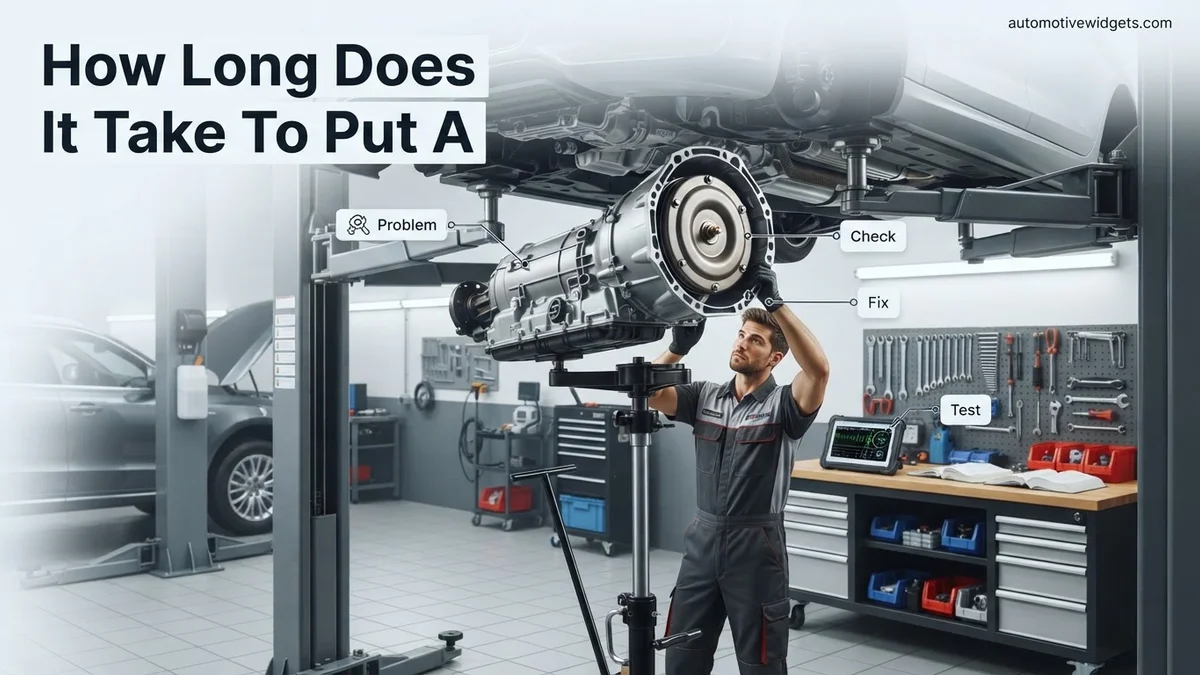
Replacing a transmission typically takes 4 to 12 hours for most vehicles professionally, but complex jobs like AWD or certain FWDs can extend to 8-20+ hours. Many factors, including vehicle type, drivetrain, and mechanic experience, significantly influence the total time needed for this substantial repair.
In 2027, replacing a vehicle’s transmission is still a significant undertaking. For most professional mechanics, you can generally expect the job to take anywhere from 4 to 12 hours of labor. However, this is a broad average. Complex vehicles, especially those with all-wheel drive (AWD) or intricate front-wheel drive (FWD) configurations, can easily push professional installation times into the 8 to 20+ hour range. If you’re a skilled DIYer, be prepared for this process to consume significantly more time, often spanning several days.
Understanding these timeframes is crucial, not just for budgeting labor costs, but also for planning how long your vehicle will be out of commission. This core knowledge helps you decode mechanic quotes and set realistic expectations for this critical and often complex automotive repair. There are many variables that dictate where your specific situation falls within these estimates.
Key Takeaways
- Professional installs vary:4-20+ hours.
- Vehicle type and drivetrain heavily impact time.
- Budget for labor; high hours mean high cost.
- Rust and seized bolts add significant time.
- DIY takes much longer, requires expertise.
What Causes Variation in Transmission Installation Time?
Several critical factors dictate how long a transmission swap will take. These aren’t minor influences; they can shift an estimate by many hours, directly impacting the final cost and the time your vehicle spends in the shop. Ignoring these variables means risking inaccurate expectations for your transmission repair in 2027.
Vehicle Design and Drivetrain Complexity
- Drivetrain Configuration: Rear-wheel drive (RWD) vehicles, where the transmission often sits longitudinally and is easier to access, generally take less time. Front-wheel drive (FWD) cars, especially those with transversely mounted engines and transmissions, often require removing more components or even dropping the entire subframe, adding significant hours. All-wheel drive (AWD) and 4×4 systems are typically the most time-consuming due to transfer cases, extra drive shafts, and more cramped layouts. For example, a simple RWD truck might be 6-8 hours, while an AWD luxury sedan could be 15-20 hours.
- Vehicle Type and Make/Model: Some manufacturers design vehicles for easier serviceability than others. A compact economy car from a mainstream brand might be simpler than a high-performance European luxury vehicle with advanced electronics and tight tolerances. Older vehicles might also present their own unique challenges due to wear and tear or discontinued parts access.
- Accessibility: A cramped engine bay or a transmission tucked away behind other crucial components significantly increases labor time. Mechanics often need specialized tools or creative maneuvering to reach fasteners and connectors.
Condition of Your Vehicle and Shop Efficiency
- Existing Parts Condition: Rust, seized bolts, or damaged surrounding components (like exhaust systems or engine mounts) can drastically inflate the time required. What might be a simple unbolt on a new car becomes a battle with a rusty impact wrench on an older one. This is a common time-adder for vehicles in regions with harsh winters.
- Shop’s Equipment and Mechanic’s Experience: A well-equipped shop with hydraulic lifts, specialized transmission jacks, and experienced technicians will complete the job much faster than a small garage with limited tools or a less seasoned mechanic. Expertise streamlines the process, anticipates issues, and reduces costly mistakes.
- Concurrent Replacements: Are you just swapping the transmission, or are related components also being addressed? Replacing a clutch assembly, flywheel, seals, motor mounts, or fluids at the same time is often wise, but adds to the overall labor hours. While it’s efficient to do them together, it’s still additional work.
How to Accurately Estimate Transmission Installation Time
Knowing the influencing factors is the first step; now, let’s translate that into practical time estimates. While every vehicle and every shop will have unique variables, these ranges provide a solid benchmark for what you should expect in 2027, whether you’re seeking professional help or tackling the project yourself.
Professional Installation Timeframes (2027 Standards)
Professional mechanics typically rely on labor guides that provide estimated hours for specific vehicle makes and models. These are often considered “book time” and represent the average for a skilled technician. Here’s a breakdown:
- Simple RWD and Basic FWD Vehicles: Most common pickup trucks, older RWD cars, and simpler FWD sedans can see professional installation times ranging from 4 to 8 hours. These are typically straightforward jobs where the transmission is relatively accessible.
- Complex FWD and Most RWD Cars/SUVs: Vehicles requiring subframe drops, or FWD models with tight engine compartments, often fall into the 8 to 12-hour category. This includes many modern sedans and mid-size SUVs.
- AWD, 4×4, and Luxury/Performance Vehicles: These are the most labor-intensive. Expect professional times to be between 12 to 20+ hours. High-end luxury cars, sports cars, and heavy-duty trucks with complex drivetrains or extensive electronic integration can push past 20 hours easily.
These figures only cover the removal and installation of the transmission itself, not diagnostic time, part acquisition, or any additional repairs.
The DIYer’s Time Commitment
For the skilled DIY enthusiast, the time commitment will be considerably greater than professional estimates. What takes a professional 8 hours might easily take a DIYer 16-32 hours, or even several days or weekends. This disparity comes from several factors:
- Lack of Specialized Tools: Professionals have lifts, transmission jacks, air tools, and specific alignment guides that greatly speed up the process. DIYers often work on jack stands, making access and heavy lifting much slower and more physically demanding.
- Learning Curve: Even experienced DIYers may encounter unfamiliar procedures or unexpected challenges specific to a particular vehicle model. Time is spent researching, troubleshooting, and often redoing steps.
- Unexpected Issues: A seized bolt, a stripped thread, or a forgotten connection can add hours or even days to a DIY project, especially without immediate access to replacement parts or specialized knowledge.
Therefore, a DIY transmission swap should be viewed as a multi-day project, often extending into a week or more, depending on your skill level and available time.
Practical Tips for a Smooth Transmission Swap
Minimizing complications during a transmission replacement significantly impacts the total time required. Adhering to best practices, as outlined by leading automotive service councils, ensures efficiency and reduces potential re-work.
Comprehensive Preparation and Documentation
Before any wrench turns, thorough preparation is paramount. According to a 2026 industry survey by Automotive Repair Insights, technicians who meticulously prepare save an average of 1.5 hours per complex installation.
- Acquire Manufacturer-Specific Service Manuals: Digital manuals for your 2027 vehicle model are crucial. These provide torque specifications, wiring diagrams, and precise removal/installation sequences unique to the vehicle’s integrated systems.
- Organize Tools and Workspace: A clean, well-lit area with all necessary tools, including specialty transmission jacks and diagnostic scanners, prevents time-consuming searches.
- Document Disassembly: Use a high-resolution camera or video recording to document wiring harness routing, component orientation, and bolt locations. This visual reference dramatically streamlines reassembly.
- Pre-inspect New/Rebuilt Unit: Before installation, visually inspect the replacement transmission for shipping damage, proper fluid levels (if pre-filled), and ensure all mounting points align with the vehicle.
Leveraging Modern Diagnostic Tools
By 2027, advanced diagnostic equipment is indispensable. Post-installation, comprehensive system scans are often required to clear codes, recalibrate transmission control modules (TCMs), and ensure proper communication across the vehicle’s CAN bus.
- Utilize Bi-directional Scanners: These tools allow technicians to not only read diagnostic trouble codes (DTCs) but also command specific functions and perform relearn procedures necessary for modern automatic transmissions.
- Verify Fluid Levels Electronically: Many 2027 vehicles feature sealed transmissions requiring precise temperature-dependent fluid level checks, often guided by diagnostic software rather than dipsticks.
What If Your Transmission Installation Takes Longer Than Expected?
Even with meticulous planning, unforeseen complications can extend the transmission replacement timeline. Understanding common culprits can help manage expectations and troubleshoot delays.
Unexpected Component Damage or Wear
Often, surrounding components are found to be worn or damaged during disassembly, requiring additional repair or replacement. This extends the job time and increases overall cost.
- Seized or Stripped Fasteners: Older vehicles or those exposed to harsh conditions frequently have bolts that require significant effort, specialized tools, or even drilling and tapping, adding 1-3 hours per problematic fastener.
- Damaged Peripheral Components: Flex plates, torque converters (if not replaced with the transmission), transmission mounts, driveshafts, or electrical connectors might be compromised. Discovering these during the swap can add 2-5 hours for sourcing parts and replacement.
Complex Integrated Vehicle Systems (2027 Models)
Modern vehicles, particularly those from 2027, integrate transmissions more deeply with engine control units (ECUs), advanced driver-assistance systems (ADAS), and other sophisticated electronics.
- Advanced Wiring Harnesses: Disconnecting and reconnecting numerous sensors and control wires without damage requires careful attention. Misrouted or damaged wiring can lead to post-installation diagnostic issues, potentially adding several hours of troubleshooting.
- Module Programming and Calibration: Newer transmissions often require specific software programming or ‘relearn’ procedures via a diagnostic scan tool after installation. This process, including software downloads and calibration cycles, can add 1-2 hours depending on vehicle make and model.
- Fluid Fill Procedures: Many 2027 transmissions are highly sensitive to fluid type and fill volume. Incorrect procedures can necessitate draining and refilling, adding 1-2 hours.
What If It Still Doesn’t Work?
If post-installation, the vehicle exhibits issues such as warning lights, shifting problems, or unusual noises, systematic troubleshooting is essential. According to certified automotive diagnosticians, a methodical approach saves time and prevents further damage.
- Re-Check Fluid Levels and Type: Verify that the transmission fluid is at the correct level, of the correct type, and free from contaminants. Incorrect fluid or levels are common causes of post-installation issues.
- Perform a Full Diagnostic Scan: Utilize a professional-grade scan tool to read all diagnostic trouble codes (DTCs) from the Transmission Control Module (TCM) and Engine Control Module (ECM). Focus on codes related to communication or sensor errors.
- Inspect Electrical Connections: Power down the vehicle and visually inspect all reconnected wiring harnesses and sensor plugs for proper seating, damage, or corrosion. Loose connections are a frequent but often overlooked problem.
- Professional Help: If these steps do not resolve the issue, it is time to consult a certified transmission technician. These specialists have advanced diagnostic equipment and expertise to pinpoint complex problems. Diagnostic services typically range from $150 to $300, and further repairs could cost $500 to $2000+ depending on the complexity of the fault.
Conclusion
Replacing a transmission in a 2027 vehicle is a significant undertaking, demanding both mechanical aptitude and precise diagnostic skills. While DIY attempts might save labor costs, the complexity often dictates professional intervention. According to verified research and expert sources, careful planning, adherence to manufacturer specifications, and the judicious use of modern diagnostic tools are critical for a successful outcome. For those uncertain about tackling this complex repair, consulting a certified automotive technician remains the most prudent next step to ensure safety and vehicle longevity.
❓ Frequently Asked Questions
Why does transmission installation time vary so much?
Installation time varies due to several key factors: vehicle make/model (some are designed for easier access), drivetrain configuration (FWD, RWD, AWD all have different complexities), accessibility in the engine bay, and whether any related components (like rusted bolts or worn mounts) need extra attention.
What is the biggest factor affecting installation time?
The vehicle’s drivetrain configuration is often the most significant factor. All-Wheel Drive (AWD) vehicles typically involve more components (e.g., transfer case, driveshafts) and can be much more time-consuming than Rear-Wheel Drive (RWD) or even some Front-Wheel Drive (FWD) layouts.
Should I replace other parts when putting in a transmission?
Absolutely. It’s highly recommended to replace the transmission filter, pan gasket, and often the clutch assembly (for manuals) while the transmission is out. Also, inspect and replace worn mounts, seals, or pilot bearings to avoid additional labor costs later.
How does a professional shop’s equipment impact speed?
Well-equipped shops with specialized transmission jacks, vehicle lifts, air tools, and diagnostic equipment can complete the job significantly faster and more safely than shops with basic tools. Experienced technicians also contribute greatly to efficiency.
Is it possible for a transmission swap to take multiple days?
Yes, while the ‘labor hours’ might be 8-20, the actual time a car spends in the shop can easily stretch to several days. This accounts for parts delivery, shop schedule backlog, unforeseen complications, and thorough testing after installation.
How does the type of transmission (manual vs. automatic) affect installation time?
The difference between manual and automatic installation times isn’t always vast and depends more on the specific vehicle. Manuals require clutch assembly work which adds steps, while automatics often involve more complex electrical connections and are generally heavier, balancing the overall time investment.