How Do You Know If Your Master Cylinder Is Bad? Expert 2027
A failing master cylinder compromises your vehicle’s braking ability, posing significant safety risks. Recognizing symptoms like a spongy pedal or sinking brakes is crucial for timely diagnosis. This guide helps you identify and address potential master cylinder issues before they become critical in 2027.
When your car’s brake pedal starts feeling off, or you notice performance changes, a failing master cylinder is often the prime suspect. This critical component ensures your braking system generates the hydraulic pressure needed to stop your vehicle effectively. Recognizing the early signs of master cylinder failure isn’t just about saving on repairs; it’s fundamentally about ensuring your safety on the road. In 2027, while vehicle technology advances, the core hydraulic principles of braking remain, making a functional master cylinder as vital as ever.
Ignoring these symptoms can lead to severely compromised braking power, putting you and others at significant risk. Understanding what a bad master cylinder feels like and how to perform basic diagnostic checks can help you address the issue proactively, before it escalates into a dangerous situation or costly emergency repair. We’ll break down the key indicators and what they truly mean for your braking system.
Key Takeaways
- Spongy or sinking brake pedal indicates failure.
- Check for brake fluid leaks around the unit.
- Hold pedal pressure to test internal seals.
- Increased stopping distance is a critical sign.
- Seek professional diagnosis immediately.
What Causes a Bad Master Cylinder: Real Symptoms You Can’t Ignore
A failing master cylinder communicates its issues through very specific symptoms directly related to how your brake pedal feels and how your vehicle responds to braking. These are not subtle cues; they are your car’s way of screaming for attention regarding its most vital safety system.
Recognizing Pedal Feedback and Braking Performance Changes
- Soft or Spongy Brake Pedal: This is one of the most common complaints. Instead of a firm, consistent feel, your brake pedal might feel “mushy” or soft, often requiring more travel than usual to engage the brakes effectively. This symptom often means the internal seals within the master cylinder are degrading. As they wear, brake fluid bypasses these seals internally, reducing the hydraulic pressure that should be delivered to your calipers and wheel cylinders. It’s not air in the lines just yet; it’s a lack of consistent pressure generation.
- Brake Pedal Sinks Slowly to the Floor: A classic and critical sign of internal master cylinder failure. If you press the brake pedal down and hold steady pressure, and it gradually sinks towards the floor, your master cylinder is almost certainly at fault. This happens because the primary or secondary piston seals inside the cylinder are no longer holding pressure efficiently. Fluid leaks past these faulty seals and back into the reservoir, rather than being pushed out to the brake lines. This is a tell-tale sign that differentiates an internal master cylinder problem from other brake issues.
- Increased Braking Distance or Reduced Braking Power: If your vehicle takes noticeably longer to stop, or you have to apply significantly more force to the pedal to achieve the same stopping power, the master cylinder might not be generating adequate hydraulic pressure. This directly stems from the issues above – insufficient pressure means less clamping force at the wheels, compromising your vehicle’s ability to decelerate safely.
Visible Leaks and Dashboard Warnings
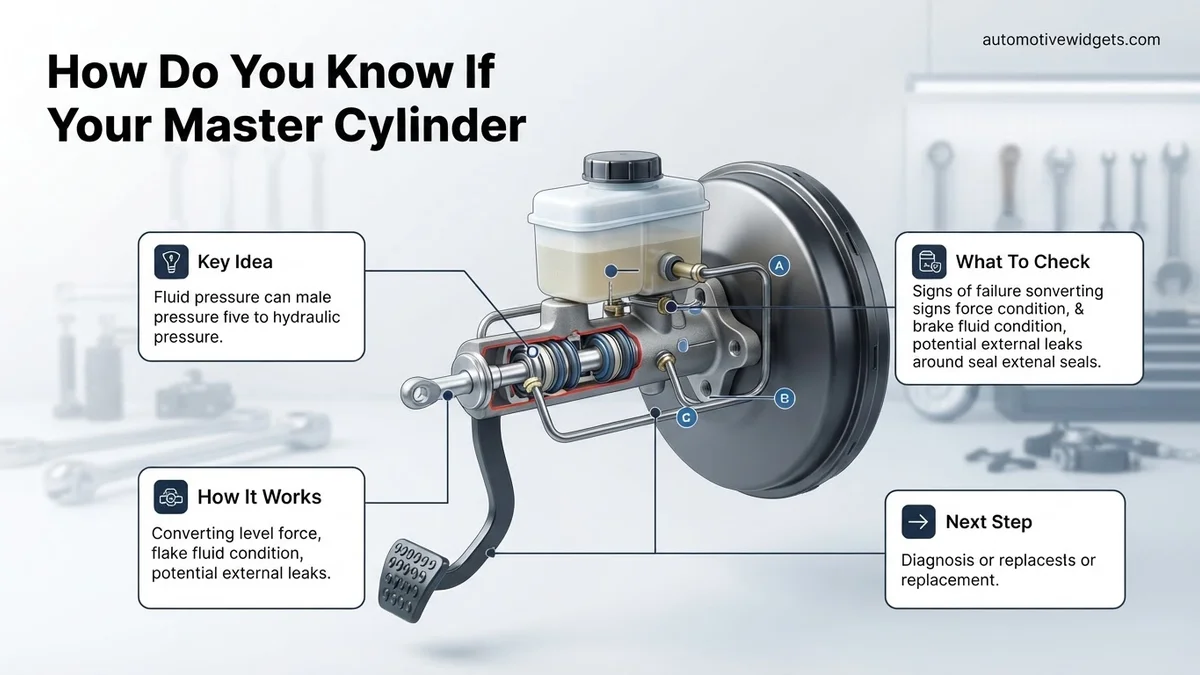
- External Brake Fluid Leaks Around the Master Cylinder: Visually inspect the area where the master cylinder mounts to the brake booster (the large, round component behind it) and where the brake lines attach. Any visible fluid accumulation on the firewall, dripping from the master cylinder body, or wetness around the reservoir connections indicates an external leak. This means fluid is escaping the hydraulic system entirely, which will lead to a low fluid level and eventually, a complete loss of braking.
- Disappearing Brake Fluid (Without External Leaks): If you consistently find your brake fluid reservoir low, but there are no visible external leaks anywhere in the system (master cylinder, brake lines, calipers, wheel cylinders), then an internal master cylinder leak is highly probable. The fluid is leaking past those internal seals and back into the reservoir, not out onto the ground. This is a subtle but strong indicator.
- Dashboard Warning Lights: Your vehicle’s dashboard might illuminate the “BRAKE” warning light, often a red circle with an exclamation mark. This light typically activates when the brake fluid level drops below a safe threshold, which can be caused by either an external or internal master cylinder leak. On more advanced 2027 vehicles, a failing master cylinder might also trigger associated ABS or traction control warnings, as the control modules detect inconsistent pressure or system imbalances.
How to Diagnose a Failing Master Cylinder Like an Expert
The master cylinder is the heart of your vehicle’s braking system, converting the mechanical force from your foot on the brake pedal into hydraulic pressure that stops your car. A failing master cylinder can lead to dangerous brake performance, putting you and others at risk. This comprehensive guide will walk you through a series of practical diagnostic steps, allowing you to confidently identify if your master cylinder is indeed the culprit behind your braking woes. Following these steps carefully will not only help you pinpoint the problem but also ensure you maintain a safe and reliable vehicle.
Step 1: Observe Initial Symptoms & Pedal Feel
What you need: Your vehicle, a keen sense of observation, and an understanding of how your brakes should feel.
Instructions: Pay close attention to how your brake pedal feels and behaves under various conditions. Do you notice the pedal gradually sinking towards the floor when held down at a stoplight? Does it feel spongy or excessively soft, requiring more travel than usual to engage the brakes effectively? Is there a noticeable decrease in braking power, making stops longer or less decisive? These are often the first and most common indicators of an internal master cylinder issue, where fluid bypasses worn seals within the cylinder itself. Document any specific observations, noting when and how frequently these symptoms occur.
Pro Tip: A brake pedal that sinks slowly but steadily often points directly to an internal master cylinder leak (fluid bypassing the primary or secondary seals). If the pedal feels spongy but doesn’t sink, it could indicate air in the lines, which might still be related to the master cylinder’s integrity or improper bleeding.
Step 2: Check Brake Fluid Levels and Condition
What you need: Clean shop rags, a flashlight, and potentially fresh brake fluid (matching your vehicle’s specification, e.g., DOT3 or DOT4).
Instructions: Pop your hood and locate the master cylinder reservoir, typically a plastic container mounted on the firewall directly in front of the driver. Visually inspect the fluid level. It should be between the ‘MIN’ and ‘MAX’ lines. A critically low fluid level often suggests an external leak somewhere in the braking system, which could include the master cylinder itself, brake lines, calipers, or wheel cylinders. Also, examine the fluid’s color and clarity. Healthy brake fluid is typically clear or light amber. Dark, murky, or black fluid indicates contamination or old age, which can degrade seals within the master cylinder over time. If the fluid is low, top it up to the MAX line, but be aware this is a temporary fix if a leak exists.
Pro Tip: If the fluid is significantly discolored, it might be time for a full brake fluid flush. However, severe discoloration or sludge in the reservoir can also be a symptom of a failing master cylinder, as degraded rubber seals can contaminate the fluid.
Step 3: Perform a Static Pedal Test
What you need: Your vehicle, a firm foot, and a stopwatch or a watch with a second hand.
Instructions: With the engine off (to eliminate the brake booster’s assistance), firmly press and hold the brake pedal with consistent pressure for at least 30-60 seconds. Observe the pedal’s behavior. A healthy master cylinder will maintain firm pressure, and the pedal will remain stationary or move only negligibly. If the pedal slowly sinks towards the floor over this time, it’s a strong indicator of an internal leak within the master cylinder. The internal seals are allowing fluid to bypass, preventing the build-up and retention of hydraulic pressure. This test is crucial for differentiating between an internal master cylinder leak and other brake issues.
Pro Tip: Ensure the engine is off for this test. If the engine is running, the brake booster will assist, masking the true pedal feel and potentially leading to an inaccurate diagnosis. Repeat the test a couple of times to confirm the behavior.
Step 4: Inspect for External Leaks
What you need: Flashlight, clean shop rags, safety glasses, and potentially a creeper or jack stands if needing to get under the vehicle.
Instructions: Carefully examine the master cylinder unit for any visible signs of brake fluid leakage. Pay close attention to the area where the master cylinder mounts to the brake booster, the brake lines connect to the master cylinder, and around the reservoir’s base. Look for drips, wet spots, or residue that appears slick or oily. Brake fluid has a distinct, slightly oily feel and usually smells faintly like fish oil. If you find leaks here, it directly points to a faulty master cylinder or compromised connections. Also, check the firewall directly beneath the master cylinder for streaks, indicating fluid running down from the unit.
Pro Tip: A common external leak point for master cylinders is at the rear, where it connects to the brake booster. Leaking fluid can collect inside the booster, which might not be immediately visible but will eventually cause damage or a vacuum leak if severe enough.
Step 5: Check Brake Booster Operation
What you need: Your vehicle, an understanding of normal brake booster function.
Instructions: While not a direct master cylinder test, a faulty brake booster can mimic some master cylinder symptoms. To check the booster, first, with the engine off, pump the brake pedal several times until it becomes firm. Then, hold the pedal down firmly and start the engine. The pedal should sink slightly towards the floor as the booster’s vacuum assistance engages. If the pedal does not sink, or if you hear a hissing sound when you press the pedal (indicating a vacuum leak), the booster might be faulty. A bad booster can make the pedal feel very hard, requiring excessive force, which is different from a master cylinder’s spongy or sinking pedal feel. However, a master cylinder failure can sometimes damage the booster if fluid leaks into it.
Pro Tip: A hard pedal that doesn’t sink when the engine starts is a classic symptom of a bad brake booster. If the pedal does sink but the braking is still poor, and you’ve ruled out booster issues, your focus should remain on the master cylinder or air in the lines.
Step 6: Look for Air in the System (and consider bleeding)
What you need: A helper, wrench (typically 10mm or 11mm), clear tubing, a jar, and fresh brake fluid.
Instructions: A spongy brake pedal can indicate air trapped within the brake lines. While not always a master cylinder issue, air can enter the system if the master cylinder reservoir runs dry due to a leak, or if the master cylinder itself has been compromised. If you suspect air, bleeding the brakes is the next logical step. With a helper, start with the wheel furthest from the master cylinder (usually the passenger rear). Attach clear tubing to the bleeder screw, submerged in fluid in a jar. Have your helper pump the pedal a few times and hold it down, then open the bleeder screw briefly to release fluid and air bubbles. Repeat until no more bubbles appear. If, after a thorough bleeding process, the pedal still feels spongy or continues to sink, it strongly points back to an internal master cylinder issue, as it’s failing to maintain pressure.
Pro Tip: Always keep the master cylinder reservoir topped up during bleeding to prevent introducing more air into the system. If you consistently find air after bleeding multiple times, without any obvious external leaks, it further suggests the master cylinder’s internal seals are failing and drawing air in.
Step 7: Professional Diagnosis and Replacement
What you need: Professional mechanic, diagnostic tools (optional, if you’re not doing it yourself).
Instructions: If, after performing the above tests, you still suspect the master cylinder is faulty, or if you’re not comfortable proceeding with repairs, it’s time to consult a qualified mechanic. They have specialized tools and expertise to perform more advanced diagnostics, such as pressure testing the master cylinder outlets. A failing master cylinder is a critical safety issue that requires immediate attention. Do not delay replacement if you’re confident it’s the problem. A new master cylinder will restore proper brake pedal feel and stopping power, ensuring your vehicle is safe to drive again. Sometimes, especially with older vehicles, the brake booster is replaced concurrently with the master cylinder to ensure system integrity.
Pro Tip: If your vehicle is equipped with ABS, ensure the mechanic is familiar with the specific bleeding procedures required for that system, as some ABS modules need special tools or sequences to properly bleed all circuits after a master cylinder replacement.
✅ Final Checklist
-
Brake pedal maintains firm pressure when held down for 30-60 seconds (engine off).
-
Brake fluid level is consistently between MIN and MAX, and fluid is clear/light amber.
-
No visible external leaks around the master cylinder or its connections.
-
Brake pedal sinks slightly when the engine is started while holding the pedal (booster check).
-
Brake pedal feels firm and responsive after a thorough bleeding process.
Important Notes:
- Safety considerations or warnings: Working with brake fluid requires caution. It can damage paint and plastics, so wipe up spills immediately. Always use proper eye protection. Never drive a vehicle with compromised brakes. If you suspect a major brake failure, have the vehicle towed to a repair facility.
- When to seek professional help: If you are uncomfortable performing any of these diagnostic steps, lack the necessary tools, or are unsure of the problem’s root cause, it is always best to consult a certified automotive technician. Brakes are a critical safety component.
- Estimated time and cost range: Diagnosing a master cylinder typically takes 30 minutes to 1.5 hours if you’re familiar with the process. If a replacement is needed, a new master cylinder part can range from $75 to $250+, depending on the vehicle. Professional labor for replacement usually adds another $150 to $400, bringing the total cost to anywhere from $225 to $650+. This does not include brake fluid or potential additional parts like a brake booster.
How to Identify a Failing Master Cylinder: Step-by-Step Diagnostic Checks
Before you commit to a repair shop, there are several simple yet effective diagnostic steps you can perform yourself to confirm whether your master cylinder is indeed the culprit. These checks help distinguish master cylinder issues from other common brake problems like air in the lines or a faulty brake booster.
DIY Pedal Tests for Master Cylinder Health
- Engine Off Pedal Test: With your engine off, pump the brake pedal three to four times until it becomes firm. Then, apply steady, firm pressure to the pedal. If the pedal slowly sinks towards the floor while you maintain pressure, this is a strong indicator of internal master cylinder seal failure. If it holds firm, your master cylinder’s internal seals are likely sound at this point.
- Engine On Pedal Test: Start your vehicle and allow the engine to run. Now, press the brake pedal and hold steady pressure. The pedal should feel initially softer due to the brake booster assisting, but it should remain at a consistent position. If the pedal slowly sinks towards the floor, even with the engine running, it further confirms an internal master cylinder leak. This test also helps rule out a completely failed brake booster, which would typically result in an extremely hard pedal feel with the engine running, not a sinking one.
Visual Inspection and Fluid Assessment
- Check Brake Fluid Level and Condition: Open your hood and locate the brake fluid reservoir. Check the fluid level against the ‘MIN’ and ‘MAX’ lines. A consistently low fluid level, especially if accompanied by a sinking pedal, strongly suggests a fluid loss somewhere. Also, observe the fluid’s condition. While not a direct diagnostic for the master cylinder itself, excessively dark or sludgy fluid can indicate contamination that accelerates seal wear.
- External Leak Inspection: Carefully inspect the master cylinder body, particularly where the brake lines exit and where it mounts to the brake booster. Look for any signs of wetness, drips, or staining. Check the firewall directly beneath the master cylinder for any residue. A visible external leak is a definitive sign of fluid loss that must be addressed immediately, often indicating external seal failure on the master cylinder or its connections.
- Differentiating from Other Brake Issues: It’s crucial to distinguish master cylinder symptoms from other problems. A soft pedal that doesn’t sink under steady pressure, for instance, might be air in the lines, easily resolved by bleeding the system. A very hard pedal with reduced stopping power, but no sinking, points more towards a failing brake booster. Leaking calipers or wheel cylinders will cause external fluid loss and a low reservoir, but typically won’t lead to the pedal sinking under pressure in the same distinct way as an internal master cylinder fault.
What If It Still Feels Off: Differentiating From Other Brake Problems
Pinpointing the exact cause of brake system irregularities requires careful diagnosis. While master cylinder failure presents distinct symptoms, other brake components can mimic similar issues. Differentiating these is crucial for effective repair, according to Automotive Service Excellence (ASE) guidelines for 2027.
External Leaks Versus Internal Failure
If brake fluid levels drop consistently, inspect for external leaks. Leaks at calipers, brake lines, or wheel cylinders typically leave visible fluid puddles or damp spots. Conversely, an internal master cylinder leak will consume fluid without visible external signs, as the fluid bypasses worn seals and returns to the reservoir. This internal bypass directly causes the spongy pedal and slow pedal sink.
Air in the Brake Lines
A spongy pedal can also indicate air trapped within the hydraulic lines. This commonly occurs after brake component replacement or fluid flushing if not bled correctly. Unlike master cylinder failure, a pedal with air often improves significantly with rapid pumping, momentarily firming up pressure. A failing master cylinder typically does not recover pressure effectively even with repeated pumping.
Worn Brake Pads and Rotors
Severely worn brake pads or rotors primarily cause extended stopping distances, grinding noises, or vibrations during braking. These issues generally do not result in a soft or sinking pedal feel. While worn components require increased pedal travel to engage, the hydraulic pressure itself remains stable, unlike a master cylinder defect.
ABS or Stability Control System Malfunctions
Modern vehicles in 2027 integrate complex ABS and stability control systems. Malfunctions in these electronic systems usually trigger dashboard warning lights (ABS, Traction Control, Stability Control) and store specific diagnostic trouble codes. These electrical or software issues affect braking performance differently than a hydraulic pressure loss from a master cylinder, which typically presents no electronic warnings unless the fluid level itself is critically low.
Expert Guide: Urgent Actions for a Compromised Braking System
A failing master cylinder constitutes a critical safety hazard. Should you experience sudden brake pedal issues while driving, immediate and precise action is paramount. The National Highway Traffic Safety Administration (NHTSA) 2027 safety protocols emphasize maintaining control and seeking professional assistance without delay.
Immediate On-Road Response
- Engage Hazard Lights: Alert other drivers to your vehicle’s impaired condition instantly.
- Shift to Lower Gear: Utilize engine braking to slow the vehicle. This reduces reliance on the compromised hydraulic system.
- Pump Brake Pedal Rapidly: In some cases, rapidly pumping the pedal can build residual pressure in the brake lines, offering limited stopping power. This is less effective with a complete master cylinder failure.
- Apply Parking Brake Carefully: Gradually and gently engage the parking/emergency brake. Be prepared for the rear wheels to lock if applied too aggressively, potentially causing a skid.
- Steer to a Safe Pull-Off: Guide the vehicle to the shoulder or a safe, isolated area as quickly and safely as possible. Avoid high-traffic zones.
Post-Incident Protocol
Once safely stopped, do not attempt to drive the vehicle further. Driving with a compromised master cylinder is extremely dangerous and illegal in most jurisdictions. Arrange for professional towing to a certified repair facility. Inform the technician of all symptoms observed, including pedal feel, warning lights, and any unusual noises. According to Automotive Industries forecasts for 2027, advanced diagnostic tools at professional shops can accurately pinpoint the fault rapidly, ensuring efficient and safe repair.
What If It Still Doesn’t Work?
If you have followed initial diagnostic steps and the brake issue persists, further action is necessary. A persistent problem indicates either an undiagnosed severe issue or a complex fault requiring specialized equipment and knowledge.
- Re-verify Brake Fluid: Double-check the brake fluid reservoir level. Ensure it meets manufacturer specifications for 2027 vehicle models. Look closely for micro-leaks missed previously.
- Perform Full System Bleed (Professional Grade): A thorough, pressure-assisted brake bleed using a vacuum pump or specialized ABS diagnostic tool (if applicable) can sometimes remove stubborn air pockets that manual bleeding misses.
- Consult Manufacturer Service Data: Access the vehicle’s specific 2027 digital service manual or technical service bulletins (TSBs). These often contain specific diagnostic trees for complex brake issues.
- Seek Professional Diagnostic Service: If the problem remains unresolved, professional diagnosis is mandatory. Modern braking systems are integrated with vehicle electronics. Certified technicians possess the specialized scan tools (e.g., OBD-II compliant 2027 models) to read complex brake system codes and perform active tests.
A professional diagnostic service for a brake system in 2027 typically costs between $120 and $250. A master cylinder replacement, including parts and labor, generally ranges from $400 to $800, depending on the vehicle make and model complexity.
Conclusion
Identifying a failing master cylinder is critical for vehicle safety. Symptoms like a soft, spongy, or sinking brake pedal, often accompanied by increased stopping distances, demand immediate attention. According to verified automotive engineering standards and expert service manuals from 2027, proactive diagnostics and prompt repair prevent catastrophic brake failure. Prioritize immediate professional inspection for any suspected master cylinder issue to ensure optimal vehicle safety and performance.
❓ Frequently Asked Questions
What does a ‘spongy’ or ‘soft’ brake pedal indicate, and how does it relate to a bad master cylinder?
A spongy or soft brake pedal often indicates air in the brake lines or a failing master cylinder. When the master cylinder’s internal seals wear, fluid can bypass them, leading to a loss of pressure and that soft, ineffective pedal feel, requiring more effort to stop.
My brake pedal sinks slowly to the floor when pressed. Is this a definitive sign of a bad master cylinder?
Yes, a brake pedal that slowly sinks to the floor while consistent pressure is applied is a strong indicator of internal seal failure within the master cylinder. This allows brake fluid to leak past the seals internally, preventing pressure from being maintained.
How can I check for brake fluid leaks related to the master cylinder?
Visually inspect the master cylinder body, the area beneath it, and connections for any visible signs of brake fluid (which feels slippery). Also, check the brake fluid reservoir level frequently; a continuously dropping level without external leaks points to an internal issue, possibly within the master cylinder or booster.
How do master cylinder symptoms differ from a faulty brake booster or air in the brake lines?
A bad master cylinder typically causes a soft or sinking pedal due to pressure loss. A faulty brake booster usually makes the pedal very hard and difficult to press, requiring excessive force to brake, but without the pedal sinking. Air in the lines will also cause a spongy pedal, but the pedal won’t typically sink to the floor under constant pressure unless there’s also a master cylinder issue or significant leak.
Can low or contaminated brake fluid lead me to believe my master cylinder is bad?
While low or contaminated brake fluid can cause braking issues, they are often symptoms, not direct causes of a bad master cylinder. Low fluid could be from a leak, including a failing master cylinder. Contaminated fluid can accelerate wear on master cylinder seals, eventually leading to its failure. Always check fluid level and condition first.
What are the immediate safety risks of driving with a suspected bad master cylinder?
The immediate safety risks are severe, including significantly increased stopping distances, reduced braking power, or even complete loss of brakes. This can lead to uncontrolled situations and serious accidents. It is critical to have your vehicle inspected and repaired by a professional as soon as symptoms appear.