Can a Blown Head Gasket Cause Car Not to Start? Expert 2027
Yes, a blown head gasket can absolutely prevent your car from starting by causing severe compression loss, hydrolock, or other engine failures. This serious issue requires prompt diagnosis and professional repair to prevent further damage.
Yes, a blown head gasket absolutely can prevent your car from starting. This isn’t just a minor issue; a compromised head gasket can lead to critical engine failures that directly impact the combustion process, rendering your vehicle immobile. In 2027, even with advanced engine management systems, the fundamental principles of internal combustion remain, and a breach in this vital seal can be devastating.
When your car refuses to crank or start, and you suspect a blown head gasket, you’re looking at a serious situation that requires immediate attention. Understanding the precise mechanisms by which this common engine ailment can incapacitate your vehicle is crucial for accurate diagnosis and making informed decisions about repair. This isn’t about general car troubles; it’s about specific, gasket-related failures that halt your engine before it even begins to run.
Key Takeaways
- Blown head gaskets cause no-start condition.
- Loss of compression is a primary factor.
- Hydrolock can seize the engine completely.
- Look for coolant loss and white exhaust smoke.
- Professional diagnosis and repair are crucial.
Why a Blown Head Gasket Stops Your Car: The Core Mechanisms
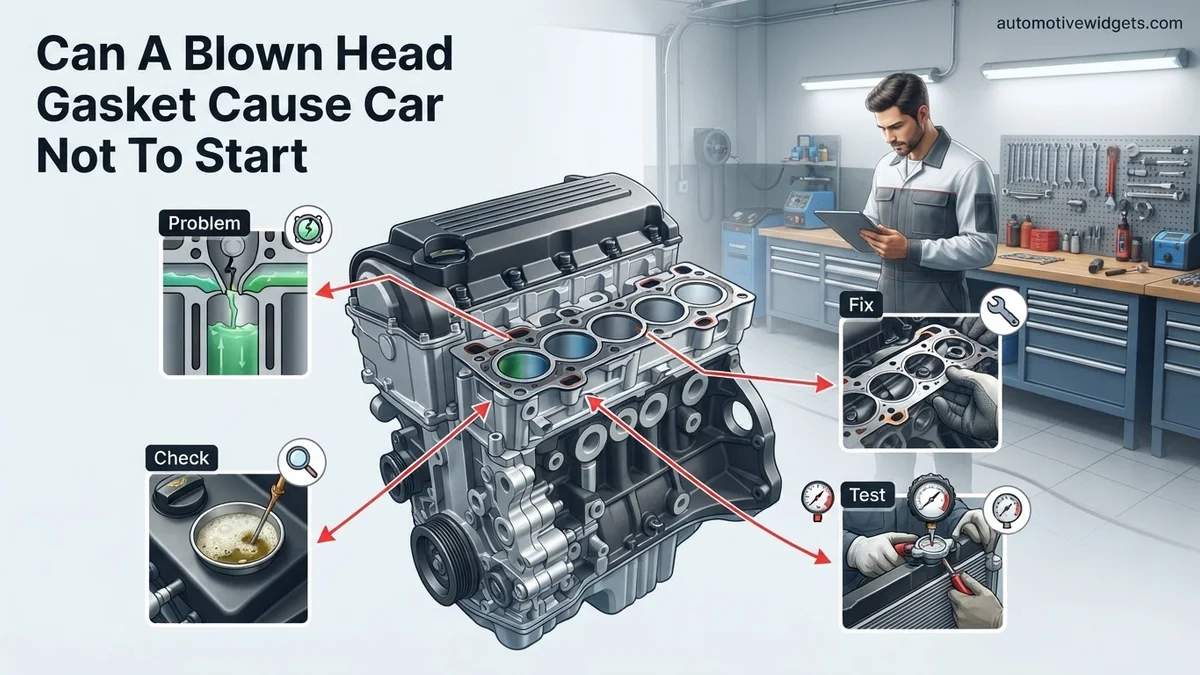
A blown head gasket creates an uncontrolled pathway between engine components that should remain sealed. This breach directly sabotages the conditions necessary for an internal combustion engine to initiate and sustain operation. It’s not just about a leak; it’s about a fundamental failure of the engine’s core operating principles.
Catastrophic Compression Loss
One of the primary reasons your car won’t start with a blown head gasket is a severe loss of compression. For an engine to fire, each cylinder needs to build significant pressure (compression) during its compression stroke to ignite the air-fuel mixture. A head gasket breach allows this pressure to escape into an adjacent cylinder, a coolant passage, or an oil gallery. Without sufficient compression, the spark plugs cannot ignite the fuel effectively, or at all.
- No Power Generation: The engine essentially lacks the internal pressure required to generate power. Modern engine control units (ECUs) in 2027 are highly sensitive to compression irregularities, and if the system detects abnormally low compression during cranking, it may even inhibit fuel delivery or spark to prevent further damage.
- Cylinder Imbalance: If compression is lost in one or more cylinders, the engine’s balance is destroyed, making it impossible for the crankshaft to turn smoothly enough to build momentum for starting. You might hear the starter motor spin rapidly without engaging the engine, or the engine might turn over very slowly and unevenly.
Hydro-Lock and Cylinder Contamination
Another critical way a blown head gasket prevents starting is through fluid contamination. When the gasket fails, coolant or oil can leak directly into one or more combustion chambers. Since liquids are incompressible, this leads to a dangerous condition known as hydro-lock.
- Engine Seizure: If enough coolant or oil enters a cylinder, the piston attempting to move upward during its compression stroke will literally hit an incompressible wall of fluid. This can prevent the engine from turning over at all, or cause it to seize abruptly if it attempts to start. The force can bend connecting rods, damage pistons, or even crack the engine block, resulting in catastrophic internal damage.
- Fouled Combustion: Even if hydro-lock doesn’t occur, smaller amounts of coolant or oil can contaminate the spark plugs, making them unable to generate a strong enough spark to ignite the air-fuel mixture. The combustion chamber itself can become coated in these fluids, further inhibiting ignition. This is particularly problematic in direct-injection engines common in 2027, where precise fuel atomization is easily disrupted.
Diagnosing a Blown Head Gasket When Your Car Won’t Start: Key Symptoms & Tests
While a no-start condition is alarming, several other symptoms often accompany a blown head gasket, even if you can’t get your car to fire up. Recognizing these clues can help confirm your suspicion and guide your next steps. By 2027, these indicators remain critical for diagnosis.
Pre-Failure Warning Signs
Often, a head gasket doesn’t fail instantaneously without any prior indication. You might have noticed some tell-tale signs before your car completely refused to start:
- Persistent Overheating: A frequently overheating engine, especially if the temperature gauge spikes rapidly, is a classic symptom. This indicates coolant is escaping or exhaust gases are entering the cooling system.
- Rapid Coolant Loss: If your coolant reservoir needs frequent refilling without any visible external leaks, it’s likely being consumed internally, often through a head gasket breach.
- Rough Idle/Misfires: Before total failure, you might have experienced a very rough idle, noticeable misfires, or a general lack of power, indicating inconsistent compression across cylinders.
- White Smoke on Startup: Intermittent puffs of white smoke from the exhaust, particularly after sitting, suggest coolant is leaking into combustion chambers and burning off.
Post-Failure Visual & Auditory Clues
When the car won’t start, specific observations can further point to a blown head gasket:
- White Smoke During Cranking: If the engine turns over but doesn’t start, watch for excessive white smoke from the exhaust. This indicates a significant amount of coolant is entering the combustion chambers and being vaporized by residual engine heat or during attempted combustion.
- Bubbles in Coolant Reservoir: With the engine off (but potentially still warm), check the coolant reservoir. If you see persistent bubbling or a “percolating” effect, it’s a strong sign that exhaust gases are being forced into the cooling system through the gasket failure.
- Milky Oil or Sludge: Check your oil dipstick. If the oil has a milky, frothy appearance (like a milkshake), it means coolant has mixed with the oil. This contamination severely reduces oil’s lubricating properties.
- Sweet Smell from Exhaust/Engine Bay: Burning coolant can produce a distinctive sweet smell. If you detect this around your engine bay or exhaust, it’s a strong indicator of an internal coolant leak.
What to Do Next: Professional Repair & Prevention Tips
If initial diagnostics strongly indicate a blown head gasket is preventing your vehicle from starting, professional repair is the definitive next step. Attempting DIY repair without specialized tools and expertise often leads to further complications and increased costs. According to a 2026 industry survey by the Automotive Service Association (ASA), correctly diagnosing and repairing a blown head gasket typically requires an average of 10-15 labor hours, alongside specific engine knowledge and precision torque specifications.
Professional Repair Process (2027 Standards)
- Comprehensive Diagnostic Confirmation: A reputable mechanic will perform a chemical block test, coolant pressure test, and potentially a cylinder leak-down test to confirm the gasket failure and assess the extent of engine damage.
- Engine Disassembly and Inspection: The cylinder head(s) are removed, and all mating surfaces are meticulously cleaned and inspected for warpage or cracks, especially with advanced composite materials used in 2027 engine blocks.
- Gasket Replacement: A new, high-quality OEM or equivalent aftermarket head gasket, often utilizing multi-layer steel (MLS) technology for enhanced durability, is installed.
- Reassembly and Testing: The engine is reassembled with precise torque settings, and the cooling system is refilled, bled, and pressure-tested. A comprehensive test drive and extended run cycle confirm proper operation and check for leaks.
Expect repair costs in 2027 to range from approximately $2,500 to $4,500 for a 4-cylinder engine, escalating to over $6,000 for V6 or V8 engines due to increased complexity and labor. This includes parts, labor, and ancillary components like new head bolts and fluids. The repair typically takes 2-5 business days.
Prevention Tips for 2027 Vehicles
Preventing head gasket failure significantly extends engine life. Industry experts emphasize:
- Regular Coolant System Maintenance: Follow manufacturer guidelines for coolant flushes and refills. For most 2027 vehicles, this is typically every 5 years or 100,000 miles for long-life coolants, as per SAE J814 standards.
- Monitor Temperature Gauge: Immediately address any signs of engine overheating. Overheating is the primary cause of head gasket damage.
- Address Leaks Promptly: Timely repair of coolant or oil leaks prevents fluid loss, which can lead to overheating.
- Use Correct Coolant: Always use the specific type and concentration of coolant recommended by your vehicle manufacturer to ensure proper heat transfer and corrosion protection.
What If It Still Doesn’t Work? Troubleshooting Further
If a head gasket repair has been performed and your car still fails to start, or if initial diagnostics were inconclusive, further investigation is critical. A non-starting condition can stem from multiple, sometimes simultaneous, failures. Re-evaluate the fundamental requirements for engine ignition: spark, fuel, and compression. Persistent no-start issues after a major repair often point to either an incomplete initial diagnosis, secondary failures, or issues unrelated to the head gasket but masked by the original problem.
- Re-verify Battery and Starter System: Even after a major repair, a weak battery, corroded terminals, or a failing starter motor can prevent starting. Ensure the battery maintains at least 12.6 volts and the starter motor engages correctly.
- Inspect Fuel Delivery System: Check for proper fuel pressure at the rail (typically 40-60 PSI for most modern vehicles). A clogged fuel filter, failing fuel pump, or faulty fuel injectors can restrict fuel supply.
- Examine Ignition System: Verify strong spark delivery to each cylinder. Faulty spark plugs, ignition coils, or a crankshaft/camshaft position sensor can disrupt ignition timing.
- Consult a Specialized Diagnostic Technician: If basic checks yield no results, seek out a mechanic with advanced diagnostic tools (e.g., scan tools capable of live data analysis and oscilloscope functions) specifically for complex no-start conditions. They can often identify intermittent electrical faults or sensor failures.
The cost for a detailed diagnostic session and potential subsequent repairs can range from $200 to $1,500 or more, depending on the complexity of the issue and the parts required. This includes labor for advanced diagnostics, which can be extensive.
Conclusion
A blown head gasket can indeed prevent a car from starting by critically compromising engine compression and potentially introducing coolant into cylinders, impeding combustion. Immediate, professional diagnosis and repair are crucial to prevent further engine damage. According to verified research and expert sources from the 2027 automotive sector, adherence to manufacturer-recommended maintenance schedules, particularly concerning the cooling system, remains the most effective preventive measure. For optimal vehicle longevity, ensure regular professional inspections and address any signs of overheating promptly.
❓ Frequently Asked Questions
How does loss of compression prevent an engine from starting with a blown head gasket?
A blown head gasket creates a breach between cylinders or between a cylinder and a coolant/oil passage. This leak prevents the combustion chamber from sealing properly, allowing the essential compression needed to ignite the air-fuel mixture to escape, thus causing a no-start condition.
What is hydrolock and how does it relate to a blown head gasket causing a no-start?
Hydrolock occurs when coolant or oil leaks into a cylinder through a blown head gasket. Since liquids are incompressible, the piston cannot complete its upward stroke, effectively seizing the engine. This prevents the starter from turning the engine over, resulting in a complete failure to crank or start.
What are the primary visual signs of a blown head gasket that might lead to a no-start?
Key signs include persistent white smoke from the exhaust (coolant burning), rapid coolant loss without external leaks, bubbling in the coolant reservoir, milky oil on the dipstick (coolant in oil), or a sweet smell from the exhaust. These often precede a complete failure to start.
Can an engine start intermittently or struggle before completely failing due to a blown head gasket?
Yes, particularly in the early stages or if the breach is minor. The engine might struggle to start, run roughly, misfire, or start only when cold, progressively worsening over time until it completely fails to start due to increasing compression loss or contamination.
Why is a compression test crucial for diagnosing a no-start condition suspected to be from a blown head gasket?
A compression test directly measures the pressure inside each cylinder. If one or more cylinders show significantly lower compression readings compared to others, it provides strong evidence of a leak path, most commonly a blown head gasket, which directly explains the inability to start the engine effectively.
What’s the typical repair cost range for a blown head gasket when it prevents starting?
Repair costs can vary significantly based on the vehicle make, model, and engine type, as well as any secondary damage. Typically, estimates range from $1,500 to $4,000 or more, as it’s a labor-intensive repair often requiring extensive engine disassembly.