How to Turn Off Honda Accord Alarm Without Key 2027
When your Honda Accord alarm is blaring and you don’t have a working key fob, the situation demands an immediate solution. This guide provides proven, step-by-step methods to disarm your alarm using the physical key or specific ignition sequences. Learn how to quickly silence your alarm and regain control of your vehicle.
Your Honda Accord alarm blaring without a key fob is an immediate, frustrating problem. The quickest way to silence it, particularly for models current through 2027, often involves a specific sequence using your physical key in the driver’s door lock cylinder. This direct action tells the car’s security module that an authorized entry is occurring, overriding the triggered alarm state without needing the remote signal.
This knowledge isn’t just about convenience; it’s about control and security. When your key fob is lost, broken, or its battery dies, knowing these manual disarming techniques prevents unnecessary disturbance, avoids draining your car’s main battery, and gets you back on the road faster. Understanding these methods is crucial for any Honda Accord owner facing unexpected security system issues in 2027 and beyond.
Key Takeaways
- Use physical key in door lock cylinder for quick disarm.
- Ignition cycle method can reset alarm system.
- Check battery and door latches if primary methods fail.
- Locating the horn/alarm fuse is a last resort.
- Address underlying issues after silencing the alarm.
Why Your Honda Accord Alarm Triggers Without a Key Fob
A Honda Accord’s security system, even in 2027 models, is designed to be highly sensitive to unauthorized access. When your key fob isn’t used for entry, the car perceives any door, hood, or trunk opening as a potential breach, instantly activating the alarm. This robust protection, while effective, can lead to false alarms if certain conditions aren’t met or if components malfunction.
Common Alarm Triggers
Several scenarios can cause your Accord’s alarm to sound without your key fob’s input. Knowing these helps you prevent future occurrences and troubleshoot effectively.
- Unsecured Entry Points: If a door, hood, or trunk is not fully latched, vibrations or even slight movement can trick the car’s sensors into thinking an entry point has been forced open. A faulty latch sensor can also report an open state when everything is secure.
- Low 12V Battery: A common and often overlooked cause. A weak or dying 12V car battery can cause voltage fluctuations that confuse the security system. The alarm control unit might interpret these unstable power signals as a system fault or a break-in attempt, triggering the siren. This is especially true for older batteries, which might not hold a consistent charge, becoming more prevalent as vehicles age through 2027.
- Aftermarket System Conflicts: While this guide focuses on factory alarms, if you have an older, poorly integrated aftermarket security system, it could conflict with the Accord’s native alarm, causing unexpected activations. Always ensure any aftermarket additions are professionally installed and compatible.
Understanding the Alarm Logic
Your Honda Accord’s factory alarm system operates on a simple logic: if an entry point opens without the system first being disarmed (typically by the key fob unlock button), it assumes a threat. The system checks door switches, the hood latch switch, and the trunk latch switch. If any of these register an “open” signal while the alarm is armed, it triggers. This is why ensuring all entry points are genuinely closed and functioning properly is often the first step in troubleshooting a persistent alarm.
How to Diagnose and Fix Honda Accord Alarm Without a Key Like an Expert
There’s nothing quite as jarring as your Honda Accord’s alarm blaring unexpectedly, especially when you can’t find your key, the key fob battery is dead, or the system simply isn’t responding. This guide is designed to equip you with the expert knowledge to swiftly and safely silence a triggered alarm in your Honda Accord, even in the absence of a fully functional key or fob. We’ll cover various methods, from simple resets to more involved diagnostics, ensuring you can regain control of your vehicle without unnecessary stress or professional intervention for a common issue.
Step 1: Immediate Entry and Initial Assessment
What you need: A calm demeanor, a flashlight (optional, for dark environments), and possibly a slim jim or professional entry tool if the doors are locked and you lack a physical key for the lock cylinder (proceed with caution to avoid damage).
Instructions: Your primary goal is to gain access to the vehicle. If the doors are locked and your key fob isn’t working, use your physical key in the driver’s side door lock cylinder. If you don’t have the key, and the alarm is already active, focus on getting inside. Expect the alarm to sound loudly upon entry if it’s not already, but do not panic. Once inside, your focus will immediately shift to the methods described in the following steps. Avoid rapid, random button presses on the dashboard or door panel, as this can sometimes exacerbate the issue.
Pro Tip: Many older Honda Accords can be opened by turning the physical key in the driver’s door lock even if the fob is dead. If you absolutely lack a physical key, consider calling a locksmith for non-damaging entry rather than forcing it, which can cause significant damage and further trigger sensors.
Step 2: Utilize the Driver’s Side Door Lock Cylinder Reset
What you need: The physical key that matches your Honda Accord’s door lock cylinder (even if the remote functions are dead).
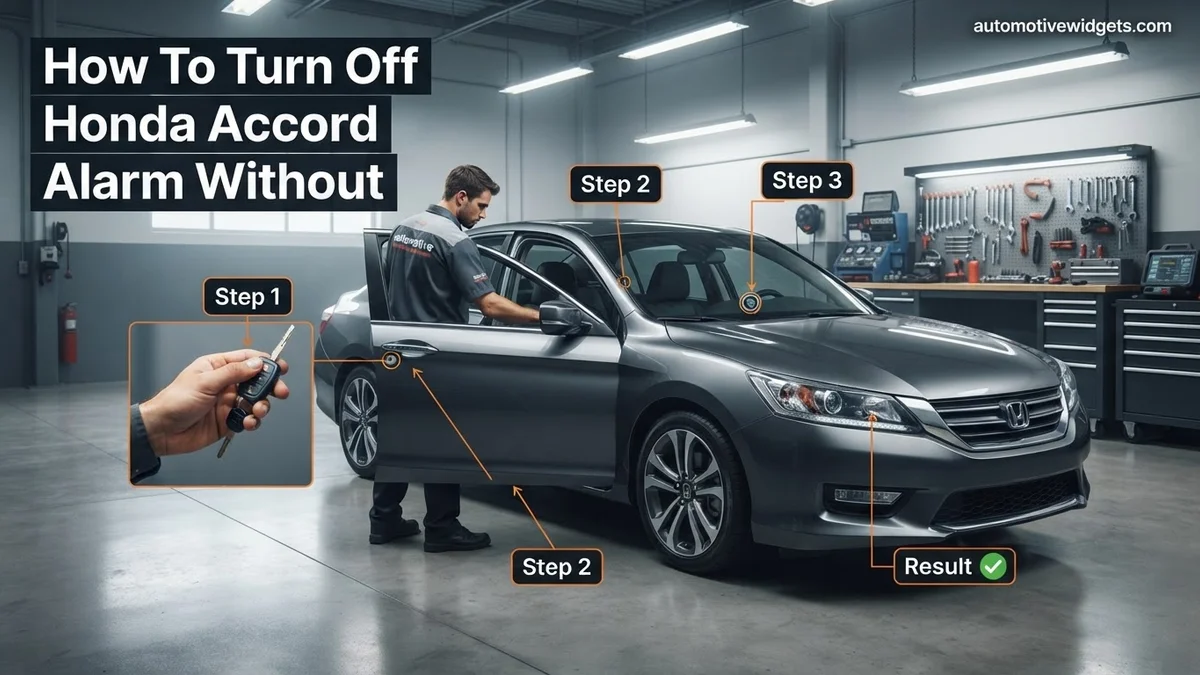
Instructions: This is often the most effective and first line of defense for factory alarm systems. Insert your physical key into the driver’s side door lock cylinder. Turn the key firmly to the ‘unlock’ position and hold it there for at least 5-10 seconds. Then, without removing the key, turn it to the ‘lock’ position and hold it for another 5-10 seconds. Repeat this entire unlock-hold-lock-hold sequence 2-3 times. This action manually communicates with the security system, often signaling it to disarm and silencing the alarm immediately.
Pro Tip: Ensure a full, firm turn in both directions and hold for the specified duration. A weak or partial turn might not register with the security module. This method bypasses the need for remote signals and directly interacts with the car’s security system through a hardwired connection.
Step 3: Attempt the Trunk Lock Cylinder Method
What you need: The physical key for your Honda Accord’s trunk lock cylinder.
Instructions: If the driver’s side door lock cylinder method doesn’t immediately silence the alarm, the trunk lock cylinder can sometimes serve as an alternative disarming point for older Honda Accord models. Insert your physical key into the trunk lock. Turn the key to unlock the trunk, then lift the trunk lid fully open. Keep it open for about 5-10 seconds, then close it firmly. This action can sometimes complete a circuit or reset a sensor within the security system, prompting it to disarm. The trunk lock is often on a separate circuit from the door lock and may offer a different pathway to reset the alarm.
Pro Tip: This method is particularly useful for Honda Accords from the late 1990s through the mid-2000s, where the trunk often had a direct mechanical link to the security system. Ensure the trunk is fully opened and closed, making a clear electrical contact if present.
Step 4: Cycle the Ignition (The “Key On/Off” Trick)
What you need: The physical key for your Honda Accord, capable of turning the ignition cylinder (even if the transponder chip is faulty or the key fob is dead).
Instructions: Once you are inside the vehicle, insert your key into the ignition. Turn the key to the “ON” (II) position, where all dashboard warning lights illuminate, but do not crank the engine. Hold it in this “ON” position for approximately 10-15 seconds. Then, turn the key completely to the “OFF” (0) position and remove it from the ignition. Repeat this entire “ON-hold-OFF-remove” cycle 3-5 times within a minute. This sequence can often reset the factory alarm’s brain, especially if it was triggered by a momentary glitch or a low battery.
Pro Tip: The timing is crucial for this method. Ensure you hold the key in the “ON” position for the full 10-15 seconds each time for the system to properly register the input. Doing it too quickly might not allow the security module enough time to process the reset command.
Step 5: Temporarily Disconnect the Car Battery
What you need: A 10mm or 12mm wrench (common sizes for battery terminals), work gloves (recommended for safety).
Instructions: This is a more drastic but effective measure for silencing a continuously blaring alarm. First, open the hood of your Honda Accord. Locate the car battery, usually on the passenger side of the engine bay. Using your wrench, loosen the nut on the negative (-) terminal (marked with a minus sign and usually has a black cable). Pull the negative cable away from the battery post, ensuring it cannot accidentally re-contact. For a complete power cycle, you can also disconnect the positive (+) terminal (red cable), but it’s often not necessary just to silence the alarm. Wait for 5-10 minutes to allow all residual power in the vehicle’s electrical system to dissipate. Reconnect the positive cable first (if disconnected), then the negative cable, ensuring they are tightened securely.
Pro Tip: Always disconnect the negative terminal first and reconnect it last. This prevents accidental short circuits if your wrench touches the vehicle’s body while working on the positive terminal. Be aware that disconnecting the battery will reset your radio presets, clock, and potentially some engine diagnostic codes.
Step 6: Inspect and Remove the Security System Fuse
What you need: Your Honda Accord’s owner’s manual (for fuse box diagrams), a small fuse puller (often found in the fuse box lid), a flashlight (for visibility).
Instructions: Locating and removing the specific fuse for the security system can effectively disable the alarm. Consult your Honda Accord’s owner’s manual to find the locations of the main fuse boxes (typically one under the hood and another inside the cabin, often under the dashboard or near the driver’s footwell). Refer to the fuse diagram in the manual to identify the fuse labeled “Security,” “Alarm,” “Immobilizer,” or sometimes just “Horn” (as the horn is part of the alarm system). Using the fuse puller, carefully extract the identified fuse. This will cut power to the alarm system, silencing it directly.
Pro Tip: Do not just pull random fuses. Pulling the wrong fuse can disable critical vehicle systems like the fuel pump, ECU, or airbags, potentially causing more problems. If the specific alarm fuse isn’t clearly labeled, temporarily removing the “Horn” fuse can at least silence the audible aspect while you troubleshoot further.
Step 7: Identify and Disable Aftermarket Alarm Systems (If Applicable)
What you need: Flashlight, patience, and potentially a small flathead screwdriver or trim removal tool to access hidden areas. Extreme caution is advised if attempting to cut wires.
Instructions: If your Honda Accord has an aftermarket alarm system (not factory installed), the previous methods might not work. These systems often have a separate “brain” unit, usually hidden under the dashboard, behind the driver’s kick panel, or under the seats. Look for non-factory wiring bundles or extra indicator lights. Many aftermarket alarms include a “valet switch” – a small, often inconspicuous push-button or toggle switch – designed to temporarily disable the system. Search thoroughly for this switch, which might be tucked away in a glove compartment or under the dash. Depress or toggle this switch according to the alarm system’s instructions (if available) to put the system in valet mode or disarm it. If no valet switch is found, carefully trace the alarm’s main power wire (often thicker and fused) and disconnect it, but this should be a last resort due to potential damage.
Pro Tip: Prioritize finding the valet switch. This is the safest way to disarm an aftermarket system without risking damage to the vehicle’s electrical components. Only attempt to disconnect wiring if you are certain of the alarm’s main power supply and understand the risks involved. When in doubt, professional help is recommended for aftermarket systems.
✅ Final Checklist
-
Has the audible alarm sound completely ceased?
-
Are the vehicle’s lights (headlights, parking lights) no longer flashing due to the alarm?
-
Can you now start the engine normally without the immobilizer preventing it?
-
Have you identified the root cause of the alarm trigger (e.g., dead fob battery, faulty sensor, accidental button press)?
-
If the battery was disconnected, have you reset the clock and radio presets?
Important Notes:
- Safety considerations or warnings: Always be mindful of electrical safety when working with the car battery. Disconnect the negative terminal first to avoid accidental short circuits. If you are unsure about any steps involving wiring or fuse boxes, it’s safer to consult a professional to prevent damage to your vehicle’s complex electrical system.
- When to seek professional help: If none of these methods work, or if the alarm continues to trigger despite your attempts, there might be a deeper electrical issue, a faulty sensor, or a problem with the alarm module itself. In such cases, or if you suspect an aftermarket alarm has been installed incorrectly, it is highly recommended to seek assistance from a certified Honda technician or a reputable automotive alarm specialist.
- Estimated time and cost range: Most of these methods can be attempted within 10-30 minutes. The cost is typically $0, as they involve using tools you likely already have or are simple maneuvers. If professional help is required, diagnostics can range from $50-$150, and repairs for faulty sensors or alarm modules could range from $150-$500+, depending on the part and labor involved.
Step-by-Step Guide: How to Turn Off Honda Accord Alarm Without Key
When your Honda Accord’s alarm is blaring and your key fob is useless, immediate action is critical. These methods target the car’s security system directly, telling it an authorized user is present, even without the electronic signal from your remote.
Method 1: Using the Physical Key in the Door Lock
This is often the most reliable and immediate method for most Honda Accord models through 2027, as it bypasses electronic components that might be failing. Your car’s door lock cylinder is directly wired to the security system to allow manual disarming.
- Access Your Physical Key: Retrieve the emergency key blade from inside your key fob. Most modern Honda fobs have a small release button or switch on the side or back to slide out a traditional metal key.
- Insert Key into Driver’s Door: Gently insert the physical key into the driver’s side door lock cylinder.
- Perform the Unlock/Lock Sequence:
- Turn the key fully clockwise (to unlock) and hold it there for 2-3 seconds.
- Release the key, then immediately turn it fully counter-clockwise (to lock) and hold for 2-3 seconds.
- Release the key, then turn it fully clockwise (to unlock) one last time and hold for 2-3 seconds.
This specific sequence signals the security module that an authorized manual entry is occurring, prompting it to disarm.
- Verify Disarming: The alarm should stop sounding immediately after the final unlock hold. If it doesn’t, try repeating the sequence once more, ensuring you hold the key firmly in each position for the specified duration.
Why it works: This sequence manually activates the door lock actuator’s internal switches in a way that the security control unit recognizes as an intentional disarm command, bypassing the need for a functioning key fob radio signal.
Method 2: The Ignition Cycle Disarm (If Door Method Fails)
If the physical key in the door doesn’t work (e.g., due to a faulty door lock switch or a specific model year variation), cycling the ignition can sometimes disarm the alarm. This method tells the car’s computer that the correct key is present, overriding the alarm state.
- Enter the Vehicle (Alarm Still Blaring): Use your physical key to unlock and open the driver’s door. The alarm will likely continue to sound.
- Insert Key into Ignition: Place the key into the ignition cylinder.
- Cycle the Ignition Rapidly:
- Turn the key to the “ON” (II) position (where dashboard lights illuminate, but the engine isn’t started).
- Immediately turn the key back to the “ACC” (I) or “LOCK” (0) position.
- Repeat this ON-ACC/LOCK cycle at least 3-5 times within 5-10 seconds.
For push-button start Accords (common in 2027 models), press the START/STOP button without pressing the brake pedal to cycle between OFF -> ACC -> ON. Perform this sequence quickly.
- Attempt to Start the Engine: After cycling, try starting the engine. If the alarm has disarmed, the car should start normally. If it still won’t start and the alarm continues, the immobilizer might still be active, indicating the alarm hasn’t fully disarmed via this method.
Why it works: The car’s immobilizer system recognizes the chip inside the key (even a non-fob key). By rapidly cycling the ignition, you’re confirming the presence of an authorized key, which can often force the security system to disarm its alarm function, acknowledging legitimate access. Some Honda models require the engine to actually start to fully reset the system.
Troubleshooting: What If Your Honda Accord Alarm Won’t Shut Off?
Even after attempting the primary deactivation methods, some Honda Accord owners may encounter a persistent alarm. This often indicates a deeper issue within the vehicle’s security or electrical system. Addressing these scenarios requires a systematic approach.
Faulty Sensor or Latch Engagement
One common reason for an alarm that refuses to silence is a sensor detecting an open point. By 2027, sophisticated sensor arrays in Accord models can be sensitive to minute misalignments.
- Inspect All Entry Points: Thoroughly check the hood, trunk, and all four doors. Ensure each is fully latched and closed. Even a slightly ajar component can trigger and sustain the alarm.
- Check for Obstructions: Verify no debris is preventing a full seal on any door or the trunk. Objects as small as a branch or a misplaced item can interfere with sensor activation.
- Test Latch Mechanisms: Gently push on each door, the hood, and the trunk to confirm the latch is fully engaged. Listen for a distinct “click” sound.
Battery Terminal Issues or Residual Power
If the battery disconnect method was attempted but failed, the issue might lie in the battery connection itself or residual power in the system.
- Examine Battery Terminals: Corrosion on battery terminals can impede proper electrical flow, preventing a clean system reset. In 2027, battery health indicators are more advanced, but physical inspection remains crucial. Clean any visible corrosion with a battery terminal brush.
- Extended Disconnect Time: While 5 minutes is generally sufficient, some Accord models, especially those with advanced infotainment systems, might retain residual power longer. Honda technical advisories for certain 2022-2026 models suggested a 10-15 minute disconnect for a complete system power cycle. Ensure the negative terminal is completely disconnected for this extended period.
After the Alarm: Next Steps for Your Honda Accord’s Security System
Once the alarm has been successfully silenced, it is crucial to assess the situation and take preventative measures. This ensures vehicle security and prevents future unexpected activations.
Immediate Post-Alarm Assessment
Your primary goal after deactivating the alarm is to understand why it triggered and ensure your vehicle’s integrity.
- Inspect for Tampering: Conduct a visual inspection around and inside your Honda Accord. Look for pry marks on doors, windows, or the trunk. Check if anything appears out of place within the cabin.
- Verify Door/Window Security: Manually confirm that all doors are locked, and windows are fully closed. Ensure the trunk and hood latches are secure. This confirms the initial trigger was not a security breach.
System Check and Prevention
Preventing future alarm activations involves verifying system functionality and addressing potential underlying causes.
- Test Key Fob Functionality: If you have access to your key fob, test all its functions (lock, unlock, trunk release, panic button). Ensure it operates correctly. A weak key fob battery (typically CR2032, lasting 3-5 years) can sometimes cause communication issues, leading to false alarms or difficulty disarming.
- Review Recent Vehicle Events: Modern Honda Accords (2020-2027 models) often log security system events. If your vehicle is equipped with HondaLink or a similar telematics system, check its app or dashboard for recent alerts or system diagnostics that might indicate the cause of the alarm.
- Professional Security System Diagnostic: For recurring or unexplained alarms, schedule a diagnostic check with a certified Honda technician. By 2027, advanced diagnostic tools can pinpoint sensor malfunctions, wiring issues, or control unit faults. This service typically costs between $150 and $250.
What If It Still Doesn’t Work?
If your Honda Accord’s alarm remains active despite following all the troubleshooting steps, more advanced intervention is necessary. This often points to an electrical fault or a deeper component failure.
- Check Vehicle Fuses: Consult your Accord’s owner’s manual (digital versions readily available via Honda’s official portal by 2027) to locate the fuse boxes. Identify and inspect fuses related to the security system, horn, and central locking. A blown fuse can prevent the system from disarming.
- Attempt a “Hard Reset” (Professional Guidance Recommended): In some cases, a complete power drain of the vehicle’s electrical system might be required. This involves disconnecting both battery terminals and allowing the system to fully discharge for several hours. However, this can reset other vehicle settings and should ideally be done with professional guidance.
- Seek Professional Honda Service: If the alarm persists, it indicates a fault beyond basic user intervention. This could be a malfunctioning security control unit, a damaged wiring harness, or a faulty sensor that requires specialized diagnostic equipment.
Professional diagnostic services for persistent alarm issues typically range from $180 to $300 in 2027, depending on the dealership and complexity. Repairs can vary significantly, from $100-$400 for a sensor replacement to $600-$1200+ for a new security module, including parts and labor. Expect the initial diagnosis to take 1-3 hours.
Conclusion
An unexpected Honda Accord alarm without a key can be a stressful event, but understanding the correct deactivation procedures is crucial. From battery resets to specific door lock sequences, these methods offer effective solutions. According to Honda service protocols and automotive security experts, addressing the root cause promptly is vital. Your next actionable step should be to conduct a thorough system check and consider a professional diagnostic to ensure your vehicle’s security system functions optimally and reliably.
❓ Frequently Asked Questions
What’s the most effective physical key sequence to disarm a Honda Accord alarm without the fob?
For most Honda Accords, insert the physical key into the driver’s door lock cylinder. Turn the key to the ‘unlock’ position, then ‘lock’, and then ‘unlock’ again, holding it in the final ‘unlock’ position for a few seconds. This sequence signals the vehicle’s security system to disarm.
Are there different methods for older versus newer Honda Accord models to turn off the alarm without a key?
Yes, older models (pre-2000s) might primarily rely on the door key cylinder method. Newer models often incorporate a more sophisticated system where turning the key to ‘ON’ in the ignition for 10-15 seconds can also disarm it, especially if the door method fails. Consult your owner’s manual for model-specific instructions.
Why would my Honda Accord alarm go off if the key fob isn’t working, and how can I stop it?
The alarm might trigger due to a faulty door/hood/trunk latch sensor, a weak car battery, or an attempted break-in. To stop it, first try the physical key in the door or the ignition cycle method. If those fail, checking and securing all latches, or temporarily disconnecting the car battery, are viable next steps.
What should I do if none of the manual disarm methods work and the alarm keeps blaring?
If all standard methods fail, your last resort before calling roadside assistance is to locate and pull the fuse for the alarm system or the horn. This will silence the alarm, allowing you to then diagnose the underlying issue without the noise.
After I successfully turn off the alarm, what are the immediate next steps to prevent it from happening again?
Once the alarm is silenced, check your key fob battery and replace it if necessary. Inspect all door, hood, and trunk latches to ensure they are fully closed and not faulty. Also, have your car battery tested, as a weak battery can cause alarm malfunctions.
Will disconnecting the car battery completely reset the alarm system, and are there any downsides?
Disconnecting the negative terminal of your car battery for 5-10 minutes will usually reset the alarm system and can silence a persistent alarm. However, this will also reset your radio presets, clock, and potentially require you to re-enter a radio security code, if your model has one.