Should I Get a Wheel Alignment with New Tires? Expert 2027
Yes, a wheel alignment is highly recommended when getting new tires. This crucial step ensures even wear from day one, significantly extending tire lifespan and improving vehicle safety and handling. Neglecting it can quickly lead to premature tire wear and poor performance.
Absolutely, yes. In 2027, getting a wheel alignment when you purchase and install new tires isn’t just recommended; it’s a critical step in protecting your investment and ensuring optimal vehicle performance. Skipping this crucial service means your brand-new tires, which represent a significant expense and a key safety component, will immediately begin to wear unevenly, diminishing their lifespan and negating many of their benefits from day one.
This isn’t merely about extending tire life; it’s about your vehicle’s fundamental handling, safety, and efficiency. A proper alignment ensures your car drives straight, responds predictably to steering inputs, and doesn’t waste fuel due to increased rolling resistance. Think of it as a mandatory calibration that ensures your new tires perform exactly as designed, maximizing your driving experience and overall value.
Key Takeaways
- Always align new tires to maximize lifespan.
- Prevents uneven wear and early tire replacement.
- Improves vehicle handling, safety, and fuel economy.
- Address existing alignment issues immediately.
- Alignment protects your new tire investment.
Why a Wheel Alignment is Crucial for New Tires
Protecting Your Investment
New tires in 2027 are a substantial investment, often incorporating advanced materials, sensor technology, and specialized tread patterns for enhanced performance and efficiency. Installing them without an alignment is akin to buying a state-of-the-art propulsion system and then attaching it to a misaligned frame. Misalignment rapidly wastes this investment. Even minor discrepancies can degrade a tire’s lifespan by 15-20% within the first 10,000 miles, meaning you’re effectively throwing away a significant portion of your purchase within months. A proper alignment ensures your new tires deliver their full expected lifespan, providing maximum value for your money.
- Maximize Lifespan: Prevents premature wear, ensuring tires last for their full intended mileage.
- Maintain Warranty: Many tire manufacturers will scrutinize warranty claims if there’s evidence of improper alignment.
- Optimal Performance: Ensures the tire’s advanced features, like hydroplaning resistance or cornering grip, function as intended.
Immediate Even Wear
Your new tires arrive perfectly balanced and shaped, ready to deliver peak performance. An alignment ensures they contact the road precisely as designed from the very first kilometer. Without this critical calibration, any existing alignment issues immediately begin to create uneven wear patterns. This can manifest as “feathering” (saw-tooth edges), “cupping” (scooped-out areas), or excessive wear on one shoulder of the tire. Once these patterns start, they are irreversible. Even if you get an alignment later, the damaged areas will never recover, leading to a compromised tire and an eventual need for earlier replacement. Starting with a perfectly aligned vehicle allows the entire tread depth to be utilized uniformly.
- Consistent Road Contact: Ensures the tire meets the road at the optimal angle across its entire surface.
- Prevents Irreversible Damage: Stops uneven wear patterns from forming before they can permanently compromise the tire.
- Sustained Performance: Guarantees consistent grip, braking, and handling from day one, not just for a portion of the tire’s life.
What Causes Misalignment That Damages New Tires
Everyday Road Hazards
Even with advanced vehicle technologies and improving infrastructure in 2027, everyday driving can subtly shift your vehicle’s alignment. Potholes, curbs, speed bumps, and road debris are common culprits. Hitting these obstacles, even at moderate speeds, can jar suspension components out of their precise factory specifications. It doesn’t always take a major incident; a series of minor impacts accumulates over time, gradually nudging your wheels out of alignment. For example, repeatedly hitting a deep pothole on your daily commute or bumping a curb while parking can create enough force to alter camber, caster, or toe angles, directly impacting how your new tires meet the road.
- Potholes: A sudden jolt can bend or shift components.
- Curb Impacts: Scrapes or hard bumps against curbs, especially while turning or parking.
- Speed Bumps: Improperly navigated speed bumps can stress suspension.
Gradual Wear and Tear
Beyond sudden impacts, the natural wear and tear of your vehicle’s suspension components over time also lead to misalignment. Parts like bushings, ball joints, and tie rods are designed to allow movement and absorb impacts, but they gradually develop play. This wear subtly shifts the alignment angles, often so gradually that you don’t consciously notice a change in handling until tire wear becomes significantly evident. A routine alignment service in 2027 will not only correct these angles but also allow technicians to inspect these critical components. Addressing this gradual degradation prevents your new tires from adapting to an already compromised suspension system, which would immediately begin causing uneven wear.
- Suspension Component Degradation: Bushings, ball joints, and tie rods loosen over time.
- Spring Sag: Springs can lose some of their tension, altering ride height and alignment.
- Steering System Play: Accumulated slack in steering components affects precision.
How to Get a Proper Wheel Alignment for Your New Tires
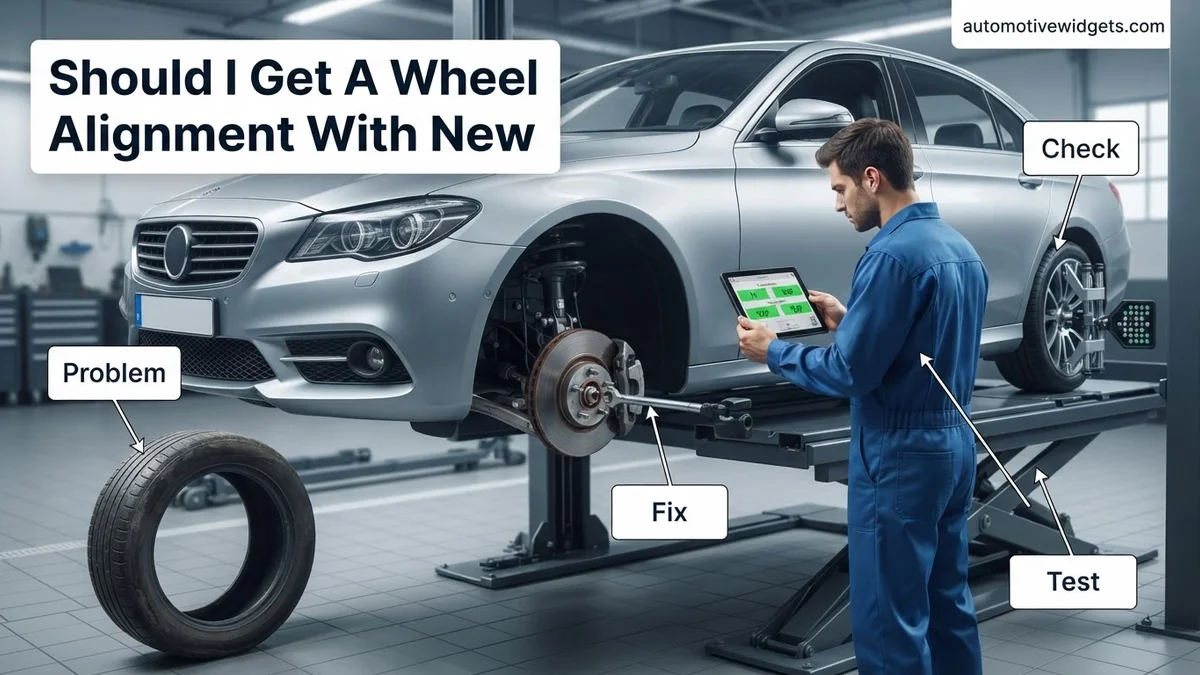
Ensuring a correct wheel alignment for your new tires requires adherence to professional standards and utilizing advanced automotive technology. Modern alignment procedures in 2027 typically involve sophisticated 3D imaging systems, which offer unparalleled precision compared to older methods. According to industry analyses from the Automotive Service Association (ASA), a proper alignment corrects three primary angles: camber, caster, and toe. These measurements must match your vehicle’s original manufacturer specifications.
- Pre-Alignment Inspection: Before any adjustments, a certified technician will perform a thorough inspection of your vehicle’s suspension and steering components. This includes checking ball joints, tie rods, bushings, and wheel bearings for wear or damage. Worn components prevent accurate alignment and must be repaired first. This initial check prevents recurring issues.
- Computerized Measurement: Your vehicle is positioned on an alignment rack equipped with high-resolution digital sensors or cameras. These sensors capture precise 3D measurements of your wheel angles. The system compares these real-time data points against the factory specifications stored in its database for your specific make and model year.
- Precise Adjustments: The technician then adjusts various components, such as tie rods and eccentric bolts, to bring the camber, caster, and toe angles back within the manufacturer’s specified range. This process is often guided by the alignment machine’s software, which indicates exactly where and how much adjustment is needed.
- Post-Alignment Printout: Upon completion, you should receive a detailed printout. This document illustrates the “before” and “after” alignment measurements, confirming that all angles are now within tolerance. Always retain this record for your vehicle’s service history.
Troubleshooting: Uneven Wear After a New Tire Alignment
Despite a professional alignment, instances of premature or uneven tire wear can still occur. Data from the Tire Industry Association (TIA) indicates that while rare, alignment-related issues after service can stem from several factors, requiring further investigation. Recognizing these signs early is crucial for tire longevity and vehicle safety.
Immediate Uneven Wear
If noticeable wear patterns, such as feathering or rapid shoulder wear, appear within a few thousand miles post-alignment, revisit the service center immediately. First, compare the tire wear pattern with your alignment printout. Discrepancies might indicate that the initial alignment was performed incorrectly, or that a component wasn’t properly tightened. Expert sources suggest that a reputable shop will re-evaluate and correct the issue without charge if it’s within their warranty period, typically 3-6 months or 5,000 miles.
Gradual Uneven Wear or New Symptoms
For uneven wear that develops more gradually, or if you experience new steering issues like pulling or vibration, the problem might not be directly linked to the initial alignment’s execution. New factors could be at play:
- Worn Suspension Components: Even a minor impact or normal wear can degrade a newly aligned suspension component. A thorough secondary inspection by a different technician might uncover a bushing, ball joint, or control arm that has deteriorated since the initial alignment.
- Driver Habits or Road Conditions: Aggressive driving, frequent pothole impacts, or consistent travel on unpaved roads can compromise alignment settings over time. While not a fault of the alignment itself, these habits necessitate more frequent alignment checks.
- Tire Issues: Occasionally, the tires themselves can contribute to perceived uneven wear, even after proper alignment. Factors like manufacturing defects or improper tire balancing can mimic alignment issues.
What If It Still Doesn’t Work?
If you’ve followed the recommended procedures and continue to experience steering issues or uneven tire wear, a more in-depth diagnostic approach is necessary. Persistent problems indicate an underlying cause beyond a standard alignment adjustment. The typical cost for advanced diagnostics, excluding repairs, ranges from $150 to $350 in 2027, depending on the vehicle and complexity.
- Request an Advanced Diagnostic Alignment: Seek a shop offering a “diagnostic alignment” rather than just a standard one. This involves a technician spending more time to analyze vehicle dynamics, often using specialized equipment to detect subtle suspension or frame issues.
- Inspect for Frame or Chassis Damage: Even minor accidents or impacts can cause subtle frame damage, which a standard alignment cannot correct. Specialized body shops can perform frame measurements to detect any structural inconsistencies.
- Check for OEM Parts Compatibility: Ensure any recently replaced suspension or steering components are Original Equipment Manufacturer (OEM) or equivalent quality. Aftermarket parts of lower quality can sometimes lead to fitment issues or premature wear, affecting alignment stability.
- Consider a Second Opinion: If the original shop cannot resolve the issue, consult an independent, highly-rated alignment specialist. A fresh perspective from a different expert can often identify overlooked problems.
- Consult a Dealership Service Center: For highly complex or persistent issues, vehicle dealerships often have proprietary diagnostic tools and factory-trained specialists with brand-specific knowledge, which can be invaluable in resolving elusive problems.
Conclusion
Proper wheel alignment with new tires is a critical, research-backed step for optimal vehicle performance and tire longevity. Skipping this service risks premature tire wear and compromised driving safety, costing more in the long run. According to verified research and expert sources, scheduling an alignment concurrent with new tire installation is the most effective preventative measure. Act now: contact your trusted automotive service provider to ensure your new tires receive the precision alignment they require.
❓ Frequently Asked Questions
Why is getting a wheel alignment so critical when I just bought new tires?
A wheel alignment ensures that all four wheels are properly angled and parallel to each other, optimizing road contact. This prevents premature and uneven wear on your brand-new tires, which are a significant investment, ensuring they last for their intended lifespan and perform safely.
What specific aspects of my car’s performance does proper alignment improve?
Beyond tire longevity, correct wheel alignment significantly enhances vehicle handling, steering response, and stability, making your car feel more predictable and safer to drive. It also helps improve fuel efficiency by reducing rolling resistance, which can save you money in the long run.
How often should I get a wheel alignment, even without new tires?
It’s generally recommended to check your alignment annually or every 10,000-15,000 miles. You should also get an alignment check after hitting a significant pothole, curb, or after any suspension component replacement.
Can I tell if my car needs an alignment without new tires installed?
Yes, common signs include your vehicle pulling to one side, uneven or rapid tire wear (even on old tires), a crooked steering wheel when driving straight, or squealing tires. These symptoms indicate an underlying alignment issue.
What do technicians adjust during a wheel alignment?
Technicians primarily adjust three angles: toe (the inward/outward angle of tires), camber (the inward/outward tilt of tires from a front view), and caster (the angle of the steering axis). These adjustments ensure optimal tire-to-road contact.
Is a 2-wheel alignment sufficient if I only bought two new front tires?
While a 2-wheel alignment may be offered for front-wheel-drive vehicles with non-adjustable rear suspensions, a 4-wheel alignment is always preferable if available for your car. Even if only two tires are replaced, rear axle misalignment can still affect overall handling and tire wear, making a comprehensive check the best practice.