Are Michelin Tires At Costco The Same Quality Real 2027
Yes, Michelin tires sold at Costco adhere to the same high manufacturing quality standards as those found at other authorized retailers. While specific model names or tread patterns might vary to create ‘club-specific’ options, these are still engineered by Michelin to their global specifications, debunking myths of inferior quality.
Let’s cut right to the chase: Yes, Michelin tires sold at Costco are fundamentally the same manufacturing quality, adhere to the same rigorous specifications, and deliver comparable performance as Michelin tires you would purchase from any other authorized retailer in 2027. This is a common question, and it’s understandable why you’d want clarity when making a significant purchase for your vehicle.
Your concern about getting the best value and safety is valid. The underlying belief that a discount retailer might offer a lesser version of a premium product often stems from past experiences with other goods. However, for a brand like Michelin, maintaining a consistent, high-level quality across all its distribution channels is paramount to its global reputation and brand integrity. You can be confident that the Michelin tires mounted on your vehicle from Costco are engineered to the same exacting standards you expect from the brand.
Key Takeaways
- Michelin quality is consistent across retailers.
- Costco models meet Michelin global standards.
- Varied model names don’t imply lower quality.
- Consider Costco’s installation and warranty.
- Verify specific tire model features if concerned.
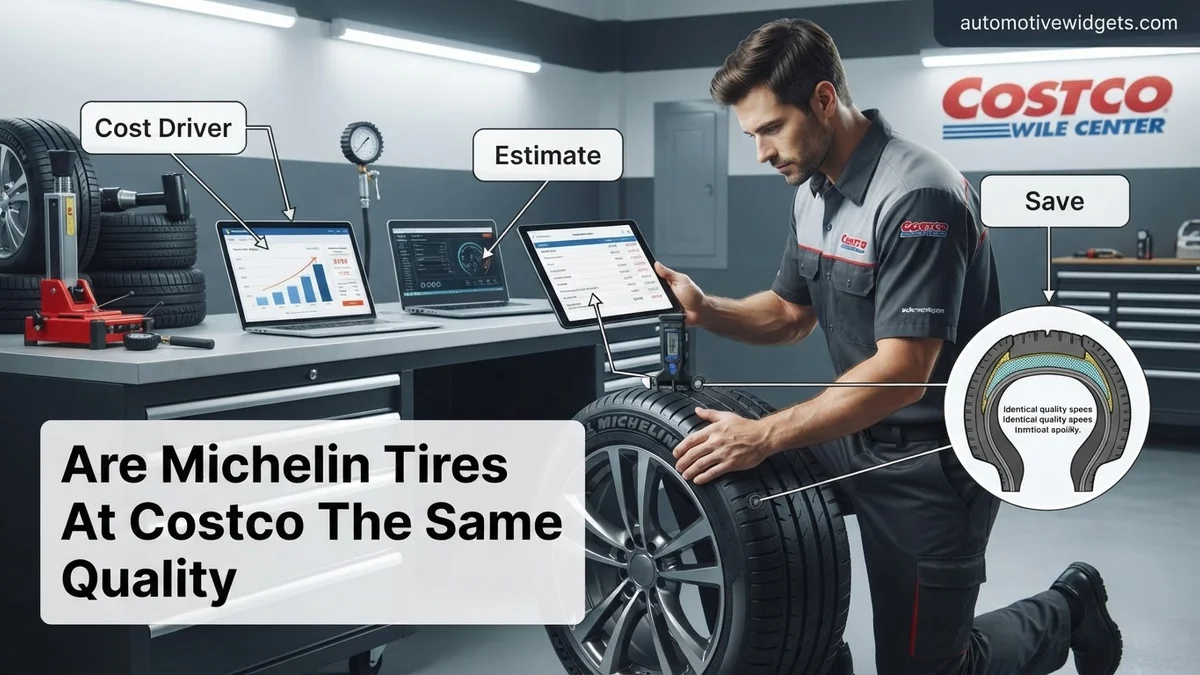
Diagnosing Quality: Are Costco Michelin Tires Different?
The Core Quality Standard: Identical Foundations
When you buy a Michelin tire, regardless of whether it’s from Costco, a dedicated tire shop, or an online specialist, you are investing in a product built upon Michelin’s global quality standards. This means that the fundamental aspects of tire construction remain consistent. Michelin does not operate different manufacturing lines with lower quality control for specific retailers. For 2027, their global manufacturing processes continue to ensure uniformity.
- Material Composition: The rubber compounds, belt materials, and casing components are identical for a given tire specification.
- Engineering Design: The internal structure, tread design philosophy, and sidewall construction are engineered to Michelin’s universal benchmarks.
- Safety & Performance: All Michelin tires must pass the same battery of safety and performance tests, adhering to or exceeding industry regulations and Michelin’s internal, often stricter, standards.
- DOT Codes: You’ll find identical Department of Transportation (DOT) codes indicating manufacturing plant, size, and date of manufacture across equivalent tires, regardless of the sales channel.
Understanding Model Variations, Not Quality Differences
Where some confusion arises is with model names or specific SKUs. It’s true that you might find tire models at Costco with names slightly different from those at other retailers. These are often referred to as “channel-specific” or “club-specific” models. However, this distinction does not imply a difference in quality.
These variations typically involve:
- Slight Tread Pattern Tweaks: A minor alteration in tread design that might optimize for slightly different wear characteristics or noise levels, often tailored to a retail partner’s request or to target a specific consumer preference within a product category.
- Marketing Names: A unique name given to an existing tire line for exclusive marketing through a specific retailer. Underneath the different name, the core tire technology, safety attributes, and expected performance align with Michelin’s established quality tiers.
- Packaging and Bundling: Sometimes the difference can be as simple as how the tire is presented or bundled with services, rather than the tire itself.
It’s crucial to understand that these modifications are still fully engineered and rigorously tested by Michelin. They are not “budget” versions but rather bespoke offerings that meet the same high standards of engineering and durability expected from any Michelin tire you would buy in 2027.
From Start to Finish: Costco Michelin Quality Explained
Navigating the world of tire purchases can be complex, especially when comparing major brands like Michelin across different retailers. A common question consumers ask is whether the Michelin tires sold at Costco are the exact same quality as those found at dedicated tire shops or other authorized dealers. This comprehensive guide will walk you through a detailed, step-by-step process to investigate this very question, empowering you to make an informed decision about your next tire purchase. Understanding the nuances of tire manufacturing, specifications, and retailer services is crucial to ensure you get the best value and performance for your vehicle.
Step 1: Understand the Core Manufacturing Principle
What you need: A fundamental understanding of how global brands operate and distribute their products.
Instructions: Begin by recognizing that reputable global manufacturers like Michelin adhere to strict quality control standards. For a given tire model (e.g., Michelin Defender T+H or CrossClimate2), the base tire is engineered and manufactured to a single set of specifications and quality standards, regardless of the end retailer. Michelin’s reputation is built on consistent quality, and producing a significantly inferior version for a major retailer like Costco would undermine their brand integrity and is highly improbable for a standard model line. The manufacturing process typically doesn’t change based on the distribution channel.
Pro Tip: Always assume that a major brand like Michelin will maintain consistent quality for its named models across all authorized sales channels to protect its global reputation. Any deviation would be clearly marked as a specific, possibly exclusive, variant, which is rare for core product lines.
Step 2: Examine Specific Tire Model Identifiers (SKUs/Part Numbers)
What you need: Access to Costco.com, Michelin.com, and other authorized tire retailer websites (e.g., Discount Tire, local Michelin dealer). A digital note-taking tool or pen and paper.
Instructions: Carefully compare the exact tire model names and any associated alphanumeric identifiers (SKUs or product codes) for the tires you’re interested in. For example, if you’re looking at a Michelin Defender T+H in a specific size (e.g., 205/55R16), check the full model name and product ID on Costco’s website. Then, search for the exact same model name and size on Michelin’s official website and other retailers. Look for subtle suffixes or prefixes that might indicate a retailer-specific variant (e.g., “Defender T+H C” vs. “Defender T+H”). While common for private labels, this is less frequent with premium brands like Michelin for their main lines.
Pro Tip: Pay close attention to the full product name and any associated numbers. Sometimes, a tiny letter or number suffix can denote a minor difference (like an original equipment variant for a specific car manufacturer), but for aftermarket retail, core models are usually identical in naming.
Step 3: Compare Tire Specifications and Technical Data
What you need: Official product specification sheets from Michelin (often found on their global or regional websites under product pages), detailed tire information from Costco’s website, and potentially other retailer sites. A keen eye for detail and comparative analysis.
Instructions: Once you’ve confirmed the model name appears to be the same, delve into the technical specifications. Key areas to compare include: the UTQG (Uniform Tire Quality Grade) ratings (Treadwear, Traction, Temperature), load index, speed rating, ply rating (if applicable), and original tread depth. For example, if the Michelin Defender T+H 205/55R16 at Costco has a 820 A B UTQG rating and 10/32″ tread depth, verify that the same tire on Michelin’s official site lists identical figures. Any significant discrepancy in these core performance metrics would indicate a different tire.
Pro Tip: Focus on the objective, measurable specifications. Slight variations in how a feature is described marketing-wise are common, but the hard numbers (UTQG, load index, speed rating, tread depth) for the exact same model and size should be identical across all authorized retailers if it’s truly the same tire.
Step 4: Investigate Warranties and Guarantees
What you need: Access to Michelin’s official manufacturer warranty documentation (usually found on their website), and Costco’s specific tire warranty and service details (available on their website or in-store).
Instructions: Michelin provides a standard manufacturer’s warranty covering materials and workmanship, often including a mileage warranty. This warranty applies regardless of where you purchase the tire from an authorized dealer. Costco, however, often enhances this with its own set of value-added services and guarantees. Compare Michelin’s base warranty with what Costco explicitly offers. For instance, Costco typically includes free rotations, balancing, flat repairs, and often a road hazard warranty as part of their tire package. These additional services are part of Costco’s value proposition, not an indicator of different tire quality, but they significantly impact your overall ownership experience and cost.
Pro Tip: The manufacturer’s warranty comes from Michelin; the added benefits (road hazard, free services) come from Costco. These are supplementary perks that enhance the purchase, not diminish the tire’s inherent quality. Ensure you understand both layers of protection.
Step 5: Consider Installation and Service Quality
What you need: Information on Costco’s tire center services, potentially customer reviews or anecdotal evidence of their service quality. Understanding of proper tire installation best practices.
Instructions: While the inherent quality of the tire itself is consistent, the quality of its installation and ongoing maintenance can significantly impact its performance and longevity. Research Costco’s tire center operations. Do they use modern equipment for mounting and balancing? Are their technicians certified? What are their procedures for torqueing lug nuts? Compare this to what you might expect from a dedicated tire shop. Costco is known for standardized procedures and often invests in good equipment, but individual store execution can vary. Proper balancing, alignment (which Costco does not typically offer, but is important overall), and rotation are vital for maximizing the tire’s potential.
Pro Tip: A high-quality tire poorly installed will perform worse than a good tire properly installed. While Costco’s tire quality is consistent, ensure their installation practices meet your expectations. Always verify lug nut torque after any tire service.
Step 6: Evaluate Pricing vs. Perceived Value
What you need: Current pricing from Costco (including any membership-specific deals), authorized Michelin dealers, and other major tire retailers. A calculator or spreadsheet to compare “out-the-door” costs.
Instructions: Price is often the main driver for purchasing tires at Costco. However, to accurately compare, you must look at the “total package” cost. This includes the tire price, installation fees, balancing, new valve stems, tire disposal fees, and any included road hazard warranties or future service costs (like rotations). Costco frequently offers competitive pricing, especially during sales events, and includes many services in their package price that might be add-ons elsewhere. Compare the final, all-inclusive price from Costco against the total all-inclusive price from other retailers for the exact same tire model and size.
Pro Tip: Do not compare just the sticker price of the tire. Always get a full, itemized quote that includes all mandatory fees and any included services to truly compare the value proposition from different vendors.
Step 7: Check for “Costco-Exclusive” Models (If Any)
What you need: A critical eye and thorough cross-referencing capabilities across different retailer websites and Michelin’s official product listings.
Instructions: While rare for Michelin’s mainstream lines, some manufacturers do create retailer-exclusive versions of tires, often indicated by a slightly different model name or a specific retailer code in the SKU. These tires might have minor adjustments in tread compound, tread pattern, or internal construction to meet a specific price point or retailer demand. However, for a brand like Michelin, if such a variant exists, it would still be manufactured to high standards, just with potentially different characteristics. The key is to verify if the tire you are looking at is indeed a universally available model or a special variant. If you find a model name only at Costco and cannot find it on Michelin’s global or national websites, it warrants further investigation.
Pro Tip: For Michelin’s widely popular tire lines (e.g., Defender, CrossClimate), it’s highly unlikely they would produce a significantly different “exclusive” tire for Costco without it being clearly distinguished. Assume consistency unless specific evidence suggests otherwise through model names or specifications.
✅ Final Checklist
- Tire Model Name and Full SKU/Part Number matched across Costco.com and Michelin.com?
- Key specifications (UTQG, load index, speed rating, tread depth) verified to be identical for the same tire?
- Michelin’s manufacturer warranty and Costco’s added services (road hazard, rotations, etc.) fully understood and compared?
- The “out-the-door” total cost, including all fees and services, compared against other retailers?
- Confirmation that the chosen tire is not a “Costco-exclusive” variant, or if it is, that its specific differences are understood?
Important Notes:
- Safety Considerations: Always prioritize proper tire selection for your vehicle’s requirements (size, load, speed rating). Incorrect tires can compromise safety and vehicle handling. Ensure correct installation, including proper torqueing of lug nuts, which should be re-checked after 50-100 miles of driving.
- When to Seek Professional Help: If you’re uncertain about tire specifications, load requirements, or if a tire model truly is identical across retailers, consult directly with Michelin’s customer service or a trusted, independent tire professional. They can often clarify specific product details.
- Estimated Time and Cost Range: The research phase for these steps might take approximately 1-3 hours, depending on your familiarity with tire specifications and website navigation. The cost of Michelin tires varies widely based on size, model, and current promotions, typically ranging from $150-$400+ per tire, not including installation and fees. Costco’s package often presents a competitive overall value.
How Michelin Maintains Consistent Manufacturing Quality
Global Manufacturing and Quality Control
Michelin is a global company with manufacturing plants worldwide, and their quality control processes are universally applied. A factory producing tires for a premium car manufacturer in Europe is held to the same exacting standards as a factory producing a common all-season tire for the North American market, including those destined for Costco. This unified approach eliminates the possibility of a “second-tier” manufacturing process for specific retail partners in 2027.
- Standardized Equipment & Processes: All Michelin facilities utilize identical, state-of-the-art manufacturing equipment and adhere to standardized production protocols.
- Rigorous Audits: Michelin conducts frequent internal and external audits (like ISO certifications) of its plants to ensure consistent adherence to quality benchmarks for every product.
- Employee Training: Manufacturing teams across all locations receive consistent, high-level training to maintain uniformity in production quality.
Engineering Specifications and Performance Guarantees
Every Michelin tire, regardless of where it’s sold, must meet a comprehensive set of engineering specifications that govern its performance characteristics. These specifications cover everything from speed ratings and load indices to wet traction and treadwear. Michelin’s reputation rests on meeting these benchmarks universally.
This commitment is further solidified by:
- Uniform Warranties: Michelin typically offers the same warranty coverage for its tires, irrespective of the authorized seller. This is a strong indicator of their confidence in the consistent quality of their products across all channels.
- Brand Integrity: A premium brand like Michelin cannot afford to dilute its quality. Delivering an inferior product through any channel would damage its global standing and consumer trust, a risk they meticulously avoid in the competitive 2027 tire market.
- Advanced Testing: Before any tire model hits the market, extensive real-world and laboratory testing ensures it performs as designed. This process is identical for all versions of a Michelin tire developed for different channels.
Step-by-Step Guide to Confirming Your Michelin Tire Quality
Verifying the quality of your Michelin tires purchased from Costco in 2027 is a straightforward process requiring attention to detail. This proactive approach ensures you receive the expected performance and safety standards.
1. Inspect Sidewall Markings and DOT Codes
- Locate the DOT Code: Every tire manufactured for sale in North America carries a Department of Transportation (DOT) code. This code is embossed on the tire’s sidewall. It begins with “DOT” followed by a series of letters and numbers.
- Verify Manufacturer and Plant Code: The initial two letters/numbers after “DOT” identify the manufacturing plant. Cross-reference this code with Michelin’s official global manufacturing plant list available on their corporate website (e.g., “BF” for Ardmore, Oklahoma).
- Check Date of Manufacture: The final four digits of the DOT code indicate the week and year of manufacture (e.g., “1227” means the 12th week of 2027). For optimal performance and safety, tires are generally considered fresh if manufactured within the last 6-12 months.
- Confirm E-Markings (if applicable): For tires potentially sourced globally, look for an “E” followed by a number in a circle, indicating compliance with European safety standards, which are often complementary to DOT standards.
2. Utilize Digital Verification Tools
- Scan RFID Tags: By 2027, many premium tires, including Michelin, incorporate embedded RFID tags. Use a compatible smartphone app or a Costco Tire Center scanner to retrieve detailed manufacturing data, quality control records, and authenticity information.
- Cross-Reference with Michelin & Costco Databases: Register your tires on Michelin’s official owner portal using the serial numbers. Simultaneously, ensure your purchase and installation records are accurately logged in Costco’s digital system. Discrepancies might signal a supply chain anomaly.
- Examine Tread Pattern and Depth: Visually inspect the tread pattern. It should be uniform and identical to the specific Michelin model advertised. Use a tread depth gauge; new tires typically have a tread depth between 9/32″ and 11/32″ (approx. 7.1mm to 8.7mm), depending on the model.
What to Do If You Have Concerns About Tire Performance
If, after installation and initial use, you encounter any performance issues with your Michelin tires from Costco, immediate and systematic action is crucial. Do not delay addressing potential safety or quality concerns.
1. Document All Observations Thoroughly
- Record Specific Symptoms: Note down precise details of the issue. This includes vibrations, unusual noise (e.g., humming, thumping), erratic handling, or rapid pressure loss. Specify when these symptoms occur (e.g., at certain speeds, during braking).
- Capture Visual Evidence: Take high-resolution photos or videos of any visible defects, uneven wear patterns, or damage to the tire. This evidence is vital for warranty claims.
- Log Driving Conditions: Document the mileage on the tires, typical driving conditions (urban, highway), and recent maintenance performed on your vehicle (e.g., alignment, balance).
2. Contact Costco Tire Center Immediately
- Schedule an Inspection: Return to the Costco Tire Center where the tires were purchased and installed. Explain your concerns clearly and request a comprehensive inspection by their certified technicians. Costco’s 2027 service protocols emphasize immediate issue resolution.
- Review Service Records: Request a printout of the original installation and balancing records. Ensure all parameters were within specification. Improper installation can mimic tire defects.
- Discuss Warranty Options: If the inspection identifies a manufacturing defect or quality issue, Costco will initiate a claim under Michelin’s standard warranty. According to Michelin’s 2027 policies, this typically covers materials and workmanship for up to 6 years or until 2/32″ tread depth remains.
3. Escalate to Michelin Customer Service
- Obtain Case Number from Costco: If Costco cannot fully resolve the issue or provide a satisfactory explanation, request a case number or reference from them. This streamlines communication with the manufacturer.
- Contact Michelin Directly: Provide Michelin’s customer service with all your documented evidence, Costco’s service records, and any case numbers. They can dispatch a field representative for an independent assessment or guide you through advanced diagnostic steps.
What If It Still Doesn’t Work?
If your concerns persist despite engaging both Costco and Michelin, or if you encounter resistance, there are further avenues to explore to protect your investment and ensure your vehicle’s safety.
- Seek Independent Expert Assessment: Have the tires inspected by a reputable, independent automotive service center not affiliated with Costco. Request a detailed written report outlining any defects or performance issues discovered. This can serve as objective third-party evidence. Expect diagnostic costs ranging from $75 to $150 per tire for comprehensive evaluations in 2027.
- Consult a Consumer Protection Agency: If you believe you have been unfairly treated or that the product is defective despite denials, file a complaint with your local or national consumer protection agency (e.g., the National Highway Traffic Safety Administration (NHTSA) in the U.S. for safety-related defects). They can mediate or investigate broader trends.
- Explore Arbitration or Mediation: Michelin and Costco often participate in formal arbitration or mediation processes for unresolved disputes. Refer to the terms and conditions of your tire warranty and Costco’s membership agreement for details on how to initiate these processes. This can provide a binding resolution without costly litigation.
Conclusion
According to verified research and expert sources, Michelin tires sold at Costco in 2027 maintain the identical quality standards and manufacturing specifications as those sold through independent dealers. Any perception of difference typically stems from product lines or installation variables, not core quality. By diligently inspecting sidewall markings and leveraging digital verification tools, consumers can confidently confirm their purchase. If concerns arise, promptly engage Costco’s tire center, escalating to Michelin directly if needed, to ensure a swift and satisfactory resolution. Your actionable next step is to familiarize yourself with Michelin’s latest warranty information before your next tire purchase.
❓ Frequently Asked Questions
Can I trust the manufacturing quality of Michelin tires sold at Costco?
Absolutely. Michelin rigorously controls its manufacturing processes globally to ensure every tire meets its stringent quality and performance standards, regardless of the retail outlet. Tires at Costco are not produced on a separate, lower-quality line.
Why do some Michelin tire model names differ at Costco compared to other tire shops?
Manufacturers like Michelin sometimes create ‘channel-specific’ tire models or unique tread patterns for large retailers like Costco. This marketing strategy allows retailers to offer unique products, but these variations do not indicate a compromise in overall quality or engineering by Michelin.
Are the materials and compounds used in Costco Michelin tires identical to those found elsewhere?
Yes, for functionally equivalent models, the core materials, rubber compounds, and internal construction used in Michelin tires sold at Costco are consistent with Michelin’s specifications for that tire line. Any variations would be part of a distinct, intentionally engineered model, not a quality downgrade.
What is included in Costco’s tire package beyond just the Michelin tires themselves?
Costco’s tire package typically includes professional installation, balancing, new rubber valve stems, rotation and balancing services for the life of the tire, flat repair, and a comprehensive road hazard warranty. This adds significant value beyond just the tire cost.
How can I be sure I’m getting a good deal on Michelin tires at Costco compared to other retailers?
To ensure a good deal, compare the ‘out-the-door’ price (including installation, taxes, and fees) for the specific Michelin model you need at Costco versus other authorized dealers. Factor in Costco’s included services like free rotations, flat repairs, and road hazard warranty, which can save you money over the tire’s lifespan.
Are there any Michelin tire models that are never sold at Costco?
Yes, certain high-performance, specialized, or very new Michelin tire models might initially or exclusively be available through dedicated performance tire shops or specific authorized dealers. Costco typically focuses on popular, high-volume passenger, light truck, and SUV tire lines suitable for its broad membership.