
What Does a Bad Wheel Bearing Sound Like When Driving: Key Signs Revealed
Have you ever noticed a strange noise coming from your car while driving but couldn’t quite pinpoint what it was? That low growl, hum, or rumbling sound that gets louder as you speed up could be a sign of a bad wheel bearing.
Ignoring this noise might seem harmless at first, but it can quickly turn into a serious safety issue. You need to know exactly what a bad wheel bearing sounds like so you can catch the problem early and avoid costly repairs or dangerous driving conditions.
Keep reading, and you’ll learn how to recognize these warning sounds, why they happen, and what steps you should take next to keep your vehicle—and yourself—safe on the road.

Credit: matsonauto.com
Common Wheel Bearing Noises
Speed-related sound changes are a key sign of a bad wheel bearing. The noise usually grows louder as the vehicle speeds up. This happens because the bearing spins faster and the damage inside becomes more noticeable.
Drivers often hear a low growl, hum, or rumbling sound. At slow speeds, the sound might be faint or hardly noticeable. As speed increases, the sound intensifies and can become quite clear. This change helps identify a wheel bearing problem.
Speed-dependent Noise
The noise from a bad wheel bearing varies with vehicle speed. At low speeds, it may sound like a faint hum. When driving faster, it turns into a louder rumble or roar. This noise is steady and does not come and go.
The Turn Test
The turn test helps locate the bad bearing. Gently turn the car left and right while driving slowly. If the noise gets louder when turning right, the bad bearing is likely on the left side. If louder when turning left, the problem is probably on the right side.
Credit: www.autotechiq.com
Speed-related Sound Changes
A bad wheel bearing often makes a low growling or humming sound while driving. This noise grows louder as the vehicle speeds up. Turning the car may change the sound, helping to spot which wheel bearing is failing.
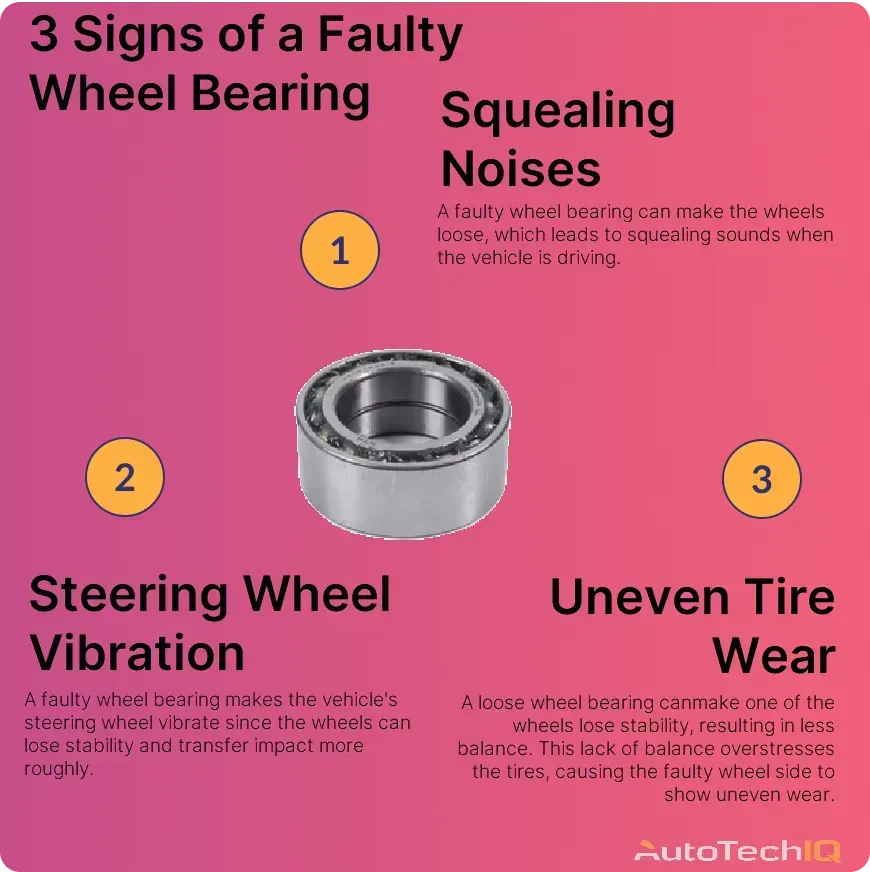
Driving with a bad wheel bearing often causes strange vibrations and feelings. These sensations are important clues that something is wrong. You may feel unusual shaking in the steering wheel or the vehicle itself. These vibrations get stronger as you drive faster.
The vibrations come from the worn bearing parts inside the wheel hub. When the bearing degrades, it does not spin smoothly. This rough movement causes the wheel to wobble slightly. Your car transmits this wobble as vibrations through the steering and chassis.
Steering Wheel Vibrations
You might notice the steering wheel shaking while driving straight. This shaking usually grows with speed. The steering wheel may also tremble more when turning or changing lanes. This happens because the bad bearing causes uneven wheel rotation.
Vehicle Shaking Or Wobbling
The whole car can feel shaky or unstable. The shaking often starts as a small rumble. Over time, it can become a strong wobble. This makes the drive uncomfortable and unsafe. The vibrations often come from the side with the bad bearing.
Uneven Tire Wear And Feel
A bad wheel bearing can cause uneven tire wear. You may feel the car pulling to one side. Tires might wear faster on the side with the damaged bearing. This uneven wear adds to the vibrations and odd sensations while driving.
Diagnosing With The Turn Test
Ignoring strange noises from a wheel bearing can cause serious problems. The wheel bearing supports the vehicle’s weight and helps the wheel spin smoothly. When it fails, driving becomes unsafe and costly. Small noises may seem harmless but often signal bigger issues.
Continuing to drive with a faulty wheel bearing increases the risk of accidents. The bearing can seize, causing the wheel to lock or detach. This leads to loss of vehicle control and potential crashes. Early attention can prevent such dangers.
Increased Vehicle Damage
A bad wheel bearing affects other car parts. It puts extra stress on the wheel hub, axle, and suspension system. These parts wear out faster and may break. Repair bills grow higher without timely fixes.
Reduced Driving Safety
Worn bearings cause wheel wobble and uneven tire wear. This reduces traction and stability on the road. Steering may become difficult, especially at high speeds. The risk of skidding or losing control rises sharply.
Potential Wheel Detachment
In severe cases, the wheel bearing can fail completely. This can cause the wheel to come off while driving. Such events lead to serious accidents and injuries. Immediate repair is crucial to avoid this risk.
Increased Repair Costs
Ignoring wheel bearing noises worsens the damage over time. Minor bearing replacement can turn into major repairs. Repairing or replacing damaged suspension and axle parts is costly. Early diagnosis saves money and hassle.
Credit: www.youtube.com
Frequently Asked Questions
What Can Be Mistaken For Wheel Bearing Noise?
Tire noise, worn CV joints, brake issues, or uneven tire wear can mimic wheel bearing noise. Engine and exhaust sounds may also be confused.
What Is One Of The First Signs Of Bearing Failure?
One of the first signs of bearing failure is a low growling or humming noise that increases with vehicle speed.
Can I Still Drive With A Wheel Bearing Noise?
Driving with a wheel bearing noise is unsafe. It worsens over time, risking wheel failure and accidents. Repair promptly.
What’s The Worst That Can Happen When Driving With A Bad Wheel Bearing?
Driving with a bad wheel bearing risks wheel lock-up or detachment, causing loss of control and serious accidents. Immediate repair ensures safety.
Conclusion
A bad wheel bearing often starts with a low rumble or hum. The sound grows louder as you drive faster. It may change when you turn the car gently. You might feel small vibrations in the steering wheel or floor.
Ignoring these noises can lead to serious vehicle damage. Getting the wheel bearing checked early keeps you safe. Listen carefully to your car’s sounds while driving. Early action helps avoid costly repairs and keeps your ride smooth.