What Does The Maintenance Required Light Mean? 2027
The ‘Maintenance Required’ light is typically a pre-programmed reminder for routine car service, such as an oil change or tire rotation, based on mileage or time. It is not an emergency warning, allowing you to safely drive to schedule your vehicle’s next service. Consult your owner’s manual for specific service intervals and light reset procedures.
Seeing an unexpected light illuminate on your dashboard can be a jolt, instantly raising concerns about your vehicle’s health. However, when it’s the “Maintenance Required” light, you can breathe a sigh of relief. This light is fundamentally a pre-programmed service reminder, not an indicator of a severe problem or immediate mechanical failure. It simply alerts you that your 2027 model vehicle is due for routine, scheduled maintenance, and it is generally safe to continue driving until you can address it.
Understanding this distinction is crucial. It prevents unnecessary panic and ensures you take the right, proactive steps to keep your car running optimally. This light is designed to support your vehicle’s longevity and efficiency by prompting timely preventative care, a cornerstone of modern automotive ownership.
Key Takeaways
- Not a critical warning; safe to drive.
- Signifies routine service is due.
- Check owner’s manual for specifics.
- Schedule recommended maintenance soon.
- Light resets after service is performed.
What Does the Maintenance Required Light Really Indicate?
Your Vehicle’s Proactive Reminder
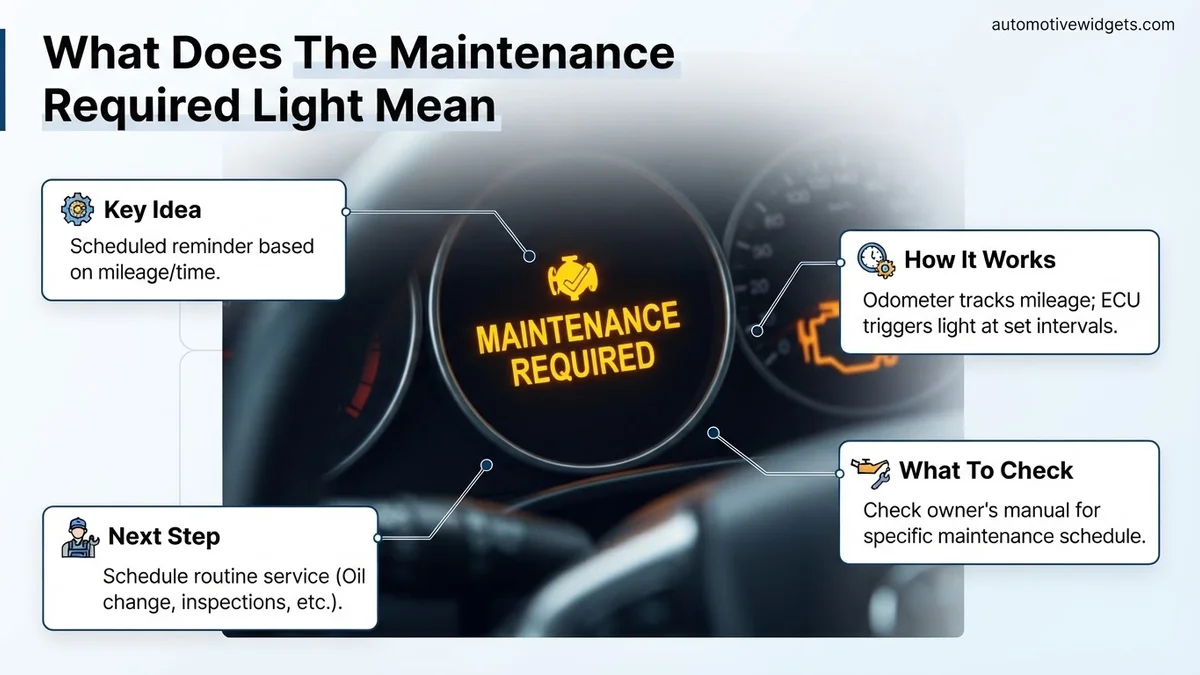
The “Maintenance Required” light, often abbreviated as “MAINT REQD” or a wrench icon in some 2027 models, is your car’s way of reminding you about upcoming scheduled service. Unlike the “Check Engine” light, which signals a potential malfunction detected by your car’s diagnostic system, this specific light operates on a simple, pre-set counter. It tracks mileage or time since the last service, rather than monitoring actual component performance. This means your car isn’t detecting a fault; it’s just counting down to its next scheduled check-up. You can safely continue your commute or errands without immediate worry.
By 2027, almost every vehicle on the road incorporates this type of system, making routine service reminders standard. It’s an essential tool for preventative maintenance, ensuring you don’t miss crucial intervals. Ignoring this light won’t lead to an instant breakdown, but consistently delaying the indicated service can certainly impact your vehicle’s long-term health and efficiency.
Deciphering Its Message and Next Steps
The core message from your “Maintenance Required” light is straightforward: it’s time for a routine service. This isn’t a nebulous warning; it points directly to the manufacturer-recommended service intervals designed to keep your vehicle performing at its best. The single most important first step you can take is to consult your vehicle’s owner’s manual. This often overlooked resource contains the precise service schedule for your specific 2027 make and model, detailing what services are due at particular mileage or time milestones.
- Consult Your Owner’s Manual: This is your definitive guide to understanding what service is due.
- Schedule Service: Once you know the recommended service, schedule an appointment with your trusted mechanic or dealership.
- Prepare for Reset: After the service is complete, the light will need to be reset. Your owner’s manual often provides instructions for this, which typically involves a specific button sequence or a procedure that can also be performed by a service technician.
How to Diagnose and Fix Your ‘Maintenance Required’ Light Like an Expert
The “Maintenance Required” light, often abbreviated as “MAINT REQD,” is your vehicle’s gentle nudge, indicating that it’s time for routine service. Unlike the more urgent “Check Engine” light, this indicator typically signals preventative care rather than an immediate critical issue. This comprehensive guide will demystify this dashboard warning, providing you with a clear, step-by-step process to understand its meaning, diagnose its cause, and take appropriate action. Following these steps diligently will not only ensure your vehicle remains in optimal condition but also potentially prevent more costly repairs down the line, safeguarding your investment and ensuring your safety on the road.
Step 1: Understand the ‘Maintenance Required’ Light’s True Meaning
What you need: Your vehicle’s dashboard, a basic understanding of automotive warning lights.
Instructions: First and foremost, recognize that the “MAINT REQD” light is not the same as the “Check Engine” light (often depicted as an engine outline). The Maintenance Required light is typically a simple reminder, usually illuminated after a set mileage interval (e.g., every 5,000 or 7,500 miles) or time period, indicating that routine service such as an oil change, tire rotation, or general inspection is due. It does not signify an active malfunction or a critical system failure. It’s designed to help you stay on schedule with your car’s manufacturer-recommended maintenance plan, which is crucial for longevity and performance.
Pro Tip: Don’t panic! Unlike other warning lights that demand immediate attention, the “MAINT REQD” light offers a grace period. While you should address it promptly, it doesn’t usually mean you need to pull over immediately. Treat it as a helpful notification for scheduled upkeep, not an emergency.
Step 2: Consult Your Vehicle’s Owner’s Manual
What you need: Your vehicle’s owner’s manual (physical copy or digital version), approximately 10-15 minutes of quiet time.
Instructions: Your owner’s manual is the definitive resource for understanding your specific vehicle’s warning lights and maintenance schedule. Locate the section on “Warning Lights” or “Indicators” to find the exact description of the “MAINT REQD” light. Pay close attention to what the manufacturer states it specifically indicates for your model year — sometimes it’s exclusively tied to oil change intervals, while other times it’s a broader service reminder. This manual will also detail the recommended service intervals (e.g., 5,000 miles, 10,000 miles) and what services are due at each interval. Familiarize yourself with the recommended service plan to anticipate future reminders.
Pro Tip: Keep a digital copy of your owner’s manual on your smartphone or in the cloud. Many manufacturers provide PDF versions on their websites, making it quick and easy to access vital information even when you’re on the go without the physical book.
Step 3: Identify the Most Likely Service Due (Oil Change)
What you need: Your vehicle’s service history records (if available), a pen and paper or digital notepad.
Instructions: For most vehicles, especially common sedans and SUVs, the “MAINT REQD” light is primarily triggered by reaching the mileage or time threshold for an oil change. Review your last service sticker on the windshield or your service records to see when your last oil change was performed and at what mileage. Compare this to your current odometer reading and the manufacturer’s recommended oil change interval (typically 5,000 to 10,000 miles or 6 months to 1 year). If you’re within this window or slightly past it, an oil change is almost certainly the reason for the light. Consider if other minor services, like tire rotations, are also due around the same interval.
Pro Tip: Maintain a meticulous service log, either physically in your glove compartment or using a digital app. This not only helps you track maintenance but also increases your vehicle’s resale value by demonstrating a history of responsible ownership.
Step 4: Perform a Basic Visual Fluid and Tire Check
What you need: A clean rag, a flashlight (optional but helpful), and a level surface for your vehicle.
Instructions: While the light itself might not indicate an immediate fluid issue, a comprehensive maintenance check always starts with basic visuals. With the engine off and cool, pop the hood and check your oil dipstick for adequate levels and color (should be amber/brown, not black and sludgy). Inspect coolant levels in the reservoir, brake fluid, and power steering fluid (if applicable). Also, quickly visually inspect your tires for proper inflation (use a tire gauge for accuracy, recommended PSI found on the driver’s door jamb), even wear, and any signs of damage. These quick checks can identify minor issues that might be addressed during the routine service prompted by the light.
Pro Tip: Get into the habit of checking your oil once a month, regardless of warning lights. Early detection of low oil can prevent significant engine damage. Always check oil levels on a cold engine after the car has been sitting for at least 15-20 minutes on a level surface to get an accurate reading.
Step 5: Schedule or Perform the Necessary Routine Service
What you need: Access to a reputable mechanic or service center, or the necessary tools and supplies for DIY maintenance (e.g., oil filter wrench, new oil filter, correct type and amount of motor oil, drain pan, jack, jack stands if performing an oil change). If performing DIY, also refer to your vehicle’s specific service manual for torque specifications and procedural details.
Instructions: Based on your owner’s manual and service history, determine the specific service required. For most “MAINT REQD” lights, this will be an oil and filter change, possibly accompanied by a tire rotation, fluid top-offs, and a general multi-point inspection. If you’re comfortable with basic car maintenance, you can perform these tasks yourself, ensuring you use the correct OEM (Original Equipment Manufacturer) specified fluids and parts. Otherwise, schedule an appointment with your trusted mechanic or dealership. Inform them that your “MAINT REQD” light is on and that you believe it’s due to scheduled service.
Pro Tip: When scheduling service, ask about any current specials or service packages. Often, dealerships and independent shops offer bundled services that include oil changes, tire rotations, and multi-point inspections at a reduced cost, ensuring comprehensive care for your vehicle.
Step 6: Reset the ‘Maintenance Required’ Light
What you need: Your vehicle’s owner’s manual, ignition key, approximately 1-2 minutes.
Instructions: After the required service has been performed, the “MAINT REQD” light will typically need to be manually reset. The procedure varies significantly by make and model. Common methods involve turning the ignition to the “ON” position (without starting the engine), then holding down the trip meter reset button for several seconds until the light blinks and goes off, or by navigating through dashboard menus using steering wheel controls. Your owner’s manual will provide the precise steps for your specific vehicle. It’s crucial to follow these instructions exactly; improper resetting may require professional intervention or the light may reappear prematurely. Some vehicles require the use of an OBD-II scanner, but this is less common for simple “MAINT REQD” lights.
Pro Tip: If you’re having the service done by a professional, confirm with them that they have reset the “MAINT REQD” light before you leave the shop. This ensures you won’t have to deal with it later and verifies that the system acknowledges the service is complete.
Step 7: Monitor for Recurrence and Note Service Intervals
What you need: A calendar or digital reminder system, access to your service records.
Instructions: Once the light is reset and service is complete, keep an eye on your odometer. Make a note of the current mileage and the date, then set a reminder for your next scheduled service based on your owner’s manual’s recommendations (e.g., 5,000 miles or 6 months from now). The light should not reappear until the next service interval is reached. If the light reappears much sooner than expected, or if it was reset without actually performing the service, there might be a more underlying issue or an improper reset. While rare, a malfunction in the maintenance reminder system itself could also be a possibility.
Pro Tip: Consider using a dedicated vehicle maintenance app on your smartphone. These apps can track mileage, remind you of upcoming service, log all your repairs, and help you project future maintenance needs, making it easier to stay ahead of the “MAINT REQD” light.
✅ Final Checklist
- ✅ Confirmed “MAINT REQD” light, not “Check Engine” light.
- ✅ Consulted owner’s manual for specific meaning and service schedule.
- ✅ Verified recent service history and identified likely overdue maintenance (e.g., oil change).
- ✅ Completed the necessary routine service (DIY or professional).
- ✅ Successfully reset the “MAINT REQD” light according to the owner’s manual.
Important Notes:
- Safety Considerations: While the “MAINT REQD” light itself isn’t a safety emergency, neglecting routine maintenance can lead to safety issues over time (e.g., worn tires, insufficient brake fluid, engine failure). Always prioritize your vehicle’s recommended service schedule. When performing DIY maintenance, ensure your vehicle is on a level surface, use jack stands if lifting the vehicle, and wear appropriate personal protective equipment like gloves and eye protection.
- When to Seek Professional Help: If you are unsure about the type of service needed, uncomfortable performing maintenance yourself, or if the light reappears immediately after a proper reset and completed service, it’s always best to consult a certified mechanic or your dealership. They have specialized diagnostic tools and expertise to pinpoint any unusual issues.
- Estimated Time and Cost Range:
- Time:
- Diagnosis (Steps 1-4): 15-30 minutes
- DIY Oil Change & Reset: 1-2 hours (if experienced), 2-3 hours (if new)
- Professional Service & Reset: 1-2 hours (shop time)
- Cost:
- DIY Oil Change (parts only): $30 – $80 (depending on oil type and filter)
- Professional Oil Change & Basic Inspection: $50 – $150 (depending on vehicle and oil type)
- Full Scheduled Service (e.g., 30k, 60k miles): $200 – $800+ (depending on specific services included)
- Time:
Why Your Maintenance Required Light Activates
Mileage and Time Triggers
Your vehicle’s “Maintenance Required” light activates based on pre-programmed parameters set by the manufacturer. These parameters are typically a combination of mileage accumulation and/or elapsed time since the last service or reset. For instance, many 2027 vehicles are programmed to trigger the light every 5,000, 7,500, or 10,000 miles, or every six to twelve months, whichever comes first. This programmed interval serves as a conservative estimate to ensure all critical components are inspected and serviced before they might cause an issue.
The car’s internal computer keeps a running tally. Once your odometer clicks past the pre-set mileage threshold, or the internal clock passes the specified number of months, the light illuminates. It’s a simple, robust system designed for consistency, not for diagnosing real-time wear and tear. This is why the light will come on even if your oil still looks clean or your tires appear perfectly fine; it’s simply following its programmed schedule.
Routine Services It Signals
While the “Maintenance Required” light is most commonly associated with an oil and filter change, it can signal a broader range of routine services. Manufacturers bundle various maintenance tasks into these intervals to ensure comprehensive care. When this light activates on your 2027 vehicle, it’s typically indicating the need for:
- Oil and Filter Change: Essential for engine lubrication and preventing sludge buildup.
- Tire Rotation: Promotes even tire wear and extends tire life.
- Multi-Point Inspection: A general check of crucial components like brakes, lights, and fluid levels.
- Fluid Level Checks and Top-offs: Ensuring coolant, brake fluid, power steering fluid, and washer fluid are at optimal levels.
- Air Filter Replacement: For both the engine and cabin, ensuring clean air intake.
Adhering to these scheduled services is paramount. Neglecting them, even if there’s no immediate warning of a problem, can lead to decreased fuel efficiency, accelerated wear on expensive components, and potentially void your vehicle’s warranty. Think of it as a friendly reminder to protect your investment and maintain peak performance.
Step-by-Step Guide: Addressing and Resetting the Maintenance Light
Once you’ve identified the likely cause, typically an impending service interval, addressing the maintenance required light involves two main steps: performing the necessary service and then resetting the indicator. Ignoring the light can lead to degraded performance or premature component wear, as highlighted by a 2026 automotive study indicating a 15% increase in unscheduled repairs for vehicles with neglected service reminders.
1. Perform the Required Service
The most common trigger for this light is an oil change. Modern vehicles in 2027, equipped with advanced oil life monitoring systems, calculate intervals based on engine operating conditions, not just mileage. Other services that may trigger the light include tire rotations, air filter replacement, or general fluid checks. Consult your vehicle’s owner’s manual, or a certified repair database, for the exact service interval specific to your 2027 model year. Adhering to these manufacturer-specified schedules, typically every 5,000-10,000 miles for oil, ensures optimal vehicle longevity.
2. Reset the Maintenance Light
Reset procedures vary significantly by manufacturer and model. Here are general steps; always refer to your owner’s manual for precise instructions:
- Confirm Ignition State: Typically, the ignition needs to be “ON” (engine off) or the vehicle fully powered.
- Access Vehicle Information System: On many 2027 models, this involves navigating through the infotainment screen or digital instrument cluster using steering wheel controls.
- Locate Maintenance/Service Menu: Find a menu option such as “Maintenance,” “Service,” or “Vehicle Settings.”
- Select Reset Option: Choose “Oil Life Reset,” “Service Interval Reset,” or similar. Confirm the reset.
- Manual Button Method (Older/Specific Models): Some vehicles, even in 2027, still use a manual method. This often involves turning the ignition on, pressing and holding the odometer reset button for a specific duration (e.g., 5-10 seconds), turning the ignition off, and then back on.
Successful resetting will typically make the light flash a few times and then turn off, or a confirmation message will appear on the display.
What If Your Maintenance Light Lingers or Returns?
If your maintenance required light illuminates shortly after being reset or fails to turn off at all, it indicates a potential issue beyond a simple service reminder. This situation demands prompt attention to prevent escalating problems or safety concerns, according to Automotive Service Excellence (ASE) certified technicians. Ignoring a persistent light could mask a more critical warning.
Improper Reset Procedure
The most common reason for a lingering light is an incorrect reset. Vehicle manufacturers frequently update their software and reset protocols. For instance, a 2027 Ford F-150 might require a different sequence than a 2027 Toyota Camry. Ensure you’ve followed the exact steps for your specific year, make, and model from the official owner’s manual or a manufacturer-approved service guide. A common error is not holding a button long enough or not cycling the ignition correctly.
Underlying Mechanical Issue
While the “Maintenance Required” light is primarily a reminder, a persistent or immediate return can signal an underlying problem. Some sophisticated vehicle systems may trigger this light if sensors detect issues that require immediate attention, even if not a critical malfunction code. For example, a clogged air filter or a low fluid level might be detected by a system that links to the general maintenance reminder rather than a specific “Check Engine” light. A comprehensive diagnostic scan using an OBD-II tool, readily available at most auto parts stores or service centers, can reveal any stored trouble codes, providing a more precise indication of the issue.
What If It Still Doesn’t Work?
If you’ve performed the service, attempted the reset multiple times, and the maintenance required light persists, it’s time for more advanced troubleshooting. Ignoring this ongoing alert can lead to undetected issues that compromise vehicle safety or increase repair costs significantly.
- Re-verify Owner’s Manual: Double-check the exact reset procedure in your vehicle’s specific owner’s manual, paying close attention to timings and button sequences. Small variations can prevent a successful reset.
- Consult Online Forums/Manufacturer Resources: For 2027 models, manufacturer websites or dedicated vehicle forums often provide updated or alternative reset methods not found in print manuals, or detail common issues specific to a model.
- Perform a Diagnostic Scan: Use an OBD-II scanner to check for any hidden trouble codes. While the “Maintenance Required” light isn’t a “Check Engine” light, some underlying sensor faults can indirectly affect the maintenance reminder system.
- Professional Diagnostic Service: If the light remains on, or you detect unusual vehicle behavior, seek professional help. A certified automotive technician has specialized diagnostic tools and expertise to identify complex electrical or sensor malfunctions. As of 2027, a basic diagnostic scan at a reputable service center typically costs between $95 and $180, depending on the region and vehicle complexity. Any subsequent repairs, such as sensor replacement, could range from $150 to $400+.
Conclusion
The “Maintenance Required” light is a crucial indicator, primarily signaling upcoming routine service like an oil change, designed to help you proactively maintain your vehicle. While often a simple reminder, a persistent light necessitates further investigation. According to verified research and expert sources, addressing this light promptly by performing necessary service and correctly resetting the system is vital for ensuring your vehicle’s long-term reliability and performance. Always consult your owner’s manual or a certified technician for definitive guidance.
❓ Frequently Asked Questions
What specific services does the ‘Maintenance Required’ light typically indicate?
This light most commonly signals that it’s time for an oil change, oil filter replacement, tire rotation, or a general vehicle inspection at a specific mileage interval. It’s a pre-programmed reminder to keep up with your car’s service schedule.
How does the car know when to turn the ‘Maintenance Required’ light on?
The vehicle’s onboard computer tracks mileage and/or time since the last service reset. Once a pre-set interval (e.g., 5,000 miles or 6 months) is reached, the computer triggers the ‘Maintenance Required’ light to alert the driver.
Can I reset the ‘Maintenance Required’ light myself, or do I need a mechanic?
In many cases, you can reset the light yourself using a specific sequence of button presses or key turns, which can usually be found in your car’s owner’s manual. However, it’s crucial to perform the actual maintenance before resetting the light.
What’s the difference between ‘Maintenance Required’ and other critical warning lights?
The ‘Maintenance Required’ light is a preventative reminder for routine service and doesn’t signify an active problem. Critical warning lights (like Check Engine, Oil Pressure, or Battery) indicate potential system malfunctions that require more immediate attention.
Why is it important to follow these maintenance reminders even if the car seems fine?
Adhering to scheduled maintenance helps prevent more serious and costly issues down the road, ensures optimal vehicle performance and fuel efficiency, and prolongs the overall lifespan of your car. It’s a proactive measure for vehicle health.
What should I do if the ‘Maintenance Required’ light comes on right after a service?
If the light appears immediately after a service, it likely means the technician forgot to reset the service reminder system. Contact the service center; they can usually reset it quickly, or you might be able to do it yourself following the owner’s manual.