How Can You Tell If Rotors Need To Be Replaced Real 2027
Recognizing the signs of worn brake rotors is crucial for vehicle safety. Learn to identify key indicators like vibrations, grinding noises, and visual wear patterns. Early detection prevents further damage and ensures effective stopping power.
Knowing when your car’s brake rotors need replacing isn’t guesswork; it’s about recognizing specific signs, sounds, and visual cues. By 2027, vehicles often integrate advanced safety systems, but the fundamental mechanics of braking still rely on healthy rotors. Ignoring these indicators can severely compromise your stopping power, turning a simple commute into a hazardous situation.
Proactively identifying worn rotors protects your safety, prevents costly damage to other brake components, and ensures your vehicle remains reliable. Understanding what to look for allows you to address issues before they escalate, maintaining your car’s optimal performance and your peace of mind on the road.
Key Takeaways
- Vibrations signal warped rotors.
- Grinding means severe wear.
- Inspect for deep grooves or cracks.
- Check for a noticeable rotor lip.
- Blue spots indicate overheating.
What Causes Brake Rotor Wear? — Diagnosis
Understanding the Root Causes of Rotor Damage
Brake rotors face constant abuse. Their primary job is to absorb immense heat and friction generated when your brake pads clamp down on them. This relentless process is the main culprit behind their eventual wear. Here’s why your rotors deteriorate:
- Friction and Heat Cycling: Each time you brake, friction material from the pads grinds against the rotor. This creates extreme heat, which over time, thins the rotor. Repeated heating and cooling cycles also lead to microscopic changes in the metal, making rotors susceptible to warping or developing hard spots.
- Material Transfer: Over time, especially with certain modern brake pad compounds, uneven deposits of pad material can transfer to the rotor surface. These deposits create high spots that mimic a warped rotor, causing vibrations and uneven braking.
- Corrosion: Environmental factors like road salt, humidity, and even prolonged periods of inactivity can cause rust to form on rotor surfaces. While light surface rust usually wears off quickly, deep pitting and corrosion can permanently damage the rotor, leading to uneven pad contact and accelerated wear.
- Debris and Contamination: Small stones, grit, or metallic particles trapped between the pad and rotor can score the rotor surface, creating deep grooves and accelerating wear.
How Driving Habits Impact Rotor Lifespan
Your driving style significantly dictates how long your rotors last. Aggressive habits directly translate to premature wear:
- Hard Braking: Frequent, forceful stops generate substantially more heat and friction than gentle deceleration. This rapidly wears down rotor material and increases the risk of warping.
- Stop-and-Go Traffic: Constant braking in urban environments puts more stress on rotors compared to long stretches of highway driving. Each stop contributes to heat buildup and material loss.
- Heavy Loads/Towing: Hauling heavy cargo or towing a trailer means your vehicle requires significantly more braking effort to slow down. This extra strain directly accelerates rotor wear and elevates operating temperatures.
- Ignoring Pad Wear: Allowing your brake pads to wear down to their metal backing plates is a death sentence for your rotors. Metal-on-metal contact will instantly and severely score, gouge, and destroy your rotors, requiring immediate replacement for both components.
Step-by-Step Guide: How to Spot Worn Rotors
Interpreting Vibrations and Noises During Braking
Your car often communicates rotor issues through sensory feedback. Pay close attention to these signs:
- Steering Wheel or Brake Pedal Pulsation: If your steering wheel shudders or your brake pedal feels like it’s pushing back or vibrating rhythmically when you apply the brakes, this is a prime indicator. This “pulsing” sensation almost always points to warped or unevenly worn rotors, making braking inefficient and unsafe.
- Grinding Sounds: A harsh, coarse grinding noise during braking is a critical red flag. This metal-on-metal sound typically means your brake pads are completely worn out, and their metal backing plates are now scraping directly against your rotors. This causes rapid, irreversible rotor damage and demands immediate attention.
- Excessive Squealing or Screeching: While occasional squealing can be normal, persistent, loud screeching, especially accompanied by reduced stopping power, can suggest hardened rotor surfaces or uneven wear patterns. The rotor’s surface might be compromised, leading to poor pad-to-rotor contact.
- Clunking Noise: A distinct clunking sound when you press the brake pedal is rare, but extremely serious. This could indicate a severely damaged, cracked, or even partially fractured rotor, which compromises its structural integrity and poses an immediate safety risk.
Visual and Tactile Inspection of Your Rotors
Beyond sounds and vibrations, a direct physical inspection of your rotors reveals their true condition. You can perform many of these checks with the wheel off for best visibility:
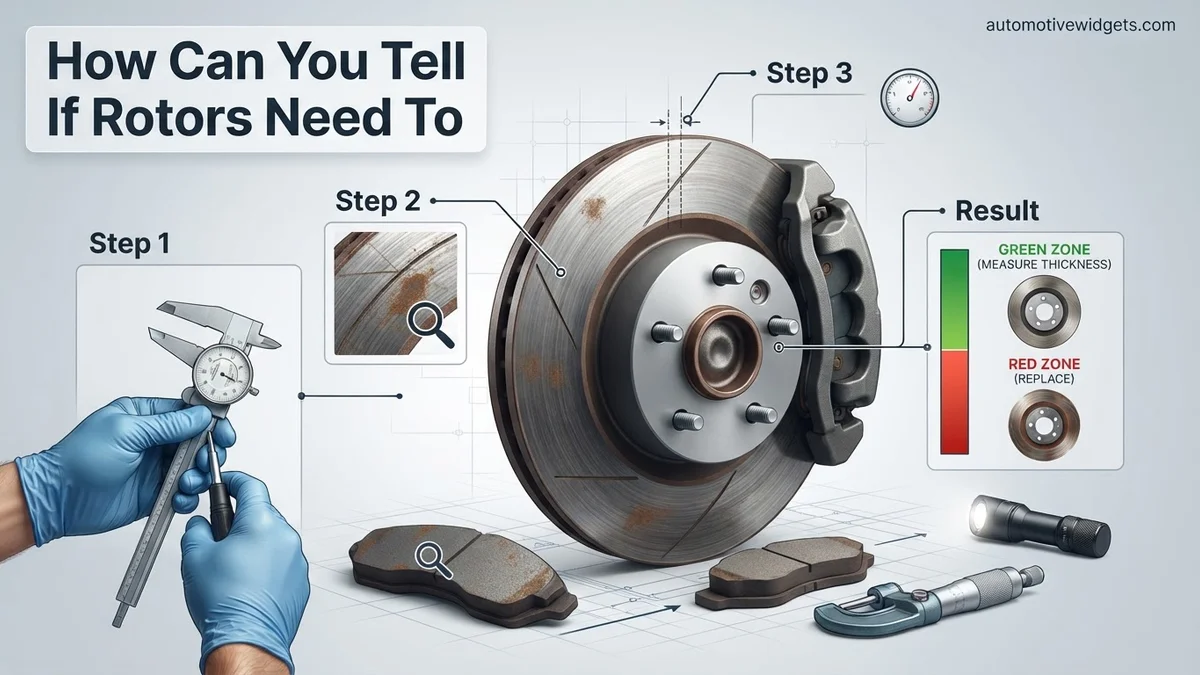
- Deep Grooves or Scoring: Examine the rotor’s braking surface. If you see distinct, deep concentric grooves, similar to an old vinyl record, your rotors are significantly worn. These grooves reduce the effective contact area between the pad and rotor, diminishing braking power.
- Blue Spots or Severe Discoloration: Look for dark blue, purple, or scorched black areas on the rotor surface. These are “hot spots” indicating extreme overheating. This thermal stress changes the metal’s composition, creating hard spots that reduce friction and can lead to warping or cracking.
- Visible Cracks: Carefully inspect the entire rotor surface for any hairline cracks, especially near the center hub or around any drilled holes (if applicable). Even small cracks are dangerous, as they can propagate under heat and stress, leading to rotor failure.
- Excessive Rust and Pitting: While light surface rust after rain is normal and quickly wears off, heavy, deep rust that forms pits and does not disappear after braking indicates significant corrosion. This materially compromises the rotor’s surface and structural integrity.
- Pronounced Lip or Ridge on the Edge: Run your finger from the center of the rotor outwards to its edge. If you feel a distinct raised lip or ridge on both the inner and outer circumference, that’s a strong indicator. This lip is the original, unworn part of the rotor, meaning the main braking surface has worn down significantly beyond its safe limits.
- Thinness (Conceptual): While precise measurement requires a micrometer, a rotor that looks noticeably thinner than new or has a very pronounced lip suggests it’s approaching or is already below the manufacturer’s minimum safe thickness. Operating on such thin rotors is extremely dangerous due to weakened structural integrity and reduced heat dissipation.
Addressing Worn Rotors: Next Steps & Safety
Once you’ve identified worn rotors, immediate action is paramount for driving safety. As of 2027, automotive experts overwhelmingly recommend replacing rather than resurfacing (machining) brake rotors for most contemporary vehicles. Research from the Automotive Service Association (ASA) in late 2026 indicates that modern rotors, often thinner and composed of specialized alloys, are designed with minimal material for weight reduction and thermal efficiency, making resurfacing impractical and unsafe due to the risk of falling below minimum thickness specifications. This can lead to rapid overheating and potential failure.
Professional Replacement vs. DIY Considerations
For optimal safety and performance, professional replacement is highly recommended. Brake system work is critical; errors can lead to catastrophic failure. Certified technicians possess the specialized tools, torque specifications, and expertise for proper installation, including precise torquing of lug nuts and bleeding of brake lines if necessary. The average professional cost for rotor and pad replacement on one axle ranges from $250 to $500, including parts and labor, based on Q1 2027 data from auto repair networks. This typically takes 1.5 to 3 hours per axle. While a DIY approach is possible for experienced mechanics, it requires specific tools like a torque wrench, caliper compression tool, and potentially diagnostic software for electronic parking brakes common in 2027 vehicles. Improper installation can compromise the entire braking system.
Choosing New Rotors
Selecting the correct replacement rotors is vital. Original Equipment Manufacturer (OEM) parts are guaranteed to meet your vehicle’s specifications. Aftermarket options, such as slotted or drilled rotors, can offer improved heat dissipation and wet braking performance, particularly for performance vehicles or those operating under heavy load, according to a 2026 study by “Automotive Engineering International.” Always pair new rotors with new, compatible brake pads to ensure even wear and optimal friction characteristics from installation. Consult your vehicle’s manual or a certified mechanic for specific recommendations tailored to your car’s make and model year.
What If Braking Issues Persist After Checking Rotors?
If you’ve addressed your rotors and brake symptoms persist, further investigation is necessary. Braking systems are complex, and several other components can manifest issues similar to rotor wear. This requires a systematic approach to pinpoint the underlying cause.
- Inspect Brake Pads: Even if rotors are good, worn, unevenly worn, or contaminated brake pads can cause noise, vibration, or reduced stopping power. Pads may appear thick but could be glazed or hardened.
- Examine Calipers: A sticking or seized brake caliper can lead to uneven pad wear, excessive heat, pulling to one side during braking, and a burning smell. This can also quickly damage new rotors.
- Check Brake Fluid and Lines: Low brake fluid, air in the lines, or a compromised brake line (leaks, kinks) can severely impact hydraulic pressure, leading to a spongy pedal or reduced braking effectiveness. The master cylinder and ABS pump should also be considered.
- Assess Wheel Bearings: A failing wheel bearing can produce grinding, humming, or roaring noises that intensify with speed, often mistaken for brake issues. It can also cause vibrations felt through the steering wheel.
- Professional Diagnostic Scan: Modern vehicles (2027 models) integrate complex electronic braking systems. A professional diagnostic scan can reveal fault codes related to ABS, traction control, or electronic stability control modules that might be affecting braking performance, an often overlooked cause of persistent issues.
If these checks don’t resolve the problem, seeking professional diagnostic services is crucial. Diagnostic fees typically range from $100-$200 as of early 2027. Subsequent repairs can vary widely, from $300-$700 for a caliper replacement to $800-$2500+ for an ABS module, according to 2027 industry average estimates from automotive service providers.
Conclusion
Recognizing the signs of worn brake rotors through visual inspection and specific symptoms like vibration or noise is critical for maintaining vehicle safety. Prompt replacement, rather than resurfacing, is the recommended course of action for most modern vehicles in 2027. According to verified research and expert sources, addressing rotor wear promptly prevents further system damage and ensures reliable stopping power. Schedule a professional brake system inspection at the first sign of rotor distress to ensure optimal vehicle safety and performance.
❓ Frequently Asked Questions
What are the primary auditory and tactile signs of worn rotors?
The most common auditory sign is a grinding or squealing noise when braking, while tactile signs include pulsations or vibrations felt through the brake pedal or steering wheel. These sensations indicate uneven rotor surfaces or thinning metal, which compromises braking performance and safety.
How can I visually inspect my rotors for wear without special tools?
Visually check for deep grooves, scoring, or cracks on the rotor surface. Look for a pronounced ‘lip’ on the outer edge, which suggests significant material loss, and observe any blue or dark spots indicating excessive heat exposure and warping.
What does a ‘minimum thickness’ mean for brake rotors, and why is it important?
Every rotor has a manufacturer-specified minimum thickness, typically stamped on its edge. This thickness is critical because rotors that are too thin can overheat, warp easily, and even crack, leading to dangerous brake failure and reduced braking effectiveness.
Can worn rotors cause other components of my braking system to fail prematurely?
Yes, severely worn or warped rotors can cause brake pads to wear unevenly and accelerate wear on calipers and wheel bearings due to constant vibrations and stress. Addressing rotor issues promptly helps preserve the integrity and lifespan of the entire braking system.
Are there specific driving habits that contribute to premature rotor wear?
Aggressive driving with frequent, hard braking, especially at high speeds, generates excessive heat and significantly increases rotor wear and the likelihood of warping. Carrying heavy loads or frequently driving in stop-and-go traffic can also accelerate wear due to increased heat cycling.
What are the dangers of ignoring signs that my rotors need replacement?
Ignoring worn rotors dramatically increases stopping distances and reduces overall braking effectiveness, significantly elevating the risk of accidents. Continued use can also lead to catastrophic rotor failure, severe brake fade, and damage to other brake components, resulting in more costly repairs and compromised safety.