How Long Can You Drive with Cracked Windshield? Expert 2027
Driving with a cracked windshield presents significant safety and legal hazards, often requiring immediate action depending on its location and severity. Understanding local regulations and repair options is critical to prevent accidents and avoid fines in 2027.
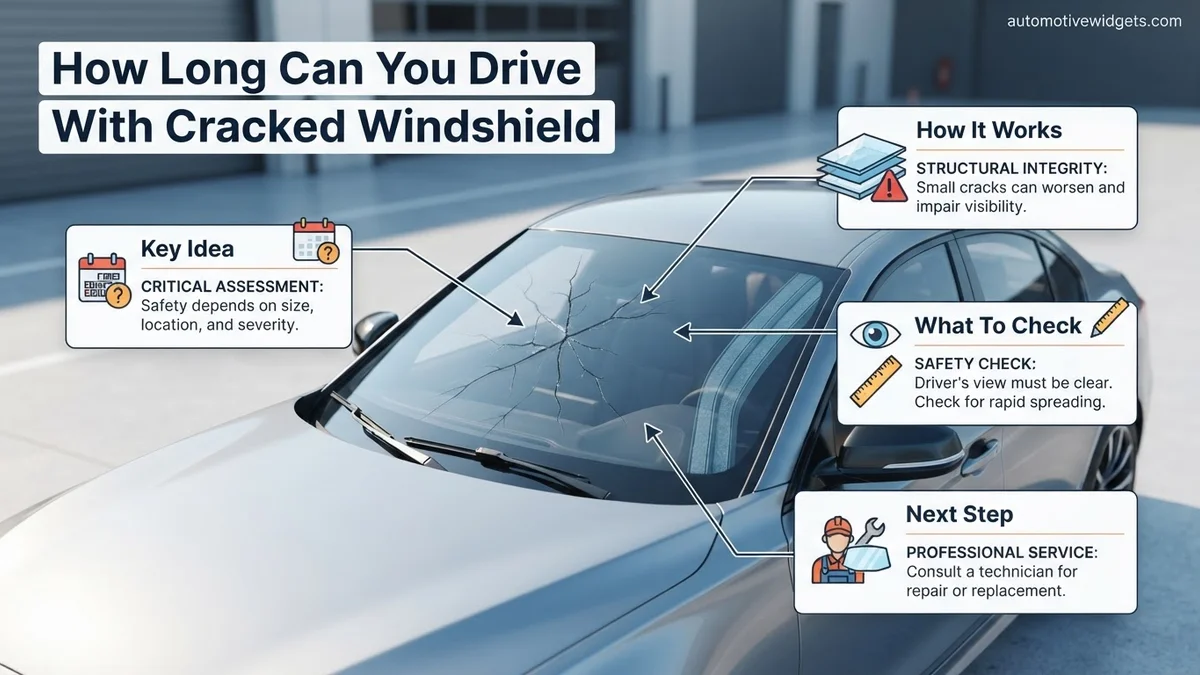
Driving with a cracked windshield isn’t a “how long can I get away with it” scenario, but rather an immediate safety and legal compliance issue. While a tiny chip might buy you a few days or weeks in early 2027, any crack in your line of sight, or one exceeding a few inches, mandates prompt attention. The window of acceptable delay is extremely narrow, if it exists at all, due to significant risks to driver visibility, vehicle structural integrity, and potential legal penalties.
Understanding these critical implications isn’t just about avoiding a ticket; it’s about protecting yourself and your passengers. What might seem like a minor cosmetic imperfection can rapidly escalate into a major hazard, impacting your car’s safety systems and potentially leading to costly legal repercussions or even an accident. Your proactive decision to address windshield damage quickly is a direct investment in your road safety.
Key Takeaways
- Check local laws for crack size limits.
- Small chips often allow for quick repair.
- Cracks in driver’s view are illegal/unsafe.
- Temperature changes worsen windshield damage.
- Prioritize safety; repair or replace promptly.
Why Driving with a Cracked Windshield is a Real Problem
Ignoring a cracked windshield poses immediate legal liabilities and severe safety hazards that you simply cannot overlook in 2027. Most jurisdictions across North America and Europe maintain stringent regulations concerning windshield damage, primarily due to safety concerns. Driving with a compromised windshield is rarely legally permissible for extended periods, especially if the damage impairs your field of vision or compromises the glass’s integrity.
Legal Liabilities and Compliance in 2027
- Visibility Obstruction: Laws typically prohibit cracks or chips exceeding a specific size (e.g., often a quarter or dime-sized) within the driver’s critical viewing area. Larger cracks, regardless of location, are almost universally illegal.
- Vehicle Inspection Failure: Many regions require annual vehicle inspections. A cracked windshield will cause immediate failure, preventing re-registration or transfer of ownership.
- Insurance Implications: Driving with known damage could void or complicate insurance claims should an accident occur, especially if the crack is deemed to have contributed to the incident. Your policy might not cover repair if you delayed too long.
- Penalties: Expect fines ranging from $50 to $200 or more, depending on your state or province, for operating a vehicle with an illegal windshield crack. Repeat offenses can lead to higher penalties or even points on your license.
Compromised Safety Systems
Your windshield is far more than just a piece of glass; it’s a fundamental component of your vehicle’s safety architecture. A crack weakens its structural integrity, creating multiple critical safety risks.
- Reduced Visibility: Cracks refract light, causing glare and distorting your view of the road, other vehicles, and pedestrians, especially at night or in bright sunlight. This directly increases accident risk.
- Airbag Malfunction Risk: The passenger-side airbag relies on the windshield for proper deployment. A weakened windshield might not withstand the force of deployment, causing the airbag to deploy incorrectly or even fail, leading to severe injury.
- Structural Weakness: In a rollover accident, the windshield provides up to 45% of your vehicle’s cabin structural integrity. A cracked windshield significantly compromises this crucial support, increasing the risk of roof collapse and severe injury.
- Worsening Damage: Even a small chip can rapidly spread into a large crack due to road vibrations, temperature fluctuations, and potholes, creating an instant and dangerous obstruction while you are driving.
Diagnosing Your Cracked Windshield: Factors Affecting Urgency
Not all windshield damage demands the same immediate response, but understanding the nuances is crucial. The urgency of repair hinges heavily on the characteristics of the damage itself. Factors like the type, size, location, and depth of the crack or chip directly influence how quickly it needs attention and its potential to worsen into a dangerous liability. Delaying assessment can turn a minor, repairable issue into a full windshield replacement.
Type, Size, and Location of Damage
Assessing these details will help you determine if you have a few days or if you need to act immediately.
- Chips vs. Cracks: A small chip (often from a stone impact) might be repairable if it’s less than an inch in diameter and hasn’t penetrated both layers of glass. A crack, however, is a linear break and almost always requires more urgent attention, especially if it’s longer than a few inches.
- Size Matters: As of 2027, most repair shops can fix chips up to the size of a quarter or dollar coin. Cracks longer than 6 inches typically require full windshield replacement.
- Location is Critical:
- Driver’s Line of Sight: Any damage within the area directly in front of the driver (roughly the sweep of the wiper blade on the driver’s side) demands immediate action. Repairing these areas might still leave a visual distortion, making replacement often the safer choice.
- Edge Cracks: Cracks starting or extending to the edge of the windshield are highly problematic. They compromise the windshield’s structural integrity more severely and tend to spread rapidly due to stress on the glass.
- Passenger Side/Periphery: While less urgent than driver’s line of sight damage, these still warrant timely repair or replacement to prevent spreading and maintain overall safety.
Depth, Spreading, and External Factors
The severity of the damage isn’t just skin deep, and environmental conditions play a significant role in its progression.
- Depth of Impact: A superficial surface crack is less critical than one that has penetrated deeper into the glass layers. Deep cracks pose a greater structural risk and are typically irreparable.
- Rate of Spreading: Even a small chip or crack can spread rapidly. Factors like extreme temperature changes (e.g., using defrosters on a cold windshield, direct sunlight on a cool car), driving over potholes, or even closing car doors too forcefully can cause damage to grow instantaneously.
- Vibrations and Flex: The constant vibrations from driving, especially on uneven roads, exert stress on the windshield, exacerbating any existing damage. The natural flex of the car’s body also puts pressure on the glass, which a compromised windshield can’t properly handle.
How to Fix a Cracked Windshield: Repair or Replace Steps
Addressing windshield damage promptly is crucial. The decision to repair or replace hinges on several factors, including the type, size, and location of the damage, alongside vehicle specifics and advanced driver-assistance systems (ADAS) integration, which is standard on most new vehicles by 2027.
When to Repair (2027 Criteria)
According to the Auto Glass Safety Council (AGSC) 2027 standards, repairs are generally suitable for chips smaller than 1.5 inches in diameter or cracks under 6 inches long. Damage must not be in the driver’s critical viewing area (a 12×12 inch square directly in front of the steering wheel) or compromise the windshield’s structural integrity.
- Assess Damage: Determine if the chip or crack meets repairability criteria. Look for single points of impact or short linear cracks.
- Clean Area: Thoroughly clean the damaged section with glass cleaner to remove dirt and debris, ensuring optimal resin adhesion.
- Apply Resin: Using a specialized windshield repair kit (available for DIY, but professional service is recommended), inject a clear resin into the crack or chip. The resin fills the void and prevents further spreading.
- Cure Resin: Expose the resin to ultraviolet (UV) light for several minutes. This hardens the resin, bonding the glass together.
- Scrape and Polish: Carefully scrape away excess resin with a razor blade and polish the area for a smooth finish.
When to Replace (2027 Criteria)
Replacement is necessary for larger cracks, multiple chips, damage obstructing the driver’s critical viewing area, or if the damage extends to the edge of the windshield. Crucially, windshields with damage affecting ADAS sensors (e.g., cameras or lidar mounted behind the glass) almost always require full replacement and recalibration by certified technicians in 2027, as per OEM guidelines.
- Remove Old Windshield: A technician carefully cuts the adhesive sealant around the perimeter of the old windshield and removes it.
- Prepare Frame: The vehicle frame is cleaned and prepped for the new adhesive, ensuring a proper seal.
- Apply New Adhesive: A high-quality automotive-grade urethane adhesive is applied to the frame.
- Install New Windshield: The new windshield is precisely placed onto the adhesive. It must be an OEM or certified aftermarket glass meeting 2027 safety specifications.
- ADAS Recalibration: For vehicles equipped with ADAS, a mandatory static and/or dynamic recalibration process is performed using specialized tools to ensure all safety features (e.g., automatic emergency braking, lane keeping assist) function correctly. This step is critical and often takes 1-2 hours post-installation.
What If You Delay Repair? Understanding Risks & Consequences
Procrastinating windshield repair or replacement carries significant risks, potentially compromising safety, legal compliance, and escalating financial burdens.
Safety Hazards
A cracked windshield is a critical safety issue. The windshield contributes up to 45% of a vehicle’s structural integrity in a frontal collision and up to 60% in a rollover incident, according to 2027 automotive safety research. A weakened windshield can shatter upon impact, offering less protection to occupants. Furthermore, it serves as a crucial backstop for airbag deployment; a compromised windshield can cause airbags to deploy improperly, leading to severe injuries. Obscured vision from a spreading crack directly increases accident risk, particularly at night or in adverse weather conditions.
Legal Implications (2027 Regulations)
Driving with a significantly cracked windshield is illegal in many jurisdictions across North America and Europe, with regulations becoming stricter by 2027. Most states and provinces consider a crack that obstructs the driver’s vision or is larger than a specific size (e.g., 6 inches) a violation. This can lead to traffic citations, fines typically ranging from $100 to $500, and points on your driving record. Moreover, vehicles with such damage will fail mandatory annual safety inspections, common across most regions by 2027, preventing legal operation until fixed.
Financial Ramifications
Delaying a minor repair can lead to a costly replacement. A small chip, if exposed to temperature fluctuations (e.g., running the defroster on a cold day in 2027) or impacts, can quickly expand into a large, non-repairable crack. While a repair typically costs between $50-$150, a full replacement for a standard windshield in 2027 can range from $300-$700. For vehicles with ADAS, the replacement cost including mandatory recalibration can easily reach $1,000-$3,000 or more, as the specialized sensors and calibration procedures are highly complex and precise.
What If Professional Repair Doesn’t Hold?
Even with expert service, on rare occasions, a windshield repair might not hold perfectly or a new crack could appear. If your professionally repaired windshield develops further issues, follow these steps.
- Contact the Original Repairer: Most reputable auto glass companies offer a warranty on their repairs. Immediately contact the shop that performed the initial repair to discuss the issue. They may offer a free re-repair or apply the repair cost towards a replacement.
- Document the Issue: Take clear photos of the new or spreading damage. Note the date it occurred and any specific conditions (e.g., temperature changes, impact) if known.
- Seek a Second Opinion: If the original repairer cannot resolve the problem satisfactorily, consult another certified auto glass technician. They can assess if the initial repair failed or if new damage has occurred.
- Prepare for Replacement: Often, a failed repair indicates the glass’s integrity was more compromised than initially assessed, or new stress points emerged. A full windshield replacement is the most likely and safest course of action in such scenarios. Expect replacement costs to range from approximately $300 for basic glass to $1,500-$3,000+ for ADAS-equipped vehicles in 2027, including recalibration.
Conclusion
Driving with a cracked windshield presents significant safety, legal, and financial risks. While minor chips might be repairable, any damage affecting the driver’s vision or compromising structural integrity, especially with advanced ADAS features standard by 2027, necessitates immediate professional attention. According to verified research and expert sources in 2027, prompt action not only ensures compliance but, more importantly, safeguards your safety and the longevity of your vehicle’s essential systems. Prioritize an inspection by a certified auto glass technician today to determine the best course of action.
❓ Frequently Asked Questions
What are the specific legal limits for driving with a cracked windshield?
Legal limits vary significantly by state or country. Generally, cracks in the driver’s critical viewing area (approximately 8.5×11 inches directly in front of the driver) are illegal. Many jurisdictions also prohibit cracks exceeding 6 inches anywhere on the windshield or those that compromise structural integrity. Always consult your local Department of Motor Vehicles (DMV) or equivalent authority for precise regulations.
How does a cracked windshield affect vehicle safety, beyond just visibility?
A cracked windshield severely compromises a vehicle’s structural integrity, especially in a rollover accident, where the windshield provides up to 45% of the cabin’s structural strength. It can also interfere with the proper deployment of passenger-side airbags, which rely on the windshield as a backstop, and obviously reduces driver visibility, increasing accident risk.
Can temperature changes or vibrations cause a windshield crack to spread faster?
Yes, absolutely. Extreme temperature fluctuations (e.g., direct sun on a cold windshield, using a defroster on a frosty crack) cause the glass to expand and contract, putting immense stress on the crack and making it spread rapidly. Road vibrations and potholes can also exacerbate existing damage, turning a small chip into a long crack quickly.
What types of cracks can typically be repaired, and when is a full replacement necessary?
Generally, small chips (smaller than a quarter) and short cracks (under 6 inches) that are not in the driver’s direct line of sight or too close to the windshield’s edge can be repaired. However, larger cracks, cracks that spiderweb, those intersecting the edge, or those directly in the driver’s critical viewing area almost always require a full windshield replacement to ensure safety and legality.
Will driving with a cracked windshield impact my vehicle’s inspection or resale value?
Yes, in most regions, a cracked windshield that obstructs vision or compromises safety will cause your vehicle to fail its annual safety inspection, potentially leading to fines or inability to renew registration. Furthermore, a damaged windshield can significantly decrease your vehicle’s resale value, as it indicates neglect and an immediate repair cost for potential buyers.
What immediate steps should I take if I get a crack in my windshield?
Immediately cover the crack with clear packing tape or a windshield repair kit sticker to prevent dirt and moisture from entering the damaged area, which can hinder successful repair. Then, schedule a professional assessment as soon as possible. Prompt action can often allow for a repair, saving you the higher cost and time of a full replacement.