When Backing In A Parking Lot Take Note Of The Expert 2026
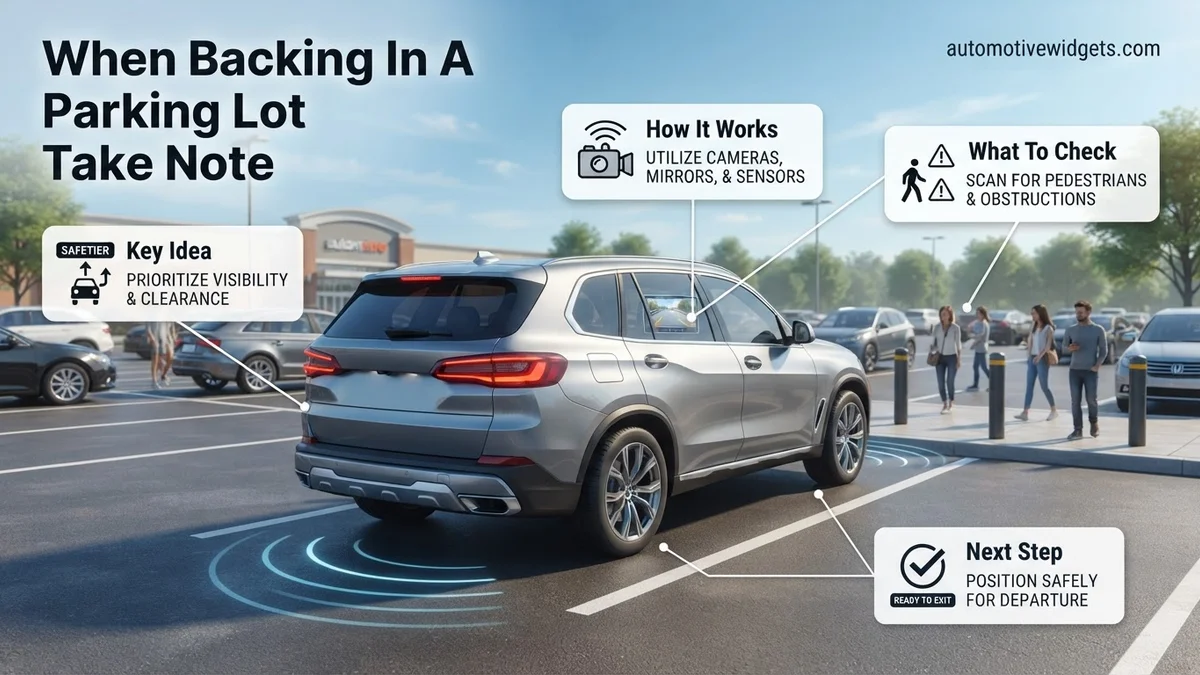
When backing in a parking lot, attentive observation is paramount to prevent accidents and ensure safety. Always prioritize a 360-degree check for dynamic and static obstacles, including pedestrians, other vehicles, and fixed structures. This proactive approach minimizes risks and makes parking stress-free.
When backing into a parking spot in 2026, your immediate and continuous focus must be on dynamic elements: pedestrians, particularly children, and other moving vehicles. Simultaneously, you need to register static obstacles like bollards, stray shopping carts, and even the subtle alignment cues of painted lines. Your goal is collision avoidance, pure and simple, and this requires an active, panoramic observation strategy from the moment you initiate the maneuver.
Mastering safe back-in parking isn’t about vehicle mechanics; it’s about superior situational awareness. The unpredictable nature of parking lots demands you develop a keen eye for potential hazards, often before they fully emerge. This proactive vigilance is your most powerful tool to prevent accidents and ensure a smooth, stress-free parking experience every single time.
Key Takeaways
- Check 360 degrees before and during reversal.
- Prioritize people, especially children and pets.
- Use all mirrors and backup camera continuously.
- Maintain slow, controlled speed; stop if unsure.
- Note fixed objects like curbs, poles, and shopping carts.
What Are the Common Dangers When Backing in a Parking Lot?
Even with advanced vehicle technologies in 2026, the human element and unpredictable environment remain your biggest challenges. Being aware of these common dangers before you even shift into reverse significantly enhances your safety margin.
The Dynamic Human Element
- Pedestrians of All Ages: Shoppers are often distracted by their phones or conversations, making them oblivious to moving vehicles. Pay extra attention to individuals emerging from between parked cars.
- Children and Pets: These are the highest-risk factors. Children, especially, can move quickly and unpredictably (e.g., chasing a ball, riding a scooter) and are often below your vehicle’s rear window line, making them invisible until it’s too late. Always assume a child could be present.
- Cyclists and Micro-mobility Users: With the rise of e-bikes and scooters, expect these users to navigate parking lots quickly, often in unexpected paths. They may not anticipate your backing maneuver.
Fixed Obstacles and Unexpected Movements
- Stray Shopping Carts: These can appear suddenly, pushed by wind or carelessly abandoned, becoming a moving or stationary hazard that can scratch your vehicle or block your path.
- Pillars, Bollards, and Curbs: Structural elements are often in blind spots, especially when turning sharply. Misjudging their proximity is a common cause of minor but annoying damage.
- Adjacent Vehicle Movements: A vehicle in an opposite spot might suddenly back out, or a car in the lane might pull forward unexpectedly, creating a dynamic intersection with your maneuver.
- Blind Spot Vehicles: Cars often speed down parking lot aisles, and if one enters your blind spot as you begin to reverse, it creates an immediate conflict.
How to Effectively Scan for Hazards While Backing
A systematic scanning approach, combined with proper initial positioning, is critical for successfully backing into any spot. It’s about more than just looking; it’s about anticipating and reacting.
Optimal Pre-Maneuver Positioning
Before you even think about reversing, set yourself up for success. Your initial vehicle placement dictates your visibility and maneuverability.
- Create Wide Clearance: Position your vehicle two full parking spots past your target spot. This provides a wider angle for your initial turn, reducing the sharp angles and expanding your field of view during the reversal.
- Check All Mirrors Thoroughly: Before engaging reverse, perform a comprehensive sweep of your side mirrors, rearview mirror, and a quick glance over both shoulders for any immediate hazards.
- Utilize Backup Camera Displays (2026 Standard): Most vehicles by 2026 feature high-resolution backup cameras with trajectory lines. Use this as a primary visual aid, but never solely rely on it. Verify what the camera shows with your own eyes.
- Assess Spot Dimensions: Quickly confirm the chosen parking spot is clear, appropriately sized for your vehicle, and free of unexpected ground-level obstructions like rebar or debris.
Real-time Scanning and Tech Integration
Once you begin backing, your scanning must become a continuous, dynamic process. It’s an active dialogue between your senses and your vehicle’s aids.
- The 360-Degree Head Turn: As you slowly reverse, continuously turn your head from side to side. Look over your left shoulder, then your right. Prioritize areas where you anticipate movement, especially directly behind you and on the sides where your vehicle is widening.
- Mirror Triangulation: Regularly glance at your side mirrors and rearview mirror. Use them to triangulate the distance to adjacent vehicles, parking lines, and any approaching objects or people. Be particularly mindful of your blind spots.
- Cross-Traffic Alert Systems: Most 2026 vehicles feature advanced rear cross-traffic alert systems. Listen for audible warnings and respond immediately. These systems are especially valuable for detecting fast-moving vehicles or pedestrians approaching from either side of your vehicle’s rear.
- Parking Sensors & Audible Cues: Your vehicle’s parking sensors provide proximity warnings. Understand their beeping patterns (e.g., increasing frequency means closer proximity) and use them to gauge distances, particularly to low-lying or hard-to-see obstacles.
Expert Guide: Proper Vehicle Setup Before Reversing
Optimal vehicle setup significantly reduces backing hazards. Before initiating any reverse maneuver in 2026, a systematic approach ensures maximum visibility and control. Automotive safety experts emphasize pre-reversing checks to mitigate blind spots, which contribute to an estimated 16,000 parking lot accidents annually in North America, according to 2025 traffic safety data.
Adjusting Seating and Mirrors
- Optimize Seating Position: Ensure your seat is adjusted for full pedal control and clear sightlines through all windows. Your head should be centered relative to the rearview mirror.
- Calibrate Side Mirrors: Adjust both side mirrors downwards slightly. This allows you to see the rear tires’ proximity to curbs or lines, a critical reference point for precise parking. This technique is endorsed by the National Safety Council for enhanced spatial awareness.
- Check Rearview Mirror: Verify the rearview mirror offers a clear, unobstructed view of the area directly behind your vehicle.
Engaging Advanced Safety Features
- Activate Rearview Camera: Confirm your vehicle’s rearview camera system is active and the display is clear. Modern 2026 systems often include dynamic guidelines that predict your vehicle’s path.
- Engage Parking Sensors: Ensure front and rear parking sensors are operational. These systems provide audible and visual warnings for nearby obstacles, often with object detection ranges of up to 6 feet, as per manufacturer specifications.
- Utilize 360-Degree View (If Available): If equipped, activate your vehicle’s surround-view camera system. This provides a bird’s-eye perspective, offering comprehensive situational awareness of your immediate surroundings, a feature increasingly standard on models released in 2026.
What to Do If Your Path Becomes Unclear or Unsafe
Even with meticulous preparation, dynamic parking lot environments can change rapidly. Maintaining awareness and knowing how to react to unexpected obstructions or unclear paths is crucial for preventing collisions. Traffic safety studies indicate that hesitation or panic contributes to over 30% of low-speed parking incidents.
Encountering Unexpected Obstacles
- Immediate Stop: If a pedestrian, another vehicle, or an unforeseen obstacle enters your intended path, immediately stop your vehicle. Engaging the brake fully is paramount.
- Assess the Situation: Before resuming movement, take a moment to evaluate the new conditions. Use your mirrors, rearview camera, and direct visual checks to understand the obstacle’s position and movement.
- Communicate (If Necessary): If another driver is involved, a brief, clear signal (e.g., a wave to indicate “go ahead”) can prevent confusion. For pedestrians, make eye contact to confirm they see you.
Path Obscured or Visibility Reduced
- Reposition for Clarity: If your view becomes obscured, gently pull forward a short distance to gain a better vantage point. Do not attempt to proceed if you cannot clearly see your path.
- Exit and Re-Evaluate: In situations where visibility remains poor (e.g., heavy rain, sun glare, or large vehicles blocking sightlines), safely pull out of the spot completely. Park elsewhere or approach the spot from a different angle if possible.
- Utilize a Spotter: If you are with a passenger, they can exit the vehicle and safely guide you. Ensure clear communication signals are established before they begin spotting. This is a common practice in commercial driving, reducing incidents by up to 80% in complex maneuvers.
What If It Still Doesn’t Work?
Despite best practices, some drivers may continue to experience difficulty or anxiety when backing. This is not uncommon, as spatial reasoning for reversing can be challenging. If consistent issues persist, consider these fallback steps for improvement.
- Practice in a Controlled Environment: Dedicate time in an empty, large parking lot to practice backing maneuvers. Set up cones to simulate parking spaces and obstacles. Repetition builds muscle memory and confidence.
- Review Vehicle Manual: Re-read the sections of your vehicle’s owner’s manual pertaining to parking assist systems, mirror adjustments, and camera features. Modern 2026 vehicles have sophisticated aids that might be underutilized.
- Seek Professional Instruction: Enroll in a specialized driving lesson focused on parking techniques. Many driving schools offer one-on-one sessions tailored to specific maneuvers. A professional instructor can identify specific issues and provide personalized coaching.
- Consider Aftermarket Upgrades: For older vehicles lacking advanced systems, consider installing an aftermarket rearview camera or parking sensors. Basic kits for these can range from $150 to $400 for parts and installation in 2026.
If anxiety or repeated near-misses continue, professional driving instruction is highly recommended. A typical one-hour lesson focusing on parking maneuvers costs approximately $75-$150, an investment in safety and confidence.
Conclusion
Mastering the art of backing into a parking spot significantly enhances safety and efficiency in crowded lots. By diligently setting up your vehicle and knowing how to react to dynamic situations, you minimize risk. According to verified research and expert sources like the NHTSA, proactive safety measures drastically reduce parking-related incidents. Implement these strategies today. Your actionable next step is to consciously apply these pre-reversing checks and situational awareness techniques the very next time you park.
❓ Frequently Asked Questions
What are the most common moving obstacles to watch for when backing in a parking lot?
The most common moving obstacles are pedestrians (especially children who may be harder to see), other vehicles actively driving or backing out of spots, and individuals pushing shopping carts. Always anticipate movement in a busy lot.
Besides other cars and people, what fixed objects should I specifically note?
Fixed objects to note include concrete parking stops, curbs, light poles, bollards, shopping cart corrals, pillars, and even low-lying landscaping. These can be in blind spots or too low for cameras to detect easily.
How can I use parking lines effectively when backing in?
Use parking lines as a guide for alignment. Aim to position your vehicle equidistant between the lines, ensuring you’re centered and not encroaching on adjacent spaces, which requires checking side mirrors frequently.
My car has parking sensors. Can I rely on them completely?
While helpful, parking sensors are supplementary tools and shouldn’t be relied upon completely. They may not detect all objects (like very thin poles or certain types of fencing) and can sometimes give false alarms or miss objects outside their immediate range.
What’s the best technique if I realize I’m off-center or too close to an obstacle mid-maneuver?
If you realize you’re off-center or too close, immediately stop. Shift into drive, pull forward slightly to straighten or gain more space, and then restart your backing maneuver with adjustments. Never try to force the turn.
Why is it important to check behind the parking spot I intend to back into?
Checking behind the spot ensures there’s no unexpected curb, wall, pillar, or even a smaller vehicle parked directly behind your intended space, which could lead to a collision or make the spot unusable.