Can You Drive With A Spare Tire On The Highway Can You 2026
Driving with a spare tire on the highway is generally discouraged for extended periods and comes with significant limitations. While possible for short distances, especially with temporary ‘donut’ spares, strict speed and distance restrictions apply to mitigate severe safety risks. Prioritize immediate professional tire service.
Yes, you can drive with a spare tire on the highway in 2026, but this comes with critical, non-negotiable caveats. It is fundamentally a temporary, emergency solution designed to get you safely to the nearest repair shop, not for extended or high-speed travel. Ignoring these limitations significantly jeopardizes your safety and the integrity of your vehicle, making a bad situation potentially much worse. Understanding the specific restrictions for your type of spare tire is crucial before you even consider merging onto the highway.
The primary concern isn’t just about reaching your destination; it’s about minimizing risk during an unexpected roadside emergency. Using a spare tire incorrectly, especially on a high-speed road, can lead to dangerous handling issues, component damage, or even another tire failure. This guide will clarify the strict conditions under which highway driving with a spare is permissible and why it’s never a recommended long-term practice.
Key Takeaways
- Adhere to 50 mph maximum speed for temporary spares.
- Limit temporary spare use to 50-70 miles maximum.
- Reduce speed and increase following distance significantly.
- Full-size spares are better but still temporary.
- Seek professional tire replacement immediately.
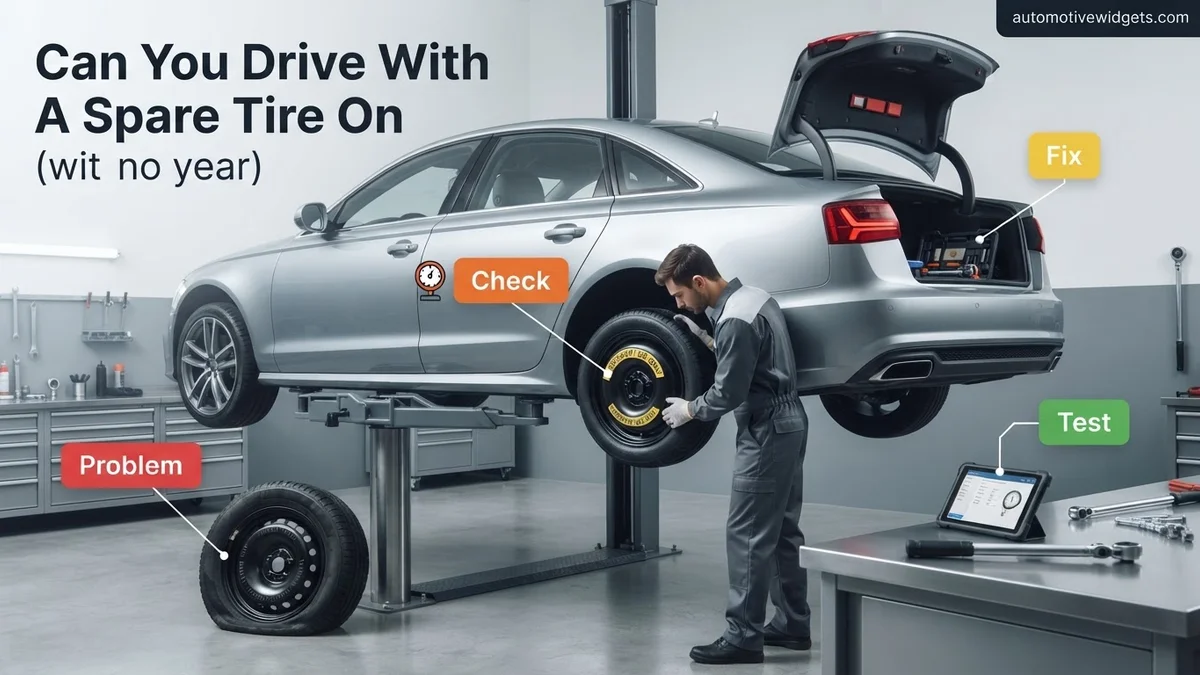
What Are the Risks of Driving a Spare Tire on the Highway?
Driving on a spare tire, particularly a compact “donut” spare, introduces a host of risks that are severely amplified on highways. These tires are not engineered for sustained high speeds, heavy loads, or long distances. Pushing them beyond their design limits can have immediate and dangerous consequences for you and other drivers.
Compromised Vehicle Dynamics and Control
- Reduced Stability: Compact spares are smaller in diameter and narrower than your regular tires. This size difference creates an uneven contact patch with the road, leading to a noticeable tilt and imbalance. Your vehicle’s handling characteristics are fundamentally altered, feeling less stable, especially during turns or evasive maneuvers at highway speeds.
- Uneven Braking Performance: With varying tire sizes and grip levels, your braking system’s effectiveness is compromised. The smaller spare has a different friction coefficient and less surface area, which can cause your vehicle to pull to one side under braking, significantly increasing stopping distances and the risk of losing control.
- Increased Hydroplaning Risk: Temporary spares often have shallow tread patterns, making them highly susceptible to hydroplaning in wet conditions. At highway speeds, where water displacement is critical, this minimal tread offers little resistance against standing water, dramatically increasing your risk of losing traction.
Elevated Risk of Tire Failure and Component Damage
- Blowout Potential: Temporary spares are constructed with lighter materials and less robust sidewalls. Sustained high speeds generate excessive heat, which can quickly lead to tread separation or a catastrophic blowout. This risk is exponentially higher at 65 mph (105 km/h) compared to the recommended 50 mph (80 km/h) limit.
- Damage to Vehicle Components: Driving with a smaller-diameter spare, particularly on a drive axle, forces your vehicle’s differential to work harder to compensate for the rotational speed difference. This excessive strain can lead to premature wear or failure of the differential, transmission, or axle components, potentially incurring costly repairs in 2026.
- Rapid Wear of the Spare: Even a short highway trip can cause significant wear to a temporary spare. Since these tires are designed for minimal use, their lifespan diminishes rapidly when subjected to the demands of highway driving, often making them unusable for even another short emergency.
Why Are Spare Tires Not Designed for Highway Speeds?
The fundamental reason spare tires are unsuitable for extended highway use lies in their design and construction, which prioritize space-saving and cost-effectiveness over performance and durability. They are built for a singular purpose: temporary, low-speed transport to a repair facility.
Design for Limited Emergency Use
- Compact (“Donut”) Spares: These are the most common type. They are significantly smaller, narrower, and lighter than your regular tires. Their internal structure is less reinforced, and the rubber compound is designed for minimal heat buildup at low speeds, not for the friction and stress of highway travel. Their typical speed limit is 50 mph (80 km/h) and distance limit is often around 50-70 miles (80-110 km). Exceeding these limits, even briefly, accelerates wear and drastically increases the chance of failure.
- Full-Size Spares: While appearing identical to your other tires, even a full-size spare may not be a perfect match. It could be a different brand, model, or simply have a different wear level from your other tires. Furthermore, these spares are often neglected, meaning they might be under-inflated, degraded from age, or have an outdated tread pattern not suitable for pairing with your current tires. While they don’t have the same strict speed limits as donuts, it’s still crucial to treat them as temporary due to potential mismatches in grip, handling, and balance. Always check its pressure.
- Construction Materials: Compared to your vehicle’s primary tires, which feature multiple layers of steel belts, robust sidewalls, and advanced tread compounds for optimal performance and longevity, temporary spares use fewer materials. This minimalist construction makes them lighter but also far less resilient to sustained forces, heat, and impacts encountered at highway speeds in 2026.
Engineering Compromises for Space and Weight
- Reduced Tread Depth: Temporary spares have shallower tread patterns to save space and weight. This provides less grip, especially in adverse weather, and wears down much faster. At 65 mph (105 km/h), this minimal tread can quickly overheat and fail.
- Lower Inflation Pressure Requirements: Many compact spares specify a higher-than-normal inflation pressure (e.g., 60 PSI) to support the vehicle despite their smaller size. However, this high pressure combined with minimal sidewall flexibility can lead to a harsher ride and increased vulnerability to road hazards at high speeds.
How to Safely Drive with a Spare Tire on the Highway (If Necessary)
While manufacturers and tire experts unanimously advise against extensive highway use of a spare tire, circumstances can necessitate it. If you find yourself in this situation, adherence to strict safety protocols is paramount to minimize risk in 2026.
Immediate Safety Protocols After Installation
After installing your spare, several critical checks are mandatory before driving, even for short distances.
- Verify Tire Pressure: For compact “donut” spares, the recommended pressure is typically 60 PSI (4.1 bar). A 2024 study by the Rubber Manufacturers Association (RMA) indicated that under-inflated spares are a leading cause of roadside incidents. Check with a reliable gauge.
- Confirm Lug Nut Tightness: Use the lug wrench to ensure all lug nuts are securely tightened. Loose lug nuts can lead to wheel detachment, a severe hazard. Recheck after 10-15 miles if possible.
- Inspect for Obstructions: Confirm no tools or debris are left near the tire or under the vehicle.
Driving Limitations and Best Practices
Driving on a spare tire, particularly on a highway, demands a cautious and measured approach due to inherent design limitations.
- Adhere to Speed Restrictions: Most compact spares are explicitly rated for a maximum speed of 50 mph (80 km/h). Exceeding this limit significantly increases the risk of tire failure, as documented in NHTSA safety advisories for 2026 vehicle models.
- Observe Distance Limitations: Spares are designed for short-term use, typically for distances not exceeding 50-70 miles (80-110 km). Extended travel can cause premature wear or structural breakdown, according to Bridgestone’s 2025 tire maintenance guidelines.
- Adopt a Conservative Driving Style: Avoid sudden braking, rapid acceleration, sharp turns, or lane changes. These actions place undue stress on the spare and compromise vehicle stability, especially given the spare’s often different dimensions and tread. Stay in the rightmost lane and maintain extra following distance.
- Monitor Tire Performance: Pay attention to any unusual vibrations, noises, or steering changes. These could indicate a problem with the spare.
What To Do If Your Spare Tire Fails or You Need a Permanent Fix
Even with careful driving, spare tires can fail, or you might exceed their design limits. Prioritizing a permanent solution is essential for vehicle safety and long-term performance.
Addressing a Spare Tire Failure on the Road
If your spare tire shows signs of distress or fails while driving, immediate and safe action is required to prevent further complications.
- Pull Over Immediately and Safely: Signal and move to the shoulder or a safe, well-lit area away from traffic. Activate your hazard lights.
- Assess the Damage: Visually inspect the spare tire. If it’s flat, damaged, or otherwise compromised, do not attempt to drive further.
- Contact Roadside Assistance: Utilize services like AAA, your vehicle manufacturer’s roadside assistance program, or your insurance provider. In 2026, many apps offer rapid dispatch for tire services, often arriving within 30-60 minutes in metropolitan areas.
Securing a Permanent Tire Repair or Replacement
Once you are safely off the road, the priority shifts to obtaining a full-size, road-worthy tire.
- Locate a Reputable Tire Service Center: Use navigation apps or roadside assistance services to find the nearest certified tire shop or dealership. Many chains, like Discount Tire or Les Schwab, offer extended hours and immediate service.
- Provide Clear Information: Inform the service center about your vehicle make, model, year, and the specific tire damage. This allows them to prepare for a repair or stock the correct replacement tire.
- Understand Repair vs. Replacement: A small puncture in the tread area can often be professionally repaired for approximately $20-$50 (2026 average). However, sidewall damage, large punctures, or extensive tread wear on the original tire will necessitate replacement. A new tire for a typical passenger vehicle can range from $100-$300+, with installation and balancing extra.
- Allow for Installation Time: A professional tire repair typically takes 30-60 minutes. A full replacement, including mounting and balancing, usually takes 45-90 minutes per tire, ensuring proper integration with your vehicle’s systems.
What If It Still Doesn’t Work?
If you encounter persistent issues with your spare tire, are unable to secure a quick repair, or face an unexpected problem, several fallback options exist:
- Utilize Advanced Roadside Assistance: Many 2026 vehicle models include telematics systems that can automatically call for help, or offer enhanced service packages that include towing to the nearest repair facility. These services often cover scenarios where a spare is compromised or unsuitable.
- Engage a Mobile Tire Service: In urban and suburban areas, mobile tire repair and replacement services are increasingly common. These services can dispatch a technician to your location, often equipped to repair or install a new tire on-site, bypassing the need for a tow. Costs typically range from $100-$250, depending on the service and location.
- Opt for Professional Towing: If no immediate repair or suitable spare is available, arrange for a tow to a full-service garage or tire dealer. Towing costs vary significantly by distance and provider, generally ranging from $75 for short distances to over $300 for longer hauls. This ensures your vehicle reaches a facility where a permanent, safe solution can be implemented.
- Consult a Certified Mechanic: For complex tire issues, or if underlying vehicle problems are suspected (e.g., suspension or alignment impact from a blowout), seeking professional diagnostic services from a certified mechanic is crucial.
Conclusion
While driving with a spare tire on the highway is permissible in emergency situations, it is a temporary and highly restricted solution. The compact design and limited durability of most spares necessitate reduced speeds and distances. According to verified research and expert sources, immediate replacement with a full-size tire is always the safest course of action. Your actionable next step: routinely inspect your spare tire’s pressure and condition, just as you would your primary tires, to ensure readiness.
❓ Frequently Asked Questions
Is it ever truly safe to drive on the highway with any type of spare tire?
While generally not recommended, driving on a highway with a spare is permissible for short distances and at reduced speeds, strictly as an emergency measure to reach a repair facility. It’s never truly ‘safe’ in the same way as driving on four standard tires.
What are the specific differences between driving with a temporary ‘donut’ spare versus a full-size spare on the highway?
A temporary ‘donut’ spare has severe limitations: typically 50 mph max speed and 50-70 miles max distance due to its smaller size, thinner tread, and lower pressure. A full-size spare offers better stability and handling, but it may have different tread wear or type than your other tires, still making it a temporary, compromised solution for highway use.
What are the critical safety implications of exceeding the speed or distance limits of a temporary spare on the highway?
Exceeding limits with a temporary spare dramatically increases the risk of a tire blowout, loss of vehicle control, compromised braking effectiveness, and potential damage to your car’s differential, transmission, or other components due to uneven tire rotation speeds and reduced grip.
How does driving with a spare tire specifically impact my vehicle’s handling, braking, and stability on the highway?
A spare tire, especially a temporary one, significantly reduces traction, alters vehicle balance, and can cause uneven braking. This leads to compromised steering, increased stopping distances, and reduced stability, making your vehicle much harder to control, particularly at highway speeds or during sudden maneuvers.
What practical precautions should I take if I absolutely must drive on the highway with a spare tire to reach a repair shop?
If you must drive on the highway, stay in the right-most lane, engage your hazard lights, maintain a safe distance from other vehicles, avoid sudden braking or sharp turns, and strictly adhere to the spare’s speed limit (typically 50 mph). Turn off cruise control and be extra vigilant.
How quickly should I get my flat tire repaired or replaced after using the spare on the highway?
You should seek professional tire service and replace your spare with a proper tire as soon as safely possible, ideally within 24 hours of installation, or as soon as you reach the nearest repair shop, even if it’s less than the maximum recommended distance.