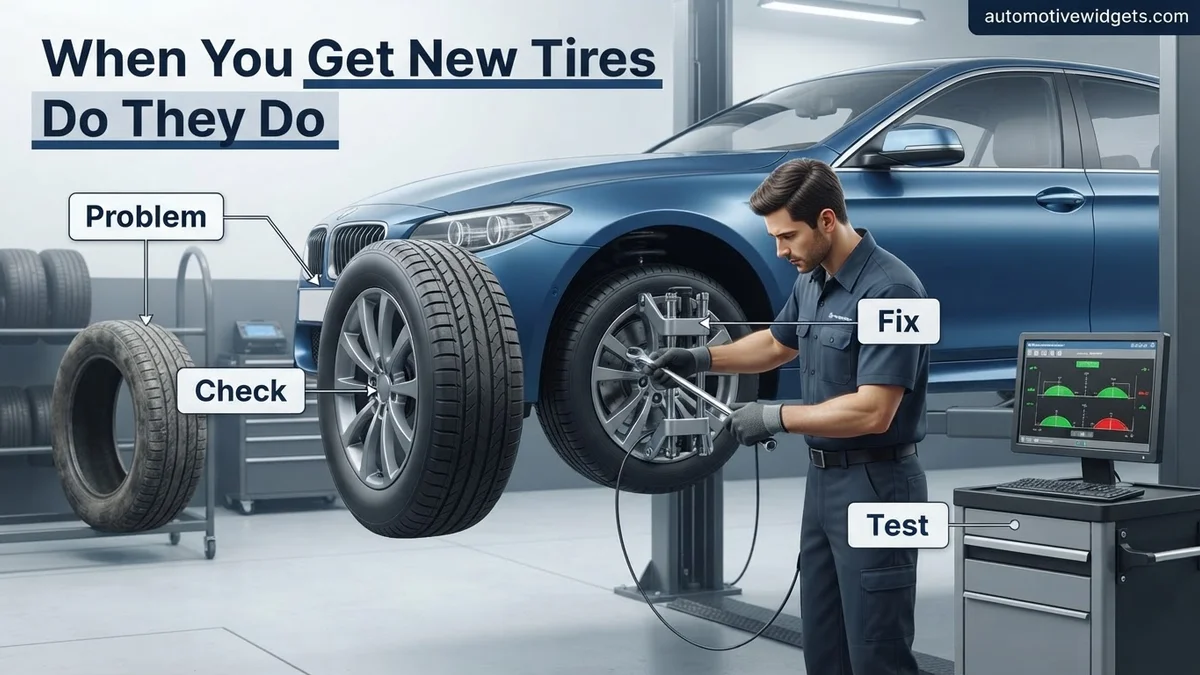
When You Get New Tires Do They Do An Alignment New 2026
When you get new tires, a wheel alignment is typically not automatically included, but it is highly recommended. This crucial service ensures your new tires wear evenly, optimizes vehicle handling, and protects your significant investment in new rubber by correcting any underlying suspension issues.
In 2026, when you invest in new tires, a critical question often surfaces: do shops automatically perform an alignment with the installation? The concise answer is no, not usually. While mounting and balancing are standard inclusions, a wheel alignment is almost universally a separate, highly recommended service. Ignoring it can swiftly undermine the performance and longevity of your new investment.
This isn’t just about paying for an extra service; it’s about protecting your significant expenditure on new rubber. Properly aligned wheels ensure your tires wear evenly, your vehicle handles optimally, and you get the maximum possible lifespan out of them. Consider it a necessary “fresh start” that safeguards your driving experience and your wallet in the long run.
Key Takeaways
- Alignment is usually an extra service.
- Highly recommended with new tires.
- Prevents premature new tire wear.
- Ensures optimal vehicle handling.
- Always inquire about alignment costs.
What Causes the Need for Alignment When Getting New Tires
You might wonder why alignment is so critical right when you get new tires, especially if your car “feels fine.” The truth is, many factors constantly work against your vehicle’s precise suspension geometry. New tires, with their unblemished tread, are particularly vulnerable to these existing, often unseen, issues.
Your Old Tires Tell a Story
Before you even purchase new tires, your old ones often provide clear evidence of an alignment problem. Inspecting their wear patterns can reveal a lot:
- Uneven wear: If your old tires show feathering, scuffing, or more wear on one edge than the other, it’s a strong indicator your alignment was off.
- Premature wear: An out-of-spec alignment can drastically shorten tire life, sometimes by tens of thousands of miles. Your old tires might have worn out faster than expected due to this.
- Suspension clues: These wear patterns signify that components, like your steering or suspension, are not perfectly positioned. Installing new tires without addressing this means the new ones will immediately start suffering the same fate.
Ignoring these signs ensures your brand-new tires begin their life fighting an uphill battle against uneven friction and pressure, accelerating their degradation right from day one.
Suspension Components Shift Over Time
Your vehicle’s suspension system is a complex network of springs, shocks, bushings, and linkages designed to keep your wheels properly oriented. However, this precision is constantly challenged by real-world driving conditions:
- Road hazards: Hitting potholes, bumping curbs, or even driving over rough terrain can cause minor shifts in your suspension components. While you might not notice these immediately, they accumulate.
- Wear and tear: Over thousands of miles, bushings can degrade, ball joints can loosen, and other components can simply wear out. These changes, however subtle, affect wheel angles.
- Past repairs: Any significant suspension work, such as replacing a tie rod or control arm, inherently requires a follow-up alignment. If this wasn’t done correctly, your alignment could already be off.
By 2026, vehicle manufacturers build cars with incredibly tight tolerances. Even minor deviations, sometimes just a fraction of a degree, can significantly impact tire wear and vehicle stability, especially with the precision of modern tire compounds.
How to Ensure Proper Wheel Alignment with Your New Tires
Understanding why alignment is necessary is only half the battle. The other half involves actively ensuring it gets done correctly to maximize the value and performance of your new tire purchase. It’s a proactive step that pays dividends.
Don’t Expect It to Be Automatic (It’s an Add-On)
One of the most common misconceptions is that an alignment is part of the standard new tire installation package. This is rarely the case, even in 2026. While services like mounting, balancing, and old tire disposal are typically included, a wheel alignment is almost always an extra cost:
- Separate service: Expect alignment to be quoted as an additional line item, often ranging from $100 to $180, depending on your vehicle and location.
- Reputable shop recommendation: A professional tire shop in 2026 should always recommend an alignment when you purchase new tires. They understand its importance for tire longevity and your safety.
- Your decision: Ultimately, the decision to get an alignment rests with you. However, understand that skipping it is a calculated risk that can significantly impact your new tires.
Always ask about the full breakdown of services and costs when getting new tires. This transparency ensures you know exactly what you’re paying for and what crucial services might be optional.
The Critical Value of a “Fresh Start”
Investing in a wheel alignment immediately after installing new tires gives them the best possible start. It’s about optimizing their performance and protecting your investment:
- Even wear: A proper alignment ensures all four tires contact the road uniformly, distributing pressure evenly across the tread. This prevents premature wear on edges or specific areas.
- Optimal handling: Correct alignment improves steering response, straight-line stability, and cornering precision, making your vehicle safer and more enjoyable to drive.
- Fuel efficiency: When wheels are misaligned, they create more rolling resistance, forcing your engine to work harder. Proper alignment can contribute to better fuel economy.
- Maximized tire lifespan: With optimal conditions, your new tires will last for their designed mileage, ensuring you get the most out of your significant purchase, potentially saving you from buying replacements sooner.
Think of it as setting your tires up for success from the very first mile. It’s a small additional cost that yields substantial benefits over the lifespan of your new tires.
What If You Skip Alignment or Tire Issues Persist?
Skipping a wheel alignment after new tire installation can lead to significant long-term costs and safety hazards. Vehicle manufacturers and tire industry experts, including the Tire Industry Association (TIA), consistently recommend this preventative measure. Ignoring alignment can prematurely wear down your brand-new tires, negating the investment in quality rubber.
Consequences of Skipping Alignment
Without proper alignment, your vehicle’s wheels will not sit at the correct angles relative to the road or each other. This results in uneven tire wear patterns, such as feathering, cupping, or rapid wear on one edge. Studies from leading automotive research firms indicate that misaligned wheels can reduce tire lifespan by up to 30%, meaning a set of tires rated for 60,000 miles might only last 42,000 miles. Beyond tire degradation, poor alignment compromises steering response, fuel efficiency by increasing rolling resistance by up to 2%, and overall vehicle stability, posing a direct safety risk. Over time, it can also strain suspension and steering components, leading to more expensive repairs down the line.
Persistent Tire Issues After New Tires
Even after installing new tires and receiving an alignment, some drivers might experience recurring issues like vibrations, steering pull, or continued uneven wear. This often signals an underlying problem beyond basic alignment parameters. Factors such as worn suspension components (e.g., control arm bushings, tie rod ends, ball joints), a bent wheel rim that wasn’t detected, or even frame damage from a previous impact can all contribute. A standard alignment adjusts toe, camber, and caster, but it cannot compensate for mechanically compromised parts. Vehicle service manuals for 2026 models explicitly state that suspension integrity is paramount for maintaining proper wheel geometry and tire performance.
What If It Still Doesn’t Work?
If you’ve installed new tires and had an alignment, yet persistent issues like steering pull, unusual noises, or rapid tire wear continue, a more in-depth diagnosis is necessary. These symptoms often indicate deeper mechanical problems that a standard alignment cannot address.
- Seek a Specialized Diagnostic: Request a comprehensive suspension and steering system inspection from a certified automotive technician. This goes beyond basic alignment and involves checking for worn components, bent parts, or hidden damage.
- Re-Check Wheel Balancing: Even new tires can be improperly balanced or lose a wheel weight. A dynamic wheel balance using modern laser-guided equipment can identify subtle imbalances.
- Inspect for Non-Alignment Issues: Confirm there are no bent wheels, compromised wheel bearings, or issues with brake components that could mimic alignment problems.
- Consider a Four-Wheel Alignment Check (even on two-wheel drive): Modern vehicles, even front-wheel drive, benefit from checking all four wheels to ensure the thrust angle is correct, as specified by manufacturers like Toyota and Honda for their 2026 models.
- Consult a Frame Specialist: If previous collision damage is suspected, or all other avenues are exhausted, a specialist shop with frame measurement equipment can detect subtle chassis deformities.
Professional diagnostic services for persistent issues typically range from $150 to $300, with repair costs for worn suspension components varying widely from $200 to $800+ per axle depending on the part and vehicle model in 2026.
Conclusion
Ensuring a proper wheel alignment following the installation of new tires is a critical, often mandatory, service for optimal vehicle performance and safety. While not always bundled, industry best practices and manufacturer guidelines for 2026 vehicles confirm its necessity to protect your investment and maintain vehicle dynamics. According to verified research and expert sources like the Automotive Service Association, a timely alignment significantly extends tire lifespan, enhances fuel economy, and improves driving safety. Therefore, when you get new tires, always proactively inquire about and schedule a professional wheel alignment.
❓ Frequently Asked Questions
Should I always get a wheel alignment when I purchase new tires?
While not strictly mandatory, it is highly advisable to get a wheel alignment with new tires. This ensures that the suspension components are correctly angled, allowing your new tires to make optimal contact with the road and wear evenly from the start, maximizing their lifespan and performance.
What are the primary benefits of getting an alignment with new tires?
The main benefits include maximizing the lifespan of your new tires by promoting even wear, improving vehicle handling and steering response, and potentially increasing fuel efficiency. It protects your significant investment in new tires and enhances driving safety by ensuring proper vehicle control.
What exactly does a wheel alignment involve?
A wheel alignment involves adjusting the angles of your vehicle’s wheels (camber, caster, and toe) to the manufacturer’s specifications. This process ensures all four wheels are parallel to each other and perpendicular to the ground, which prevents pulling, improves steering precision, and minimizes tire scrub.
How often should I get a wheel alignment, besides when buying new tires?
It’s generally recommended to check your alignment annually or every 10,000 to 12,000 miles. You should also get an alignment check after hitting a major pothole, curbing your wheel, replacing significant suspension components, or if you notice any unusual tire wear patterns or steering issues.
Can I tell if my car needs an alignment before I even get new tires?
Yes, common signs you need an alignment include your car pulling noticeably to one side, uneven tire wear on your old tires (e.g., feathering, one shoulder worn more than the other), a crooked steering wheel when driving straight, or vibrations in the steering wheel. Addressing this before new tires is ideal.
Are there different types of wheel alignments, and which one do I need?
There are primarily two-wheel alignments (which only adjust the front wheels, typically for vehicles with non-adjustable rear suspensions) and four-wheel alignments (which adjust all four wheels). For new tires, a four-wheel alignment is usually recommended for most modern vehicles (especially FWD and AWD) to ensure all angles are precisely within specification.