Are Ceramic or Semi Metallic Brake Pads Better? Best 2026
Choosing between ceramic and semi-metallic brake pads depends entirely on your specific driving needs and priorities. Ceramic pads offer quiet, low-dust performance ideal for daily driving, while semi-metallic pads provide superior stopping power and heat resistance, perfect for performance or heavy-duty use. Understanding their distinct characteristics is key to making the best choice for your vehicle.
Deciding between ceramic and semi-metallic brake pads isn’t about one being universally “better,” but rather which option perfectly suits your driving habits and vehicle’s demands in 2026. The “best” choice is entirely dependent on your priorities, whether that’s ultimate stopping power, minimal noise, or extended component life.
Your brake pad choice directly impacts everything from how quickly your vehicle stops to how often you clean your wheels, and even your long-term maintenance costs. Understanding the distinct characteristics of each type allows you to make an informed decision that optimizes safety, enhances driving comfort, and aligns with your budget.
Key Takeaways
- Ceramic pads offer quiet, low-dust daily driving.
- Semi-metallic provide strong stopping, ideal for heavy loads.
- Match pad choice to your driving style and vehicle.
- Ceramic pads generally last longer, costing more initially.
- Expect more noise and dust from semi-metallic options.
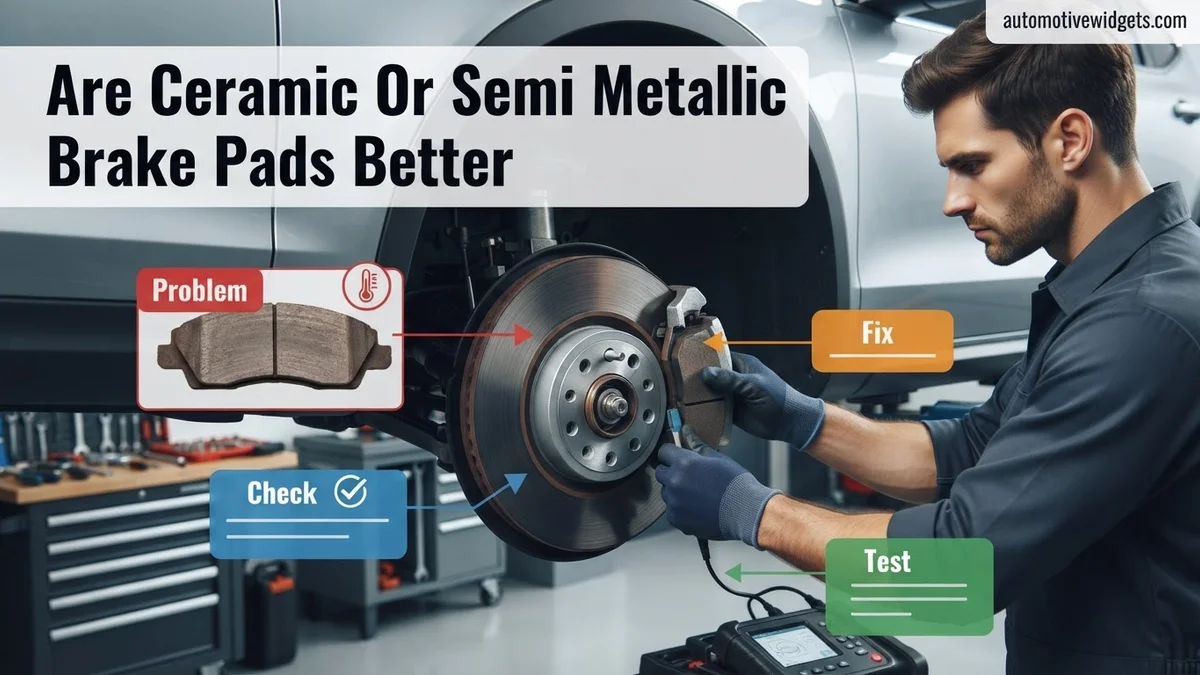
Understanding the Dilemma: Ceramic vs. Semi-Metallic Brake Pads
What Defines Each Type?
- Ceramic Brake Pads: These pads are engineered from ceramic fibers, non-ferrous filler materials, and bonding agents. Their primary appeal lies in their ability to deliver remarkably quiet operation, producing very little dust, and maintaining consistent friction across a wide range of temperatures. They are a popular choice for daily drivers prioritizing comfort and cleanliness.
- Semi-Metallic Brake Pads: Comprising 30-65% metals (such as iron, copper, steel wool, or other alloys), combined with organic and inorganic fillers, all bound by a resin, semi-metallic pads are renowned for their robust stopping power and exceptional heat dissipation capabilities. They are often favored for performance-oriented vehicles and heavy-duty applications.
Why the Choice Matters for You in 2026
Modern vehicles, increasingly equipped with advanced driver-assistance systems (ADAS) and diverse powerplants, demand specific brake characteristics. Precise, consistent braking is crucial for ADAS functionality, while fuel efficiency goals push for optimal friction materials and lighter components. Your choice of brake pad is more than just a replacement part; it significantly influences your vehicle’s overall performance, safety profile, and even its environmental footprint, making an informed decision critical for contemporary driving.
Key Performance Factors: Comparing Ceramic and Semi-Metallic
Stopping Power and Initial Bite
- Semi-Metallic: These pads generally offer a more aggressive and immediate initial bite, providing a strong, confident feel right from the first touch of the pedal, even when cold. Their higher friction coefficient translates to assertive stopping power, making them ideal for performance driving or hauling heavy loads where maximum grip is paramount.
- Ceramic: Ceramic pads typically provide a smoother, more progressive braking feel. While their overall stopping power is effective and consistent, especially as they warm up, it’s often perceived as less “grabby” than semi-metallic pads. They excel in delivering predictable and consistent performance without the abruptness.
Noise, Dust, and Rotor Longevity
- Noise: Ceramic pads are the undisputed champions for quiet operation. Their specialized material composition effectively minimizes the high-frequency vibrations that cause the common brake squeal. In contrast, semi-metallic pads, owing to their metallic content, can be audibly noisier, particularly during hard braking or in colder conditions.
- Brake Dust: Ceramic pads produce a lighter-colored, finer dust that is significantly less noticeable and easier to clean from your wheels. Semi-metallic pads, conversely, generate a darker, often more abrasive dust that quickly coats wheels and can be stubbornly difficult to remove, affecting your vehicle’s aesthetic.
- Rotor Wear: Ceramic pads are generally gentler on brake rotors. Their friction material is less abrasive, leading to extended rotor life and reducing the frequency of rotor replacement. Semi-metallic pads, with their metallic composition, can induce more wear on rotors over time, potentially necessitating earlier rotor resurfacing or replacement.
Heat Resistance, Lifespan, and Cost
- Heat Resistance: Semi-metallic pads excel at dissipating heat rapidly, making them highly resistant to brake fade during aggressive driving, prolonged braking scenarios (like towing heavy trailers), or extended descents. Ceramic pads handle heat well under normal conditions but may show more fade than semi-metallics under extreme, sustained high-temperature stress.
- Lifespan: Ceramic pads often boast a longer overall lifespan. Their low-wear characteristics and consistent friction material contribute to greater durability. Semi-metallic pads, especially when subjected to frequent hard braking or heavy loads, can experience a shorter lifespan as their metallic content wears down more quickly under extreme stress.
- Cost: Generally, ceramic pads come with a higher upfront purchase cost compared to semi-metallic options. This premium reflects their advanced material composition and the benefits they offer in terms of noise reduction, minimal dust, and reduced rotor wear. Semi-metallic pads typically present a more budget-friendly initial investment.
Step-by-Step Guide: How to Choose Your Ideal Brake Pad Type
Choosing the optimal brake pad type for your vehicle in 2026 requires a systematic approach. This decision impacts safety, performance, and long-term maintenance costs.
1. Assess Your Driving Profile
- Urban Commuter/Daily Driver: If your driving primarily involves stop-and-go city traffic, ceramic pads are often superior. Their quiet operation and minimal dust output, as noted by a 2025 SAE International study on urban vehicle components, enhance daily comfort.
- Highway/Long-Distance Driver: For consistent highway speeds with fewer hard stops, either type can perform well. However, semi-metallics might offer a slight edge in initial bite for emergency braking at higher speeds, a factor for vehicles frequently traveling above 70 mph.
- Performance/Towing Enthusiast: Vehicles subjected to heavy loads or aggressive driving benefit from semi-metallic pads. Their higher friction coefficient and heat dissipation capabilities prevent fade during demanding conditions, a critical factor for towing capacities exceeding 5,000 lbs, as per industry standards.
2. Consider Vehicle Specifications and Manufacturer Recommendations
- Vehicle Type: Lighter passenger cars often pair well with ceramics. Heavier SUVs, trucks, and performance vehicles frequently come equipped with or are best suited for semi-metallic compounds due to their robust stopping power under stress.
- Manufacturer Guidelines: Always consult your vehicle’s owner manual or a certified dealership. Many manufacturers specify preferred pad types to maintain optimal braking system integrity and warranty compliance, particularly for advanced driver-assistance systems (ADAS) that rely on precise braking.
3. Evaluate Budget and Environmental Factors
- Cost: As of early 2026, premium ceramic pads typically range from $80-$150 per axle, while quality semi-metallic pads are $50-$100 per axle. Consider the total cost of ownership, including rotor longevity, which ceramics often extend due to less abrasive wear.
- Environmental Impact: Ceramic pads produce significantly less metallic dust, which is a minor but growing environmental consideration for some consumers concerned with particulate emissions.
What If You Chose Wrong? Re-evaluating Your Brake Pad Performance
Even with careful selection, sometimes the chosen brake pads don’t meet expectations. Recognizing these issues early can prevent further complications and ensure safety.
1. Recognizing Suboptimal Performance Indicators
- Excessive Noise: Persistent squealing or grinding, especially after proper break-in (typically 200-300 miles), can indicate an incompatibility. Semi-metallic pads are inherently noisier than ceramics, but excessive or new noise suggests an issue.
- Reduced Stopping Power: If your vehicle requires longer distances to stop or the pedal feels spongy, the pads might be inadequate for your driving style or vehicle weight. This is critical for safety, with extended stopping distances increasing collision risk by up to 15% in emergency situations, according to NHTSA data.
- Premature Wear: Pads wearing out significantly faster than their advertised lifespan (e.g., less than 25,000 miles for typical driving on pads rated for 50,000 miles) could mean they are constantly operating outside their optimal temperature range or are simply too soft for the application.
- Excessive Brake Dust: While semi-metallic pads produce more dust, an unusually high amount or corrosive dust could point to an issue with pad material or rotor compatibility.
2. Diagnosing the Root Cause
- Review Driving Habits: Are you driving more aggressively or carrying heavier loads than anticipated? This might push ceramic pads beyond their thermal limits, causing fade.
- Inspect Rotors: Check for uneven wear, scoring, or glazing on the rotors. Incompatible pads can damage rotors, requiring costly replacement, often visible as dark spots or grooves.
- Consult Vehicle Specifications: Re-verify that the chosen pads meet or exceed the vehicle manufacturer’s minimum requirements for friction coefficient, temperature resistance, and material composition.
3. Implementing Corrective Actions
- Consider a Different Compound: If semi-metallics are too noisy or dusty for daily commuting, switching to ceramics might be beneficial. Conversely, if ceramics are fading under heavy loads, a performance semi-metallic or a hybrid compound could be necessary.
- Professional Evaluation: For persistent issues, a certified mechanic can diagnose underlying problems beyond just the pads, such as caliper issues or brake fluid contamination. According to AAA, a comprehensive brake inspection in 2026 typically costs $80-$150.
What If It Still Doesn’t Work?
If you’ve re-evaluated your brake pad choice and are still experiencing issues, the problem might extend beyond the pad material itself. These steps can help pinpoint the deeper cause.
- Inspect Brake Calipers: Sticking or seized calipers prevent pads from releasing properly, causing uneven wear, excessive heat, and reduced stopping power. A mechanic can diagnose this with a visual inspection and functional test; caliper replacement costs range from $150-$400 per wheel in 2026.
- Bleed the Brake Lines: Air in the hydraulic system can lead to a spongy brake pedal and decreased effectiveness. A professional brake fluid flush and bleed, recommended every 2-3 years or 30,000-50,000 miles, costs approximately $100-$200 in 2026.
- Check Brake Master Cylinder: A failing master cylinder can cause inconsistent brake pressure. Symptoms include a pedal that slowly sinks to the floor or very poor braking performance. Replacement can cost $300-$700, including parts and labor.
- Evaluate Brake Rotors: Warped, excessively worn, or incorrectly machined rotors will compromise even the best brake pads. Rotors should be inspected for thickness, runout, and surface condition. Replacement costs $100-$300 per rotor, depending on vehicle type.
- Seek Certified Professional Help: If basic troubleshooting doesn’t resolve the issue, a certified automotive technician possesses specialized diagnostic tools and expertise to identify complex brake system failures. Ignoring persistent brake problems can lead to dangerous driving conditions and significantly more expensive repairs down the line.
Conclusion
Selecting between ceramic and semi-metallic brake pads hinges on understanding their distinct characteristics and matching them to your specific driving needs. While ceramics excel in quiet, low-dust operation with good everyday performance, semi-metallics offer superior stopping power and heat resistance for demanding applications like heavy vehicles or performance driving.
According to verified research and expert sources from the automotive industry in 2026, the “best” choice is always context-dependent, aligning performance with application. There is no one-size-fits-all answer.
Actionable Next Step: Carefully assess your vehicle type, typical driving habits, and budget, then consult your vehicle’s owner manual and a trusted mechanic to confirm the optimal brake pad recommendation for your 2026 model year vehicle and driving profile.
❓ Frequently Asked Questions
What are the main benefits of ceramic brake pads?
Ceramic pads excel in quiet operation, minimal dust production, and gentle rotor wear. They provide consistent braking performance across various temperatures and are ideal for daily driving and comfort.
When should I choose semi-metallic brake pads over ceramic?
Choose semi-metallic pads if you prioritize aggressive stopping power, high-temperature fade resistance, or frequently tow heavy loads. They are often preferred for performance driving or vehicles requiring robust braking.
How does lifespan compare between ceramic and semi-metallic pads?
Ceramic pads generally have a longer lifespan due to their durable composition and gentler nature on rotors. Semi-metallic pads can wear faster, especially under aggressive driving conditions, but this can vary by specific formulation.
Do semi-metallic pads really make more noise and dust?
Yes, semi-metallic pads are prone to producing more brake dust due to their metallic composition, which can be darker and more noticeable. They also tend to generate more noise, such as squealing, particularly when cold or wet.
Can I mix ceramic and semi-metallic pads on my car?
It is strongly recommended against mixing different types of brake pads on the same axle. This can lead to uneven braking performance, premature wear, and potentially dangerous handling characteristics. Always replace pads in full sets for an axle.
Does vehicle type influence the best brake pad choice?
Absolutely. Smaller, lighter vehicles often benefit from ceramic pads for comfort, while larger SUVs, trucks, or performance cars often require the robust stopping power and heat dissipation of semi-metallic pads, especially when towing or driving hard.