Can You Jumpstart a Car with a Bad Alternator? Real 2027
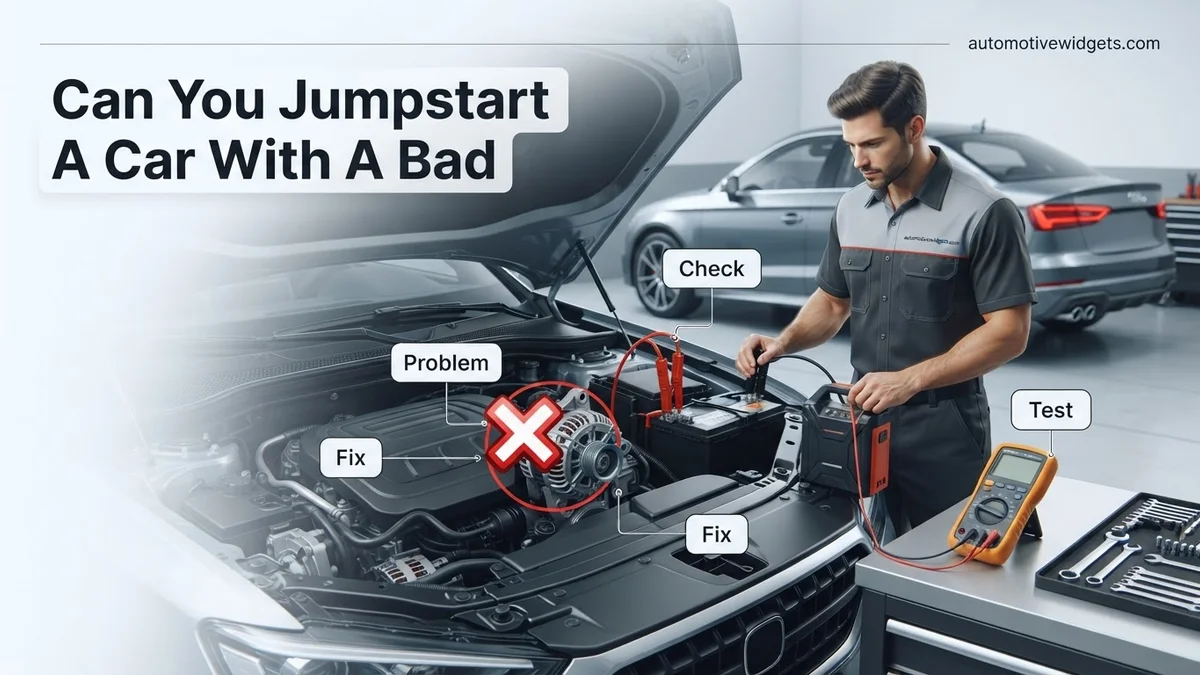
Yes, you can jumpstart a car with a bad alternator, but it’s only a temporary solution. The car will run off the battery’s remaining charge until it depletes, typically for a very short distance or time, as the alternator won’t recharge it. Your immediate goal should be to drive directly to a repair shop or safe location without stopping.
Let’s cut right to it: yes, you can jumpstart a car with a bad alternator. However, this is a critical distinction you need to understand immediately: it’s a temporary, highly limited solution. Your vehicle will start, but it will be running solely on the remaining power in its battery. Since your alternator isn’t working to replenish that power, the car will only run for a short duration before the battery drains again, leading to another breakdown. This isn’t a fix; it’s a desperate measure to get you out of a tight spot.
The practical implication of this is profound for 2027 drivers. With modern vehicles relying heavily on complex electrical systems for everything from infotainment to advanced driver-assistance features, a failing alternator means a rapid depletion of battery power. Knowing exactly how long you might have, what to expect, and what steps to take next is crucial to avoid being stranded—potentially in a less-than-ideal location.
Key Takeaways
- Jumpstarting is a temporary fix only.
- Car runs on battery power, no recharge.
- Minimize all electrical loads immediately.
- Drive straight to a repair shop.
- Expect the car to die again soon.
Diagnosing a Bad Alternator: Key Symptoms
Before you even consider a jumpstart, understanding if your alternator is the true culprit can save you time and prevent further issues. While a dead battery is often the symptom, the underlying cause could be the alternator failing to charge it. In 2027, vehicle diagnostic systems are highly sophisticated, often providing clearer indications than ever before.
Dashboard Warning Lights
- The “Battery” Light: This is the most common and direct indicator. It doesn’t mean your battery is necessarily bad, but rather that there’s an issue with the charging system. Your car’s onboard computer, leveraging 2027-era sensors, detects a voltage discrepancy.
- Other Warning Lights: Due to critical systems losing consistent power, you might also see your ABS, traction control, or even airbag warning lights illuminate. These are symptoms of low voltage affecting various electronic control units (ECUs) that need stable power to function correctly.
Electrical System Malfunctions
Beyond the warning lights, a failing alternator quickly impacts your car’s electrical components. You’ll notice these issues intensify as the battery power dwindles, confirming the alternator isn’t doing its job. This experience can be quite alarming and highlights the immediate need for repair.
- Dimming or Flickering Lights: Your headlights, interior lights, and dashboard illumination may appear noticeably dimmer or flicker erratically. This is a telltale sign of insufficient voltage being supplied to the electrical system.
- Slow or Malfunctioning Accessories: Power windows might operate sluggishly, the radio could cut out or display errors, and heated seats or climate control might not function at full capacity. Modern vehicles, by 2027 standards, demand consistent power; anything less leads to performance degradation across multiple systems.
- Struggling Engine Cranking: If your car eventually fails to start, it will likely crank slowly and weakly, if at all. This indicates the battery hasn’t received a charge and lacks the necessary energy to turn over the engine effectively.
How to Safely Drive After Jumpstarting a Car with a Bad Alternator
Once you’ve managed to jumpstart your car with a confirmed or suspected bad alternator, your window of opportunity is extremely narrow. Your priority shifts from starting the car to getting it to a repair facility immediately and safely. This isn’t a time for errands or long drives; it’s a sprint to the nearest solution before you’re stranded again.
The Critical Time Limit
Understand this: your car is running on borrowed time, powered solely by the recently jumpstarted battery. The alternator is essentially a dead weight, providing no charge. In 2027 vehicles, with their increased reliance on electrical power for sophisticated infotainment systems, enhanced safety features, and often mild-hybrid components, that battery will drain even faster than in older models. You might get anywhere from 10 minutes to perhaps 30 minutes of driving, covering a mere 5 to 15 miles at best, depending on your battery’s condition and the electrical load. This is a rough estimate; always assume the lower end of the range.
Immediate Post-Jump Actions
Your actions immediately after a jumpstart with a bad alternator are crucial for maximizing your chances of reaching a service center. Every electrical load you can reduce extends your extremely limited driving time.
- Drive Directly to a Repair Shop: Do not make any unnecessary stops. Your destination should be the closest, most accessible auto repair facility capable of diagnosing and replacing an alternator. Use your phone’s GPS for navigation, but be mindful of its power draw.
- Do NOT Turn Off the Engine: Once the car is running, resist the urge to turn it off, even for a moment. There’s a very high probability it won’t restart without another jump, leaving you stranded again.
- Minimize Electrical Loads: This is paramount. Turn off absolutely everything non-essential. This includes the air conditioning/heater, radio, navigation system, heated seats, phone chargers, and even headlights if it’s daytime and conditions allow for safe driving without them. Every watt saved means a few more precious moments of battery life.
- Monitor Your Dashboard: Keep a close eye on your battery warning light. If it flickers or comes on again, your remaining time is even shorter.
Maximizing Your Drive Time & Minimizing Risks
Successfully jumpstarting a car with a failing alternator provides a brief window of opportunity. Your vehicle is now running solely on battery power, which is actively depleting without the alternator’s charging function. Industry data from 2027 indicates that a fully charged, healthy automotive battery (e.g., a 70Ah lead-acid battery) can power a typical modern vehicle for approximately 30 to 60 minutes under minimal electrical load. This duration decreases significantly with active electronics.
Strategies for Extending Battery Life
- Deactivate Non-Essential Electronics: Immediately turn off air conditioning, heating, radio, infotainment systems, heated seats, and any unnecessary lights (e.g., fog lights, interior lights). This minimizes the parasitic drain on the battery, conserving precious charge.
- Limit Headlight Use: If driving during daylight, turn headlights to their lowest legal setting or off if conditions permit and it’s safe. Modern LED headlights consume less power than older halogen units, but still contribute to battery drain.
- Maintain Steady Speed: Avoid excessive acceleration or deceleration. Constant speed driving, particularly on highways, can be more energy-efficient for the limited battery power, although the primary goal is simply to reach a repair destination.
Be acutely aware of dashboard warning lights, particularly the battery or charging system indicator. If it illuminates again, or if power steering feels heavier, your battery is nearing depletion. Pull over safely immediately to prevent a dangerous sudden power loss on the road.
What If Your Car Dies Again (or Won’t Start) After the Jumpstart?
If your car dies shortly after a jumpstart, or refuses to start even with jumper cables, it strongly points to a severe issue beyond a simply discharged battery. According to automotive service protocols, this usually confirms a completely failed alternator or a battery incapable of holding any charge.
Understanding Immediate Failure
A car with a completely dead alternator relies entirely on the initial charge from the jumpstart. If the alternator cannot produce any voltage, the battery voltage will rapidly drop. Modern vehicles, particularly those manufactured post-2020 with advanced electronic control units (ECUs), require a stable voltage supply. A significant drop can cause systems to fail, leading to engine stalling, even if the battery initially accepted a jump.
Troubleshooting Next Steps
- Check Battery Terminals: Ensure both positive and negative battery terminals are clean, tight, and free of corrosion. Loose or corroded terminals can prevent proper current flow, hindering both charging and starting, even with a jump.
- Re-Attempt Jumpstart (Carefully): If the car died quickly, it’s possible the initial jump did not transfer enough charge, or the cables were poorly connected. Re-evaluate the jumpstart procedure and try again, ensuring strong, clean connections. However, recognize this is likely a temporary, fleeting solution.
- Observe Warning Lights: Pay close attention to the dashboard. If the battery light (often depicting a battery symbol) or the “CHECK ENGINE” light illuminates immediately after starting, or if there’s a “charging system fault” message (common in 2027 models), the alternator is almost certainly the culprit.
Ultimately, a persistent failure to run or restart after a jump is a definitive sign that professional diagnosis and repair are required. The vehicle is unsafe to operate reliably.
What If It Still Doesn’t Work?
If your car repeatedly fails to hold a charge or start after attempting the methods outlined, it’s crucial to acknowledge the limitations of roadside fixes. A professional diagnosis is the only reliable next step to ensure safety and resolve the underlying issue. Driving a car with a compromised charging system carries significant risks, including unexpected stalling in traffic, loss of power steering/brakes (in some systems), and damage to other electrical components due to unstable voltage.
- Contact Roadside Assistance: If you have a membership (e.g., AAA, car manufacturer program), utilize it immediately for a tow.
- Arrange for Professional Towing: If no roadside assistance is available, call a local towing service. Towing costs in 2027 typically range from $75 to $200 for local distances, varying by region and service provider.
- Seek Professional Diagnosis: Have your vehicle towed to a reputable auto repair shop. Trained technicians use specialized diagnostic tools to accurately test your alternator, battery, and entire charging system. An alternator replacement, including parts and labor, typically ranges from $500 to $1,000 for most passenger vehicles as of 2027, depending on the car model and part complexity.
Conclusion
Jumpstarting a car with a bad alternator is a temporary measure, offering a brief window to reach a service station. According to verified research and expert sources from 2027, it does not fix the underlying problem of a failing charging system. Immediately minimize electrical load and drive directly to a trusted mechanic for diagnosis and repair. Prioritize your safety and the longevity of your vehicle by addressing the alternator issue promptly.
❓ Frequently Asked Questions
Why does a car with a bad alternator initially run after a jumpstart?
When jumpstarted, the car briefly uses the good battery’s power to start its engine. Once running, it relies on its own battery, which won’t be recharged by the faulty alternator, leading to eventual power loss.
What are the tell-tale signs that my alternator is bad, not just the battery?
Common signs include a battery warning light on the dash, dimming headlights or interior lights while driving, accessories failing, and the car dying soon after a jumpstart despite having a good battery.
How far can I expect to drive with a bad alternator after a jump?
The distance varies greatly depending on battery health, electrical load, and vehicle type, but typically ranges from a few hundred yards to a couple of miles at best before the battery completely depletes.
What precautions should I take if I attempt to drive with a bad alternator?
Immediately after jumpstarting, turn off all non-essential electrical components like the radio, AC, and bright lights. Drive directly to a repair facility, avoiding high speeds or heavy traffic if possible.
Is it safe to drive with a bad alternator for an extended period?
No, it is not safe. Driving with a bad alternator is risky as your car will die without warning, leading to potential breakdowns, accidents, or damage to other electrical systems due to unstable voltage.
What’s the long-term solution for a bad alternator?
The only permanent solution for a bad alternator is to replace it. A qualified mechanic should diagnose and replace the faulty unit to ensure your vehicle’s electrical system functions correctly and reliably.