How Often Does Brake Fluid Need To Be Changed How 2027
Brake fluid must be changed periodically because it is hygroscopic, absorbing moisture over time. This water contamination lowers its boiling point, leading to reduced braking efficiency and potential system damage. Regular replacement is crucial for optimal safety and performance.
For most vehicles on the road in 2027, you should plan to change your brake fluid every two years or 30,000 miles, whichever comes first. This isn’t just a suggestion; it’s a critical safety measure that directly impacts your car’s stopping power and the longevity of its brake system. Neglecting this simple maintenance task can lead to significantly reduced braking performance, expensive repairs, and, most importantly, compromised safety on the road.
Understanding why this interval is so crucial can save you from potential hazards and costly breakdowns. Your brake fluid works tirelessly under extreme conditions, and its effectiveness diminishes over time due to unavoidable factors. Keeping your brake fluid fresh ensures your braking system remains responsive and reliable, providing peace of mind every time you get behind the wheel of your 2027 vehicle.
Key Takeaways
- Change brake fluid every 2 years or 30k miles.
- Moisture contamination degrades fluid, lowering boiling point.
- Consult your vehicle’s owner’s manual for specifics.
- Test fluid regularly for water content level.
- Old fluid risks brake fade and component corrosion.
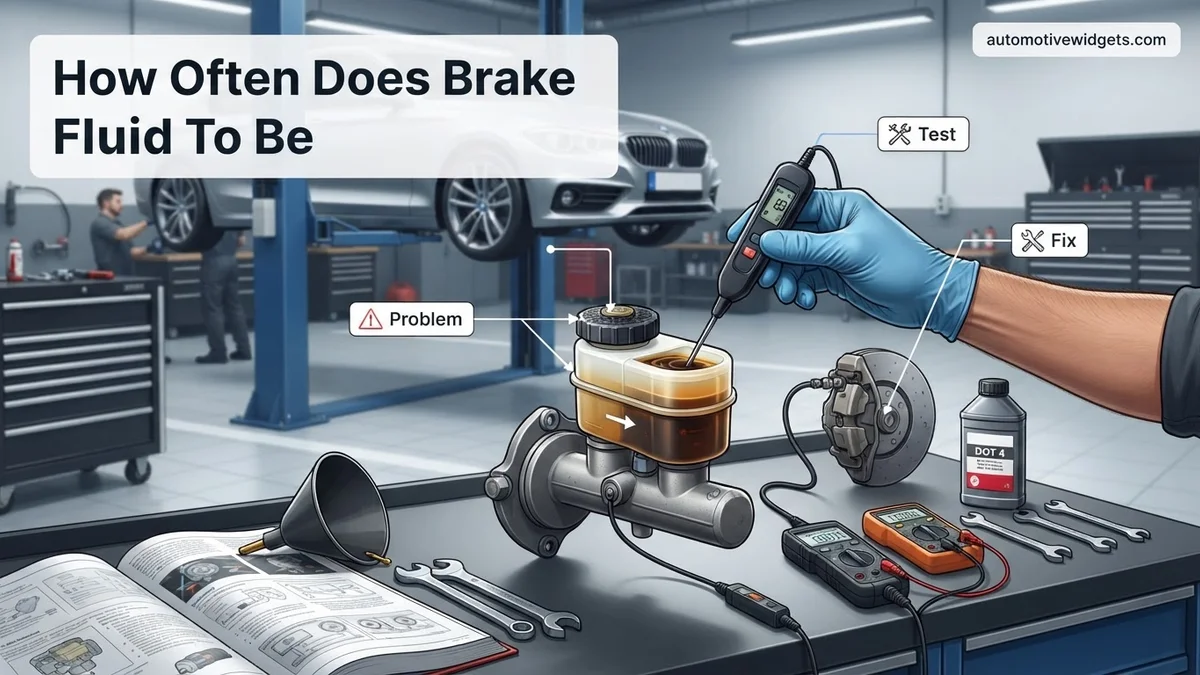
What Causes Old Brake Fluid Problems?
Your brake fluid is the unsung hero of your vehicle’s braking system, but it has a fundamental weakness: it’s incredibly prone to contamination. Over time, this contamination leads to two major issues that severely compromise your safety and vehicle health.
The Moisture Magnet Problem
The primary culprit behind brake fluid degradation is its hygroscopic nature. This means brake fluid, particularly the common DOT3, DOT4, and DOT5.1 types used in 2027 vehicles, readily absorbs moisture from the air. Even through seemingly sealed components like rubber brake hoses and reservoir caps, tiny amounts of humidity seep in.
- Lowered Boiling Point: As water mixes with the fluid, it drastically lowers the fluid’s boiling point. Brake systems generate immense heat during braking. Fresh DOT4 fluid might boil at over 446°F (230°C), but with just 3% water, its boiling point can drop to below 320°F (160°C).
- Vapor Lock Risk: When contaminated fluid heats up and boils, it creates compressible vapor bubbles within the brake lines. Unlike fluid, vapor can be compressed. When you press the brake pedal, instead of directly transferring force to the calipers, the pedal simply compresses these bubbles, resulting in a spongy pedal feel or, worse, complete brake failure known as “vapor lock.”
Internal Corrosion and Damage
Moisture isn’t just a boiling point problem; it’s also a major instigator of corrosion within your brake system. The water introduced into your brake fluid can lead to rust and deterioration of critical metal components.
- System Components: Over time, water can corrode the internal surfaces of brake lines, calipers, wheel cylinders, and even the sophisticated anti-lock braking system (ABS) and electronic stability control (ESC) units. These components are incredibly precise and expensive to replace.
- Reduced Performance: Corroded internal surfaces can create friction, impede fluid flow, and cause seals to degrade, leading to sticky calipers or leaks. This directly translates to reduced braking efficiency and an inconsistent pedal feel. Early signs of rust in your fluid can mean significant damage is already occurring internally, which could lead to very costly repairs for your 2027 vehicle’s advanced braking systems.
From Start to Finish: Brake Fluid Change Intervals Explained
Understanding when to change your vehicle’s brake fluid is paramount for maintaining optimal braking performance and ensuring your safety on the road. Brake fluid, a critical component of your car’s hydraulic braking system, is unique because it’s hygroscopic, meaning it readily absorbs moisture from the air. This absorbed water significantly lowers the fluid’s boiling point, leading to potential brake fade and reduced stopping power. This comprehensive guide will walk you through the essential steps to determine the ideal brake fluid change interval for your specific vehicle and driving conditions, helping you make informed decisions for preventative maintenance.
Step 1: Understand the Role of Brake Fluid and Its Vulnerabilities
What you need: A basic grasp of how your vehicle’s braking system operates.
Instructions: Begin by recognizing that brake fluid transmits the force from your brake pedal to the brake calipers, pressing the pads against the rotors to slow or stop your vehicle. It operates under immense pressure and generates considerable heat. The fluid’s most critical vulnerability is its hygroscopic nature; it absorbs moisture over time, even through microscopic pores in brake lines and seals. Water contamination leads to corrosion within the brake system components and drastically lowers the fluid’s boiling point. When brakes get hot during heavy use, this water can boil and create compressible vapor pockets, resulting in a spongy pedal feel and dangerous loss of braking effectiveness.
Pro Tip: Never underestimate the importance of brake fluid. It’s not just about stopping; it’s about reliable, consistent stopping power under all conditions, directly impacting vehicle safety.
Step 2: Consult Your Vehicle’s Owner’s Manual
What you need: Your vehicle’s owner’s manual (physical copy or digital version online).
Instructions: This is your primary and most reliable source of information. Manufacturers specify maintenance schedules based on extensive testing specific to your vehicle’s design and components. Locate the “Maintenance Schedule” or “Service Intervals” section in your owner’s manual. Look for recommendations regarding brake fluid replacement. Some manufacturers suggest intervals as short as every two years, while others might extend it to five years or a specific mileage (e.g., 30,000 to 60,000 miles). Adhering to these factory recommendations ensures your vehicle operates as intended and can prevent premature wear or failure of brake system components.
Pro Tip: Always prioritize your manufacturer’s specific recommendations over general advice. They know your vehicle best.
Step 3: Recognize the Common Industry Guideline
What you need: General awareness of automotive maintenance standards.
Instructions: While your owner’s manual is supreme, a widely accepted industry guideline for brake fluid replacement, especially for most passenger vehicles, is every 2 to 3 years, or approximately every 30,000 to 45,000 miles. This general timeframe accounts for the typical rate at which brake fluid degrades and absorbs moisture under average driving conditions. Even if your manual specifies a longer interval, many experienced technicians recommend adhering closer to the 2-3 year mark, particularly if you live in a humid climate or frequently drive in demanding conditions. This acts as a good baseline when evaluating your specific situation.
Pro Tip: If your owner’s manual doesn’t explicitly state a brake fluid change interval, default to the 2-3 year recommendation as a safe preventive measure.
Step 4: Perform a Visual Inspection of the Brake Fluid
What you need: A flashlight, clean lint-free rag, and safety glasses.
Instructions: Pop your hood and locate the brake fluid reservoir, usually a translucent plastic tank mounted on the firewall near the driver’s side. With the engine off and the vehicle on level ground, put on your safety glasses. Observe the fluid level, ensuring it’s between the “MIN” and “MAX” lines. More importantly, observe its color through the reservoir. New brake fluid is typically clear, with a light amber or yellowish hue, similar to fresh cooking oil. As it degrades and absorbs contaminants, it will turn darker, appearing brown, dark amber, or even black and murky. This darkening indicates moisture, rust particles, and other debris accumulating in the system.
Pro Tip: Avoid opening the brake fluid reservoir cap unless absolutely necessary, and only in a clean environment. Opening it exposes the fluid to more atmospheric moisture and potential contaminants, accelerating its degradation.
Step 5: Test Brake Fluid for Moisture Content
What you need: A brake fluid tester (either electronic or test strips).
Instructions: Visual inspection is good, but not definitive for water content. The most accurate way to assess fluid health is by testing its moisture level. Electronic brake fluid testers measure electrical conductivity, which increases with water content, providing a percentage of water by volume (e.g., 0-1% good, 2% marginal, 3% or more requires replacement). Dip-type test strips react to copper corrosion inhibitors and moisture, changing color to indicate fluid condition. Follow the tester’s instructions carefully. A high moisture reading, typically 3% or more, is a clear indicator that the fluid’s boiling point has significantly dropped and it needs immediate replacement, regardless of its age or appearance.
Pro Tip: Electronic testers are generally more reliable for accurately measuring water content compared to simple test strips, which often indicate the presence of copper (corrosion) more than actual water percentage.
Step 6: Consider Your Driving Conditions and Habits
What you need: An honest assessment of your typical driving environment and style.
Instructions: Your personal driving habits and local environment play a significant role in how quickly brake fluid degrades. If you frequently drive in hot, humid climates, the fluid will absorb moisture faster. Similarly, if you engage in demanding driving, such as towing heavy loads, driving in mountainous terrain with frequent braking, or participating in track days, your brakes will generate more heat. This higher heat accelerates the breakdown of the fluid and causes water contamination to boil sooner. Vehicles used for performance driving or in high-humidity regions might need fluid changes annually or even more frequently than standard recommendations to maintain peak performance and safety.
Pro Tip: If your vehicle is subjected to “severe service” conditions (extreme temperatures, heavy loads, frequent short trips, dusty environments), consider shortening the brake fluid change interval by 25-50% compared to the standard recommendation.
Step 7: Watch for Warning Signs of Contaminated or Low Fluid
What you need: Attention to your vehicle’s braking performance.
Instructions: Pay close attention to how your brakes feel. Common symptoms of old or contaminated brake fluid include a “spongy” or “mushy” brake pedal that feels soft and travels further than usual before engaging. You might also notice a decrease in braking effectiveness, requiring more pressure or longer distances to stop. A brake warning light on your dashboard (often a circle with an exclamation mark or the word “BRAKE”) can indicate low fluid levels or a pressure imbalance, which could be related to fluid issues. If you experience any of these symptoms, it’s crucial to have your brake system inspected immediately, as it indicates a potential safety hazard.
Pro Tip: Never ignore changes in your brake pedal feel or performance. These are critical safety indicators that demand prompt attention and professional diagnosis.
Step 8: Plan Your Brake Fluid Service Based on Your Findings
What you need: Your maintenance records and a calendar.
Instructions: Based on the information gathered from your owner’s manual, visual inspections, moisture tests, driving conditions, and any warning signs, you can now determine if your brake fluid needs changing. If the fluid is dark, tested high in moisture (3% or more), or if you’re past the manufacturer’s recommended interval, it’s time for a brake fluid flush and replacement. Schedule this service with your trusted mechanic or prepare to perform it yourself if you have the proper tools and expertise. It’s often convenient to have this done during other routine maintenance, such as tire rotations or oil changes, to consolidate shop visits.
Pro Tip: Keep meticulous records of all your vehicle’s maintenance, including brake fluid changes. This helps track intervals and can be valuable for future diagnostics or resale.
✅ Final Checklist
-
Owner’s manual consulted for manufacturer-specific brake fluid change intervals.
-
Brake fluid reservoir visually inspected for fluid level and color (should be clear/light amber, not dark brown/black).
-
Brake fluid moisture content tested with a reliable tester (ideally electronic).
-
Driving conditions (humidity, heavy braking) assessed for accelerated fluid degradation.
-
No symptoms of degraded fluid detected (spongy pedal, reduced stopping power, warning lights).
Important Notes:
- Safety Considerations: Brake fluid is corrosive and can damage paint, plastic, and rubber. Always wear safety glasses and gloves when inspecting or handling it. Avoid skin contact, and if spilled, clean it immediately with plenty of water. Keep new fluid containers sealed tightly to prevent moisture absorption.
- When to Seek Professional Help: If you are unsure about any step, do not have the proper tools (like a brake fluid tester or bleeding kit), observe any warning lights, or experience a sudden change in brake performance, it is always best to consult a certified automotive technician. Brake system maintenance is critical for safety.
- Estimated Time and Cost Range: A professional brake fluid flush typically takes 1 to 2 hours. The cost can range from $80 to $150, depending on your vehicle type, shop rates, and the type of brake fluid used (DOT 3, DOT 4, DOT 5.1). DIY costs primarily involve the fluid (around $10-$30 per liter) and potentially a bleeder kit ($30-$100), but requires mechanical aptitude.
How to Fix Old Brake Fluid Problems (Brake Fluid Change)
The solution to brake fluid degradation is straightforward and preventative: a complete brake fluid flush and replacement. This process removes the old, contaminated fluid and replaces it with fresh, high-performance fluid, restoring your braking system’s integrity.
Manufacturer Recommendations (The Starting Point)
Your vehicle’s manufacturer knows best, and their recommended maintenance schedule, found in your owner’s manual (applicable even to models from 2027), should always be your primary guide. While these can vary, there are common trends:
- Typical Intervals: Most manufacturers suggest changing brake fluid every 2 years or 30,000 miles. Some high-performance vehicles or certain luxury brands might recommend 1 year, while others may stretch to 3-5 years, often with specific fluid types.
- Check Your Manual: Always refer to the specific guidelines for your make and model. This ensures you’re meeting the minimum requirements to maintain your warranty and optimal safety for your 2027 vehicle.
Real-World Factors Influencing Frequency
While manufacturer recommendations provide a baseline, various real-world conditions can accelerate brake fluid degradation, meaning you might need to change it more frequently.
- Driving Habits: If you frequently engage in heavy braking, drive in stop-and-go city traffic, or tow heavy loads, your brakes generate more heat. This increased heat can accelerate moisture absorption and fluid breakdown, necessitating more frequent changes.
- Climate and Environment: Vehicles consistently driven in high-humidity climates will experience faster moisture absorption into the brake fluid. Similarly, exposure to salty environments (e.g., coastal areas or heavily salted winter roads) can also contribute to internal corrosion if fluid integrity is compromised.
- Brake Fluid Type:
- DOT3/DOT4: These are glycol-ether based and hygroscopic. DOT4 generally has a higher dry boiling point than DOT3, offering slightly better heat resistance, but still absorbs moisture at a similar rate. Many modern vehicles from 2027 specify DOT4 or even DOT4 LV (Low Viscosity).
- DOT5.1: Also glycol-ether based, it offers a higher boiling point than DOT4 and is often used in performance vehicles. It’s also hygroscopic and requires regular changes.
- (Note: DOT5 is silicone-based and not hygroscopic, but rarely used in consumer vehicles due to specific compatibility issues and a spongy feel; it’s generally not interchangeable with DOT3/4/5.1.)
- Visual Inspection: While not a definitive test, brake fluid that appears dark brown or black has likely absorbed significant contaminants and moisture. Fresh fluid is typically clear or light amber. A visual check can be an indicator that it’s time for a professional inspection and potential fluid change.
What If Brake Issues Persist After Fluid Maintenance?
Even with diligent brake fluid changes and adherence to manufacturer guidelines, other brake system components can fail or degrade. If your vehicle, even a 2027 model, exhibits persistent issues like a spongy brake pedal, grinding noises, a low pedal feel, or reduced stopping power, further investigation is critical. Relying solely on fluid changes will not address mechanical wear or electronic malfunctions within the braking system. According to automotive service experts, these lingering symptoms often point to issues beyond fluid contamination or degradation.
- Comprehensive Brake System Inspection: A thorough visual and physical inspection is the essential first step. Look for visible leaks around the brake calipers, brake lines, and the master cylinder. Even minor fluid seepage can introduce air into the system or reduce hydraulic pressure. Additionally, verify brake pad thickness and rotor condition; excessively worn components drastically compromise braking effectiveness and can cause noise or vibration.
- Check for Residual Air in the System: Despite a recent brake fluid flush, air can remain trapped, particularly in complex Anti-lock Braking System (ABS) and Electronic Stability Control (ESC) modules. Trapped air is a common cause of a spongy or soft brake pedal. A professional re-bleed using specialized diagnostic tools, which are standard in 2027 service centers, might be necessary to cycle ABS valves and ensure all air is expelled.
- Evaluate Master Cylinder or Caliper Function: A failing master cylinder might not effectively hold hydraulic pressure, leading to a brake pedal that slowly sinks to the floor. Conversely, sticking brake calipers can cause uneven brake pad wear, pulling to one side during braking, or even brake drag, which can generate excessive heat and reduce fuel efficiency. These hydraulic components are fundamental to effective braking and their malfunction requires immediate attention.
- Consider ABS/ESC System Diagnostics: Modern vehicles, especially those manufactured for 2027, rely heavily on sophisticated electronic braking systems like ABS and ESC for optimal safety. Malfunctions within these electronic modules or their sensors can manifest as various brake problems, sometimes illuminating warning lights on the dashboard. Specialized diagnostic scanners are required to identify specific fault codes and pinpoint issues within these complex electronic systems.
When to Seek Professional Help: Any persistent issue impacting your vehicle’s braking performance demands immediate professional attention. Driving with compromised brakes is a significant safety hazard. A certified automotive technician possesses the expertise and specialized equipment to accurately diagnose complex brake system issues, whether mechanical, hydraulic, or electronic.
Estimated Cost Range (2027): Professional brake diagnostics typically cost between $120-$250, depending on the complexity and vehicle make. Repair costs vary widely: a master cylinder replacement can range from $400-$800, while caliper replacement is generally $250-$600 per axle. Repairs or replacements involving ABS modules are significantly more expensive, potentially starting at $1,200 and exceeding $2,500, especially for premium or advanced vehicle models.
Conclusion: Prioritizing Brake Fluid for 2027 Driving Safety
Maintaining optimal brake fluid quality is fundamental for vehicle safety and performance, particularly with the advanced braking systems prevalent in 2027 models. Regular fluid changes, typically recommended every 2-3 years or 30,000-45,000 miles, are crucial to prevent internal system corrosion, ensure consistent hydraulic pressure, and guarantee reliable stopping power. Neglecting this simple yet vital maintenance can lead to costly component failures and significantly compromised vehicle safety. According to verified research and expert sources, proactive brake fluid maintenance remains a non-negotiable aspect of responsible vehicle ownership.
Your Next Step: Consult your specific vehicle’s owner’s manual for the precise 2027 manufacturer recommendations on brake fluid change intervals and specifications, or schedule an inspection with a certified automotive technician to assess your fluid’s current condition and the overall health of your braking system.
❓ Frequently Asked Questions
What is the primary reason brake fluid needs regular changing?
Brake fluid is hygroscopic, meaning it absorbs moisture from the air over time. This water contamination significantly lowers its boiling point, making it less effective under heavy braking and leading to potential vapor lock, which can cause total brake failure.
Are there different types of brake fluid, and does that affect change intervals?
Yes, common types include DOT3, DOT4, and DOT5.1; all are glycol-based and hygroscopic, thus requiring regular changes (typically 2-3 years). DOT5 is silicone-based, non-hygroscopic, but is not interchangeable with other types and is less common in everyday vehicles.
How do I know if my brake fluid needs to be changed without a service record?
Beyond recommended intervals, a professional technician can test the fluid’s moisture content with a specialized meter. You might also notice a visual change to a darker, murkier color, or experience a softer, spongy brake pedal feel.
What factors can shorten the recommended brake fluid change interval?
Driving in high-humidity climates, frequent heavy braking (e.g., towing, mountain driving, or track use), and the specific recommendations of your vehicle’s manufacturer can all necessitate more frequent brake fluid changes than the general guideline.
What are the dangers of driving with old or contaminated brake fluid?
Driving with old brake fluid can lead to a spongy brake pedal, reduced stopping power (brake fade), and internal corrosion of critical brake components like the master cylinder, calipers, and ABS unit, ultimately compromising the entire braking system’s safety and effectiveness.
Is changing brake fluid a DIY job, or should I have a professional do it?
While possible for experienced DIYers, a proper brake fluid flush requires specific tools, knowledge of correct bleeding procedures, and proper disposal of hazardous waste. It is generally recommended to have a certified professional perform this service to ensure system integrity and your safety.