How Often Should You Replace Your Brake Fluid in ? 2027
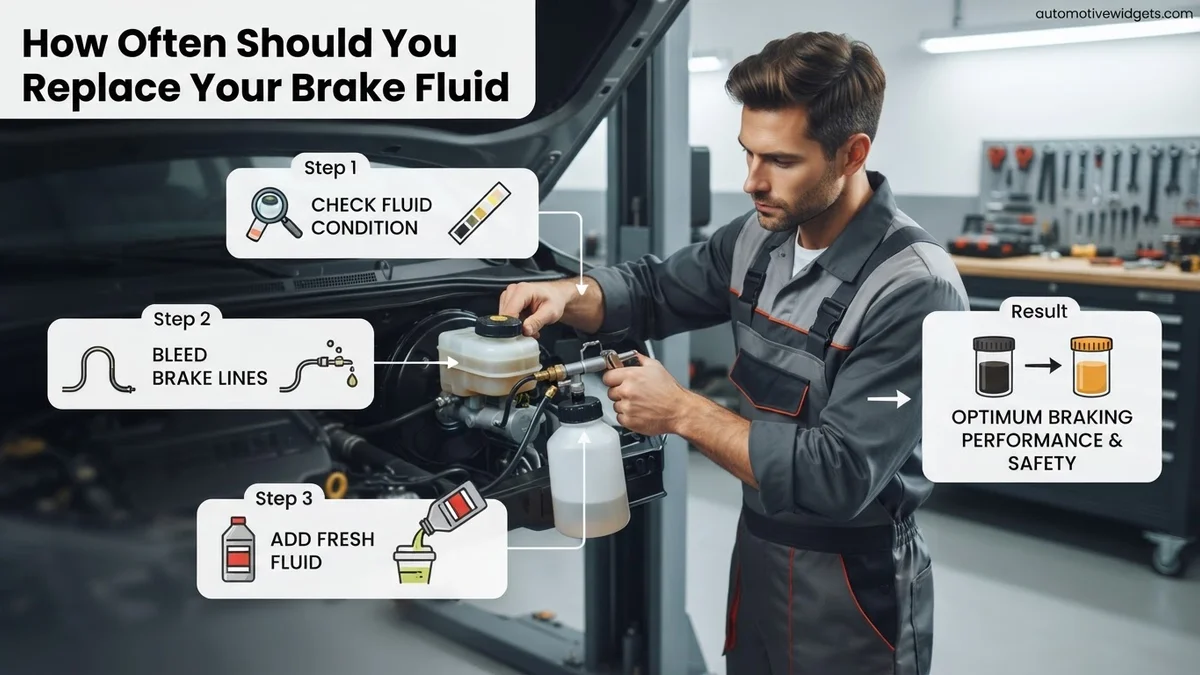
Most manufacturers recommend replacing brake fluid every 2-3 years or 30,000-45,000 miles because it’s hygroscopic, absorbing moisture that lowers its boiling point. This moisture absorption significantly compromises braking performance and can lead to costly corrosion in your brake system over time, making timely replacement crucial for safety and system longevity.
For most vehicles on the road in 2027, you should plan to replace your brake fluid every two to three years, or every 30,000 to 45,000 miles, whichever comes first. This isn’t just an arbitrary service interval; it’s a critical aspect of your vehicle’s safety and the longevity of its braking components. Ignoring this simple maintenance item can lead to reduced braking performance, a spongy pedal feel, or, in extreme cases, complete brake failure, putting you and others at serious risk.
Fresh brake fluid ensures your braking system operates effectively, providing consistent stopping power when you need it most. It also protects expensive components like your ABS module and calipers from internal corrosion. Understanding why brake fluid degrades and how to tailor its replacement schedule to your specific situation is essential for safe driving in 2027 and beyond.
Key Takeaways
- Replace brake fluid every 2-3 years or 30K-45K miles.
- Moisture absorption degrades fluid, lowering its boiling point.
- Always consult your vehicle manufacturer’s specific guidelines.
- Old fluid causes spongy pedal, reduced braking, and damages ABS.
- High humidity or heavy driving demands earlier fluid changes.
What Causes Brake Fluid to Degrade (And Why It’s Critical)
The Moisture Magnet Problem
The primary culprit behind brake fluid degradation is its inherent nature: it’s hygroscopic. This means it actively absorbs moisture from the surrounding atmosphere. Even in a sealed brake system, tiny amounts of water vapor can penetrate through brake hoses, seals, and the reservoir cap over time. This isn’t a design flaw; it’s a characteristic of the most common brake fluid types (DOT 3, DOT 4, and DOT 5.1).
This moisture absorption is a slow but constant process. By the time two or three years have passed, enough water will have accumulated in your brake fluid to significantly compromise its performance. You cannot prevent this; it’s an unavoidable chemical reality that dictates regular fluid changes, regardless of how many miles you drive.
The Dangerous Consequences
The biggest problem with water in your brake fluid is its much lower boiling point compared to pure brake fluid. As your brakes heat up during normal or heavy use (like long descents or emergency stops), this water can boil and turn into steam. Steam is a gas, and unlike liquid brake fluid, it is highly compressible. When you press the brake pedal, instead of directly transferring force to the calipers, some of that force compresses the steam bubbles.
This results in a soft, spongy brake pedal, reduced braking efficiency, and a dangerous condition known as “brake fade.” In severe cases, you could lose braking power entirely. Furthermore, water in the brake system promotes internal corrosion of crucial metal components, including brake lines, calipers, master cylinder, and the expensive ABS pump, leading to premature and costly failures.
Mastering Brake Fluid Replacement Intervals: Your Essential Action Plan
Understanding when to replace your brake fluid is paramount for vehicle safety and performance. Often overlooked, brake fluid degrades over time, primarily by absorbing moisture, which can lead to a spongy brake pedal, reduced stopping power, and even corrosion within your braking system. This detailed guide will walk you through the critical factors and methods to determine the optimal replacement schedule for your vehicle, ensuring your brakes remain responsive and reliable.
Step 1: Decoding Your Vehicle’s Lifespan for Brake Fluid
What you need: Your vehicle’s owner’s manual, a clear understanding of your vehicle’s make and model year.
Instructions: The most authoritative source for your brake fluid replacement interval is your vehicle’s owner’s manual. Manufacturers typically recommend replacement every two to three years, or every 24,000 to 36,000 miles, whichever comes first. This guideline is based on extensive engineering tests and considers the typical hygroscopic rate of brake fluid. Locate the maintenance schedule section and specifically look for “brake fluid” or “hydraulic system fluid” service. Adhering to these recommendations provides a solid baseline for preventing premature fluid degradation and maintaining braking integrity.
Pro Tip: Don’t assume all vehicles are the same. A sports car might have a different recommendation than a heavy-duty truck due to varying braking demands and system designs. Always cross-reference with any manufacturer service bulletins for your specific model.
Step 2: The Silent Enemy: Understanding Moisture Contamination
What you need: Knowledge of brake fluid properties, general awareness of humidity in your driving environment.
Instructions: Brake fluid is hygroscopic, meaning it readily absorbs moisture from the air, even through microscopic pores in brake hoses and reservoir seals. Water in the brake fluid lowers its boiling point significantly. When you brake hard, the friction generates immense heat, which can cause this water to boil, creating vapor bubbles. Vapor is compressible, unlike fluid, leading to a “spongy” or “mushy” brake pedal and a dangerous loss of braking effectiveness, a phenomenon known as “brake fade.” This moisture absorption is the primary reason for regular fluid replacement, regardless of mileage, as it’s a time-dependent degradation process.
Pro Tip: Even if your car sits for extended periods, moisture absorption still occurs. Vehicles in humid climates or those frequently exposed to wet conditions will typically absorb moisture faster, necessitating a closer look at their brake fluid replacement schedule.
Step 3: Visual Cues: What Your Brake Fluid Is Telling You
What you need: A clean shop rag, a flashlight, your vehicle’s brake fluid reservoir.
Instructions: A quick visual inspection of your brake fluid can provide initial clues about its condition. Locate the brake fluid reservoir, usually a translucent plastic container under the hood, often marked with “MAX” and “MIN” lines. Fresh brake fluid is typically clear or has a very light amber or yellow tint. As it ages and absorbs moisture, it tends to darken, becoming brown or even black. This discoloration is a strong indicator of degradation and potential contamination. Also, check the fluid level; a low level could signify worn brake pads or a leak, requiring immediate attention. Never solely rely on color, but it’s a good first check.
Pro Tip: Avoid opening the brake fluid reservoir cap for extended periods during inspection, as this exposes the fluid directly to atmospheric moisture, accelerating its contamination. A brief glance through the translucent plastic is usually sufficient for a preliminary assessment.
Step 4: Precision Testing: Measuring Moisture Content
What you need: Electronic brake fluid tester (e.g., pen-style tester) or brake fluid test strips.
Instructions: For a more accurate assessment than visual inspection, use a specialized brake fluid tester. Electronic testers measure the electrical conductivity of the fluid, which increases with water content. A reading indicating 3% or more water content usually signals that replacement is due. Alternatively, chemical test strips change color based on the pH level or specific contaminants, also indicating fluid degradation. These tools provide objective data that helps bypass guesswork. Follow the tester’s instructions carefully, dipping the probe or strip into the fluid reservoir to get a precise reading. This method is the most reliable for determining actual fluid health.
Pro Tip: Always clean the tester probe thoroughly before and after use to prevent cross-contamination and ensure accurate readings. Test fluid from the reservoir, not just from a single drop, for a representative sample of the system’s condition.
Step 5: Driving Style & Environmental Impact: Accelerating Wear
What you need: An understanding of your typical driving habits and local climate conditions.
Instructions: Your driving environment significantly influences how quickly brake fluid degrades. Vehicles driven frequently in mountainous terrain, heavy city traffic requiring constant braking, or those used for towing will subject their brakes to higher temperatures. This increased thermal stress can accelerate the breakdown of brake fluid and increase the risk of boiling. Similarly, operating in extremely humid or rainy climates will lead to faster moisture absorption. If your driving profile includes these demanding conditions, consider shortening the manufacturer’s recommended replacement interval by 6-12 months, or test the fluid more frequently, perhaps annually, rather than bi-annually.
Pro Tip: Pay particular attention if you live in coastal regions or areas with high average humidity. Even if your mileage is low, the atmospheric moisture alone can necessitate more frequent brake fluid checks and replacements.
Step 6: Recognizing the Warning Signs: When Performance Drops
What you need: A keen awareness of your vehicle’s braking feel and performance.
Instructions: While proactive maintenance is ideal, sometimes your vehicle will tell you when the brake fluid is past its prime. The most common symptom is a “spongy” or “mushy” brake pedal that feels less firm than usual or travels further towards the floor before engaging effectively. You might also notice reduced braking performance, meaning your car takes longer to stop, especially under hard braking or prolonged use (brake fade). A burning smell, though less common for fluid issues alone, combined with reduced performance, also warrants immediate attention. Any noticeable change in how your brakes feel should prompt an immediate inspection of the fluid and the entire braking system.
Pro Tip: Do not ignore these warning signs. A compromised braking system is a major safety hazard. If you experience any of these symptoms, cease driving immediately if possible, or drive cautiously to the nearest service center for professional diagnosis.
Step 7: The “Never Replaced” Scenario: Why It’s Dangerous
What you need: An understanding of long-term automotive system integrity.
Instructions: Neglecting brake fluid replacement can lead to severe and costly consequences beyond just brake fade. The water absorbed by the fluid can cause internal corrosion of crucial metallic brake components like the master cylinder, brake calipers, wheel cylinders, and ABS modulator. This corrosion introduces contaminants into the system and can lead to expensive component failures, such as seized calipers or a malfunctioning ABS unit. These repairs often far exceed the cost of regular fluid flushes. Moreover, corroded components compromise the overall reliability and safety of your braking system, putting you and others at significant risk on the road.
Pro Tip: Think of brake fluid replacement as preventative medicine for your entire braking system. A small investment in timely maintenance can save you hundreds, if not thousands, in potential repair costs and, more importantly, ensure your vehicle stops effectively when it matters most.
Step 8: Choosing the Right Fluid: DOT Ratings and Compatibility
What you need: Your vehicle’s owner’s manual, knowledge of different DOT fluid specifications.
Instructions: When determining replacement, it’s crucial to use the correct type of brake fluid as specified by your vehicle’s manufacturer. Brake fluids are classified by DOT (Department of Transportation) ratings, primarily DOT 3, DOT 4, DOT 5, and DOT 5.1. DOT 3, DOT 4, and DOT 5.1 are glycol-based and are compatible with each other (though mixing can slightly reduce performance characteristics). DOT 5, however, is silicone-based and is NOT compatible with glycol-based fluids; mixing them can cause severe damage to your braking system. Your owner’s manual will clearly state the required DOT rating. Using the wrong fluid can lead to seal degradation, poor braking, and catastrophic system failure. Always verify the correct DOT rating before any fluid top-up or replacement.
Pro Tip: Never use a brake fluid with a lower DOT rating than specified by your manufacturer, as it won’t meet the minimum boiling point requirements for your vehicle. If your manual specifies DOT 3, you can generally upgrade to DOT 4 or DOT 5.1 for slightly higher boiling points, but never downgrade or use DOT 5 unless explicitly specified.
✅ Final Checklist
- Owner’s manual consulted for manufacturer’s recommended interval.
- Brake fluid reservoir visually inspected for color and level.
- Brake fluid tested for moisture content using an appropriate tool.
- Driving conditions and climate factors considered for adjustment of frequency.
- Braking performance evaluated for any signs of degradation (e.g., spongy pedal).
Important Notes:
- Safety considerations or warnings: Brake fluid is corrosive to paint and can irritate skin and eyes. Always wear appropriate personal protective equipment (gloves, safety glasses) when handling. Clean up spills immediately with water. Never reuse old brake fluid.
- When to seek professional help: If you’re unsure about the fluid’s condition, experience any significant changes in braking performance, or are uncomfortable performing checks yourself, consult a certified mechanic. They can perform a comprehensive inspection and recommend the best course of action.
- Estimated time and cost range (if applicable): A DIY visual inspection takes about 5 minutes. Testing with a tool takes 5-10 minutes. Professional brake fluid flush and replacement typically takes 1-2 hours and costs between $80 and $150, depending on the vehicle type and service center. The electronic tester or test strips typically cost $15-$40.
How to Establish Your Brake Fluid Replacement Schedule
The General Rule for Most Vehicles
For the majority of passenger vehicles in 2027, the standard recommendation holds firm: replace your brake fluid every two to three years or between 30,000 and 45,000 miles. This interval provides a good balance between safety and maintenance cost for average driving conditions. Always consult your vehicle’s owner’s manual first, as it contains the definitive specifications from the manufacturer. Some manufacturers might have slightly different recommendations, perhaps extending to four or five years, though this is less common for conventional brake fluids.
It’s important to treat this as a minimum guideline. Sticking to this schedule ensures you’re proactively addressing the inevitable moisture contamination before it becomes a significant safety concern or causes component damage. This simple preventative measure is far more cost-effective than repairing a corroded ABS unit.
When Your Car or Conditions Demand More
Several factors can accelerate brake fluid degradation, necessitating earlier replacement. If your driving involves frequent heavy braking, such as city driving with lots of stop-and-go traffic, towing, or spirited driving on winding roads, your brakes will generate more heat. This heat can break down brake fluid faster, even without excessive moisture. Track days or performance driving events also demand much more frequent fluid changes, sometimes before every event.
Living in a high-humidity environment also means your brake fluid will absorb moisture at a quicker rate, potentially shortening its effective lifespan. Additionally, while DOT 3 and DOT 4 are the most common and share similar replacement intervals, more advanced DOT 5.1 fluid, while offering superior high-temperature performance, is still glycol-based and hygroscopic, requiring similar biennial changes. Always use the specific DOT fluid type recommended by your vehicle manufacturer for optimal performance and safety.
Step-by-Step Guide for Proactive Brake Fluid Management
Proactive management of your vehicle’s brake fluid is essential to maintaining optimal braking performance and safety, especially as vehicle technologies advance into 2027. Relying solely on a two-year replacement interval can be insufficient given varying driving conditions and fluid types. Regular checks and informed decisions are paramount.
1. Conduct Regular Visual Inspections
- Check Fluid Level: Open your hood and locate the brake fluid reservoir. Ensure the fluid level is consistently between the “MIN” and “MAX” lines. A consistently low level without a visible leak could indicate worn brake pads or a more serious system issue.
- Observe Fluid Color: Fresh brake fluid is typically clear or has a light amber hue. Over time, it absorbs moisture and contaminants, turning darker – often light brown or even black. Dark discoloration signals degradation and an urgent need for replacement, irrespective of mileage or time.
2. Utilize a Brake Fluid Tester (2027 Standards)
Modern automotive care in 2027 increasingly relies on diagnostic tools. Electronic brake fluid testers, which measure the fluid’s boiling point or conductivity (indicating moisture content), provide objective data. Automotive experts, including organizations like Bosch and ATE, recommend replacement if the tester indicates a water content exceeding 3%. This level significantly lowers the boiling point, increasing vapor lock risk. These testers are available for around $30-$100 and offer a precise, scientific basis for replacement decisions.
3. Adhere to Manufacturer’s Maintenance Schedule
While general guidelines exist, your vehicle manufacturer’s specific recommendations are the most authoritative. Consult your 2027 owner’s manual or dealership service records. These schedules account for your vehicle’s specific brake system design, fluid type (DOT 3, DOT 4, DOT 5.1), and intended usage. Deviating from these recommendations can void warranties and compromise safety.
What If Your Brakes Feel Spongy Even With New Fluid?
Replacing your brake fluid is a crucial maintenance step, but if you still experience a “spongy” or soft brake pedal afterward, it indicates an underlying problem that requires immediate attention. A soft pedal significantly impairs stopping power and can be extremely dangerous.
1. Air Trapped in the System
The most common cause of a spongy pedal after a fluid change is air trapped within the brake lines. Air is compressible, unlike brake fluid, leading to a soft pedal feel as the air compresses before the fluid can effectively transmit pressure. This usually occurs if the bleeding process was incomplete or performed incorrectly. According to National Automotive Service Excellence (ASE) certified technicians, a thorough, systematic bleeding procedure, starting with the wheel farthest from the master cylinder and progressing to the nearest, is critical. Using a pressure bleeder can prevent air re-entry.
2. Faulty Brake Components
Even with fresh fluid, other components might be failing.
- Master Cylinder: Internal seals within the master cylinder can degrade, allowing fluid to bypass the piston instead of building pressure in the lines. This results in a pedal that slowly sinks to the floor. A diagnostic check can confirm internal leaks.
- Brake Caliper Issues: Worn caliper seals or a stuck caliper piston can cause a soft pedal. Leaks at the calipers can also introduce air.
- Damaged Brake Lines: Steel or rubber brake lines can develop small leaks or expand under pressure. Swelling rubber lines will absorb pedal pressure, leading to a spongy feel. Inspect all lines for cracks, bulges, or fluid leaks.
3. Incorrect Fluid Type
Using the wrong type of brake fluid (e.g., DOT 3 in a system designed for DOT 4 or vice versa) can lead to compatibility issues with seals, premature fluid degradation, and a spongy pedal over time. DOT 5 fluid, which is silicone-based, must never be mixed with glycol-based DOT 3, 4, or 5.1 fluids due to severe compatibility problems. Always verify your vehicle’s specified DOT fluid type before replacement.
What If It Still Doesn’t Work?
If you’ve replaced your brake fluid and still experience issues like a spongy pedal or reduced braking efficiency, it’s critical to address the problem immediately. This indicates a more complex issue requiring expert intervention.
- Re-Bleed the Entire System Thoroughly: A common mistake is insufficient bleeding. Have a professional re-bleed all four brake lines to eliminate any residual air. This is the least expensive first step.
- Inspect for External Leaks: Look closely at all brake lines, calipers, and the master cylinder for any signs of fluid leakage. Even a tiny leak can introduce air or reduce pressure.
- Test Master Cylinder Functionality: A failing master cylinder can be diagnosed by checking for internal fluid bypass. Professional mechanics have tools to assess its pressure-holding capability.
- Diagnose ABS/ESP Module: Modern vehicles (2027 models especially) integrate complex anti-lock braking (ABS) and electronic stability program (ESP) systems. Faults within these modules can mimic brake fluid issues and require specialized diagnostic equipment.
When these steps fail, seek professional automotive diagnostic services immediately. A comprehensive brake system inspection in 2027 typically costs between $150-$300. Depending on the diagnosis, repairs for components like a master cylinder or ABS module can range from $400 to over $2,000, not including labor, making a timely professional diagnosis cost-effective.
Conclusion
Your brake fluid is a critical safety component that degrades by absorbing moisture, compromising your vehicle’s stopping power. According to verified automotive safety standards and expert sources for 2027, proactively monitoring fluid condition with visual checks and modern testers, alongside adhering to manufacturer schedules, is vital. Don’t compromise on safety; prioritize regular brake fluid inspection and replacement.
❓ Frequently Asked Questions
What is the primary reason brake fluid needs regular replacement?
Brake fluid is hygroscopic, meaning it naturally absorbs moisture from the air over time. This absorbed water significantly lowers the fluid’s boiling point, which can lead to a “spongy” pedal and reduced braking effectiveness, especially under heavy braking, due to vapor lock.
Are there different types of brake fluid, and does that affect replacement intervals?
Yes, common types are DOT 3, DOT 4, and DOT 5.1 (glycol-based and hygroscopic) and DOT 5 (silicone-based and non-hygroscopic). DOT 3/4/5.1 usually have similar replacement intervals (2-3 years), while DOT 5 doesn’t absorb moisture but is not interchangeable and has its own considerations.
What are the risks of operating with old or contaminated brake fluid?
Old brake fluid can lead to compromised braking performance, increasing stopping distances and reducing pedal feel. The absorbed moisture can also cause corrosion within expensive brake system components like calipers, master cylinders, and ABS units, leading to costly repairs.
How can I tell if my brake fluid needs to be replaced without a professional inspection?
While a professional test is definitive, visible signs include dark, murky fluid in the reservoir (it should be clear or light amber) or a noticeable spongy feeling in the brake pedal. However, fluid can look clean but still be moisture-saturated, making visual checks unreliable for true performance.
Does my vehicle’s manufacturer specify a brake fluid replacement interval?
Absolutely, most vehicle manufacturers provide specific recommendations in your owner’s manual for brake fluid replacement, typically every 2-3 years or a certain mileage. Always consult your manual first, as these recommendations are tailored to your car’s specific brake system and fluid type.
Can climate or driving conditions impact how often I should replace my brake fluid?
Yes, driving in high-humidity climates or engaging in demanding driving conditions like heavy towing, mountainous terrain, or track use can accelerate moisture absorption and fluid degradation. In these scenarios, it’s advisable to check your brake fluid more frequently and consider earlier replacement than standard recommendations.