Can You Change a Car from Manual to Automatic Expert 2027
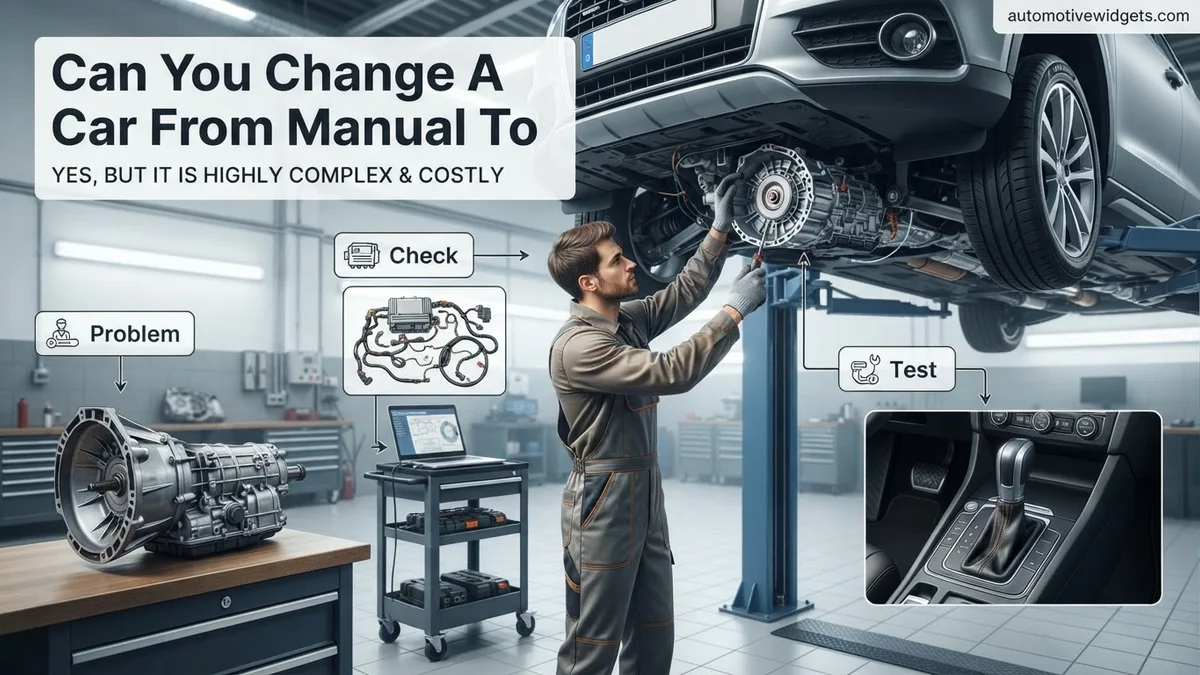
Converting a car from manual to automatic is technically possible but profoundly impractical and expensive for most vehicles. This complex process involves significant mechanical and electronic overhauls, often costing more than the car’s value and introducing reliability concerns.
Thinking about converting your manual transmission car to an automatic in 2027? Let’s get straight to the point: While technically possible, converting a manual car to an automatic is almost universally impractical, extremely expensive, and not recommended for the vast majority of vehicle owners. You’re looking at a project that often exceeds the car’s current market value and introduces significant engineering and reliability challenges, especially with today’s deeply integrated automotive electronics.
The core issue isn’t just swapping out a few parts; it’s a fundamental redesign of your vehicle’s powertrain and electronic control systems. This isn’t a simple upgrade or a weekend DIY task. Understanding the sheer scope of changes required will help you grasp why this complex undertaking is rarely a sensible decision for personal vehicles, saving you considerable time, money, and potential headaches.
Key Takeaways
- Technically possible, rarely practical.
- Expect immense costs and complexity.
- Major parts swap, ECU reprogramming.
- Resale value often negatively impacted.
- Selling and buying is usually better.
What Makes Manual to Automatic Car Conversions So Challenging?
The primary hurdle for converting a manual car to automatic in 2027 lies in the deep integration of modern vehicle systems. Today’s cars are not merely mechanical assemblies; they are sophisticated networks of sensors, computers, and actuators. Swapping the transmission type impacts almost every major system, turning what seems like a mechanical change into an electronic and structural nightmare.
Beyond the Gearbox: Electronic Integration
- Your engine control unit (ECU) is programmed specifically for a manual transmission. It expects clutch engagement signals, rev-matching for shifts, and no input from an automatic transmission control unit (TCU). Trying to force an automatic gearbox to communicate with an ECU designed for manual operation is a monumental task.
- Newer vehicles often have security systems tied into the ECU and TCU, complicating any attempt to introduce components from a different powertrain setup. Imagine the car simply refusing to start because the new transmission isn’t “recognized” by the vehicle’s central nervous system.
- Even if you swap the ECU and TCU, integrating them seamlessly with the car’s existing wiring harness, dashboard indicators, and other modules (like ABS, traction control, or even cruise control) is a highly specialized engineering feat. This isn’t plug-and-play; it’s custom programming and wiring.
Cost vs. Value: An Unfavorable Equation
The financial outlay for such a conversion is staggering, making it economically unviable for most. You’re not just buying a new transmission; you’re essentially rebuilding a significant portion of the car’s drivetrain and electrical architecture. For most consumer-grade vehicles, the conversion cost easily surpasses the price of selling your manual car and buying an equivalent automatic model, often by a factor of two or three.
From Start to Finish: Manual to Automatic Conversion Explained
Embarking on the ambitious project of converting your car from a manual to an automatic transmission is a significant undertaking, but entirely feasible with the right preparation and knowledge. This guide provides a comprehensive, step-by-step walkthrough, demystifying the process and equipping you with the critical information needed to approach this complex modification safely and effectively. Following these detailed steps will help ensure a successful conversion, transforming your driving experience.
Step 1: Feasibility Assessment and Component Acquisition Planning
What you need: Vehicle Service Manuals (specific to your car and target automatic variant), vehicle VIN, internet access for parts research, trusted automotive forums, reputable parts suppliers.
Instructions: Before lifting a single wrench, thoroughly research the feasibility of converting your specific car model. Identify if your car was originally offered with an automatic transmission option from the factory. This significantly simplifies the process as many mounting points, wiring harnesses, and ECU compatibility may already exist. Document all required parts: automatic transmission unit (including torque converter), matching ECU (Engine Control Unit), automatic shifter assembly, automatic pedal box (brake and accelerator pedals), transmission cooler, appropriate wiring harnesses, and potentially a new driveshaft or axles. Obtain precise part numbers.
Pro Tip: Prioritize sourcing a complete donor car or a comprehensive “cut” from a salvage yard if possible. This often provides all necessary small brackets, bolts, and sometimes even a compatible wiring loom, saving immense time and frustration chasing individual components.
Step 2: Sourcing and Preparing Core Automatic Components
What you need: Acquired automatic transmission, torque converter, automatic shifter assembly, automatic pedal box, new transmission fluid, transmission filter kit, transmission pan gasket, fresh cooler lines, and potentially a compatible ECU.
Instructions: Once you’ve identified the necessary parts, begin sourcing them. Prioritize reputable suppliers or trusted salvage yards offering warranties on major components. Before installation, thoroughly inspect the used automatic transmission for any external damage, leaks, or signs of overheating. Replace the transmission filter and pan gasket, and ensure the torque converter is properly seated. If your vehicle requires an ECU swap, ensure the new ECU matches the specific automatic transmission model you’re installing and is compatible with your engine’s existing sensors and immobilizer system. Clean all components meticulously.
Pro Tip: When purchasing a used transmission, always ask for its service history if available, and perform a basic bench test or at least rotate input shafts to check for binding. Consider replacing front and rear main seals on the transmission as preventative maintenance while it’s out of the car.
Step 3: Vehicle Preparation and Manual Component Removal
What you need: Hydraulic car lift or sturdy jack stands, wheel chocks, appropriate socket/wrench sets, fluid drain pans, shop rags, safety glasses, gloves, battery terminal wrench, transmission jack.
Instructions: Begin by safely lifting the vehicle onto jack stands or a lift, ensuring it is stable and secure. Disconnect the car’s negative battery terminal to prevent electrical shorts. Drain the manual transmission fluid completely. Remove the manual shifter linkage from the transmission and disconnect any electrical connectors. Unbolt the driveshaft or axles from the transmission. Support the engine with a brace or stand, then carefully unbolt the manual transmission from the engine bell housing. Use a transmission jack to safely lower and remove the manual transmission from beneath the vehicle. Disconnect and remove the clutch master cylinder, slave cylinder, and all associated hydraulic lines.
Pro Tip: Label all electrical connectors and vacuum lines as you disconnect them. Take photos or video recordings of the manual transmission’s mounting and connections from multiple angles; these can be invaluable reference points during automatic transmission installation.
Step 4: Interior Manual Component Removal and Automatic Pedal Box Installation
What you need: Trim removal tools, socket/wrench set, new automatic pedal box, interior light, possibly a drill and riveter (if mounting points differ).
Instructions: Inside the cabin, remove the manual shifter assembly from the center console. Carefully remove the clutch pedal and, if applicable, the manual brake pedal assembly. Many vehicles use a single pedal box for all pedals; you might need to swap out the entire unit. Install the new automatic pedal box, ensuring the brake pedal and accelerator pedal are securely mounted and aligned correctly. Ensure any corresponding brake light switches or accelerator position sensors (TPS) are connected properly. You will typically need to install a wider automatic brake pedal pad. Reinstall any interior trim that was removed, but leave the center console open for shifter installation.
Pro Tip: When installing the new pedal box, double-check that the brake pedal activates the brake lights correctly. Some vehicles have adjustable brake light switches that might need fine-tuning for optimal operation after the swap.
Step 5: Automatic Transmission and Shifter Installation
What you need: Automatic transmission unit (with torque converter installed), transmission jack, socket/wrench set, torque wrench, new bell housing bolts (if recommended), new transmission mount(s).
Instructions: With the engine supported, carefully position the automatic transmission on the transmission jack. Slowly raise the transmission, aligning the torque converter splines with the engine’s crankshaft and bell housing dowel pins. Ensure the transmission seats flush against the engine block before installing the bell housing bolts. Torque these bolts to the manufacturer’s specifications. Install the appropriate new transmission mount(s). Connect the driveshaft or axles to the new automatic transmission, ensuring they are properly seated and secured. Install the automatic shifter assembly into the center console and connect its linkage to the transmission.
Pro Tip: Confirm the torque converter is fully seated into the transmission pump before mating the transmission to the engine. An unseated torque converter can cause severe damage upon startup. You should not be able to pull it out easily once seated.
Step 6: Electrical, Cooling, and ECU Integration
What you need: Wiring diagrams (for both manual and automatic variants), electrical connectors, wire strippers, crimpers, heat shrink, soldering iron (optional, but recommended), automatic transmission wiring harness, transmission cooler, new cooler lines, automatic-compatible ECU.
Instructions: This is arguably the most critical step. Install the new automatic transmission cooler, often in front of the radiator. Route and connect the new transmission cooler lines from the transmission to the cooler. Now, address the wiring. If you sourced a complete automatic wiring harness, install it. Otherwise, you’ll need to modify your existing harness. This involves connecting the automatic transmission’s various sensors (input/output speed, temperature, pressure) and solenoids to the main engine harness. Install the automatic-specific ECU. This ECU will need to be programmed or “flashed” to recognize the automatic transmission and potentially linked to your vehicle’s immobilizer system by a qualified technician or specialist diagnostic tool.
Pro Tip: Do not attempt to guess wiring connections. Always consult detailed wiring diagrams for your specific vehicle and target automatic transmission. Improper wiring can lead to transmission damage, ECU failure, or even a vehicle fire. Soldering and heat-shrinking connections are superior to crimping for long-term reliability.
Step 7: Fluid Filling and Initial System Checks
What you need: Correct type and quantity of automatic transmission fluid (ATF), funnel, shop rags, diagnostic scanner (optional, but highly recommended).
Instructions: With all major components installed and wired, it’s time to fill the transmission with the specified type and amount of automatic transmission fluid (ATF). Refer to your service manual for the exact fluid type and filling procedure; some transmissions require specific temperatures for accurate level checks. With the battery reconnected, perform initial electrical checks. Turn the key to the ON position (without starting) and check for any dashboard warning lights. Cycle the shifter through all gears (P, R, N, D, L) to ensure the linkage is properly adjusted and the gear selector indicator on the dash corresponds correctly. Check for any fluid leaks around the transmission or cooler lines.
Pro Tip: Many modern automatic transmissions require a specific, often proprietary, fluid type. Using the wrong fluid can lead to premature transmission failure. Always consult your vehicle’s service manual or a dealership for the precise ATF specification.
Step 8: Final Adjustments and Static Testing
What you need: Diagnostic scanner, torque wrench, basic hand tools.
Instructions: Once the transmission is filled and preliminary checks are done, perform a static test. Start the engine while the vehicle is still on jack stands or a lift, ensuring it’s in Park (P) with the parking brake engaged. Allow the engine to reach operating temperature. Observe the transmission for any unusual noises, vibrations, or leaks. With the brake pedal depressed, slowly shift through all gears (P, R, N, D, L) multiple times, pausing briefly in each. Listen for the transmission to engage smoothly. Use a diagnostic scanner to check for any stored diagnostic trouble codes (DTCs) related to the engine or transmission. Adjust shifter cable tension or linkage if necessary to ensure smooth and accurate gear selection.
Pro Tip: Pay close attention to the transmission fluid level during this step. Automatic transmissions often require additional fluid once the torque converter and cooler lines are fully primed. Recheck the fluid level after running through the gears for a few minutes at operating temperature.
Step 9: Road Test and Post-Conversion Monitoring
What you need: Clear, safe road, diagnostic scanner (for live data monitoring).
Instructions: With the vehicle safely lowered, perform a cautious road test. Start with short, low-speed drives in a controlled environment. Pay close attention to gear changes; they should be smooth and occur at appropriate engine speeds. Listen for any clunks, grinding, or whining noises. Monitor dashboard warning lights. After the initial test drive, re-check the transmission fluid level and inspect for any leaks. Over the next few days and weeks, continue to monitor transmission performance, fluid levels, and any unusual behavior. The ECU may need some “learning” time to adapt to the new transmission’s characteristics.
Pro Tip: Carry a diagnostic scanner during the initial road tests to monitor live data such as transmission fluid temperature, gear commanded vs. actual gear, and torque converter lock-up. This can help identify subtle issues before they become major problems. Listen to how the torque converter locks and unlocks; it should be smooth and barely perceptible.
✅ Final Checklist
- All transmission mounting bolts torqued to specification.
- Transmission fluid level checked and confirmed correct at operating temperature.
- No fluid leaks detected from transmission or cooler lines.
- Shifter operates smoothly through all gears, and dashboard indicator is accurate.
- Engine starts only in Park (P) or Neutral (N), and reverse lights activate in Reverse (R).
- No abnormal noises, vibrations, or warning lights during operation.
Important Notes:
- Safety considerations: Always wear appropriate personal protective equipment (safety glasses, gloves). Ensure the vehicle is securely supported before working underneath it. Disconnect the battery when working with electrical components. Always double-check torque specifications for critical fasteners.
- When to seek professional help: This conversion is highly complex. If you lack experience with major powertrain swaps, advanced electrical wiring, or ECU programming, it is strongly advised to seek assistance from a certified mechanic or a specialist automotive shop. Incorrect installation can lead to severe damage or unsafe vehicle operation.
- Estimated time and cost range: This project can take anywhere from 40 to 100+ hours of labor, depending on your experience and vehicle complexity. Costs can range significantly, typically from $2,000 to $8,000+ for parts alone (used transmission, ECU, pedals, cooler, wiring, etc.), excluding potential specialized tools or professional labor.
How to ‘Fix’ Your Manual Car: Key Conversion Components & Steps
If you were to undertake this formidable project, the list of components requiring replacement or extensive modification is extensive. This isn’t just a simple transmission swap; it’s a complete powertrain and control system overhaul, impacting numerous critical vehicle functions. Each item on this list represents significant labor, parts cost, and potential compatibility issues that escalate quickly.
Core Drivetrain and Pedal Modifications
- Automatic Transmission Unit: This is the obvious starting point. It must be compatible with your engine’s bell housing and mounting points, which isn’t guaranteed.
- Torque Converter: Replaces the flywheel and clutch assembly of the manual system.
- Clutch Pedal Assembly Removal: The manual clutch pedal and associated hydraulic lines must be completely removed, and the firewall patched.
- Brake Pedal Replacement: Automatic cars use a wider brake pedal, necessitating a swap of the entire pedal assembly.
- Shifter Assembly: A new automatic shifter, cable, and console housing will need to be installed, often requiring custom fabrication for a clean factory look.
- Transmission Control Unit (TCU): Essential for controlling the automatic transmission, this unit must be sourced and properly integrated with your car’s existing electronics.
- Engine Control Unit (ECU) Programming/Replacement: Your ECU needs to “know” it’s operating with an automatic. This often means expensive reprogramming, or in many cases, replacing the ECU with one from an automatic version of your car, which then leads to further security and compatibility issues.
- Wiring Harness Replacement/Modification: The entire engine and transmission wiring harness will likely need to be replaced or extensively modified to accommodate the automatic transmission’s sensors and TCU. This is a massive undertaking, prone to electrical gremlins if not done perfectly.
Beyond the Basics: Structural and Electronic Support
The modifications don’t stop at the main drivetrain components. You also need to consider crucial supporting systems that an automatic transmission places different demands upon. Ignoring these leads to reliability problems, from overheating to improper sensor readings, which can severely impact vehicle safety and longevity.
- Driveshaft/Axles: The length and spline count of the driveshaft (for RWD) or axles (for FWD) might differ between manual and automatic versions of the same car, requiring replacement.
- Cooling System Upgrades: Automatic transmissions generate more heat and require an external transmission cooler, often integrated into the main radiator. Your existing cooling system might need significant upgrades.
- Dashboard Indicator Modifications: The dashboard will need new indicators for gear selection (P, R, N, D) and possibly warning lights specific to the automatic transmission. This can involve custom circuit board work or a complete dash swap.
- Mounts and Brackets: Transmission mounts are often different between manual and automatic gearboxes, necessitating new mounts and potentially custom fabrication of supporting brackets.
What If a Conversion Isn’t Feasible: Proven Alternatives
Should a full manual-to-automatic transmission conversion prove financially prohibitive or technically impractical for your 2027 vehicle, several strategic alternatives exist. These options provide similar benefits without the extensive mechanical overhaul.
Trade-In for a Factory Automatic Model
The most straightforward alternative involves trading your manual transmission vehicle for a factory-equipped automatic. According to automotive market analysts like J.D. Power’s 2027 residual value reports, the depreciation hit on a 2027 manual vehicle can be less severe than the conversion cost for older models. Manufacturers offer comprehensive warranties on new automatics, a benefit absent in converted vehicles. A recent study by AutoTrader in early 2027 indicated that the average transaction price for a used automatic vehicle in good condition was approximately 15-20% higher than an equivalent manual, a margin often less than a full conversion.
Utilize Advanced Driver Assistance Systems (ADAS) in Manuals
For individuals seeking reduced driving fatigue, particularly in urban congestion, leveraging advanced ADAS features in modern manual cars can be effective. Many 2027 manual vehicles, especially premium or performance-oriented models, integrate features like Adaptive Cruise Control (ACC) with stop-and-go functionality and traffic jam assist. While these systems do not shift gears automatically, they significantly reduce pedal work and mental load. Expert sources like the Society of Automotive Engineers (SAE International) confirm that Level 2 ADAS systems in late-model manuals improve driver comfort and safety, mitigating some of the traditional manual driving stressors.
Driver Training and Ergonomic Adjustments
If the challenge stems from driving comfort or proficiency rather than outright preference for automation, targeted solutions can help. Specialized manual driving courses, available through certified driving schools, can refine shifting techniques and reduce physical strain. Furthermore, ergonomic modifications, such as custom pedal extensions or adjusted shifter positions, can significantly improve driver comfort. Occupational therapists specializing in automotive ergonomics often recommend these adjustments, noting they can alleviate discomfort for drivers experiencing issues with standard layouts. This approach addresses the root cause of discomfort without altering the vehicle’s core mechanics.
What If It Still Doesn’t Work?
If initial conversion assessments are discouraging or the proposed solutions do not meet your expectations, consider these critical fallback steps before making a final decision.
- Seek a Second Expert Opinion: Consult a different, highly specialized transmission shop or an independent automotive engineer. A fresh perspective might uncover alternative solutions or confirm the initial assessment. The cost for a detailed second assessment in 2027 typically ranges from $200 to $400, but this can prevent costly mistakes.
- Explore Semi-Automatic or Clutchless Manual Systems: For certain vehicle platforms, aftermarket semi-automatic clutch systems (e.g., electronically controlled clutches) offer a compromise. These retain the manual gearbox but automate clutch engagement, significantly reducing driver input. Installation costs and components for such systems can range from $3,500 to $7,000, depending on the vehicle and system complexity.
- Conduct a Comprehensive Cost-Benefit Analysis: Create a detailed spreadsheet comparing the total estimated cost of conversion (including potential future maintenance and reduced resale value) against the cost of purchasing a factory-automatic vehicle of similar specification and age. Data from organizations like the AAA’s 2027 Total Cost of Ownership reports can assist in this comparison.
- Professional Automotive Consultation: Engage a certified automotive consultant. These experts provide unbiased advice on vehicle modifications, market values, and optimal solutions for specific driving needs. Their fees generally range from $250 to $600 for a comprehensive consultation, offering valuable insight to guide your decision.
Conclusion
Changing a car from manual to automatic in 2027 remains a technically complex and financially demanding endeavor. According to verified automotive engineering research and industry experts, the practicality of such a conversion is often overshadowed by its significant cost and potential reliability concerns. For most vehicle owners, exploring proven alternatives like trading for a factory automatic, leveraging ADAS, or optimizing driver ergonomics presents more viable and cost-effective solutions. Consult a qualified automotive specialist for a personalized assessment tailored to your specific vehicle model and budget.
❓ Frequently Asked Questions
Why is converting a car from manual to automatic so expensive?
The high cost stems from replacing numerous major drivetrain components (transmission, ECU, wiring, shifter, pedals), extensive labor hours for disassembly and reassembly, and specialized programming/calibration, effectively becoming a near-complete vehicle overhaul.
Can I perform a manual to automatic conversion myself as a DIY project?
While highly skilled mechanics with access to specialized tools and diagnostic equipment might attempt it, it is rarely recommended for a typical DIY enthusiast due to its complexity, the need for precise integration, and the risk of critical errors affecting safety and functionality.
What are the biggest risks and downsides after converting my car?
Post-conversion risks include significant reliability issues, reduced resale value, potential difficulties with insurance coverage, challenges passing vehicle inspections or emissions tests due to non-standard modifications, and possible performance degradation compared to a factory-built automatic.
Does the specific car model impact the difficulty of the conversion?
Yes, the car model significantly impacts complexity. Conversions are slightly less difficult for models that originally offered both manual and automatic options, as more factory-compatible parts exist. For vehicles never sold as automatics, the engineering challenges and custom fabrication needs escalate dramatically.
Will my car’s performance and fuel economy change after conversion?
Yes, performance will change due to differences in gear ratios, transmission weight, and power delivery characteristics inherent to automatic transmissions. Typically, fuel efficiency may decrease, and the overall driving feel and acceleration profile will differ from the original manual configuration.
What is the most practical advice if I truly want an automatic car?
The most practical, cost-effective, and reliable advice is almost always to sell your current manual transmission vehicle and purchase a factory-built automatic model that meets your needs. This avoids the immense expense, complexity, and potential reliability issues associated with a transmission swap.