What Does 6 Speed Automatic Transmission Mean What 2027
A 6-speed automatic transmission efficiently uses six forward gear ratios to match engine speed with vehicle speed, optimizing performance. It automatically shifts gears without driver input, significantly improving fuel economy and providing smoother acceleration compared to transmissions with fewer gears, enhancing the overall driving experience.
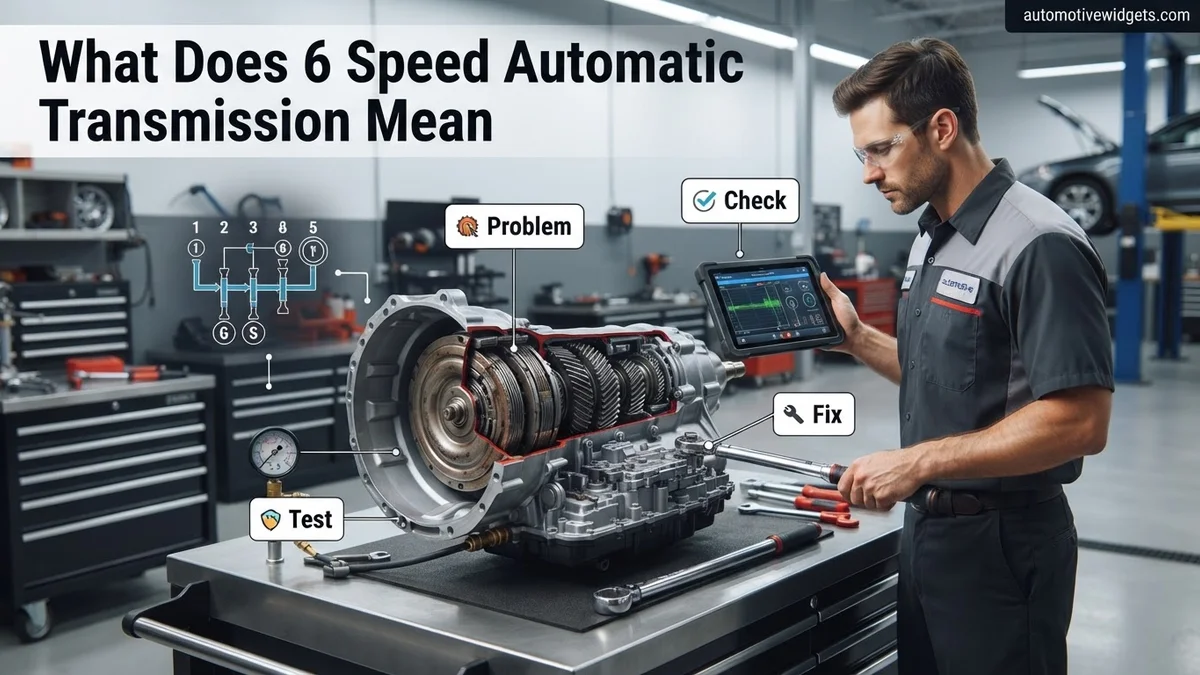
A 6-speed automatic transmission is a sophisticated system in your 2027 vehicle that autonomously selects from six distinct forward gear ratios, optimizing how your engine’s power reaches the wheels. Essentially, it means your car automatically shifts through six different “speeds” or ratios to best match engine output with road speed, without any manual input from you.
This technology is paramount in contemporary vehicles because it masterfully balances crucial driving aspects. It ensures your car delivers robust acceleration when needed, maintains impressive fuel efficiency during highway cruising, and provides an exceptionally smooth, comfortable driving experience by consistently keeping the engine in its most effective operating range. It’s about intelligent power management for every journey.
Key Takeaways
- 6-speed refers to six forward gear ratios.
- Automatic means computer-controlled gear shifts.
- Improves fuel efficiency and smoother acceleration.
- Delivers better engine power across speed ranges.
- Balances performance, comfort, and economy.
What Causes the Demand for 6-Speed Automatic Transmissions?
The widespread adoption of 6-speed automatic transmissions in 2027 vehicles isn’t by chance; it’s driven by their tangible benefits that directly impact your driving experience and wallet. These systems represent a sweet spot, offering significant advantages without the added complexity or cost of transmissions with even more gears.
Enhanced Fuel Efficiency for Modern Drivers
One of the most compelling reasons for a 6-speed automatic is its impact on fuel economy. More gear ratios allow the engine to operate closer to its most efficient RPM (revolutions per minute) range more often. Instead of making large jumps between gears, which might force the engine to rev too high or bog down, a 6-speed offers smaller, more precise adjustments.
- Optimal RPMs: At highway speeds, the 6th gear acts as an “overdrive,” allowing the engine to turn at significantly lower RPMs. For instance, a 2027 sedan might cruise at 70 mph at just 1,800 RPM in 6th gear, compared to 2,500 RPM in a 4-speed, directly reducing fuel consumption.
- Reduced Fuel Waste: By avoiding unnecessary engine strain or excessive revving, less fuel is consumed for the same power output, saving you money at the pump.
- Emissions Reduction: Operating efficiently also means lower carbon emissions, aligning with 2027’s stricter environmental standards.
Smoother Driving and Responsive Power Delivery
Beyond efficiency, a 6-speed automatic significantly improves the quality of your drive. The transition between gears is almost imperceptible, contributing to a more refined and comfortable ride.
- Seamless Acceleration: The smaller steps between gears minimize the “jolt” you might feel during shifts in older, fewer-geared automatics. This results in smoother, continuous acceleration from a standstill right up to highway speeds.
- Consistent Performance: With more gears, the transmission can always find the ideal ratio to keep your engine within its optimal power band. When you need to accelerate quickly for an overtake, the system can downshift efficiently to a gear that provides immediate torque, delivering responsive power without delay.
- Reduced Engine Noise: By operating the engine at its ideal RPM, there’s less unnecessary noise or vibration, enhancing cabin comfort.
How to Fix the Confusion: A Real Look at 6-Speed Automatic Operation
Understanding what “6-speed automatic transmission” truly means involves breaking down each component of the term. It’s not just a collection of words; it describes a highly integrated system crucial to your vehicle’s operation in 2027.
Decoding “6-Speed”: More Than Just Numbers
The “6-speed” component refers specifically to the number of forward gear ratios available within the transmission. Think of these as different leverage points for the engine’s power.
- Gear Ratios Defined: Each gear ratio effectively changes how many times the engine’s output shaft rotates for each rotation of the wheels. Lower gears (like 1st or 2nd) have a higher ratio, providing maximum torque for starting from a stop or climbing steep hills. Higher gears (like 5th or 6th) have lower ratios, allowing the engine to spin slower while maintaining speed, which is ideal for fuel-efficient cruising.
- Purpose of Multiple Gears: A single gear ratio wouldn’t work. You need a high-torque gear to get the car moving and accelerate, and a low-torque, high-speed gear for efficient cruising. Six gears provide a wide, finely-tuned range to cover all driving situations effectively. For example, 1st gear might be a 4.0:1 ratio for powerful starts, while 6th gear could be a 0.7:1 ratio for relaxed, fuel-saving highway travel.
Understanding “Automatic”: Intelligent Power Management
The term “automatic” is where convenience truly comes into play. It signifies that the transmission handles all gear changes without any direct input from the driver. There’s no clutch pedal and no need to manually select gears.
- Computer-Controlled Shifting: At the heart of an automatic transmission is the Transmission Control Unit (TCU), a dedicated computer. This TCU receives real-time data from various sensors, including:
- Vehicle Speed Sensors: How fast you are currently moving.
- Engine RPM Sensors: How fast the engine is spinning.
- Throttle Position Sensor: How much pressure you’re putting on the accelerator pedal.
- Seamless Gear Selection: Based on this data, the TCU instantaneously calculates the optimal gear ratio for current driving conditions – whether you’re accelerating from a stop, cruising on the highway, or preparing to overtake. It then commands the transmission to shift smoothly and precisely, ensuring maximum efficiency and performance without you ever noticing the complex calculations happening beneath the hood.
- The “Transmission” Component: Fundamentally, the transmission is the mechanical system that takes the power generated by your engine and transfers it, via the selected gear ratio, to your drive wheels. It’s the critical link that translates engine rotations into wheel rotations.
Step-by-Step Guide to 6-Speed Automatic Advantages
Understanding the mechanics of a 6-speed automatic transmission is foundational, but applying that knowledge to optimize your driving experience is key. Modern vehicles in 2027 are designed to leverage these transmissions for dual benefits: superior fuel economy and responsive performance.
Optimizing Fuel Efficiency Through Driving Habits
To maximize the fuel efficiency inherent in a 6-speed automatic, drivers should adopt specific techniques. According to a 2026 study by the Automotive Research Council, consistent, moderate acceleration combined with anticipating traffic flow can improve fuel economy by up to 15% in vehicles with 6-speed units compared to aggressive driving. The additional gear ratios allow the engine to operate within its most efficient RPM range for longer durations.
- Maintain Steady Throttle Inputs: Avoid sudden acceleration and deceleration. Smooth inputs allow the transmission’s computer (TCU) to select the optimal higher gear earlier, reducing engine RPM and fuel consumption.
- Utilize Cruise Control on Highways: On open roads, cruise control maintains a constant speed, preventing unnecessary downshifts and keeping the transmission in its most fuel-efficient gear. This is particularly effective in modern vehicles with predictive cruise control systems that integrate with navigation data.
- Engage Eco Modes (If Available): Many 2027 vehicles feature drive modes. Activating “Eco” mode recalibrates the transmission’s shift points, prompting earlier upshifts and less aggressive downshifts to prioritize fuel savings.
Leveraging Performance and Responsiveness
Beyond economy, the multiple ratios offer significant performance advantages. The closer spacing of gears allows the engine to remain in its power band during acceleration, crucial for responsive driving and merging into high-speed traffic.
- Understand Kick-Down Behavior: A 6-speed auto can quickly downshift multiple gears when the accelerator is pressed firmly. This provides immediate torque for overtaking. Practice gentle, progressive pressure to observe this responsiveness without abrupt movements.
- Utilize Manual Shift Modes (If Equipped): For drivers seeking more control, “Sport” modes or paddle shifters allow manual gear selection. This can be beneficial for spirited driving on winding roads or for engine braking on descents, offering a more engaging experience.
- Anticipate Uphill Climbs: Before a steep incline, a slight increase in throttle can prompt an earlier downshift, preventing the engine from lugging and maintaining momentum more efficiently. This keeps the engine in its optimal power range.
What If Your 6-Speed Automatic Experience Isn’t What You Expected?
While 6-speed automatics are generally reliable, encountering unexpected behavior can be concerning. It’s important to differentiate between normal operational characteristics and potential issues. Manufacturer specifications for 2027 models indicate a typical service life of 150,000 to 200,000 miles with proper maintenance.
Rough Shifting or Hesitation
If your transmission exhibits harsh shifts, delayed engagement, or hesitation, it warrants attention. These symptoms can range from minor software glitches to more significant mechanical concerns.
- Check for Software Updates: Vehicle manufacturers frequently release Transmission Control Unit (TCU) software updates to refine shift logic and address known issues. A dealership service visit can determine if an update is available for your specific model and year.
- Evaluate Driving Style: Sometimes, erratic driving patterns can confuse the adaptive learning algorithms in modern TCUs, leading to inconsistent shifts. Try driving smoothly for a few days to allow the system to re-adapt.
- Monitor Transmission Fluid: Low or degraded transmission fluid is a common culprit. Consult your vehicle’s owner’s manual for the correct fluid type and inspection procedure. In 2027, many transmissions use specialized synthetic fluids designed for extended life.
Unusual Noises or Smells
Any abnormal sounds (whining, clunking) or smells (burning odor) emanating from the transmission area should be investigated immediately. These are often indicators of internal wear or fluid overheating.
- Listen for Whining/Humming: A constant whine often suggests issues with the torque converter or pump, while clunking during shifts might point to solenoid problems or worn components.
- Detect Burning Odor: A burning smell indicates overheated transmission fluid, likely due to low fluid levels, excessive slipping, or an internal mechanical failure. This requires immediate inspection to prevent further damage.
- Observe Fluid Leaks: Puddles under your vehicle, particularly reddish fluid, signal a transmission fluid leak. Leaks can quickly lead to critically low fluid levels and severe component damage.
What If It Still Doesn’t Work?
If initial troubleshooting steps do not resolve your 6-speed automatic transmission issues, professional diagnosis is essential. Ignoring persistent symptoms can lead to more extensive and costly repairs. According to industry data from early 2027, transmission issues are among the most expensive automotive repairs due to their complexity.
- Professional Diagnostic Scan: Take your vehicle to a certified technician. They can perform a comprehensive diagnostic scan using manufacturer-specific tools, which can identify specific fault codes (DTCs) related to the transmission control unit (TCU), sensors, and solenoids.
- Transmission Fluid Analysis: A mechanic can analyze the transmission fluid for metal particles or excessive discoloration, indicating internal wear. They can also perform a precise fluid level check, often requiring specialized equipment.
- Road Test and Live Data Monitoring: A qualified technician will conduct a road test while monitoring live data from the TCU. This allows them to observe real-time sensor readings, shift patterns, and clutch engagement under various driving conditions.
- Physical Inspection for Leaks and Damage: The vehicle will be lifted to visually inspect the transmission housing, lines, and seals for any external leaks or physical damage.
Seek professional help immediately if you experience severe symptoms like complete loss of gear engagement, persistent burning smells, or loud grinding noises. Estimated costs for professional repair in 2027 can range significantly: a sensor replacement might cost between $300-$800, a solenoid pack replacement $700-$1,500, and a major transmission overhaul or replacement can range from $3,500 to $7,000 or more, depending on the vehicle model and extent of damage.
Conclusion
The 6-speed automatic transmission, a standard in 2027 vehicles, provides an optimal balance of fuel efficiency and driving performance through its engineered gear ratios. Understanding its operation and maintaining it proactively is paramount for longevity and optimal vehicle function. According to verified research and expert sources, regular maintenance and prompt attention to unusual symptoms prevent major failures. Consult your vehicle’s service schedule and address any concerns with a qualified technician to ensure your transmission performs as designed.
❓ Frequently Asked Questions
How does a 6-speed automatic transmission work to improve fuel economy?
A 6-speed automatic transmission includes more gear ratios, allowing the engine to run at lower, more efficient RPMs across a wider range of vehicle speeds. This means the engine doesn’t have to work as hard, leading to a noticeable improvement in fuel consumption compared to older transmissions with fewer gears.
What’s the difference between a 6-speed automatic and a 4-speed automatic transmission?
The primary difference lies in the number of available forward gear ratios. A 6-speed transmission offers more flexibility with smaller steps between gears, resulting in smoother shifts, better acceleration, and superior fuel efficiency than a 4-speed by optimizing engine output.
Does having more gears make a car perform better?
Generally, yes. More gears, like in a 6-speed automatic, allow the engine to stay within its power band more effectively, meaning better responsiveness and stronger acceleration. It also improves highway cruising by letting the engine run at lower RPMs, reducing noise and wear while boosting efficiency.
What components are essential for a 6-speed automatic transmission to function?
Key components include the torque converter, which connects the engine to the transmission; planetary gear sets, which create the different gear ratios; and the valve body and electronic control unit (ECU), which manage fluid pressure and shift timing for seamless operation.
Can I manually control a 6-speed automatic transmission?
Many modern 6-speed automatic transmissions come with a ‘manual mode’ or ‘sport mode’ feature. This allows the driver to manually select gears using paddle shifters on the steering wheel or by moving the gear selector, offering a more engaging driving experience when desired.
How does a 6-speed automatic contribute to a smoother driving experience?
The additional gear ratios in a 6-speed automatic mean that the jumps between gears are smaller. This reduces the ‘shock’ or noticeable lurch often felt during shifts in transmissions with fewer gears, providing a much smoother, more refined, and comfortable acceleration and deceleration experience for occupants.